District of Columbia sales tax calculator
Know exactly what to charge at any District of Columbia address. Find the combined rate, the tax on any amount, and the total. Free for your business, no sign-up.
Done checking rates one sale at a time? QuickBooks applies the right District of Columbia rate on every invoice automatically. See how automated sales tax works
DC's sales tax math is the same at every address in the District. The general rate is 6% on retail sales of goods and on a specific list of services. No city or county sales tax sits on top of it. That is because the District of Columbia is itself the local jurisdiction.
The average American side hustle brings in about $2,038 a month, according to Intuit QuickBooks entrepreneurship research. At that size, a DC seller is squarely in the system. You register with the Office of Tax and Revenue (OTR). You charge 6% on taxable sales delivered in the District, and you file a return on MyTax.DC.gov.
What makes DC different isn't the geography. It's the list. DC taxes a specific set of services, and the list reaches cleaning crews, payroll providers, employment agencies, and cloud software. It leaves barbers, accountants, and pet groomers alone. Whether you run a boutique in Georgetown, a janitorial company serving offices downtown, or a software business in Navy Yard, here's how DC's rate works. You'll also see which of your sales it reaches and what to know at filing time.
DC's general sales tax rate is 6%. It applies to retail sales of goods, which the law calls tangible personal property, and to the services DC specifically names. It is the only sales tax layer. The District of Columbia is itself the local jurisdiction. There are no counties or municipalities within DC with independent taxing authority. So there is no additional local sales tax layered on top of the DC rate. In most states there is.
There is no local layer to add and no local registration. You register once with OTR, listing each DC location you sell from. The same 6% applies whether the sale is delivered to Georgetown, Anacostia, or anywhere between.
A handful of categories carry their own rates under the same statute. Among them are food or drink prepared for immediate consumption, soft drinks, alcohol, parking, transient lodging, and rental vehicles. This page covers the general rate only.
DC's approach to services runs through a single mechanism. Professional and personal service transactions are presumed exempt when they involve tangible personal property only as an inconsequential element with no separate charge. The presumption holds except where a specific paragraph of the statute overrides it and lists the service as taxable. A service is taxable in DC only when it appears on that list. Everything else defaults to exempt. The list includes:
Services that are not taxable include home health care, general medical services, babysitting and daycare, barbering and beauty services, debt counseling, general accounting, engineering, legal services, management consulting, and veterinary services. The reason is either that they involve tangible personal property only as an inconsequential element or that DC has not named them. Also not taxable are dance instruction, flying instruction, kenneling, pet grooming and training, safe deposit box rental, taxidermy, interior design, investment counseling, lobbying, public relations, sales agent and broker services, and travel agency services.
The lines cut in specific directions. Tanning-studio services are taxable, while tattoo parlor services are not. Water conditioning and softening service is not taxable. But the sale of the softening equipment is taxable as tangible personal property. So is its rental, where the equipment does not become a real property improvement.
Repairs: the labor is taxable, and so is the service contract. Repairing, altering, mending, or fitting tangible personal property is a specifically listed taxable service. So is applying or installing tangible personal property as a repair or replacement part of other tangible personal property. Because both are listed, repair labor charges are taxable in DC. Sales of materials to a repairer are exempt, while the labor charge the repairer bills to the customer remains taxable. So the tax is collected once. It falls on the labor and finished repair charge to the customer, rather than separately when the repairer buys materials.
A maintenance or service contract for goods is treated as a repair contract. It is taxable on the full amount. That holds whether it is paid in a single payment or periodic payments. It holds whether or not any materials are furnished. And it holds regardless of whether the agreement is optional or mandatory.
Repairs to real property sit outside this rule. The tax does not apply to repairs to real property or to appurtenances classified as real property. DC's regulations list repairs to central air conditioning, hot water heaters, furnaces and oil burners, sinks, built-in dishwashers, and garbage disposers as non-taxable real property repairs. Repairs to stoves, refrigerators, window air conditioners, portable dishwashers, and clothes washers and dryers are taxable repairs of goods. Installation follows the same line. Installing a part that repairs existing goods is taxable. A separately stated installation charge made with the sale of a new, complete item is generally not taxable.
Contractors and grading. Sales of machinery and materials to a contractor are generally taxable. The contractor's treatment depends on the contract. Under a time-and-materials contract, the contractor collects tax reimbursement from the customer on the materials used in constructing, repairing, or altering real property. Under a lump-sum, cost-plus, or guaranteed-price contract, the contractor is treated as the consumer of the materials. It pays tax to its vendor or self-assesses use tax on them, rather than billing the customer separately for tax on materials. Excavating and grading is not itself a listed taxable service. But grading performed under a landscaping contract is taxable as part of that landscaping work.
What this means for a seller: before you price a service, check OTR's Taxable and Non-Taxable Services page. Check it in both directions, for services you assumed were exempt and for services you assumed were taxable.
DC has one general sales tax rate and no local layer. So its sourcing rules answer a yes-or-no question: is this a DC sale, taxed at 6%, or not a DC sale at all? DC is a destination-sourced jurisdiction. A vendor engaging in business in the District collects DC sales tax on sales of tangible personal property and digital goods delivered in the District. It also collects on the taxable services the statute lists. A sale delivered to a buyer outside DC is exempt unless the property is for use, storage, or consumption in the District. For goods, that means the place where your customer takes delivery decides it.
For services, the rule generally turns on where the service is delivered or performed. The statute ties security services to their delivery point. DC's regulations tax employment counseling performed at a DC office, and not counseling performed at an office in another state. OTR's information-services examples treat a report billed to a DC firm but shipped to Detroit as not taxable. Find your situation:
If you sell goods in person at your location: the customer takes delivery at your DC counter, so the sale is a DC sale at 6%. DC's regulations are explicit that this holds even when the customer is taking the item home across the line. Property purchased in the District and delivered to the buyer in the District carries DC sales tax. That holds even if it is later stored, used, or consumed outside the District.
If you ship or deliver goods to DC customers: tangible personal property and digital goods delivered in the District are DC sales at 6%. Because there is no local tax, it does not matter which DC address. The flip side: property you deliver to a buyer outside the District, with the delivery included in the sale, is exempt from DC sales tax. That holds unless the property is for use, storage, or consumption in the District.
When a DC vendor delivers outside the District in other circumstances, the regulations ask whether the sale was in fact an interstate transaction. They weigh facts such as whether you were licensed to do business where you delivered, and whether the sale was C.O.D. at the delivery point. They also weigh whether you delivered in your own equipment or through a carrier you paid. And they weigh whether the customer paid at your DC place of business. Those are fact questions, so keep the delivery address and the payment record with every sale.
If you sell taxable services: DC's rules point to where the service is delivered. The statute says the tax on security services is controlled by the delivery point of the services. Monitoring property located entirely outside the District is not a taxable security service. That holds even when the monitoring equipment sits in DC.
DC's employment-services regulations tax employment counseling performed at an office in the District. They do not tax counseling performed at an office in Pennsylvania or Wisconsin. They tax a placement fee when the job seeker is placed with an employer in the District. That holds even when the agency and the job seeker are in Virginia or Texas. When one bill mixes taxable DC services with services performed elsewhere, you must separately state the DC charges, or the whole bill is taxed.
Data processing and information services sold and delivered by the vendor to locations outside the District are exempt from DC sales tax. OTR lists a scouting report billed to a DC firm but shipped to Detroit, Michigan as not taxable.
If you clean, maintain, repair, or install at a customer's property in the District: real property maintenance, landscaping, and on-site repair of a customer's equipment are generally DC sales when the property they are performed on is in the District. That is where the service is delivered. On-site repair includes installing a repair or replacement part in the equipment. They are generally not DC sales when the property is outside the District, wherever your own office sits.
Repairs you do in your DC shop are generally DC sales when the customer gets the item back in the District. Apply 6% to the charge for the taxable service. Repairs to real property are not a taxable repair service. See the repairs paragraph above.
If you sell software or cloud services: software and digital goods delivered in the District are DC sales. For Software as a Service and other data processing services, the regulations exempt services sold and delivered by the vendor to locations outside the District. They reach services performed or delivered outside the District that are brought into the District for use, through the use tax. That use tax is prorated when the service is used both inside and outside the District. For a customer in the District, the service is generally a DC sale. For a customer outside the District, it generally is not.
If you sell through a marketplace like Amazon or Etsy: a marketplace facilitator must collect and pay DC sales tax on all sales it makes on its own behalf. It must also collect and pay on all sales it facilitates on behalf of marketplace sellers. That holds regardless of whether the underlying seller independently has nexus in DC. Your own website checkout, invoices, and in-person sales remain yours to collect and report. If you are an out-of-state seller with no physical presence in the District, your marketplace sales still count toward your own nexus threshold. That threshold is covered next.
If you're out of state selling into DC: DC's economic nexus rule has been in effect since January 1, 2019. You must collect once you have more than $100,000 in retail sales or 200 or more separate retail sales delivered into the District in the previous or current calendar year. Either test on its own is enough. Your marketplace sales count toward the threshold even though the marketplace collects on them. Collection begins with your next transaction after you cross a threshold.
If you have no physical presence in the District and remote sales are your only connection to it, then until you've crossed a threshold you aren't required to collect DC tax. OTR treats a seller that delivers goods or taxable services in the District through its own employees or independent contractors as having a physical presence. So the thresholds do not apply to that seller, and it must collect on all of its DC sales.
Once you have crossed a threshold, you source each sale the same way an in-District seller does. Tangible personal property and digital goods delivered in the District are DC sales at 6%. Sales delivered to a buyer outside DC are not.
Rentals and leases. Sales tax applies to the rental or lease of tangible personal property. It does not apply to the rental or lease of real property. The tax is computed on each rental payment. OTR ties it to property used in the District.
Worked example. You build furniture in a Shaw workshop and sell a $900 table.
Same table, same price, and the DC tax line is identical at every DC address. What changes it is a delivery outside the District, so keep the ship-to address with every sale.
Several of DC's lines run against the grain. The ones that matter most to small sellers:
Groceries: food and groceries sold for home preparation or consumption are exempt. Bakery items sold to take home in the form, quantities, and packaging a grocery store would sell them are generally exempt as ordinary groceries. Food prepared for immediate consumption, and food or drink sold through a vending machine, are taxable, as are soft drinks. Prepared food and soft drinks are also among the categories with their own rate noted above.
DC defines food or drink prepared for immediate consumption broadly. It covers food in a heated state (other than baked goods heated only by baking), sandwiches, prepared salads, salad bars, and party platters. It also includes all food or drink served by or sold in or by restaurants, lunch counters, cafeterias, caterers, carryout shops, and like places of business. So a bakery-café's counter sales generally fall there rather than under exempt groceries.
DC's soft-drink definition generally excludes drinks that are at least 50% milk or a milk substitute and 100% fruit or vegetable juice. Non-carbonated cold drinks are taxable when a retailer dispenses them in a cup or glass. They are also taxable when they are available on a self-serve basis.
Candy is included among DC's taxable food items when purchased for immediate consumption. If you sell small quantities of candy or bottled beverages for immediate consumption, confirm the current treatment directly with OTR. That matters especially where a customer pays with SNAP or food-stamp benefits. Older secondary summaries describe a quantity-and-payment-method test that could not be confirmed against DC's own code or regulations.
Clothing: taxable year-round. DC has no clothing exemption. Clothing, clothing accessories, protective clothing and equipment, sports and recreational equipment, and special-order clothing are all taxable. Clothing alteration and repair is a taxable service, since repairing, altering, mending, or fitting tangible personal property is specifically listed. There is no sales tax holiday to plan around. DC's prior sales tax holiday statute was repealed.
Software and digital products: taxable whether custom, downloaded, or prewritten, and so are digital goods and cloud services. The details are below.
Medicines and medical items: medicines, pharmaceuticals, and drugs are exempt whether or not they are sold on a doctor's prescription. That covers both prescription and over-the-counter items. The exemption applies as long as the item is recognized in the official United States Pharmacopoeia, the Official Homeopathic Pharmacopoeia of the United States, or the Official National Formulary. A supplement to any of them counts too. It also applies to a mixture containing at least one such recognized substance that is intended for internal use or external application to treat, cure, mitigate, or prevent disease.
Vitamins and dietary supplements are not automatically exempt. A product qualifies for the medicine exemption only if it independently meets that recognition test. A general dietary or weight-management supplement that does not meet it is instead treated as a taxable food product, not an exempt medicine.
Durable medical equipment and mobility-enhancing equipment are exempt from a specific named list. The exemption applies when the item is sold to an individual for personal use under a physician's prescription. The durable-equipment side lists commodes, urinals, hospital beds, respirators, oxygen tents, kits, and inhalers. The mobility side lists canes, crutches, quad canes, patient lifts, walkers, and wheelchairs. DC does not adopt the Streamlined Sales Tax definitions for these terms.
Newspapers, magazines, and printing: taxable. Newspapers are taxable in DC, unlike most states, which commonly exempt them. Magazines and other periodicals are taxable too, except publications of the District or federal government or their instrumentalities, or publications of semipublic institutions. Printing services are taxable.
Manufacturing and resale inputs: materials that become an ingredient or component part of a manufactured item are exempt. Machinery directly used in manufacturing or processing is taxable. Unlike most states, DC does not provide a general exemption for manufacturing machinery and equipment.
Rentals: sales tax applies to the rental or lease of tangible personal property. It does not apply to the rental or lease of real property. That is why marina rental and boat docking are not taxable. DC treats marina and dock space as real property.
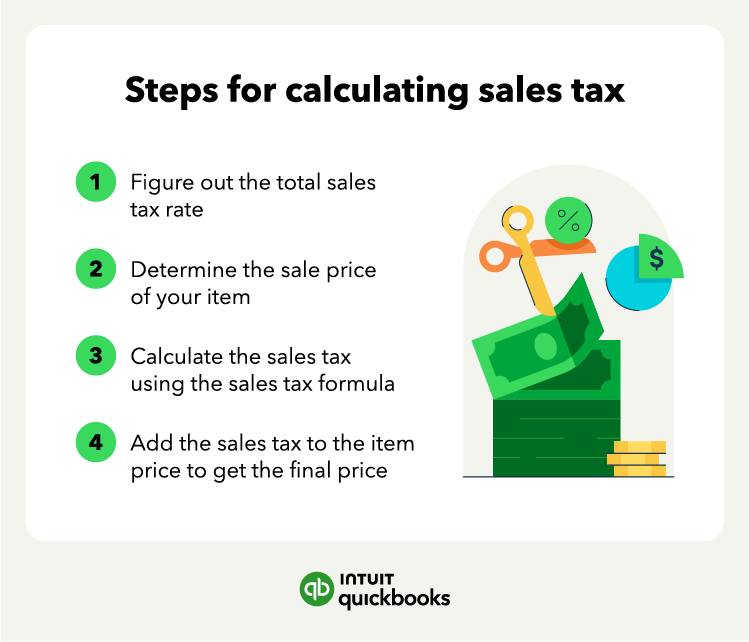
Selling a mix of taxable and exempt items is where receipts get messy. Track the two buckets separately from the start.
Use tax is the buyer's side of the same tax. OTR describes it as a tax imposed at the same rate as the sales tax, 6%. It falls on the purchase or rental of tangible personal property that will be used, stored, or consumed in the District. It applies when the buyer did not pay sales tax to the District or any other taxing jurisdiction at the time of the purchase or rental.
The statute reaches services as well as goods. It taxes the use, storage, or consumption in the District of tangible personal property and services sold or purchased at retail. That holds whether the purchase was made inside or outside the District.
If the purchase was delivered to you in the District, DC use tax is due on everything you use, store, or consume here. If you bought and took delivery outside the District and properly paid that jurisdiction's sales or use tax, the property is generally exempt from DC use tax. More generally, DC's use tax does not apply to a purchase on which you paid a retail sales tax under another state's or territory's law. The same holds if you reimbursed the vendor for that tax. So you generally do not owe DC use tax on top of another state's sales tax.
One DC-specific twist applies if you are a DC resident. If a DC vendor delivers your purchase to you outside the District and you bring it back into DC, you owe use tax on the purchase price.
For a business, this shows up when you order equipment, supplies, or software from a vendor that didn't charge DC tax. Say your Adams Morgan café buys a $3,000 commercial espresso machine from an out-of-state vendor. The invoice shows no DC tax, and the machine is delivered to the shop. You owe $180 in DC use tax, 6% of the $3,000 purchase price. That is the same rate the sales tax would have carried.
There is no local use tax. The District is itself the local jurisdiction, with no counties or municipalities holding independent taxing authority. So there is no local layer on the use tax, any more than on the sales tax.
How you report it. If you hold a DC sales and use tax account, use tax goes on the same FR-800 return you file for sales tax. Its use tax lines take the cost of all personal property and taxable services you used or consumed in DC on which sales tax has not been paid to any state. That includes items you bought under a DC Certificate of Resale and then withdrew from stock for your own or your business's use. You multiply the purchase price by the applicable use tax rate. The use tax exemptions are the same as the sales tax exemptions.
An employer that files DC withholding tax returns, but is not otherwise required to collect sales tax, files an annual use tax return by October 20 each year. It pays the use tax due. Other buyers who owe the tax file a return and pay it. The statute's default is within 20 days after the end of each calendar month.
DC taxes software without the custom-versus-prewritten line most other states draw. Custom, downloaded, and prewritten computer software are all taxable. That holds regardless of whether the software is canned, prepackaged, or customized. DC does not carve out an exemption for custom software the way most other states do. Computer hardware is taxable as ordinary goods. Digital goods means digital audiovisual works, digital audio works, digital books, digital codes, and digital applications and games. It also means other property that would otherwise be taxable when delivered, streamed, or accessed digitally. They are taxable, including maintenance, updates, and support sold as part of the digital good. Internet access service is exempt.
Infrastructure as a Service, Platform as a Service, and Software as a Service are taxable too. They are taxed through DC's data processing services category rather than a software-specific provision. The services list above covers this. Computer software maintenance is separately and consistently taxed under the same rule that taxes computer software generally. A maintenance or service contract for goods is taxable on the full amount. DC does not use the optional-versus-mandatory distinction that some other states apply to maintenance agreements.
DC's sales and use tax return, the FR-800, comes in monthly, quarterly, and annual versions. OTR assigns the one you file:
Register before your first taxable sale. Before making taxable sales in the District, you must register on MyTax.DC.gov using the Combined Registration Application (Form FR-500). There is no charge. List every DC location you will sell from. OTR issues a Certificate of Registration for each one, and each location must display its own.
Your liability sets your frequency, with two exceptions. If your sales and use tax liability is $1,201 or more per period, you file monthly (FR-800M). Marketplace facilitators and remote sellers file monthly regardless of liability. If your liability is $201 to $1,200 per period, you file quarterly (FR-800Q). All other new registrants start on a quarterly basis. If it is $200 or less per period, you file annually (FR-800A). Your account is assigned a frequency, and MyTax.DC.gov selects the correct form when you log in to file.
Everything is due on the 20th. Returns and payments are due by the 20th day of the month following the end of the monthly, quarterly, or annual period. The annual return covers October through September, so an annual filer's return is due October 20. If the due date falls on a Saturday, Sunday, or legal holiday, the return is due the next business day.
File and pay on MyTax.DC.gov. For tax years 2017 and forward, returns must be filed electronically through MyTax.DC.gov. Paper returns are not accepted. Amended and final returns are filed there too. If your payment for a period exceeds $5,000, you must pay electronically.
File every return, including zero returns. You must file a return even if you made no sales or no sales and use tax is due. Otherwise you will receive a delinquency notice. On a zero return, complete the identification section and enter zero on the Total Amount Due line. States penalize missing paperwork, not just missing money.
One return covers sales and use tax, with a line for marketplace sales. The FR-800 starts from your gross sales. It subtracts exempt and resale sales. It also subtracts the sales made through a marketplace facilitator that collected and paid tax on your behalf. It carries separate use tax lines for your own untaxed purchases. There is no local schedule to allocate, because there is no local tax.
Tip: if a rate error slips through, fix the rate first, then correct the affected returns. In DC you amend a filed return on MyTax.DC.gov by opening the period and selecting "View or Amend Return." Undercollect and the difference comes out of your pocket. Overcollect and you owe refunds. Tax you collected as tax is never yours to keep.
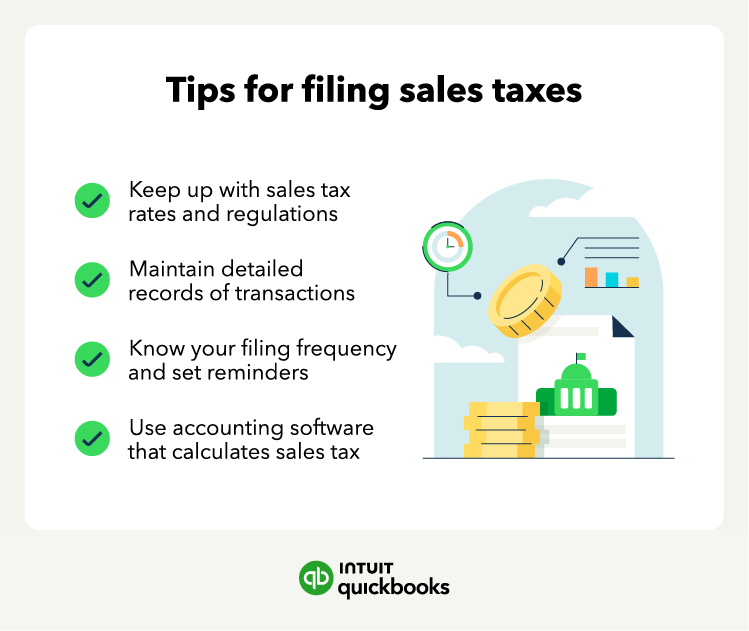
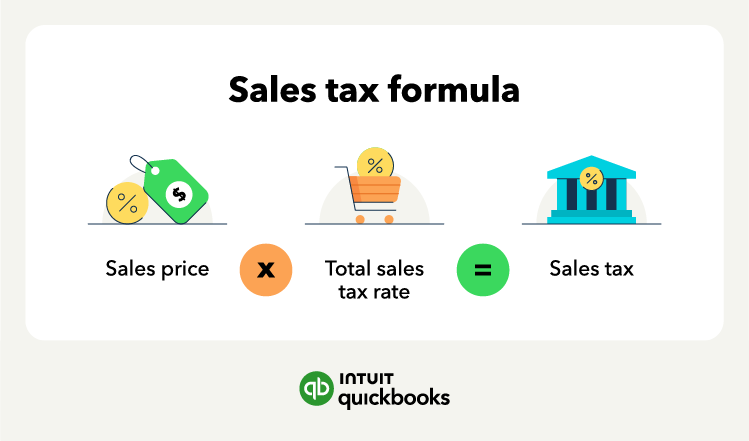
Multiply the pre-tax price by 6%, DC's general sales tax rate. Because there is no local tax, the rate is the same at every DC address. On a $1,200 sale, that's $72 in tax and a $1,272 total.
No. The District of Columbia is itself the local jurisdiction. There are no counties or municipalities within DC with independent taxing authority. So there is no additional local sales tax layered on top of the DC rate. The 6% general rate applies at every DC address. Separate rates apply only for the specific categories the statute names, such as prepared food, soft drinks, alcohol, parking, and lodging.
Only if your service is on DC's list of taxable services. The list includes real property maintenance (janitorial work, pest control, window cleaning, lawn care), landscaping, and repair and alteration of tangible personal property. It includes data processing, which reaches payroll services, computerized bookkeeping, and Software as a Service. It includes information services such as credit reporting.
It includes employment and placement services, along with armored car, private investigation, and security services. It also includes self-storage of household goods, health clubs and tanning studios, laundering and dry cleaning (other than self-service, coin-operated equipment), and linen services. And it includes carpet and upholstery cleaning, car washes (other than coin-operated self-service), bowling alleys and billiard parlors, bottled water delivery for water coolers, and copying and mailing services. OTR's own list of examples is not all-inclusive. Check its Taxable and Non-Taxable Services page and the statute before treating a service as exempt. Barbering and beauty services, pet grooming, general accounting, legal, consulting, engineering, medical, and veterinary services are not taxable.
No. Food and groceries sold for home consumption are exempt. That includes bakery items sold to take home as a grocery store would sell them. Food prepared for immediate consumption is taxable. That generally includes everything sold in or by restaurants, cafeterias, carryout shops, and like places of business. Food or drink sold through a vending machine is taxable. Soft drinks are taxable too. DC's definition generally excludes 100% juice and drinks that are at least 50% milk. Non-carbonated cold drinks become taxable when dispensed in a cup or glass or offered self-serve.
No. DC does not currently hold a sales tax holiday. A prior sales tax holiday statute was repealed. Clothing is taxable every day of the year.
Manage sales tax in QuickBooks with automation that helps you save time and stay compliant.
Save time with automated sales tax
Products are automatically matched to tax categories, so you can charge the right sales tax with less manual work. Returns are automatically prepared and formatted for your state, and if you sell into other states, you can automate multi-state filing from one place.
Stay confident and compliant
File with confidence using accurate, automated calculations. Tax rates and rules change, and they are updated automatically in QuickBooks, so what you charge keeps up. Get reminders before filing deadlines so you can plan ahead, and know your return status with real-time updates.
Your data stays protected
Securely send returns to tax agencies and track every filing in QuickBooks.
Manage your books and sales tax in one place
Automatically calculate, collect, and track applicable sales tax from your customers. One report breaks out taxable and non-taxable sales, so you always know what to pay each agency. Prepare, file, and pay directly from QuickBooks.
Explore QuickBooks sales tax software to spend less time on tax and more time running your business.
*Sales tax filing is available as an add-on service through QuickBooks Online for $40 per filing.
You've got the rates and the rules that apply in District of Columbia. The harder part is applying them correctly on every sale, every quarter. QuickBooks automated sales tax calculates the right combined rate, tracks what you've collected, and shows what you owe when it's time to file.
Call Sales: 1-800-285-4854


