



SALE

Get 50% off QuickBooks for 3 months

See plans and pricing
Choose your... Country Language
What is project-based accounting?
Accounting and bookkeeping

What is project-based accounting?

Not every project delivers the same value to your business. While new work can drive revenue, some projects may require more time, effort and resources than they generate in return. Understanding the true profitability of each project can help businesses make more informed decisions and improve overall performance.

Project accounting is a method of tracking the costs, revenue and profitability of individual projects. By monitoring financial performance on a project-by-project basis, businesses can identify which projects add value, where margins can be improved, and how resources can be allocated more effectively. This guide explores the key principles of project accounting and how it can benefit small and mid-size businesses.


Key Takeaways:

  • Project accounting tracks the costs, revenue and profitability of individual projects, helping businesses make more informed decisions.

  • Creating budgets, tracking costs and monitoring KPIs are essential for effective project accounting and financial control.

  • Project accounting provides greater visibility into project performance, resource allocation and overall business profitability.

  • Common challenges include inaccurate time tracking, cost overruns, resource management issues and fragmented reporting.

  • Accounting software can simplify project accounting by automating tracking, centralising project data and providing real-time financial insights.

What is project accounting?

Project accounting is an accounting practice that tracks costs and financial benefits associated with a project. Project accounting allows businesses to assess the financial implications of completing certain types of projects as well as plan out projects to meet contract parameters. By using project-based accounting, you can determine if the costs—materials, time, special equipment—are worth the outcome or financial benefit it yields.

Project-based accounting can be a valuable tool for effective project management by providing a detailed view of project financials and progress.

Project accounting principles to follow

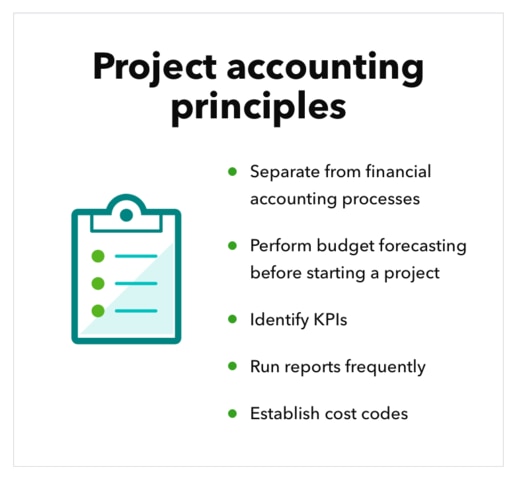
If you’re going to employ project accounting, there are a few overarching principles you should follow:

  • Use a separate accounting system. Project accounting can’t be lumped in with your typical accounting processes—there is much more detail involved.
  • Complete budget forecasting before starting a project. For the most effective use of project accounting, budgeting before starting the project is essential. This will give you a starting point to work from and a basis for measuring progress, identifying red flags, and determining project success and failure.
  • Identify KPIs. Key performance indicators like schedule performance and cost performance can help you ensure that critical aspects of the project are on track.
  • Run reports frequently. Since project accounting is used to track progress and budget, it’s important to run financial reporting frequently to effectively monitor project status and potential issues.
  • Establish cost codes. Using accurate cost codes to identify, track, and compare expenses is essential. Doing so allows you to manage certain types of transactions and more easily perform cost comparison analysis between projects with more ease.

Another important thing to keep in mind when it comes to project-based accounting is that accuracy is key—this includes timesheets and resource allocation.

By abiding by these guidelines, you’ll be able to get the most value out of your project accounting efforts.

Project accounting principles
Grow Your Business With QuickBooks

Project-based accounting benefits 

Making project accounting a standard part of your workflow can help simplify project management by providing greater visibility into costs, budgets and overall project performance.

Here are some of the key benefits to consider if you’re unsure whether your business can benefit from project accounting:

  • Provides important insights to project managers
  • Allows you to establish a reasonable budget for a project
  • Improves resource management
  • Helps you gather valuable insights for making bids on future projects
  • Provides real-time updates on the project’s progress and profitability
  • Allows leadership to identify issues with projects and make quick decisions to get back on track and reduce costs
  • Helps educate project teams on how every factor can impact a project’s cost and profitability
  • Provides the customer with accurate data for billing and keeping tabs on project progress
  • Helps you determine scope and pricing for similar projects by analyzing actual costs versus estimated costs
  • Improves overall financial management of your business

The key takeaway here is that project accounting helps you reduce the risk of project failure by improving overall project management.

Project accounting examples 

Project accounting can be applied across a wide range of industries to help businesses track project costs, monitor budgets and measure profitability. Below are a few examples of how different businesses handle project accounting in practice:

Construction projects: Construction businesses use project accounting to track labour, materials and subcontractor costs for individual projects. This helps monitor budgets, manage costs and measure profitability.

Professional services firms: Accounting firms, consultants and legal practices can use project accounting to track billable hours, project budgets and client profitability. This helps improve resource planning and financial performance.

Marketing and creative agencies: Marketing and creative agencies use project accounting to monitor campaign costs, staff time and project margins. This provides greater visibility into the profitability of client work.

Project accounting challenges 

Project accounting can help businesses better understand project performance, but there are a few common challenges that can make it harder to manage effectively.

  • Inaccurate time tracking: If employees don't record their time consistently, it can be difficult to accurately track labour costs and understand how profitable a project really is.
  • Cost overruns: Unexpected expenses, project delays and changes to project scope can quickly push costs beyond the original budget, affecting profitability.
  • Budget forecasting issues: Without up-to-date project data, businesses may find it challenging to estimate future costs, allocate resources and plan upcoming work.
  • Resource allocation problems: Managing staff, contractors and workloads across multiple projects can be difficult, particularly for growing SMEs with limited resources.
  • Fragmented reporting: When project information is spread across different spreadsheets, tools or systems, it can be difficult to get a complete view of project performance.

Accountants using software like Intuit QuickBooks can help businesses keep project information in one place, track costs more accurately and gain better visibility into project profitability.

How to do project-based accounting 

There are several key steps for successful project accounting:

  • Set up a system to track tasks and project costs. Accounting software can help automate data entry and simplify cost tracking.
  • Create a project budget that outlines expected labour, materials, and other expenses.
  • Track transactions, time, and resources throughout the project to maintain accurate cost records.
  • Review project performance regularly to compare actual costs against the budget and address issues early.

Many small and midsize businesses don't have dedicated project accountants, so project managers are often responsible for project accounting. However, accounting may fall outside their expertise, and managing it manually alongside other responsibilities can be time-consuming and challenging.

Fortunately, accounting tools like project accounting software exist and they can save you a lot of headaches.

Introduce project accounting to your business

Do a better job at containing project costs and avoid common project management errors with project accounting. Empower your business with increased control over projects and their outcomes, to help you achieve your goals and grow your company. With next-level accounting software like QuickBooks Online, project accounting is more streamlined and easier than ever.

This content is for information purposes only and should not be considered legal, accounting or tax advice, or a substitute for obtaining such advice specific to your business. Additional information and exceptions may apply. Applicable laws may vary by state or locality. No assurance is given that the information is comprehensive in its coverage or that it is suitable in dealing with a customer’s particular situation. Intuit Inc. does not have any responsibility for updating or revising any information presented herein. Accordingly, the information provided should not be relied upon as a substitute for independent research. Intuit Inc. does not warrant that the material contained herein will continue to be accurate nor that it is completely free of errors when published. Readers should verify statements before relying on them.