How to create a financial plan
If you’re looking for a good financial plan example, this section will provide detailed instructions on creating your own. Follow this step-by-step guide to start creating a tailored financial plan for your business:
1. Set financial goals
Before you can create a financial plan, you need to decide on the goals you’re working toward:
- Short-term goals might focus on immediate priorities, such as covering monthly operating expenses, building an emergency fund, or hitting your first-year sales target.
- Medium-term goals could include expanding your customer base, opening a second location, or investing in new equipment within three to five years.
- Long-term goals often look further ahead, such as preparing for retirement, planning succession, or building financial reserves to weather market changes.
When setting goals, make them specific and measurable. For instance, instead of saying “grow sales,” try: “Increase revenue by 20% within 12 months by expanding into two new Malaysian markets.” Clear targets like this keep you accountable and allow you to track progress.
A helpful framework is the SMART method, which ensures your goals are well-defined and realistic:
- Specific: Be clear about what you want to achieve.
- Measurable: Use numbers, percentages, or other quantifiable outcomes.
- Achievable: Ensure the goal is realistic based on your resources and market conditions.
- Relevant: Align goals with your overall business strategy and priorities.
- Time-bound: Set a deadline to stay motivated and on track.
2. Assess your balance sheet
A balance sheet is like a financial snapshot of your business at a specific point in time. It summarises what your company owns (assets), what it owes (liabilities), and the equity that remains after debts are settled.
When analysing your balance sheet, consider the following areas:
- Reviewing your assets: Assets are the resources your business owns that have value. These include cash, accounts receivable, inventory, property, equipment, and long-term investments.
- Reviewing your liabilities: Liabilities represent what your business owes. This can include short-term obligations like accounts payable, taxes, and bank overdrafts, as well as long-term commitments such as business loans, bonds, and lease agreements.
- Reviewing your equity: Equity reflects the portion of the business owned outright by you or other stakeholders. It typically includes owner’s capital, retained earnings, and shareholder equity.
- Checking income and expenses: While income and expenses appear more clearly on your profit and loss statement, reviewing them alongside your balance sheet helps connect day-to-day operations with overall financial health. For example, high expenses may reduce retained earnings, which directly impacts equity.
- Checking liquidity: Liquidity ratios reveal whether you can meet short-term obligations. The current ratio (Current Assets ÷ Current Liabilities) and quick ratio ((Current Assets – Inventory) ÷ Current Liabilities) are useful indicators of your ability to cover debts as they come due.
- Assessing long-term stability: Ratios such as the debt-to-equity ratio and interest coverage ratio provide insight into how much leverage your business is carrying and whether you can manage interest payments sustainably.
- Evaluating asset management: Tools like return on assets (ROA) and asset turnover ratio measure how efficiently your business uses its resources to generate income. A higher efficiency often translates into stronger profitability.
- Comparing with industry benchmarks: Comparing your figures against Malaysian industry standards or regional averages helps you spot strengths, weaknesses, and opportunities for improvement.
3. Analyse your break-even point
Your break-even point (BEP) is the stage where your total revenue equals your total costs. This means you’re not making a profit yet, but you’re also not running at a loss. Knowing this number is important because it tells you the minimum sales you need to cover your expenses before you can start earning a profit.
To calculate your BEP, you’ll need to consider a few key factors:
- Fixed costs: These don’t change with sales volume, such as office rent, insurance, or salaries for full-time staff.
- Variable costs: These rise and fall depending on how much you sell. For example, raw materials, packaging, or electricity used in production.
- Sales price: The amount you charge for your product or service. Make sure this takes into account market expectations in Malaysia as well as your competitors’ pricing.
- Sales volume: The number of units sold, or the amount of services delivered, that you need to hit in order to break even.
4. Create a sales forecast
A sales forecast is your estimate of how much revenue your business is likely to generate over a specific period. Creating a realistic sales forecast helps you plan cash flow, set targets, and prepare for growth.
When building your forecast, consider factors such as:
- Historical sales data: If you’re already operating, use past sales records to guide future expectations.
- Market trends: Look at demand in Malaysia for your product or service. For example, shifts toward e-commerce, digital payments, or halal-certified products.
- Industry conditions: Are there seasonal patterns (e.g. Hari Raya or year-end sales) that affect demand in your sector?
- Customer behaviour and demand: Think about how Malaysian consumers prefer to shop, whether online, in-store, or via social platforms.
- Pricing strategy: Ensure your prices are competitive while still covering costs and leaving room for profit.
- Marketing: Factor in the impact of promotions, advertising, and partnerships on sales growth.
- Competition: Keep an eye on what similar businesses in Malaysia are offering, and at what price.
- Economic factors: Consider influences like inflation, exchange rates, or changes in government policies that can affect spending power.
- Production and inventory levels: Make sure your supply can keep up with demand forecasts.
- Sales team performance: If you have a sales team, their targets and productivity will directly affect your forecast.
- New products or market expansion: Account for launches or plans to reach new customer segments.
5. Cash flow projections
Managing your cash flow is one of the most important parts of keeping your business stable and sustainable. Even profitable businesses can run into trouble if they don’t have enough cash available to pay suppliers, employees, or bills on time. Creating cash flow projections helps you anticipate shortfalls and make better financial decisions.
Here are the key steps to follow when building a cash flow projection:
- Start with your opening cash balance: This is the amount of cash your business has at the beginning of the period (usually a month or quarter).
- Estimate cash inflows: Include all expected sources of income, such as sales revenue, government grants, bank loans, or investor funding. In Malaysia, some SMEs also factor in seasonal inflows from festive periods like Hari Raya or Chinese New Year.
- Estimate cash outflows: List your expenses, including rent, salaries, utilities, supplier payments, loan repayments, marketing, and tax obligations such as SST (Sales and Service Tax).
- Track income and expenses closely: You can use accounting software like QuickBooks to record transactions in real time. This helps you spot patterns, identify unnecessary spending, and ensure your projections stay accurate.
- Calculate net cash flow: Subtract your total outflows from your total inflows. A positive cash flow means your business is generating more than it spends, while a negative cash flow signals potential cash shortages.
- Determine your ending cash balance: Add your net cash flow to your opening balance. This figure will become the starting balance for your next period.
It’s also important to adjust for seasonal or irregular changes in your cash flow. For example, retail businesses in Malaysia may see spikes during festive seasons, while quieter months require careful planning to avoid shortages.
6. Create a budget and plan for emergencies
A well-prepared budget acts as your financial roadmap, helping you control spending, set priorities, and stay on track with your business goals. In Malaysia’s competitive and often unpredictable business environment, a solid budget is even more crucial.
When creating your budget, keep these steps in mind:
- Calculate all forms of income: Start with your projected sales revenue and add any other sources of income, such as rental income, government grants, or investor funding.
- Subtract your fixed costs: These are consistent expenses like office rent, salaries, insurance, and internet services.
- Subtract your variable expenses: These change depending on your level of activity, such as raw materials, utilities, delivery costs, or packaging.
- Prepare for emergencies and one-time expenses: Always set aside an emergency fund. A common rule of thumb is to save 3–6 months’ worth of operating expenses to help you weather cash flow shortages.
- Create a profit and loss statement: This provides a clear picture of your overall financial health by showing whether your business is generating profit or running at a loss.
More information can be found in our guide to financial reporting.
7. Plan for taxes
Understanding your tax obligations is a vital part of financial planning for any Malaysian business. How much tax you need to pay depends on factors like your business structure, income, and the type of activities you’re engaged in.
Here are some of the common taxes and obligations Malaysian businesses should be aware of:
- Corporate Income Tax: Companies are required to pay income tax on their chargeable income. The standard corporate tax rate is 24%, but SMEs with paid-up capital of RM2.5 million or less may qualify for a lower rate of 15% on the first RM150,000 of chargeable income, and 17% for the next tier (subject to conditions). Sole proprietors and partnerships, on the other hand, are taxed under personal income tax rates.
- Sales and Service Tax (SST): The Sales Tax (generally 5%–10%) applies to taxable goods manufactured locally or imported, while the Service Tax (6%) applies to certain prescribed services such as hospitality, professional services, and telecommunications. Businesses must register for SST if their taxable turnover exceeds the threshold set by the Royal Malaysian Customs Department.
- Withholding Tax: Payments made to non-residents (such as royalties, technical services, or interest) may be subject to withholding tax, which must be deducted at source and paid to the Inland Revenue Board of Malaysia (LHDN).
- Employee-related Taxes:PCB (Potongan Cukai Bulanan / Monthly Tax Deductions): Employers must withhold monthly tax from employees’ salaries and remit it to LHDN.
- EPF (Employees Provident Fund): Mandatory contributions to employees’ retirement savings (employer minimum 13% or 12%, depending on wages).
- SOCSO (Social Security Organisation) & EIS (Employment Insurance System): Contributions that provide protection for employees against injury, disability, or retrenchment.
- Real Property Gains Tax (RPGT): Applies when selling real property or shares in a real property company.
- Import Duties & Excise Duties: If your business involves importing goods or producing items like alcohol or tobacco, these taxes will apply.
Failure to meet your tax obligations can result in penalties. If you’re unsure about your responsibilities, it’s always best to consult a licensed tax agent or reach out to the Inland Revenue Board of Malaysia (LHDN) for guidance.
You can also learn more here: VAT To SST Changes In Malaysia Guide For Accountants & Bookkeepers.
8. Automate and integrate tools
Financial planning doesn’t have to be time-consuming. By automating tasks and integrating the right tools into your workflow, you can reduce errors and get a clearer picture of your business performance.
QuickBooks is designed to help Malaysian businesses simplify financial management by:
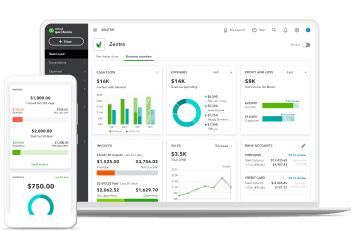
- Generating instant financial reports: View profit and loss statements, balance sheets, and cash flow reports in just a few clicks.
- Tracking overdue invoices: Stay on top of who owes you money and send reminders automatically.
- Creating custom reports: Tailor reports to your business needs—whether by product, customer, project, or location.
- Getting a 360° view of your business: Access real-time insights into sales, expenses, and income trends.
- Collaborating with your accountant or bookkeeper: Share access securely so they can prepare and deliver reports tailored to your goals.
By automating reporting and integrating QuickBooks into your financial planning, you’ll spend less time on paperwork and more time focusing on strategy and growth. It also ensures you always have up-to-date, reliable data at your fingertips.
9. Review and adjust your plan regularly
A financial plan is not something you set once and forget. In Malaysia’s fast-changing business environment, it’s important to review your plan regularly so it reflects real conditions. Factors like inflation, exchange rate movements, government policy changes, or shifts in consumer demand can all affect your numbers.
To stay on track:
- Review monthly: Monitor your cash flow, income, and expenses closely to spot issues early. For example, if costs for raw materials rise, you may need to adjust pricing or sales targets.
- Review quarterly: Compare your actual performance against forecasts and budgets. This is a good time to refine strategies, adjust marketing efforts, or reassess investment decisions.
- Review annually: Step back and look at the bigger picture—are you meeting your long-term goals? Do you need to expand, diversify, or cut back in certain areas?
By monitoring your plan regularly and making updates where needed, you’ll keep your business agile and better prepared to handle challenges.
10. Remain open to new opportunities
Financial planning isn’t just about protecting your business from risks—it’s also about preparing for growth. By keeping an open mind and regularly reviewing your financial position, you can spot opportunities to expand, diversify, or invest in new markets.
In Malaysia’s dynamic economy, opportunities may come in many forms:
- Exploring new customer segments—such as targeting younger, digital-first buyers.
- Expanding into regional or international markets, especially with strong trade links across ASEAN.
- Investing in new technology or tools that boost efficiency and profitability.
- Building partnerships or collaborations that give you access to new resources and clients.
The key is to build on your financial prospects gradually over time. A healthy financial plan gives you the confidence to take calculated risks and pursue opportunities when they arise.