SALE

Get 50% off QuickBooks for 3 months

See plans and pricing
QuickBooks Blog
Need help choosing a plan?
Created with Sketch. 1800 917 771 Schedule a call
Need help?
We're here for you.
Schedule call
Created with Sketch.
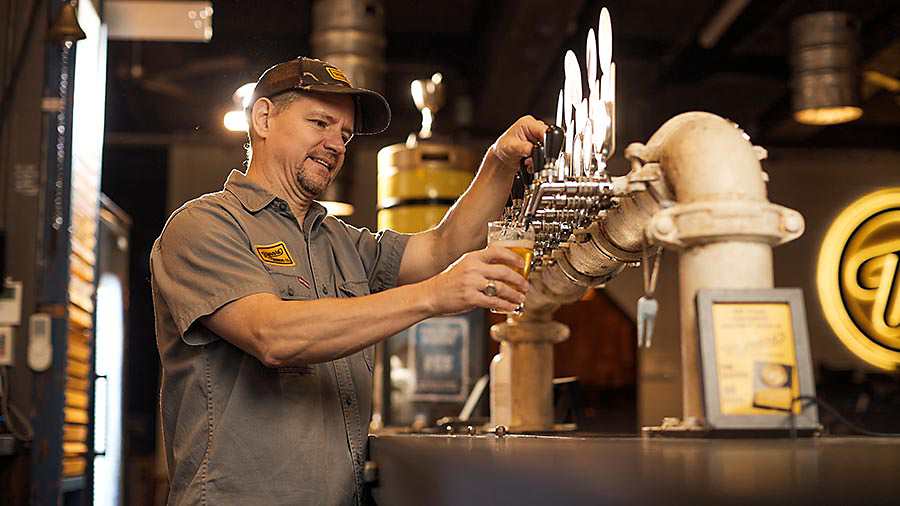
Peter Philip from Wayward Brewing pouring a pint after using QuickBooks Complete Guide to Hospitality Award Rates
Payroll

Hospitality Award Rates: The Complete Guide

The Hospitality Industry (General) Award 2020 (MA000009), commonly known as HIGA, was updated following the Fair Work Commission’s 2025 Annual Wage Review. The current pay rates apply from the first full pay period on or after 1 July 2025.

If you run a hotel, pub, bar, or accommodation business, it’s essential to make sure your team is paid correctly under the latest rates.

This guide explains everything you need to know about Hospitality Award rates, classifications, penalty rates, and compliance requirements for 2025/26.

What are industry awards?

Industry awards are legally binding documents created under Australia’s national workplace relations system. Modern awards were introduced as part of the Fair Work reforms to simplify and standardise thousands of older state and federal awards into a clearer national framework.

Each award sets the minimum pay rates and employment conditions for a specific industry or occupation. This includes:

  • Base hourly rates
  • Penalty rates
  • Overtime
  • Allowances
  • Classifications
  • Rostering rules
  • Other working conditions

Awards apply to a broad range of professions and workers within an industry, from entry level employees through to supervisors and certain managerial roles.

The Hospitality Industry (General) Award 2020 (MA000009) is the award that covers many hotels, pubs, bars, and accommodation businesses across Australia. Pay rates are typically reviewed each year following the Fair Work Commission’s Annual Wage Review, with updates usually taking effect from the first full pay period on or after 1 July.

Who does Hospitality Award cover?

Hospitality Award pay rates apply to many employers operating in the hospitality sector and the employees who work for them. Coverage depends on the primary nature of the business and the duties performed by the employee, not just the job title.

These are the businesses that are commonly covered:

Business type

Examples

Accommodation

Hotels, motels, resorts, serviced apartments

Licensed venues

Pubs, taverns, bars, wine bars

Event & catering

Catering companies, function centres

Gaming & casinos

Casinos and hospitality venues with gaming operations

Roles commonly covered by the Hospitality Award include:

Category

Typical job titles

Front of house

Food & beverage attendant, waiter, bartender, barista, front office/reception, guest services

Housekeeping & guest services

Housekeeper, concierge, doorperson

Back of house

Cook, chef, kitchen attendant, dishwasher, storeperson

Gaming

Gaming attendant, table games employee

Support roles

Clerical staff, reservations staff, security officers employed directly by the venue

The Hospitality Award may not apply if:

  • The business is primarily a café or restaurant, which may fall under the Restaurant Industry Award.
  • The business operates as fast food, which may fall under the Fast Food Industry Award.
  • The employee is a very senior manager or executive whose role is clearly above Award coverage.

If you are unsure, check the Fair Work Commission website or use Fair Work’s Pay and Conditions Tool (PACT) to confirm Award coverage before applying Hospitality classifications or rates.

Who doesn’t the award cover? 

The Hospitality Industry (General) Award 2020 (MA000009) does not apply if a business or employee is covered by a different modern award or workplace agreement.

You may not be covered by the Hospitality Award if the business falls under:

Award

Typically covers

Restaurant Industry Award

Standalone cafés and restaurants where food service is the primary business activity

Fast Food Industry Award

Fast food chains and quick service outlets with limited table service

Registered and Licensed Clubs Award

RSLs, sporting clubs and other registered clubs

General Retail Industry Award

Retail businesses where hospitality is secondary, such as supermarkets with in-store cafés

The correct award depends on the primary purpose of the business and the actual duties performed by the employee, not just the venue name or how the role is described.

The Hospitality Award may also not apply where:

  • An employee is covered by a registered enterprise agreement.
  • The worker is a very senior executive or high level managerial employee whose duties are clearly above award classifications.
  • The role falls under a different occupational award, such as certain security or cleaning awards where staff are employed by an external contractor.

If you are unsure which award applies, review the award coverage clauses on the Fair Work website or use the Pay and Conditions Tool (PACT) to confirm before applying pay rates.

Hospitality Award rates in 2026 

Below are the current minimum pay rates under the Hospitality Award for full-time, part-time, and casual employees. Rates vary by classification level, including the commonly searched level 3 hospitality award rate.

Type of employment

Hours of work

Minimum weekly or hourly rate

Full-time

Average of 38 ordinary hours per week

Level 1: $24.10/hr

Level 3 hospitality award rate: $26.10/hr

Part-time

Less than 38 hours per week on a regular pattern

Level 1: $24.10/hr

Level 3 hospitality award rate: $26.10/hr

Casual

Irregular hours with no guaranteed ongoing work. Includes 25% casual loading

Level 1: $31.19/hr

Level 3 hospitality award rate: $33.38/hr

Junior

Under 20 years old. Percentage of adult rate based on age

Example: 17-year-old Level 1 full-time: $14.97/hr

17-year-old Level 1 casual: $18.71/hr

Hospitality pay rate example 

Under the current Hospitality Award pay guide, minimum rates are set by classification level and employment type. Pay increases are no longer calculated as a flat dollar uplift. Instead, updated base rates apply from the first full pay period on or after 1 July 2025.

Here’s a simple example using 2026 rates:

Example: Level 1 Food and Beverage Attendant (adult)

  • Base rate (full-time or part-time): $24.10 per hour
  • Casual rate (includes 25% loading): $31.19 per hour

If this employee works:

  • Saturday (1.25x): $30.13 per hour
  • Sunday (1.5x): $36.15 per hour
  • Public holiday (2.25x): $54.23 per hour
  • Overtime – first 2 hours (1.5x): $36.15 per hour
  • Overtime – after 2 hours (2x): $48.20 per hour

What changes the rate?

An employee’s pay depends on:

  • Their classification level (Level 1 to Level 6, casino streams, supervisory roles)
  • Whether they are full-time, part-time or casual employees
  • When they work (weekends, evenings, public holidays, overtime)
  • Any applicable allowances

For example, a Level 3 hospitality employee has a higher base rate of $26.10 per hour, and all penalties are calculated from that higher amount.

Grow Your Business with QuickBooks

Changes to know for Hospitality Awards 

Each year, the Fair Work Commission reviews and updates minimum pay rates across the hospitality industry. If you employ staff under MA000009, staying across these updates is essential to ensure you are paying the correct Hospitality Award wage.

Here are the key changes and ongoing requirements to be aware of:

1. Annual minimum wage updates

  • Award rates are typically reviewed each July following the Annual Wage Review.
  • New base rates apply from the first full pay period on or after 1 July 2025.
  • Penalty rates, overtime and allowances are calculated from the updated base rate.

If base rates increase, this automatically affects:

  • Weekend and public holiday penalties
  • Overtime payments
  • Allowances calculated as a percentage of the base rate

2. Penalty rates still apply

Hospitality employees must be paid higher rates when working:

  • Evenings and late nights
  • Weekends
  • Public holidays
  • Overtime hours

Penalty rates range from 1.15x to 2.25x of the employee’s base hourly rate, depending on when the work is performed.

3. Superannuation obligations

Superannuation rules also affect payroll costs in the hospitality industry.

  • The Super Guarantee (SG) rate is now 12%.
  • Employers must pay super on eligible earnings regardless of how much the employee earns.
  • The former $450 per month minimum earnings threshold has been removed.

Super is calculated as a percentage of ordinary time earnings and must be paid at least quarterly.

Track payroll changes with Intuit QuickBooks

For mid-sized businesses in the hospitality industry, managing award updates, penalty rates, and super changes across multiple teams can be risky if handled manually. QuickBooks Online Advanced reduces payroll errors with tools designed to support growing businesses.

With our business tools, you can:

  • Automate payroll calculations so you don’t have to manually work out how to calculate payroll each time award rates change
  • Apply current Hospitality Award wage settings, including penalty rates and superannuation
  • Track employee hours using an integrated timesheet calculator
  • Manage cash flow and customer billing with built-in invoicing tools
  • Estimate tax obligations using an income tax calculator
  • Generate payroll and compliance reports to support ATO requirements

Discover how QuickBooks Online Advanced can keep your hospitality business compliant while freeing up time to focus on growth. Take a look at our pricing plans or try our service for a free 30-day trial. 

Hospitality Award FAQs


Related Articles

A computer screen showing a picture of a computer.

TAKE A NO-COMMITMENT TEST DRIVE

Your free 30-day trial awaits

Our customers save an average of 9 hours per week with QuickBooks invoicing*

No credit card needed

Cancel anytime

Unlimited support

By entering your email, you are agree to our Terms and acknowledge our Privacy Statement.