








Let’s not sugar coat. There’s a lot of SEO competition out there with some high-ranking players on the Google search results page. If you own a small business, a technical SEO strategy will be crucial for your online presence and website traffic.
As a small business owner, you may feel overwhelmed with all the SEO strategies you can implement onto your site to increase the amount of potential customers. So when it comes to your SEO efforts, it is a good idea to break down all the different types, making the information easier to digest.
Here is what you need to know when it comes to technical SEO for small businesses, including how to make your business website do better with organic search traffic as well as create a better visitor experience.
What is Technical SEO?
Technical SEO is the process of arranging a website to meet the requirements of search engines with the goal of enhanced organic rankings. Making a website faster, easier to crawl and understandable for search engines are the pillars of technical optimization.
Technical SEO is part of on-page SEO, which focuses on improving elements on your website to get higher rankings. It’s the opposite of off-page SEO, which generates exposure for a website through other channels. Therefore, a small business SEO strategy focused on technical optimization is a must.
Why is Technical SEO Important?
The goal for search engines is to give their users the most relevant and high-quality results. To do this, search engines, like Google, crawl and evaluate website pages for many different factors. Some factors are based on the user’s experience, like how fast a page loads, or local search results closest to the user. Other factors help search engines understand what your page is about.
Essentially, technical SEO for small businesses is important because it allows you to stay competitive within your industry. So when users are doing their queries, your site ends up at the top of the search results page. Technical SEO is also important for improving the user experience and making your website more user-friendly (for the human). It ensures your website is fast, clear, and easy to navigate.
Technical search engine optimization is especially crucial for e-commerce sites. Ecommerce is often perceived to be dominated by sites like Amazon and Walmart. However, with the right technical SEO techniques, small e-commerce websites can also get their fair share of customers.
How to Improve Your Business Site’s Technical SEO
Using keywords, internal links, external links, long-tail keywords, and link building are all best practices in terms of coming up as part of the organic search results. While these methods will help with your SEO efforts, there is still so much more left to do.
The architecture for your website is a big factor for SEO. This involves the way your site is actually constructed, meaning it needs to be organized logically. If your site only has a minimum amount of pages it won’t really make a difference, but if you have an e-commerce site with many pages you need to make sure it’s as easy as possible to navigate. Let’s take a deeper look into the different factors of technical SEO.
Site map
Sitemaps are crucial for SEO. A sitemap is a blueprint of your website that allows the engines to find, crawl and index all of your content. Sitemaps tell Google which pages on your site are most important, when the page was last updated, and how frequently the page is changing.
They also help search engines discover new pages — even when they are not linked from the main site.
There are four main types of sitemaps:
- Normal XML Sitemap: It’s usually in the form of an XML sitemap that links to different pages on your website.
- Video Sitemap: Used to help Google understand video content on your page.
- News Sitemap: Let’s Google find content on sites that are approved for Google News.
- Image Sitemap: Helps Google find the images on your site.
Google mostly finds website pages through links. So if you have a newer site without many external backlinks, then a sitemap will be a big help if you want Google to find pages on your site.
URL
When you see a URL with a bunch of random letters and numbers that don’t tell you anything – that’s the kind of URL you might want to avoid because it is not good for any type of SEO. The best is to have a URL that is easy to read and gives the user a clear understanding of what the page is about when you want to successfully link to your site.
Here are examples of the various formulas:
Category pages:
yourwebsite.com/category-name (category page)
Subcategory pages:
yourwebsite.com/category-name/subcategory-name
Sub-subcategory pages:
yourwebsite.com/category-name/subcategory-name/subcategory-name
Product pages:
yourwebsite.com/category-name/subcategory-name/subcategory-name/product
Meta tags
Metadata means data about data. In reference to websites, a meta tag gives information about a site and directly influences how the search engines view it. It is important to have structured data as most meta tag elements are for the benefit of search engines, like Googlebot and other web crawlers.
They are also used to rank content or pages. Title tags and meta descriptions are displayed on the SERP. Here is a list of the different meta tags:
- Meta title: These tell the engine the title you want to be displayed on the SERP. It can be a simplified phrase of the headline that appears on the webpage. Including a meta title tag for your web pages makes it easier for the engine crawlers to read, classify, and rank your content.
- Meta description: A meta description summarizes the content of the webpage for search engine crawlers and internet users. It appears below the title tag on the search engine results page.
- Robot meta tags: Robot tags are specifications placed in an HTML tag that provide search engine instructions on whether you’d like them to crawl or index parts of your website or not.
- Viewport meta tag: These tags show how the user views different areas of your webpage. These viewports can change depending on what people are using to view your content, like mobile or laptop. Web developers use it to address a content’s size and scale, which allows for mobile-friendly websites. The viewport meta tag is used to guide the browser to display a webpage on different screen sizes, such as desktop, tablet, or mobile.
To ensure the proper optimization of metadata, some keyword research is needed. Using the right keywords in your content, as well as technical specifications, can help boost your small business’s visibility online. Therefore, small business SEO – both technical and on-page – should focus on keyword research to ensure the most relevant metadata.
Redirects
If a page is ever deleted from a website, or when it changes domain names, the visitor and engine will be redirected to a new location or to an error page if there has not be an established redirect. Redirects are important for the human user and search engine because no one wants to end up on a page that no longer exists. There are various reasons why someone would use a redirect and different methods on how to redirect properly.
As a small business trying to do it’s best for SEO, you want to make sure you are redirecting people correctly. Improper redirecting can lead to unhappy or frustrated customers and lower engine rankings.
Load times
Ensuring your pages load quickly is one of the main factors in technical search engine optimization. If a user is waiting too long for a page to load, they will most likely become impatient and go to the next site that loads faster. A study conducted by Geoff Kenyon can give you a sense of how fast your site should be loading.
- If your site loads in 5 seconds, it is faster than approximately 25% of the web.
- If your site loads in 2.9 seconds, it is faster than approximately 50% of the web.
- If your site loads in 1.7 seconds, it is faster than approximately 75% of the web.
- If your site loads in 0.8 seconds, it is faster than approximately 94% of the web.
Responsive web design
“Time spent on a page” is one of Google’s indicators if a site is giving valuable information to queries. Responsive web design will make your website easier for people to read and navigate your site, therefore increasing the time they spend on it.
Responsive web design helps optimize websites for mobile search, improving your site’s functionality and design by scaling the content to users’ devices, thus providing a consistent experience across all devices.
Google will promote websites that are implementing a good user experience, using the metrics of content, design and functionality as baselines of judgment. If your site is not optimized based on these factors, you will lose ranking and as a result, lose traffic on your website. Therefore, a loss in track is a drop in sales.
Everyone is on their phones, so having a clunky website on a mobile device will make you miss out on valuable opportunities to attract customers.
How to Conduct A Technical SEO Audit
A technical SEO audit is a way of evaluating your website to see how well it’s doing. It’s also a great way to identify opportunities for improving and optimizing your website. To make things easier for you we put together a checklist of SEO tips to help you complete the audit.
1) Crawl your website
The first thing you need to do for your SEO audit is crawl your website. If you’re new to this, you can check out some tutorials to help you use the necessary SEO tools. An SEO crawler, like Ahrefs, will search through the site in the same way that Google does and provide useful information on the structure and current SEO setup. Crawling is useful for identifying problems like duplicate content, low word count, unlinked pagination pages, and excess redirects.
2) Check your site’s ranking
Knowing how you compare to your competitors is an important advantage that will aid in your SEO success. Knowing how your competition is performing on the same playing field as yourself will allow you to make decisions that will let you stand out from them.
To see how you rank with your chosen keywords, check out position tracking.
If you run your domain through a Domain Overview tool, you can get a visual on a competitive positioning map that will give you an understanding of who your competitors are.
3) Checking for doubles
Check for duplicate versions of your site on Google’s index.
Your site could sit on:
- http://www.domain.com
- http://domain.com
- https://www.domain.com
There probably won’t be a difference for your user except for the fact that they will see “this site is not secured.” But the search engine will flag this as a problem.
4) Checking indexed URLs
This is a fairly simple step, and you can do this by using Google Search Console. If you have a simple lead generation page, check for how many pages and posts you published in your CMS? If you run an e-commerce store, how many products have you listed? This is a simple check – is the number of indexed results what you were expecting? If not, this could be a sign of duplicates or thin content pages.
5) Manual actions
These are like flags that Google gives out to inform you that you are not in compliance with Google’s Webmaster Quality Guidelines. This means your site will drop in ranking, and you won’t be able to rank as highly as you previously were until the action is revoked. This action can be at page-level or sitewide. In a worst-case scenario, your entire website will be deindexed, and you won’t be able to rank for your brand name.
6) Checking speed
Making sure your site is up to speed is important for site users and technical SEO standards. In 2018 Google announced that speed rate will be an SEO ranking factor. Flash forward to 2021, Google announced they will have a Page Experience Update. It outlines that UX will be more heavily weighted in SEO success. Meaning speed will be extremely important.
7) HTTPS
Your site should be using HTTPS. You can check this by heading to “https://www.domain.com” in your browser. HTTPS has been a ranking signal since 2014, and if your site still runs on HTTP, you need to implement an SSL certificate.
8) Is your site mobile-Friendly?
Most sites are now either responsive or use dedicated mobile-optimized versions, but this does not mean problems don’t occur.
In addition, it has now been confirmed that mobile-friendliness is going to be a part of Google’s 2021’s Page Experience update. For an in-depth look into making sure your site is mobile-friendly, check out Semrush.
9) Core web vitals
“Today, we’re building on this work and providing an early look at an upcoming Search ranking change that incorporates these page experience metrics. We will introduce a new signal that combines Core Web Vitals with our existing signals for page experience to provide a holistic picture of the quality of a user’s experience on a web page.”
— Google Webmaster Central Blog
What are these core web vitals that Google is talking about? They were launched by Google to give guidance for quality signals that are crucial for providing an exceptional visitor experience and they will eventually become ranking factors.
10) Audit your on-page SEO
Conducting an on-page audit of your site will improve all different types of SEO. The steps you can take include actions like:
- Optimizing title tags, metadata, and H tags
- Image alt tags
- Creating optimized content
- Internal linking
11) Check your redirects and fix broken links
One way to ensure a negative user experience is by having links on your site that have no purpose. It makes the site look unprofessional, and beyond that, it makes the search engine recognize your site as low quality. So make sure you implement redirects and ensure they are working correctly.
If redirects are implemented incorrectly, this can cause crawl issues, with common examples of improper redirect usage being redirect chains and loops.
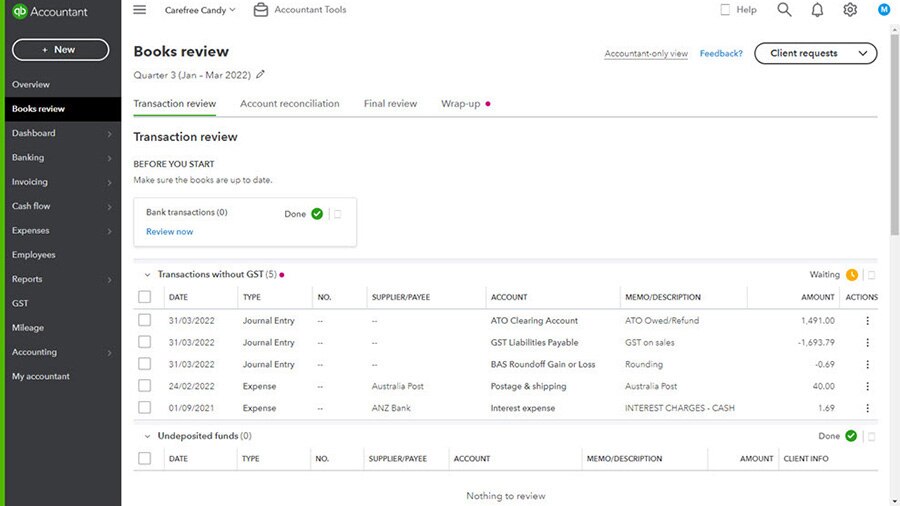
With your new SEO tactics, you’ll start seeing an increase in traffic to your website – due to higher rankings and better visitor experience – the outcome can only mean more sales and revenue. Therefore, make sure you stay on track with your business’s cash flow, and gain insights with financial reporting when you use QuickBooks Online.
Try QuickBooks Online today and unify your digital marketing strategy with your finances to get the most out of your online presence.