QuickBooks Blog
Need help choosing a plan?
Created with Sketch. 1800 917 771 Schedule a call
Need help?
We're here for you.
Schedule call
Created with Sketch.
Image Alt Text
taxes

Guide to Tax Deductions for Restaurant Owners in Australia

Running a restaurant in Australia means juggling lots of financial responsibilitiesβ€”from daily operations to handling your taxes. Understanding tax deductions for restaurant owners can put more money back in your pocket and help your business succeed.Β 

In this article, we’ll explore what you can claim as a tax deduction for restaurant workers, and why it matters. With the right knowledge and tax software, you can stay compliant while keeping more of your hard-earned money.

Why tax deductions are important for restaurant businesses

Getting your taxes right matters for any hospitality business.

Deductions reduce your taxable income. That means you could pay less taxβ€”and have more money to reinvest in your business. In a fast-paced industry with tight profit margins, this can make a real difference.

Knowing the possible tax deductions for restaurant owners in Australia means that you can claim everything you’re entitled toβ€”without crossing any lines. From staff wages to kitchen equipment, every eligible deduction counts.

Want to go on a deep dive? The ATO website has detailed info on what business owners can claim.

Common tax deductions for restaurant owners in Australia


Whether you’re claiming tax deductions for chefs and hospitality workers or managing finances for an entire venue, there are a range of expenses you can claim to reduce your taxable income. Here are the most common ones:Β 


Food and beverage purchases

If you buy it to serve or sell, it’s usually deductible. This includes:

  • Ingredients and raw materials: Think meat, seafood, fruit, vegetables, sauces, herbs, and pantry staples – anything that goes into making your menu.


  • Beverages: Alcoholic drinks, soft drinks, and even bottled water sold to customers.


  • Disposable Items: Those takeaway containers and straws add up! Don't forget to claim these as essential service items.

These are all common tax deductions for restaurant owners.


Staffing and wages

Your team is the heart of your restaurantβ€”and staff costs are generally tax-deductible. This includes wages for everyone from your head chef to your dishwasher.

You can also claim:

  • Super contributions
  • Workers' comp insurance
  • Payroll tax
  • Staff uniforms

If you're levelling-up your employees skills, tax deductions for hospitality staff development are available tooβ€”think advanced cooking technique workshops or restaurant management courses.


Rent and utilities

The money you pay to lease your restaurant space is 100% deductible. This includes your base rent and any additional charges in your lease agreement.

Your utility bills are also fully deductible, including:

  • Electricity
  • Gas
  • Water
  • Internet
  • Phone services


Vehicle and transport costs

Do you use vehicles for deliveries or picking up supplies? These costs are deductible. You can claim fuel, insurance, registration, repairs and depreciationβ€”just make sure you track business versus personal use.

For many restaurants, especially those offering delivery, these tax deductions for restaurant owners can add up to significant savings.


Equipment and depreciation

Big investments in kitchen gear and dining room furniture don't have to hurt quite so much, thanks to depreciation deductions. Even better newsβ€”under the current ATO rules, if the asset costs less than $20,000, you may be able to deduct the full amount right away using the instant asset write-off.

  • Kitchen equipment: Your commercial ovens, fridges and dishwashers can be depreciated over time.


  • Furniture and fixtures: Tables and dΓ©cor items that create your restaurant's atmosphere can be depreciated too.


  • Point of sale systems: Your POS system and computers qualify for deductions.


  • Small tools: Kitchen utensils and tools costing less than $300 can usually be deducted immediately.


Advertising and marketing costs

Getting the word out about your restaurant is essential, and most promotional expenses are deductible:

  • Digital marketing: Your website and social media ads are tax deductible. So are your online booking systems and email campaigns. In today's world, these digital tools are how many customers find you.


  • Traditional advertising: Print ads and signage still work well for many restaurants and are fully deductible.


  • Promotions and events: Special events and promotional offers designed to bring in customers count as business expenses you can claim.


Training and education expenses

Keeping your skills sharp and your staff well-trained is not just good businessβ€”it's tax-deductible, too. Courses for food handling and alcohol service can be claimed. So can education for upskilling your staff in cooking techniques or management skills.

Industry conferences and workshops also qualify. For your kitchen team, tax deductions for chefs and hospitality workers can help offset the cost of staying at the top of their game.




Grow Your Business with QuickBooks

Additional deductible business expenses

Beyond your core operational costs, restaurant businesses can claim several other significant tax deductions. Here’s what you shouldn’t overlook:


Interest on loans

Interest paid on business loans is fully tax-deductible for restaurant owners. Credit card interest is also deductible when the card is used exclusively for business purposes.

For many restaurant owners, financing is essential for growth, and these deductions help offset the cost of borrowing.


Professional fees

Professional services are necessary for running a successful restaurant business and these fees are typically deductible:

  • Accounting services: Fees paid to accountants for tax preparation and bookkeeping are fully deductibleβ€”and so is the cost of financial advice and BAS preparation.


  • Legal expenses: Ongoing legal fees related to day-to-day operations are generally deductible.


  • Consulting services: You can claim a deduction on payments to restaurant consultants such as menu developers or interior designers. These specialised services can improve your operations while providing tax benefits.


Insurance premiums

Insurance is vital for protecting your restaurant business, and premiums are generally tax-deductible. This includes coverage for:

  • Public liability
  • Property insurance for your premises and equipment
  • Business interruption insurance
  • Workers' compensation

Food spoilage insurance, which is specific to the restaurant industry, is also deductible. Maintaining adequate insurance coverage protects your business from unexpected events while providing tax benefits through premium deductions.


Repairs and maintenance

Keeping your restaurant in good working order requires ongoing maintenance, and these costs are tax-deductible. Repairs to kitchen equipment or the building structure are considered business expenses when they maintain rather than improve the asset.

Regular maintenance such as cleaning hood systems or servicing refrigeration equipment can be claimed immediatelyβ€”but it’s important to distinguish between repairs (deductible immediately) and improvements (which may need to be depreciated over time).

Record-keeping requirements for tax deductions

Keeping good records is key to claiming tax deductions for restaurant owners. The ATO asks businesses to hold onto their records for five years after lodging a tax return, so it’s important to stay organised. Here’s what you’ll need:

  • Receipts and invoices: Proof of purchases like ingredients or equipment.


  • Bank statements: Records of business transactions and payments.


  • Employee payment records: Wages, super and payroll details.


  • Motor vehicle logbooks: If you’re claiming car expenses for business use.


  • Asset purchase documents: For larger items like ovens or furniture.


  • Inventory tracking: Systems that you use to record food and beverage stock.


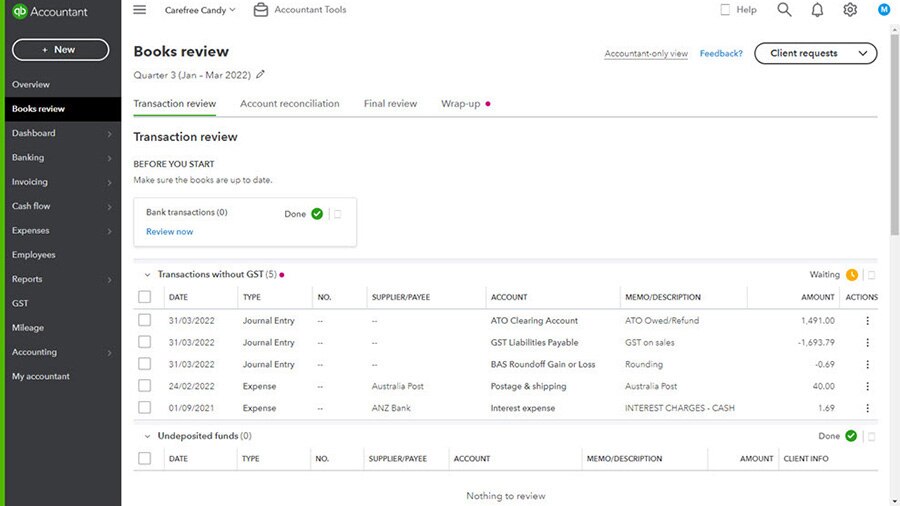
Using accounting software like QuickBooks can help keep everything in one place. It makes it easier to stay ATO-compliant by tracking your expenses and managing your business records.

Special tax considerations for restaurant owners

Restaurant businesses have some unique tax rules. It’s important for owners to understand them so they can claim the right deductions and stay compliant with the ATO. Here’s what you need to know:


GST and BAS

As a food service business, GST can get tricky. Some food items are GST-free, while others are taxable. Meals eaten in the restaurant usually include GST, but some takeaway foods might be exempt.

When it’s time to lodge your Business Activity Statement (BAS), you’ll need to report the GST you’ve collected and the GST you’ve paid on business purchases. Getting the categories right helps you claim all the GST credits you’re entitled to, and ensures you’re reporting correctly to the ATO.


ATO audits and risk management

Because restaurants often deal with a lot of cash, they can face extra attention from the ATO. Using a proper point-of-sale (POS) system that tracks all sales can create a clear audit trail and protect your business during reviews.

Keeping good records and making sure your purchases match up with your sales is also important. The ATO compares businesses to industry benchmarks, so knowing how your restaurant stacks up can help you spot and avoid potential audit red flags.

Common tax mistakes restaurant owners should avoid

Even experienced restaurant operators can slip up when it comes to tax time. Here are some common tax deduction mistakes to watch out for:

  • Claiming personal expenses: It might be tempting to claim personal meals as business costs, but the ATO makes a clear distinction. Only meals tied to business discussions, meetings or staff training are deductible.


  • Overlooking small deductions: It’s easy to focus on the big-ticket items and forget the little things. Subscriptions and small kitchen tools are valid tax deductions for chefs and hospitality staff that can add up over time.


  • Poor record-keeping: Without solid records, claiming deductions becomes a headache. It also puts you at risk during ATO reviews. Good documentation is key to staying compliant.


  • Misunderstanding depreciation: Rules about depreciation can get tricky. Using the wrong rates or misclassifying assets can lead to errors and missed tax deductions for restaurant owners.

Understanding these and more of the most common tax deduction mistakes can save you money and prevent compliance issues down the road.

How to maximise your tax deductions

A little planning goes a long way when it comes to tax deductions for restaurant managers and owners:

  • Keep business and personal expenses separate:Β This makes tracking deductible costs much clearer. Consider setting up digital expense tracking to capture every potential deduction.


  • Meet with your accountant regularly:Β Don’t wait until tax time. Regular check-ins can help you plan big purchases and stay on top of tax rules for restaurants.


  • Find the right tools: Restaurant accounting software like QuickBooks can automatically track expenses and generate reports for tax time. It makes it easy to claim all legitimate tax deductions for hospitality staff and owners while staying compliant.


  • Focus on good record-keeping: The better your records, the easier it is to reduce your tax bill and avoid headaches. Less admin time means more time to focus on your customers.

With a solid understanding of deductions, you can significantly reduce your tax bill. This gives you more time and money to focus on what you do bestβ€”creating great dining experiences for your customers.

Ready to streamline your finances and maximise your deductions? Try QuickBooks and take the stress out of tax season.


Related Articles

Looking for something else?

Get QuickBooks

Smart features made for your business. We've got you covered.

Help Me Choose

Use our product selector to find the best accounting plan for you.

QuickBooks Support

Get help with QuickBooks. Find articles, video tutorials, and more.

A computer screen showing a picture of a computer.

TAKE A NO-COMMITMENT TEST DRIVE

Your free 30-day trial awaits

Our customers save an average of 9 hours per week with QuickBooks invoicing*

No credit card needed

Cancel anytime

Unlimited support

By entering your email, you are agree to our Terms and acknowledge our Privacy Statement.