

Ecommerce
Guide to the SaaS Sales Process
Simple, smart accounting software - no commitment, cancel anytime


GROWING YOUR BUSINESS


You’ve got the big idea down and you know who you’re selling to – but choosing the right type of business structure is equally as important. Plus, as the business landscape becomes increasingly competitive, choosing the correct framework to build your initial foundations upon can help create the perfect launchpad.
Read on to explore the different business structure types, and how the right one will help define your personal liability, tax frameworks, and administrative burdens.
Depending on the type of business you run, you’ll need to choose between unincorporated structures (sole traders, general partnerships) and incorporated entities (limited companies, limited liability partnerships).
Different legal business structure types determine how you submit your taxes to HMRC. For example, sole traders pay Income Tax and NICs on net profits via Self Assessment. Meanwhile, limited companies pay Corporation Tax on profits and distribute funds via dividends or payroll.
Businesses can start with a simple sole trader structure and move to a limited company as they grow, using cloud accounting software to keep records compliant at every stage.
Before you choose the type of business structure you think works best for you, it’s a good idea to explore all your options. Whether you’re working alone or with partners, there are a few business structure types to consider.
In a nutshell: The simplest way to start a business.
Best for: Freelancers, consultants, and independent contractors.
By default, you’ll initially operate as a sole trader unless you register as another business structure with Companies House. As an unregistered sole trader, you and your business are not legally separate. This means that your personal assets are exposed to business debts, and you’ll take personal liability for them.
You’ll report your profits to HMRC on your annual Self Assessment tax return, which is how you’ll pay Income Tax and National Insurance Contributions.
Learn more about accounting software for sole traders
In a nutshell: Shared ownership and management without forming a company.
Best for: Small businesses with co-founders, law practices, and trade partnerships.
Partnerships allow two or more people to share ownership of a business, which includes decision-making and profits. Similar to operating as a sole trader, ordinary partnerships in particular are not registered with Companies House, meaning you and your partners are not classed as legally separate from your business. This means all partners face liability for business obligations.
Also similar to sole traders, you’ll report your tax and profits to HMRC through your Self Assessment tax return.
In a nutshell: Liability protection combined with partnership flexibility.
Best for: Professional service firms (accounting, legal, medical).
A Limited Liability Partnership (LLP) is a type of registered business, meaning all partners are classed as legally separate from the company. This means you have limited liability protection, which safeguards personal assets from business debts and other partners' malpractice. You’ll need to submit general partnership tax reports, as well as individual ones for each member.
As an LLP:
You’ll need to file a Partnership Tax Return (SA800) to HMRC
Each member needs to submit individual Self Assessment tax returns to HMRC
You’ll still need to file annual accounts with Companies House, separate to HMRC tax submissions.
Learn more about income tax for limited partnerships
In a nutshell: Separate legal identity offering strong liability protection.
Best for: Small-to-medium businesses, startups, and companies seeking investment.
A Ltd business is legally separate from its owners, including shareholders and directors, so you’ll have strong liability protection. Profits are subject to Corporation Tax, and directors can draw income through a combination of salary (PAYE) and dividends. This can help to optimise tax efficiency while illustrating credibility to clients and lenders.
Keep digital records, submit quarterly updates to HMRC, and finalise your Income Tax at the end of your accounting period with Intuit QuickBooks.
Explore plans & pricing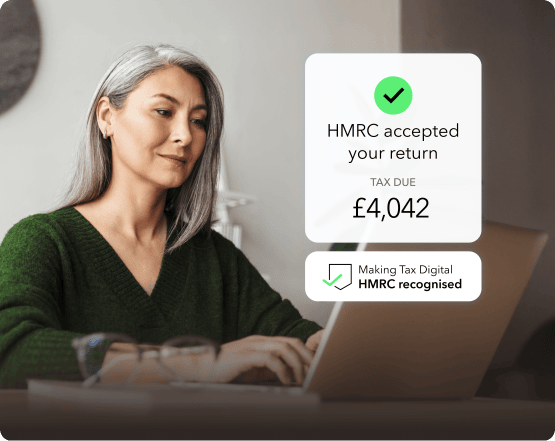
In a nutshell: Profit with a purpose and mission-driven setups.
Best for: Social enterprises, charities, and community projects.
CICs and registered charities prioritise social or environmental impact. This means they often reinvest surpluses back into their core mission rather than distributing profits to shareholders. They benefit from special tax exemptions on income and capital gains, but must meet strict compliance standards.
Learn more about accounting software for non-profits
Business Structure | Ownership & Members | Personal Liability | Tax Framework | Statutory Admin Requirements | Best Suited For |
Sole Trader | Single individual | Unlimited personal liability | Income Tax & NICs via Self Assessment | Simple bookkeeping & annual tax return | Freelancers, consultants, and independent contractors starting out |
Ordinary Partnership | Two or more partners | Unlimited joint & several liability | Partners pay Income Tax & NICs individually | Partnership tax return + individual Self Assessment | Small businesses with co-founders sharing management and risk |
Limited Liability Partnership (LLP) | Two or more members | Limited liability for all members | Partners pay Income Tax & NICs on profit share | Companies House filings + LLP partnership returns | Professional service firms (lawyers, accountants, medical practices) |
Private Limited Company (Ltd) | One or more shareholders | Limited liability for all shareholders | Corporation Tax on profits; Income Tax on dividends | Companies House filings, Annual Accounts, Confirmation Statements | Growing businesses, commercial contracts, & raising capital |
Community Interest Company (CIC) / Charity | One or more directors / trustees | Limited liability for all members | Special tax status / Exempt from Corporation Tax | Strict compliance with Companies House / Charity Commission | Mission-driven, social enterprises, and charitable organisations |
Businesses are always growing. So, there may come a time when you need to consider changing your business structure to suit how you currently operate. Financial goals often shift, and legal and tax requirements evolve.
As a small business, this often means moving from being a sole trader to a partnership or limited company. But choosing when to switch is a decision in itself. Here are a few things to consider:
Protecting personal assets: As contract values and operational risks grow, you may find it best to shift to a limited company or LLP. This can help protect personal assets and savings from commercial claims.
Optimising tax efficiency: When annual profits reach higher levels, it may be time to switch to a limited business structure. In this case, combining salary and dividends may offer lower overall liabilities than standard Income Tax and NICs.
Attracting equity investors: If you think it’s time to start attracting investors to boost growth – for example, issuing shares to venture capitalists, you could consider transitioning to a private limited company. Many investors typically require corporate equity structures before they’ll even consider your proposition.
Meeting client and contract requirements: You may need to adapt your structure to satisfy government procurement tenders or commercial supplier terms. Some industry licensing rules often also demand that your business is an incorporated entity.
Although switching from one type of business structure to another may seem daunting, choosing the path you take doesn’t need to be. It’s your business – you’ll know what works best, and what the next steps should be. It’s just a case of formalising your decision.
Define your business goals: Clarify your long-term ambitions—whether that’s maintaining a lean freelancing operation or building an enterprise to sell.
Evaluate liability risks: Assess your exposure to commercial debt, property leases, or legal claims.
Understand your tax options: Compare pass-through Income Tax against Corporation Tax and dividend distributions.
Consider your funding needs: Determine if you’ll rely on bank loans, grants, or external equity investors.
Think about management and governance: Choose between informal management (sole trader) or formal boards and shareholder resolutions (limited company).
Plan for future growth: You may want to choose a scalable structure that can accommodate new partners, international expansion, or ownership changes.
Seek expert advice: It might be a good idea to talk to a UK accountant or solicitor before finalising legal registrations.
Whether you’re just getting off the ground or are making a structural switch, QuickBooks supports all business structure types. Our software can help sole traders calculate Self Assessment tax estimates, limited companies track Corporation Tax liabilities, and automate income and expense tracking regardless of entity size.
Discover QuickBooks for Limited Companies
The primary legal business structure types in the UK are sole trader, private limited company (Ltd), ordinary partnership, Limited Liability Partnership (LLP), and Community Interest Company (CIC). The best choice for your company depends on your risk profile, required liability protection, tax preferences, and long-term growth plans.
A legal business structure defines how a company is legally registered, who has financial liability for debts, and how taxes are reported to HMRC and Companies House. An organisational structure defines daily internal operations— for example, how roles, hierarchies, and operational departments are structured.
You may want to consider switching to a limited company when your business risks increase, as this can help you gain limited liability protection. You may also want to switch when your profits increase to a level where combining salary and dividends becomes more tax-efficient than Income Tax. Another example might also be when you start taking on large commercial clients and equity investors who require an incorporated business.
The best funding type for your business depends on your cash flow predictability, asset base, growth speed, and willingness to share ownership. Established businesses with steady revenues often prefer commercial bank debt, asset finance, or invoice discounting to retain 100% equity.
Meanwhile, high-growth startups or businesses scaling into risky new markets typically favour equity financing (venture capital or business angels) or non-dilutive government expansion grants to secure capital without adding fixed monthly debt repayments.
The information on this website is provided free of charge and is intended to be helpful to a wide range of businesses. Because of its general nature the information cannot be taken as comprehensive and they do not constitute and should never be used as a substitute for legal, accounting, tax or professional advice. We cannot guarantee that the information applies to the individual circumstances of your business. Despite our best efforts it is possible that some information may be out of date. Any reliance you place on information found on this site or linked to on other websites will be at your own risk.
This information is intended to outline our general product direction, but represents no obligation and should not be relied on in making a purchasing decision. Additional terms, conditions and fees may apply with certain features and functionality. Eligibility criteria may apply. Product offers, features, functionality are subject to change without notice.
Share:
Subscribe to get our latest insights, promotions, and product releases straight to your inbox.
9.00am - 5.30pm Monday - Friday

