

Journeys by Design gains multi-year financial visibility with QuickBooks Advanced
Simple, smart accounting software - no commitment, cancel anytime


MAKING TAX DIGITAL


For small business owners, Making Tax Digital for Income Tax (MTD for IT) promises a simpler way to manage your income tax. If you’re not already signed up, then now could be the right time to get ready. The UK government is introducing rules where self-employed individuals who have over £50,000 of qualifying income in the tax year 2024 to 2025 will be required to use MTD for IT by 6 April 2026.
In this article, we’ll look at how this could impact you, what it means for your business, and how to prepare for it. We’ll also help you to avoid the pitfalls and explain the benefits of Making Tax Digital for Income Tax for small businesses in 2026/27.
If you’re a sole trader with over £50,000 from self-employment and/or property income for the tax year 2024 to 2025, you’ll need to transition to MTD by April 6 2026
You’ll need to sign up for MTD for IT compatible software that can work with HMRC's Making Tax Digital system
There are penalties for not signing up, which result in fines and interest being added to the tax that you owe.
As a small business, you probably have a lot to think about, not least your finances. And if you haven’t already, you may need to think about Making Tax Digital for Income Tax. While moving your Income Tax records online won’t affect the products you sell or the services you offer, it can impact how you manage your records day-to-day.
The reason behind the shift towards online records is that the government wants to reduce the odds of administrative errors by simplifying the process for everyone involved. As an SME owner, accurate Income Tax submission reduces the chance of unexpected costs.
Crucially, if you’re a small business owner with under £50,000 of qualifying income in the tax year 2024 to 2025 you won’t need to sign up until the system is set up for lower-income brackets in 2027, though you may be able to sign up voluntarily.
If you do have over £50,000 of qualifying income for the tax year 2024 to 2025, you’ll need to transition to the online system, using MTD for IT compatible software that can upload the information for you, whether directly or by using data from a spreadsheet from April 6 2026.
If you need to make the transition to Making Tax Digital for Income Tax before the deadline of 6 April, 2026, or if you want to get ahead of the curve, we’ve put together a simple guide so you can move to MTD for IT.
Research whether it applies to you. Before you make the leap to MTD for IT, you should check whether it’s a requirement for you. The criteria are:
You’re a sole trader or a landlord
At least part of your income comes from self-employment or rental income
Your qualifying income (your total yearly income from self-employment and property) is over £50,000 for the tax year 2024 to 2025.
Sign up for Self Assessment. If the above applies to you, and you’re not already signed up, then you may need to register for Self Assessment, a system HMRC uses for collecting Income Tax.
Get hold of some MTD software. Before you can sign up to Making Tax Digital for Income Tax, you’ll need MTD for IT compatible software that works with the system. HMRC doesn’t have its own MTD for IT compatible software, so you may need to subscribe to or purchase accounting tools that can transfer your data to HMRC. QuickBooks offers a range of plans suited to small businesses that are compatible with MTD for IT rules.
Keep full digital records. As your financial records will need to move online, you should begin to keep a complete digital record of your transactions.
Provide quarterly updates to HMRC. Your software may be able to do this automatically or at least send you reminders. You’ll be required to provide financial updates every three months as part of Making Tax Digital for Income Tax.
Keep digital records, submit quarterly updates to HMRC, and finalise your Income Tax at the end of your accounting period with Intuit QuickBooks.
Explore plans & pricing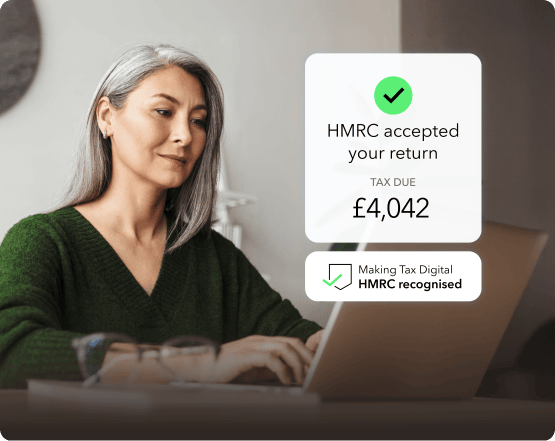
As a small business owner, the move to MTD for IT can feel like an additional task on top of an already busy workload. However, there are plenty of things to look forward to with the new system. MTD for IT is designed to reduce clerical errors and save you time on reporting. Moving to Making Tax Digital for Income Tax should mean you can spend more time on the things most important to you.
MTD for IT makes tax submissions more efficient, meaning you get more time for running your business
Frequent updates to HMRC mean better clarity on your tax and finances
A digitally integrated system eliminates the need for a paper trail and manual documents, which means fewer chances of error
Detailed transaction records make it easy for you to spot trends in your spending and budget, and allow you to manage your finances accordingly
As with any change to business operations, you’ll need to take the time to familiarise yourself with the rules and regulations of new systems. You should understand what’s required of you and have a firm grasp of what will need to be uploaded and when. This may mean thinking about how your business operates and potentially changing your internal systems or retraining staff.
You’ll also need to decide on the accounting software you want to use. Legally, this software must be MTD for IT compatible. With options available to suit all budgets and business types, you should be able to find something that works with your small business. Explore QuickBooks’ pricing plans.
If you’re unable or unwilling to follow the Making Tax Digital rules, there can be consequences, often in the form of a fine. Late submissions can be subject to a penalty system in which missed deadlines result in a penalty point, rather than a fine. This way missed deadlines don’t mean automatic punishment.
In the first tax year of compulsory MTD for Income Tax (April 2026 to April 2027), the penalty system will not be in effect. After this, a two-point threshold will apply across a 24-month period. If you accumulate two points within these two years.t make payments late, whether for penalties or your latest tax payment, 7.75% interest will be added onto any tax owed.
If you’re a new business, you might not be earning much money as you get set up. Fortunately, HMRC has a tax-free allowance for small business owners. If you earn less than £1,000 a year from self-employment, you don’t need to disclose it or pay tax on the income.
Your qualifying income is the total amount of money you make (before expenses) through self-employment and property rentals (if relevant). Employment income or PAYE, savings, and pensions don’t count towards your qualifying income.
Once you’re signed up to Making Tax Digital for Income Tax, you’ll be required to send quarterly updates on your income. At the end of the year, these will be compiled into a single end-of-year tax return. If you have multiple streams of income, from self-employment and property, you’ll need to submit separate quarterly updates for each.
The information on this website is provided free of charge and is intended to be helpful to a wide range of businesses. Because of its general nature the information cannot be taken as comprehensive and they do not constitute and should never be used as a substitute for legal, accounting, tax or professional advice. We cannot guarantee that the information applies to the individual circumstances of your business. Despite our best efforts it is possible that some information may be out of date. Any reliance you place on information found on this site or linked to on other websites will be at your own risk.
Share:
Subscribe to get our latest insights, promotions, and product releases straight to your inbox.
9.00am - 5.30pm Monday - Thursday
9.00am - 4.30pm Friday

