

Making Tax Digital
Making Tax Digital (MTD) for Limited Companies explained
Simple, smart accounting software - no commitment, cancel anytime


MAKING TAX DIGITAL


Making Tax Digital (MTD) aims to modernise the way UK businesses approach key tax, bookkeeping and financial reporting tasks. And as a limited company, you’ll need to adopt a few key practices to be compliant. In this guide, we’ll talk through what limited companies need to know about Making Tax Digital.
MTD for Income Tax does not apply to limited companies, but for sole traders and landlords, and the government has scrapped plans to extend MTD to Corporation Tax. As a result, limited companies can carry on with their current approach to filing Corporation Tax returns.
All VAT-registered limited companies have to follow Making Tax Digital (MTD) for VAT rules by law. This means keeping digital records of all VAT transactions and using HMRC-recognised software to submit returns, with non-compliance leading to penalties and fines.
Even though it not currently mandatory, moving towards MTD processes—like digital record-keeping, accounting software for invoicing and reporting, and wider digital processes—can still benefit limited companies thanks to better accuracy, improved efficiency, and clearer financial oversight.
MTD doesn’t currently apply to limited companies for Corporation Tax, but it may apply to them for VAT.
If your limited company is VAT registered – which should be any business with over £90,000 taxable turnover per year – then MTD for VAT has been mandatory since April 2022.
As a limited company, you’re required to pay Corporation Tax, rather than Income Tax – which is usually reserved for individuals. The Government has scrapped plans to extend MTD to Corporation Tax – so if you file CT returns, you can stick to your old methods for now.
As of April 2022, all VAT-registered businesses – including limited companies – must follow Making Tax Digital (MTD) for VAT rules.
This includes maintaining digital records of sales, purchases and other VAT transactions using compatible software, rather than isolated spreadsheets.
This software must be recognised by HMRC – and should be submitted to HMRC directly from the software, rather than entered manually.
And even if you work with an external accountant, you’ll still need to store your records digitally through compliant, compatible means. Failing to do so could land you with penalties and fines from HMRC.
Learn more about how to record, charge and reclaim VAT under Making Tax Digital.
Keep digital records, submit quarterly updates to HMRC, and finalise your Income Tax at the end of your accounting period with Intuit QuickBooks.
Explore plans & pricing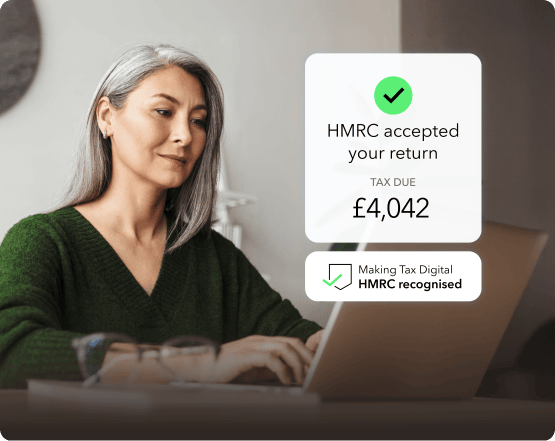
If you’re not VAT registered, MTD might not affect you quite yet. But digital practices are best practices – and by adopting MTD principles early, you can future proof your business for any changes that might come later. Plus, you’ll probably find your taxes are simpler and more efficient in the long run.
Here are three areas where you should make the switch.
Digital record keeping. Make sure record keeping is all managed on electronic software like QuickBooks. This means your income, expenses, assets and liabilities will all be stored and tracked electronically.
Accounting software. Switching to digital software for invoicing and reporting is not just more secure, it’s more convenient too. A good accounting solution will automate tricky calculations without the need to input a formula into a rigid spreadsheet. They’ll also simplify collaboration with your accountants and internal teams.
Wider processes. Accounting and record keeping are just the beginning. With the right software, you can integrate bank feeds, automate reconciliations and payroll, and streamline your internal workflows.
While MTD for Corporation Tax is no longer coming, it doesn’t mean that limited companies can’t make the most of the advantages MTD for VAT brings. Beyond simple compliance, MTD-aligned digital practices offer major benefits for limited companies.
Improved accuracy. Accuracy is one of the clearest advantages. Automated calculations and digital records far reduce the risk of human error – which makes life easier both for businesses and HMRC.
Greater efficiency. Digital systems cut down time spent on manual data entry, reconciliations, and menial admin tasks. This allows business owners and staff more time to focus more on growth and strategy.
Better oversight. With real-time access to financial data, companies can make faster, more informed decisions based on what is happening now, not six weeks ago.
Streamlined collaboration. When records, returns and reconciliation are all handled by the same software, teams can dip in and out, tick off tasks and collaborate far easier.
Future proofing. Finally, maintaining digital systems ensures readiness for future regulatory changes, helping businesses adapt quickly if MTD requirements expand to new taxes.
If VAT-registered companies don’t comply with MTD for VAT rules, they may face penalties under the HMRC points system. This penalises businesses for late filing, late payment and inaccuracy.
When it comes to late payments, HMRC also applies interest charges, which are currently set at 7.75%. This is the Bank of England base (3.75% as of March 2026), plus 4%.
Non-compliance – such as failing to keep digital records or submit via compatible software – can also result in penalties and increased scrutiny from HMRC, potentially leading to further compliance checks.
MTD for Income Tax currently applies to sole traders and landlords only, rather than limited companies. Limited companies pay Corporation Tax, rather than Income Tax, but this is currently outside the scope for MTD. Directors of Limited Companies may still have to adhere to MTD for Income Tax on their pay, dividends and other personal income if they have sole trade or landlord income.
VAT registered companies will need to use HMRC-registered software for their taxes, such as QuickBooks. This software allows businesses to keep digital records, calculate VAT accurately, and submit returns directly to HMRC.
MTD for Income Tax does not apply to limited companies. Income Tax relates to individuals, like sole traders and landlords, with qualifying income over a certain threshold. The government has paused plans to extend MTD to Corporation Tax, meaning limited companies are not included in this part of the programme. MTD for VAT, however, does still apply.
The information on this website is provided free of charge and is intended to be helpful to a wide range of businesses. Because of its general nature the information cannot be taken as comprehensive and they do not constitute and should never be used as a substitute for legal, accounting, tax or professional advice. We cannot guarantee that the information applies to the individual circumstances of your business. Despite our best efforts it is possible that some information may be out of date. Any reliance you place on information found on this site or linked to on other websites will be at your own risk.
This information is intended to outline our general product direction, but represents no obligation and should not be relied on in making a purchasing decision. Additional terms, conditions and fees may apply with certain features and functionality. Eligibility criteria may apply. Product offers, features, functionality are subject to change without notice.
Share:
Subscribe to get our latest insights, promotions, and product releases straight to your inbox.
9.00am - 5.30pm Monday - Thursday
9.00am - 4.30pm Friday

