

Intuit QuickBooks Small Business Index, November 2026
Simple, smart accounting software - no commitment, cancel anytime


FINANCE, BUDGETS AND CASHFLOW


Open banking was launched in 2017 following an order by the UK Competition and Markets Authority to increase competition and innovation across the UK banking sector. Before this, banks held sole control over customer financial data, limiting how easily people could compare products or switch providers.
For small businesses and sole traders, open banking can help to seamlessly maintain an accurate picture of finances and keep tax records accurate and up to date. Read on to learn more about how open banking works and what it can do for your business.
Open banking lets you securely share bank data through regulated APIs, without ever handing over your login details to third parties.
Real-time bank feeds keep tax records organised, simplify reconciliation and give small businesses instant visibility over their cash flow and working capital.
Connecting open banking through QuickBooks brings your finances together in one place, cutting admin time and helping you make faster financial decisions.
Open banking is a secure system regulated by the Financial Conduct Authority (FCA). It lets consumers, small business owners, and sole traders share financial data safely between banks and authorised third-party providers. Rather than relying on paper statements or shared logins, your data moves securely through regulated channels, with your clear consent at every step.
Only firms authorised and regulated by the Financial Conduct Authority (FCA), or operating under the Payment Services Directive 2 framework, can request access to your banking data. This regulation exists specifically to protect consumers and small businesses from unauthorised data sharing.
Open banking lets you give a company temporary access to your bank account, either to view transactions through read-only access, or to send and receive payments. You log in via your usual banking details, without ever sharing them with the third-party site.
Open banking works by relying on APIs. These are structured connections that let banks share data securely with approved providers. Once you give consent, that request goes straight to your bank, which shares only the details you’ve approved. You can withdraw permission at any time, keeping you firmly in control of who sees your financial information, and for how long.
Common uses include budgeting apps that track your spending; and moving money between accounts at different banks.
Open banking relies on application programming interfaces (APIs), a secure ‘digital handshake’ letting two systems talk directly.
This replaces legacy screen scraping, where users once handed over their actual login credentials to third-party software, creating unnecessary security risks.
Through AIS, authorised software such as QuickBooks can view transaction histories, balances, and incoming payments to your account as they happen.
This real-time flow, powered by open banking, keeps accounting ledgers accurate without any manual input required.
These allow authorised third parties to set up direct, instant bank-to-bank transfers.
This makes paying a supplier or settling an e-commerce invoice simple, removing the need for credit cards or manual online bank logins. It’s another practical way open banking speeds up everyday payments.
With open banking, transaction data syncs automatically each night, cutting out manual spreadsheet work entirely.
Reconciliation becomes quicker since your figures no longer need to be re-entered by hand. You get a real-time view of money in and out, without logging in to separate accounts. Records stay accurate throughout the month, rather than requiring a rushed catch-up before deadlines.
With live feeds in place, deductible expenses are categorised instantly rather than sorted after. This keeps your records clean and organised for VAT, Income Tax, or Corporation Tax throughout the year.
Open banking links your bank data directly to your accounting software in real time. You no longer need to reconstruct months of transactions before a filing deadline. Tax preparation becomes a matter of reviewing records that are already organised.
Keep digital records, submit quarterly updates to HMRC, and finalise your Income Tax at the end of your accounting period with Intuit QuickBooks.
Explore plans & pricing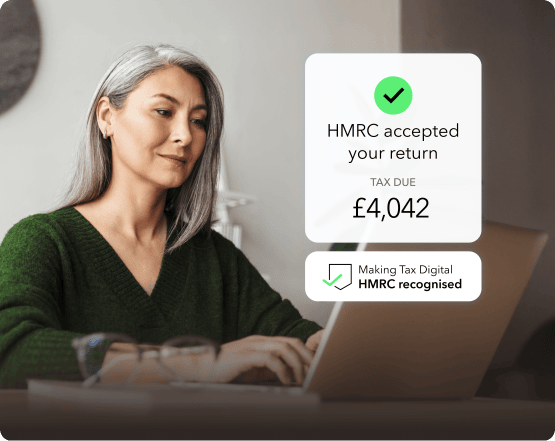
Pairing real-time bank data with forecasting tools gives business owners immediate visibility over working capital. This makes it easier to plan, rather than reacting to problems after they surface.
Among the wider benefits of open banking for small businesses is faster credit access. Lenders can review verified account history directly, cutting down the paperwork traditionally required for funding applications. This can shorten decision times, helping small businesses secure credit when they need it most.
Open banking security relies on 256-bit encryption, the same standard used by major high-street banks. Every provider must be vetted and listed on the official FCA register, ensuring only regulated, trustworthy companies can access your financial data.
You’ll never share your online banking password or PIN through open banking. Instead, authentication takes place inside your bank’s own app or portal, using face ID, a fingerprint, or multi-factor authentication for secure, credential-free access.
With open banking, you decide exactly what data to share and with whom. You can revoke access at any time, directly through your bank’s app, and connected services lose visibility immediately. Your consent stays fully within your control, from start to finish.
Step 1: Go to Banking / Transactions: Select ‘Connect account’ within your accounting software dashboard menu.
Step 2: Choose your bank: Search for your high-street or challenger bank (e.g. Barclays, HSBC, NatWest, Monzo, Starling).
Step 3: Authenticate directly with your bank: You will be securely redirected to your bank’s official app or website to log in and approve the connection.
Step 4: Select accounts and match transactions: Select which accounts to include, then start reviewing and categorising your live transactions.
With QuickBooks, open banking, reconciliation, receipt matching, and cash flow tracking all come together in one smart hub. Your accounts stay synced automatically, so nothing slips through the cracks.
QuickBooks takes the hassle out of everyday admin, giving you more time to focus on growth. It’s everything you need in one clear dashboard.
Learn more about open banking with QuickBooks
Yes, open banking is strictly regulated by the Financial Conduct Authority (FCA) in the UK. It uses bank-grade encryption and secure APIs to protect your data at every step. You never share your banking passwords or PINs with third-party software, keeping your credentials fully protected throughout the entire process.
No, providers cannot access your funds without explicit consent. Account Information Services (AIS) are limited to viewing transaction data only, with no ability to move money. Payment Initiation Services (PIS) require your direct authorisation through your bank’s secure app before any payment can be initiated at all.
No, open banking requires online or mobile banking access for your payment account. Since authentication happens directly through your bank’s app or website, you need an active online banking set-up first. Without it, your bank cannot securely verify your identity or approve any data-sharing connection.
No, open banking itself is completely free to use. However, some firms offering apps or software built on open banking may choose to charge for their specific products or services. So, it’s worth checking pricing with individual providers first.
If a financial product you’ve signed up for doesn’t suit your needs, get in touch with the provider straight away. They can advise on cancelling the arrangement and confirm any details around the process.
The information on this website is provided free of charge and is intended to be helpful to a wide range of businesses. Because of its general nature the information cannot be taken as comprehensive and they do not constitute and should never be used as a substitute for legal, accounting, tax or professional advice. We cannot guarantee that the information applies to the individual circumstances of your business. Despite our best efforts it is possible that some information may be out of date. Any reliance you place on information found on this site or linked to on other websites will be at your own risk.
This information is intended to outline our general product direction, but represents no obligation and should not be relied on in making a purchasing decision. Additional terms, conditions and fees may apply with certain features and functionality. Eligibility criteria may apply. Product offers, features, functionality are subject to change without notice.
Share:
Subscribe to get our latest insights, promotions, and product releases straight to your inbox.
9.00am - 5.30pm Monday - Friday

