

Working in the cloud
Insights and answers at your fingertips—Intuit Intelligence in QuickBooks has arrived
Simple, smart accounting software - no commitment, cancel anytime


GROWING YOUR BUSINESS


Here at QuickBooks, we celebrate women in business and female entrepreneurs every day! This International Women’s Day, we wanted to look into the different areas of a startup to see precisely where men and women differ when running a business.
To find this out, we commissioned an online survey for male and female UK business owners asking about areas such as innovation, confidence, and financial health.
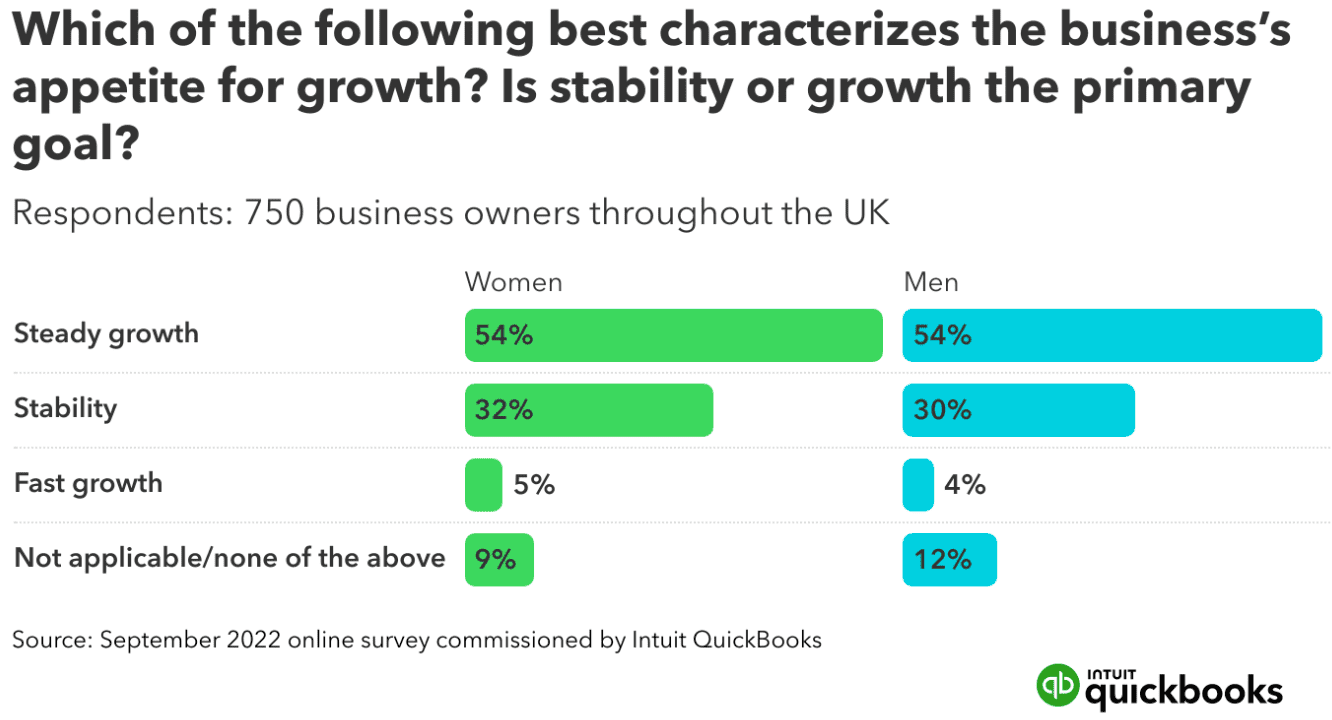
Our survey statistics revealed that women business owners are chasing entrepreneurial success and expansion at the same rate as their male counterparts.
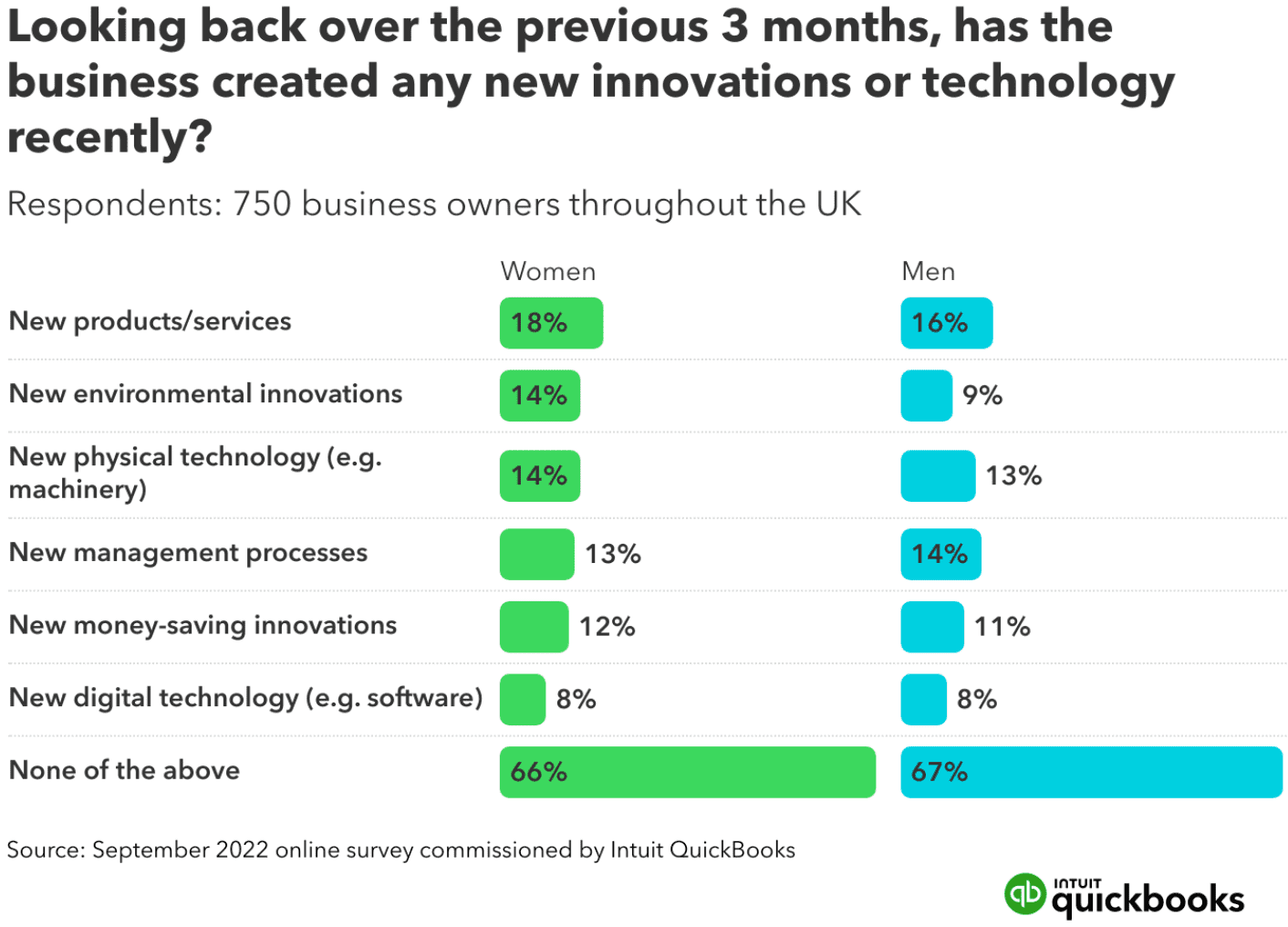
Findings also show that women-owned businesses are equaling their male peers with the creation or adoption of business innovations, even outpacing them in fields such as new products/services and environmental innovations.
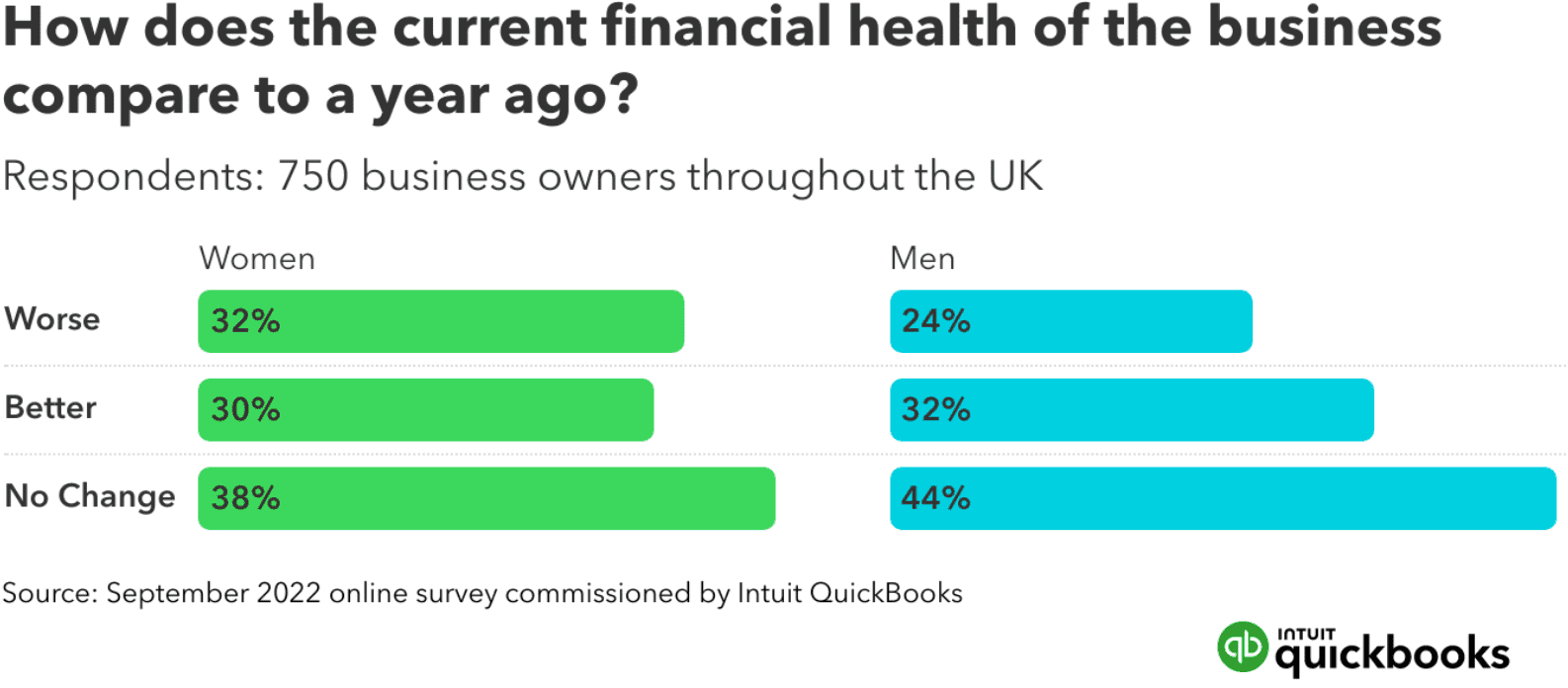
Despite an equal appetite for growth and innovation, financial inequities pose a challenge in attaining the success women owners envision for their businesses. Our survey stats revealed that UK businesses owned by women are struggling more financially than male-owned businesses. When asked about how their current financial health compares to last year, 32% of women say that their businesses’ financial health is worse currently, compared to 24% of men.
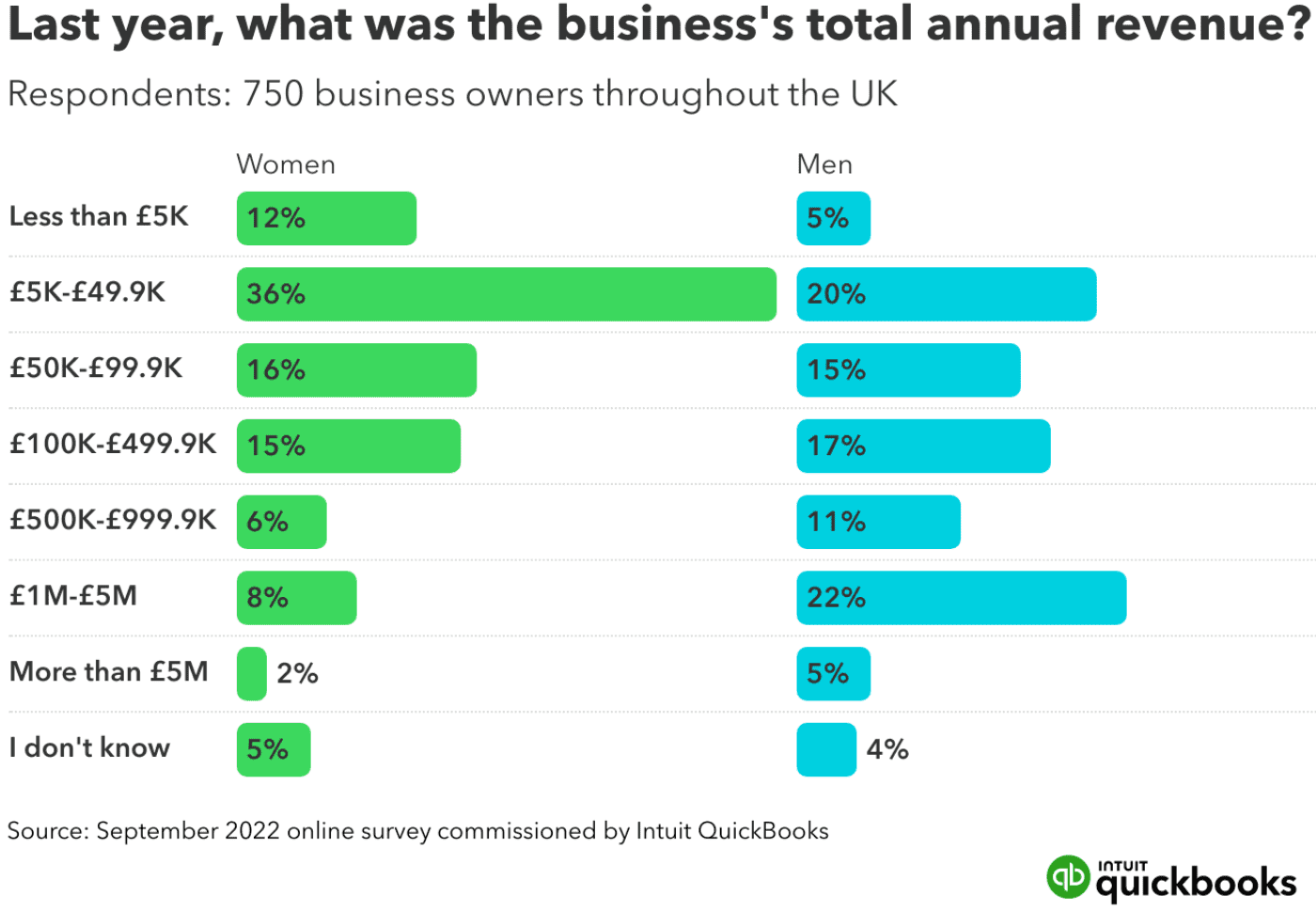
We also asked respondents about last year’s annual revenue and found that 16% of women business owners made £500,000 or more. Among men, this number more than doubles to 38%. The majority of female-owned businesses earned less than £49,999 a year.
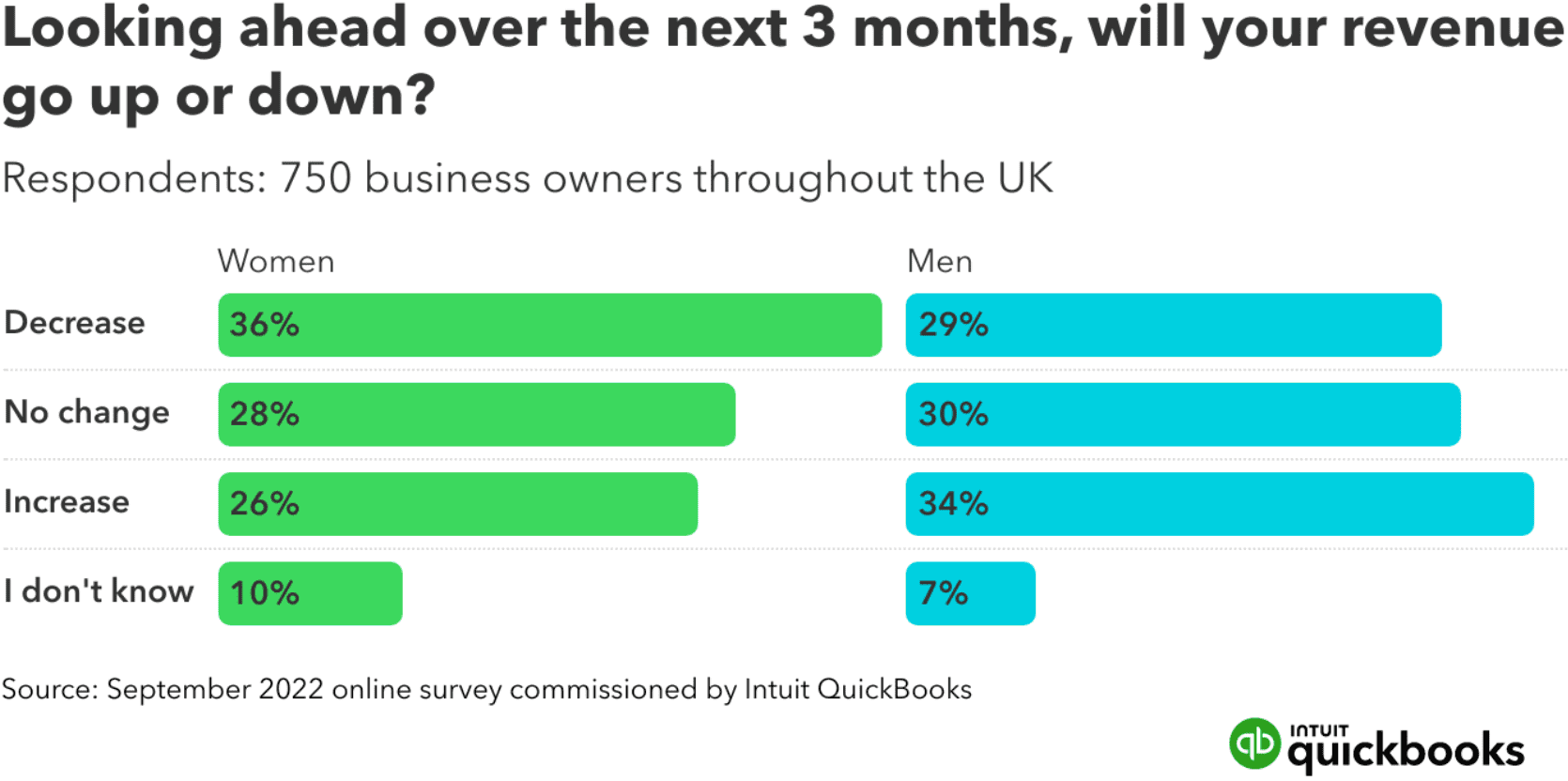
When looking ahead at the next three months, 26% of female-business owners expect to see an increase in revenue—however, this number is higher for male-business owners (34%). More women entrepreneurs also expect to see their revenue decrease (36%) while 29% of males anticipate the same.
Keep digital records, submit quarterly updates to HMRC, and finalise your Income Tax at the end of your accounting period with Intuit QuickBooks.
Explore plans & pricing
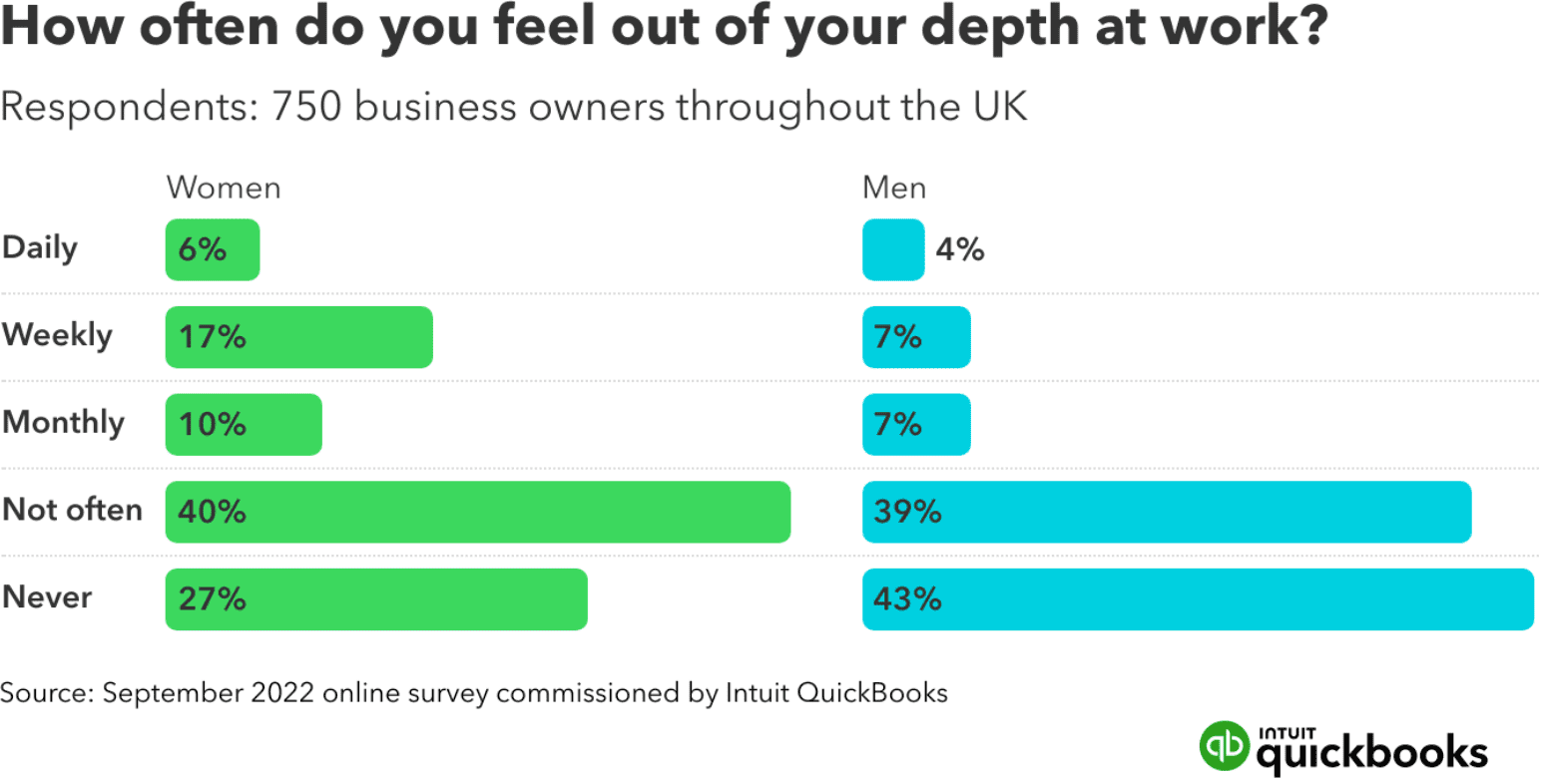
It is possible that women and female entrepreneurs may need more support to feel self-assured and well-equipped in running their businesses. According to our survey, 33% of female business owners revealed that they have felt out of depth daily, weekly, or monthly compared to 18% of males. Just under 30% of women report that they never feel out of depth at work. Among men, this number jumps to 42%.
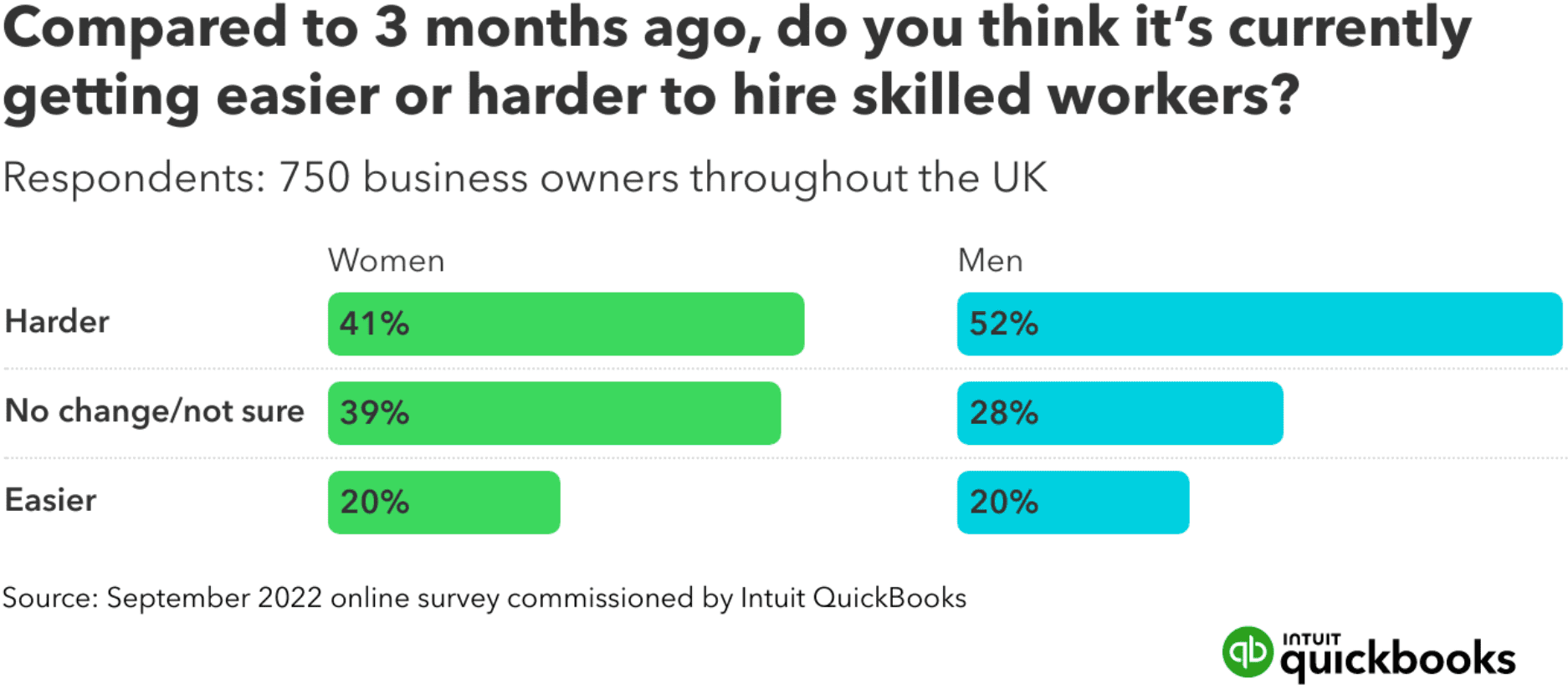
With many businesses still feeling the impact of the Great Resignation and ongoing hiring challenges, employee retention continues to be a priority in operations for a number of small businesses. The good news is that women-owned businesses (41%) are less likely than their peers (52%) to indicate that employee retention is getting harder—a signal that while these businesses may struggle with financials, with more support, they could achieve the success they dream of.
Online survey commissioned by Intuit QuickBooks in September 2022 of 750 UK business owners (292 women and 424 men). Respondents’ median business revenue from the previous year was £788,022 for women and £1,364,233 for men. Over one in three (38%) women respondents are sole proprietors. One in five (22%) men are sole proprietors. Over one in three (35%) women and men (37%) have up to 20 employees. Retail trade (12%), education (11%), and human health (7%) are the top industries among women respondents. Construction (10%), scientific and technical activities (8%), and retail trade (7%) are the top industries among male respondents. A third (33%) of women respondents have been in business for up to five years. Less than one in five (18%) male respondents have been in business for up to five years.
This content, report and materials are for informational purposes only and should not be considered legal, accounting, financial, investment, or tax advice, or a substitute for obtaining such advice specific to your business. Additional information and exceptions may apply. Applicable laws may vary by state or locality. No assurance is given that the information is comprehensive in its coverage or that it is suitable in dealing with a customer’s particular situation. Intuit Inc., or its affiliates do not have any responsibility for updating or revising any information presented herein. Accordingly, the information provided should not be relied upon as a substitute for independent research. Intuit Inc., or its affiliates do not warrant that the material contained herein will continue to be accurate nor that it is completely free of errors when published. Readers should verify statements before relying on them.
We provide third-party links as a convenience and for informational purposes only. Intuit Inc. or its affiliates do not endorse or approve these products and services, or the opinions of these corporations or organizations or individuals. Neither Intuit Inc. nor its affiliates assume responsibility for the accuracy, legality, or content on these sites.
https://quickbooks.intuit.com/uk/blog/christmas-shopping-survey-2022/
https://quickbooks.intuit.com/uk/blog/self-assessment-survey-2023/
https://quickbooks.intuit.com/uk/blog/small-business/growing-your-business/
Share:
Subscribe to get our latest insights, promotions, and product releases straight to your inbox.
9.00am - 5.30pm Monday - Friday

