
Need help choosing?
Speak to a QuickBooks expert to find the right product for your business
Talk to sales: 0808 304 6205
9.00am - 5.30pm Monday - Friday
Get product support
Contact support Visit support page

Making Tax Digital
(MTD)
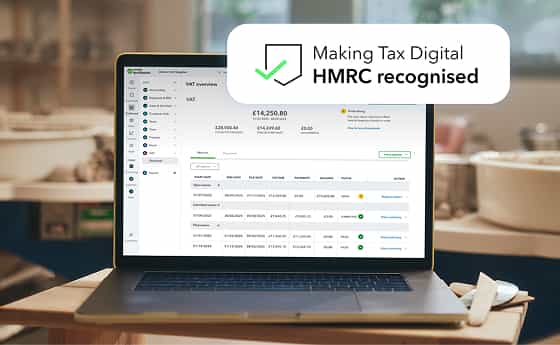
Learn all about Making Tax Digital with our resources. Find out how it affects you (as a business or an accountant) and all the key dates for compliance. Find out how our HMRC-recognised software can help you get MTD-ready.
What is Making Tax Digital?
Making Tax Digital is the government’s plan to move UK taxpayer’s records from spreadsheets and paper, to a fully digital system. It applies to VAT-registered businesses and will soon apply to Income Tax records for self-employed individuals and landlords with an income over £50,000.

Self-employed individuals and landlords
MTD for Income Tax (Previously referred to as MTD for ITSA) will soon apply to self-employed individuals and landlords who meet certain criteria.
Find out more

VAT registered
businesses
Making Tax Digital (MTD) for VAT currently applies to VAT-registered businesses.
Find out more

Making Tax Digital key dates & deadlines
MTD for VAT has been applicable to VAT-registered businesses, regardless of turnover, since April 2022.
COMING SOON
April 2026
From April 2026, MTD for IT will apply to self-employed individuals and landlords with qualifying income over £50,000.
April 2027
From April 2027, MTD for IT will apply to self-employed individuals and landlords with qualifying income between £30,000 and £50,000.
April 2028
From April 2028, MTD for IT will apply to self-employed individuals and landlords with qualifying income of more than £20,000.
What does MTD mean for small business owners?
If a business is VAT-registered, HMRC will now automatically sign you up to MTD for VAT.
If you’re a self-employed business or landlord with annual business or property income above £50,000, you need to be registered for Making Tax Digital for Income Tax and using recognised software by from April 2026. In April 2027, this income threshold lowers to £30,000 and once again to £20,000 in April 2028.
Designed to make it easier for businesses to file their tax returns, MTD requires you to:

Keep digital records using MTD-compatible software
Submit your tax returns to HMRC with digital links to your records
For Income Tax, submit quarterly financial updates of your business income

Under MTD, all businesses must keep a range of digital records. For MTD for VAT, these include:
Business name, address and VAT registration number
VAT on all goods and services you supply or receive
Time and value of supply for everything you buy and sell
Sales, profit and VAT owed, according to which scheme you use
What does MTD mean for accountants and bookkeepers?
Accountants and bookkeepers will play a pivotal role in helping their clients understand the new requirements and select appropriate software.

“Many of our clients had heard nothing about MTD from HMRC and had no idea what it meant. So we talked a lot about it when we moved them over to QuickBooks.”
Lorraine Ellison of Simply Additions Accountants


As an accountant, you’ll need to help clients choose MTD-compliant software best suited for their needs, as well as:
Understand what MTD is and its impact on businesses
Stay informed about MTD for VAT, and current guidelines
Get the latest on MTD for Income Tax and what it means for your practice and clients

Switch to MTD
Switching to MTD with QuickBooks is easy. If you’re VAT-registered, simply confirm you’re signed up for MTD for VAT. HMRC should have contacted you about it.

Connect to HMRC
Then, you can connect QuickBooks to HMRC and submit your tax return digitally.

Move financial records
If you want a head start for the upcoming MTD for Income Tax mandation date, moving your financial records to QuickBooks can help save you time and effort in the long term.
Making Tax Digital FAQs

Stay informed and inspired
Subscribe to get our latest insights, promotions, and product releases straight to your inbox.


