


Intuit QuickBooks Small Business Index, March 2026
Simple, smart accounting software - no commitment, cancel anytime


GROWING YOUR BUSINESS


While building your business, you’ve probably had your hand in everything, from hiring employees to running payroll. And while your business may be your pride and joy, it can still be tough to do everything on your own.
To help keep up with your growing business, you might consider outsourcing payroll to shift some responsibilities off your plate, allowing you to spend time on other crucial business tasks.
So how exactly does outsourcing payroll work? And what are the pros and cons of taking this step for your business? Follow this guide to learn more about payroll outsourcing and how it can benefit your business.
Disclaimer: This article is for general information only and does not constitute financial, tax, financial management, or legal advice. You should consult a qualified professional for advice tailored to your situation.
Payroll outsourcing services streamline your payroll processing system. Rather than an in-house payroll or HR professional, team manager, or small business owner handling payroll themselves, a third party takes care of the logistics.
These third parties often automate many aspects of payroll, including:
Calculating payroll deductions
Sending employee payslips for each payrun
Compiling payroll reports
Producing payroll registers
A high-quality payroll outsourcing service can provide you with a suite of features for running payroll efficiently. Simple outsourcing options can allow you to manage payroll data from a phone or desktop application, while higher-value options can allow you to connect directly with expert support. They may also include HR outsourcing features.
Rather than having an in-house team calculate tax deductions and file your small business payroll taxes, outsourced payroll handles it all behind the scenes. Plus, professional payroll services can significantly reduce the chances of errors in your payroll processing.
According to Straits Research, in 2024, 61% of UK businesses outsourced payroll services due to the complexities of tax regulations, labour laws, and pension schemes.
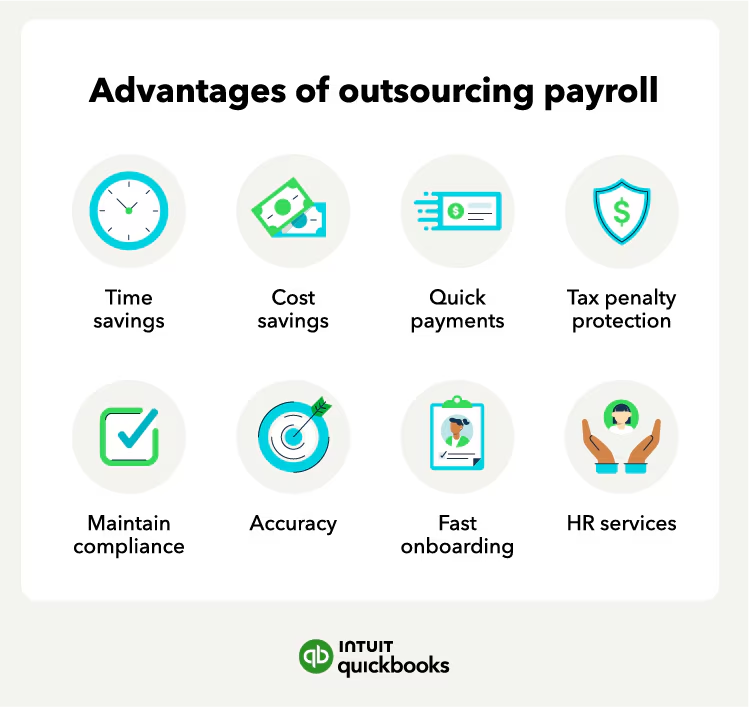
Like with any business decision, you’ll want to know how your business will benefit if you decide to outsource your payroll. Now that you know what outsourcing the payroll process entails, let’s look at the wide range of payroll outsourcing benefits it can provide for you and your business.
Time savings: Time spent worrying about payroll tax documentation, payroll processing, and more is time you’re not spending elsewhere. As a leader in your business, it’s important to devote your time to the things that matter most. Outsourced payroll services can allow for that.
Cost savings: Hiring someone to work on payroll in-house can be expensive. And if you’re spending time on payroll rather than on other aspects of your business, you could lose money. Outsourcing payroll can be a much more affordable option.
Quick payments: One thing is certain, employees like being paid on time. Outsourced payroll may allow you to streamline processes and reduce the risk of delays, helping ensure payments are made on schedule.
Maintain compliance: Outsourcing of payroll can help ensure that you maintain compliance as payroll professionals stay on top of any changing regulations or requirements.
Accuracy: Payroll errors can lead to plenty of headaches. Employees may become frustrated and leave your company if you pay them incorrectly or too late. Outsourcing payroll processing helps reduce the chance of errors, especially for companies with a large number of employees.
Fast onboarding: Outsourcing payroll will quickly get new hires on the payroll and ready for their first day on the job before the next pay period.
HR services: Some platforms include both HR and payroll features, such as time off and insurance management. These can also help decrease costs to your business while streamlining your employee management.
Whether you’re looking to save some extra time or are interested in additional HR features, outsourcing your payroll could be the right choice for your small business.
Most everything has its pros and cons, and outsourcing payroll is no exception. Before diving into whether or not outsourcing payroll is the correct decision for you and your business, look at some of the downsides.
Less oversight: Even though outsourcing payroll can help you save time and money, it also involves giving up direct supervision of the payroll process. If you’d like to automate the payroll process while still having the ability to keep your payroll information in-house, you might consider using payroll software.
Risk of errors: While experienced payroll professionals are less likely to make mistakes than other less experienced individuals, it is still a possibility. And unlike when you do payroll in-house, it may take longer to correct the mistake than if you were handling it yourself.
Unnecessary benefits: Depending on the provider you decide to outsource payroll processing with, you may be paying for additional services your business doesn’t need. This can lead to you spending more money than is necessary.
Delays: Because you’ll have to share employee and wage information with your payroll provider, there is a possibility that there could be lost information throughout the sharing process. If that happens, resolving these issues may take additional time, which could lead to payroll delays.
As with any business decision, it’s up to you to decide whether or not the pros outweigh the cons when looking to improve your current payroll processes.
Keep digital records, submit quarterly updates to HMRC, and finalise your Income Tax at the end of your accounting period with Intuit QuickBooks.
Explore plans & pricing
Pros | Cons |
Saves time — Can free you up to focus on growing your business, not admin. | Less control — You’ll need to trust a third party to handle sensitive information. |
Cost-effective — Can be cheaper than hiring a full-time employee. | Potential for delays — If there’s a data input issue, it could delay payroll runs. |
Accurate payments — Can reduce errors that could frustrate staff or breach HMRC rules. | Risk of paying for unused features — Some providers may bundle in extras you may not need. |
On time — Can help ensure employees and contractors are paid correctly each time. | Correction process may be slower — Fixing issues through a third party can take longer. |
Tax and legal compliance — Can help keep you aligned with HMRC, RTI and pension regulations. | GDPR and data security — You’re responsible for ensuring data is handled properly. |
Access to expert support — Most providers offer specialist advice when needed. |
Now that you’ve weighed the pros and cons of outsourcing payroll, let’s break down some common features to keep an eye out for in payroll outsourcing services.
Payroll automation: To ensure you’re getting as many timesaving benefits as possible, choose a payroll outsourcing service that allows you to automate the payroll process.
Tax assistance: Choosing a payroll outsourcing service that can help calculate, pay, file, and pay your payroll taxes is a great way to help streamline the payroll tax process, giving you peace of mind that your taxes are filed correctly and on time.
Payroll reporting: Some payroll outsourcing services offer easily customisable payroll reports that you can use to share important insights and make informed business decisions. This may include payroll deductions, paid time off and more.
24/7 customer support: Using an outsourced payroll service may provide you access to 24/7 support from payroll experts, ensuring you can receive timely answers to any payroll questions you may have.
Time tracking: Some payroll outsourcing services also include time-tracking features that can help you easily monitor how your employees spend their time and gain real-time insights.
Once you find a payroll outsourcing service that best fits your needs, you’ll begin the payroll outsourcing process, further explained below.
According to Statista, in March 2025, weekly wages in the UK were growing by around 5.6 percent, or 1.8 percent when adjusted for inflation.
Outsourcing payroll is easier than it sounds. Plus, a little effort now can save you hassle down the road. Here are the steps you can take to ensure the transition is seamless.
Determine what type of payroll service you want: What parts of your payroll would be most helpful to outsource? Is there any aspect of payroll, payroll-related tax, and employee benefits management that you want to keep in-house? Be sure to answer these questions as you look for the right payroll service provider for your organisation.
Do your research: It’s hard to know which payroll processing software is right for your business without doing solid research beforehand. Your research should involve asking questions like the ones listed above, then seeing what each platform offers. Some platforms, like QuickBooks, allow you to select from a variety of payroll plans. This gives you flexibility when choosing different levels of service for your organisation. That way, you know you’re only paying for services you need.
Choose the right payroll service: Once you’ve set a budget, determined what you need, and researched your options, it’s time to switch payroll provider. When choosing a provider, you want to find one that is quickly and easily integrated with your current payroll process. It’s also important that employees feel secure and confident in their new payroll system.
By following these four steps, you can start reaping the benefits of payroll outsourcing and spend your time focusing on other important aspects of your small business.
If outsourcing payroll seems like the best next step for your small business, consider using payroll software. With payroll software, you can easily integrate with your current operations, automate your payroll process, and access 24/7 support from payroll experts.
Yes, many UK payroll providers are fully compliant with HMRC, RTI, auto-enrolment pensions, and GDPR.
Startups, SMEs, and businesses scaling beyond five employees often benefit most.
Yes. Many services offer full visibility and let you manage PAYE digitally, with support for tax year-end and P60s.
The information on this website is provided free of charge and is intended to be helpful to a wide range of businesses. Because of its general nature the information cannot be taken as comprehensive and they do not constitute and should never be used as a substitute for legal, accounting, tax or professional advice. We cannot guarantee that the information applies to the individual circumstances of your business. Despite our best efforts it is possible that some information may be out of date. Any reliance you place on information found on this site or linked to on other websites will be at your own risk.
Share:
Subscribe to get our latest insights, promotions, and product releases straight to your inbox.
9.00am - 5.30pm Monday - Thursday
9.00am - 4.30pm Friday

