Alaska sales tax calculator
Know exactly what to charge at any Alaska address. Find the combined rate, the tax on any amount, and the total. Free for your business, no sign-up.
Know exactly what to charge at any Alaska address. Find the combined rate, the tax on any amount, and the total. Free for your business, no sign-up.
Done checking rates one sale at a time? QuickBooks applies the right Alaska rate on every invoice automatically. See how automated sales tax works
Alaska has no state sales tax. But that doesn't mean an Alaska seller can ignore sales tax. Alaska has more than 100 local taxing jurisdictions, boroughs and cities. Many of them impose their own local sales tax. Each decides for itself what is taxable, what is exempt, and at what rate. Others, including some of the state's largest, Anchorage and Fairbanks among them, impose no general sales tax at all.
The average American side hustle brings in about $2,038 a month, according to Intuit QuickBooks entrepreneurship research. At that size, an Alaska seller's question isn't what the state rate is. It's which municipality each sale is sourced to, and what that municipality's code says.
Whether you run a gift shop in Juneau, sell outdoor gear in Kodiak, or ship goods across the state from Anchorage, here's how Alaska's local-only sales tax works. You'll also see how to tell which municipality's rules reach a sale, and what to know at filing time.
There is no Alaska state sales tax rate. The sales tax at an Alaska address is whatever the borough and the city there have each chosen to levy, if anything. Each does so under its own ordinances:
Where a city and its borough both levy a sales tax, a sale sourced to that city generally carries both. There is no single statewide rule behind any of it. What is taxable, what is exempt, and at what rate all depend on which municipality a sale is sourced to.
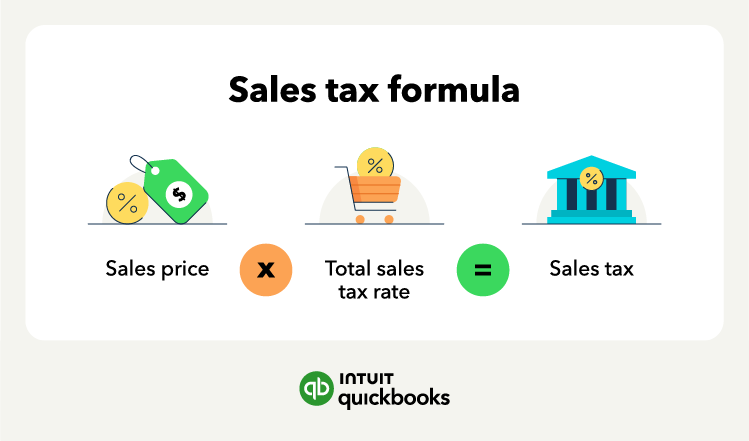
Because Alaska has no state sales tax, there is no state statute defining the tax base. There is also no state-administered rate. Each borough or city that levies a sales tax sets its own rate, tax base, and exemptions. So a seller with customers in several Alaska municipalities should expect real variation from one to the next. Groceries, for example, can be exempt in one jurisdiction and taxable in another.
Historically, each jurisdiction also set its own registration, filing, and payment requirements. For a seller with a physical presence in a municipality, that is still how it works. Tax on local sales is paid directly to the municipality. Remote sales into member municipalities now have one system. In response to the U.S. Supreme Court's 2018 *Wayfair* decision on economic nexus, Alaska municipalities formed the Alaska Remote Seller Sales Tax Commission (ARSSTC). They formed it on November 18, 2019, through an intergovernmental agreement. That lets a remote seller register, file, and pay local sales tax once, rather than separately to each municipality.
More than 50 jurisdictions had adopted its uniform remote-seller rules. That count is as of the Commission's most recent member list. Several more had joined but not yet adopted. They are the cities of Gambell, Koyuk, Nunapitchuk, Teller, and Wales. The list changes. So check ARSSTC's member jurisdictions page rather than relying on a fixed count.
The uniform code standardizes administrative mechanics (registration, filing, payment, shared definitions), not exemptions. Exemptions are narrowly construed. They are allowed only when a sale clearly falls within an exemption defined in that member jurisdiction's own code. And the shared definitions do not compel any municipality to exempt a category of goods or services. So before you price a sale:
For member jurisdictions, ARSSTC publishes an address-level sales tax lookup. It holds a seller who relies on its certified address database harmless. That protection covers tax that would be due solely because of an error in the database.
Under the ARSSTC uniform code, which member municipalities have adopted for remote sales, sourcing is destination-based for goods and services alike. The tax is the one in effect at the point of delivery. That is where your customer takes possession of the goods, or receives, and first makes use of, the service. Your own location decides the rate only in two cases. One is when the customer takes possession, or receives the service, there. The other is when the customer pays for the goods while physically present at your location. That holds even if you then deliver them to another town.
A sale at your own storefront is a local sale under that municipality's own code. A sale into a taxing municipality that has not adopted the uniform code follows that municipality's code too. Find your situation:
If you sell goods in person at your location: the sale is made where your customer takes possession. It follows that municipality's own code. It is reported directly to the municipality rather than through ARSSTC. That is true even if the customer carries the goods home to another town.
A sale paid for in person at your store stays sourced to your store. That is true even if you then deliver or ship the goods to another Alaska town. The Commission's example is a Homer shop. A visitor buys gifts at the counter and has them delivered to friends around Alaska. The shop charges Homer and Kenai Peninsula Borough tax on the gifts, paid directly to the borough.
The Commission's own example for a pickup: a Wasilla resident buys a snowmachine at an Anchorage store and trailers it home. No sales tax is charged, because the transfer happened at a storefront in a jurisdiction with no sales tax.
If you ship or deliver goods to Alaska customers: for an order placed remotely, the sale is sourced to the point of delivery. Remotely means online, by phone, or by mail. The point of delivery is where your customer takes possession, as known to you. Handing goods to a carrier is not delivery. You collect for the final destination no matter who hired the carrier. If you know a delivery address is just a freight forwarder, use the Alaska address where the customer will actually take receipt.
Say the point of delivery is in a member municipality where you have no physical presence. If you are registered with ARSSTC, you collect that municipality's tax and report it through the Commission. A delivery into a municipality where you do have a physical presence is a local sale, reported to that municipality. The Commission's example: an Anchorage furniture store delivers to a buyer in Seldovia. It charges Seldovia and Kenai Peninsula Borough sales tax, paid through the Commission.
If you perform services: a service is generally sourced to where your customer receives it and first makes use of it. That is not necessarily where you did the work. If the result is delivered electronically, or you have no delivery address, the point of delivery is the customer's billing address. The Commission's example: a digital ad prepared at the agency's office and delivered electronically is sourced to the client's billing address.
If you physically perform a service inside a member municipality, you have a physical presence there. So, through the end of the following calendar year, your sales into it are local sales reported to that municipality rather than remote sales.
If you sell through a marketplace like Amazon or Etsy: under the uniform code the marketplace facilitator is the remote seller for every sale it facilitates. It collects, reports, and pays the tax to the Commission. If all your Alaska sales run through a facilitator, you are not required to register with ARSSTC. The Commission asks for a marketplace seller affidavit instead. If you also sell through your own website or invoices, you collect and report on those sales. Leave the marketplace sales off your return, though they still count toward your threshold.
If you're out of state selling into Alaska: you must register with ARSSTC and collect once two conditions are met. First, your statewide gross sales of property, products, or services delivered into Alaska reach $100,000 in the current or previous calendar year. Second, you sell into a member municipality. Suppose a seller over the threshold delivers only into communities with no sales tax. It doesn't need to register until it has a customer in a taxing jurisdiction.
There is no transaction-count test. The former 200-transaction prong was removed effective January 1, 2025, so only dollars matter. The test counts all sales into Alaska, taxable or not, marketplace sales included. Registration is due within 30 days of meeting the threshold. One registration covers every member jurisdiction.
Until you've crossed the threshold, you aren't required to collect, if you have no physical presence in an Alaska taxing municipality. You may register and collect voluntarily, though. Sales into a municipality where you do have a physical presence are local sales under that municipality's own code. That is so whatever your statewide total. Once you have crossed the threshold, each sale is sourced to its Alaska point of delivery. It carries that municipality's tax. Alaska-based sellers shipping to other municipalities face the same test, counting only their remote sales.
When a municipality newly adopts the code, collection there starts the first day of the month following 30 days after adoption. There is no retroactive collection. Sales into a taxing municipality that has not adopted the code can't go through the ARSSTC portal. They are filed directly with that municipality on its own forms.
Sales with their own rules. The following report to the member jurisdiction rather than the Commission:
Mobile telecommunications services are sourced under the federal Mobile Telecommunications Sourcing Act, which Alaska law incorporates. And some member municipalities cap the tax on a single item or service. The tax is collected consistent with each jurisdiction's cap. ARSSTC's rate sheets and lookup show where caps apply.
Some member municipalities also change their general rate by season, with a higher summer rate and a lower winter rate. Skagway, Seldovia, Sitka, and Ketchikan are among them. And some levy a separate alcoholic beverage tax alongside a general sales tax (Juneau) or instead of one (Anchorage). So use the rate in effect on the sale date for the product sold. ARSSTC's member list and lookup show both.
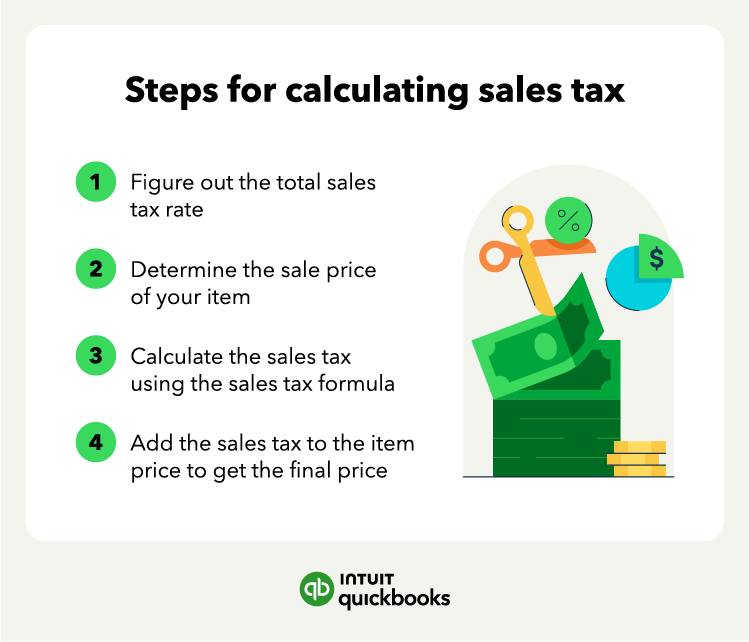
Worked example. You build furniture in Anchorage and sell a $900 table.
Keep the delivery address with every sale. The ARSSTC return reports sales by member jurisdiction. It shows a 0 on the line for every community you had no sales into.
There is no statewide exemption list, because there is no state sales tax. Exemptions live in each municipality's own code. Under the uniform code they are narrowly construed. An exemption applies only when a sale clearly falls within one defined in that member jurisdiction's code. A product that is exempt in one Alaska municipality, groceries for example, is not necessarily exempt in the next.
Member codes carry two kinds of exemptions. Product-based exemptions turn on what is sold. Entity-based exemptions turn on who is buying or selling. For an entity-based exemption, every sale is taxable unless the buyer presents proof of exempt status. Request the certificate for every exempt transaction or keep it on file. Document every exempt sale, and keep that documentation for three years. ARSSTC's lookup displays each member jurisdiction's exemption categories.
Selling a mix of taxable and exempt items is where receipts get messy. Track the two buckets separately from the start.
Alaska has no state use tax, for the same reason it has no state sales tax. Use tax in Alaska is municipal. Under Alaska law, a borough that levies a sales tax may also, by ordinance, levy a use tax on the storage, use, or consumption of tangible personal property in the borough. Cities may do the same in the manner provided for boroughs. Where a municipality levies one, its use tax rate must equal its sales tax rate. The tax is levied only on buyers.
In practice it reaches goods you buy without paying that municipality's sales tax and then store, use, or consume there. If you can show you already paid a sales tax on the same purchase, in Alaska or any other state, you owe the use tax only to the extent it exceeds what you paid.
Say your business is in a municipality that levies a 5% sales tax and a matching use tax. You buy a $3,000 commercial espresso machine from a seller that didn't collect that tax. The use tax is $150. If the seller charged you $90 of another jurisdiction's sales tax on the same machine, you owe the $60 difference.
How you report it. A use tax is the levying municipality's tax, imposed by its own ordinance. So look to that municipality's code for whether it levies one, and for how and when it is reported.
Alaska has no state sales tax. So there is no statewide holiday. Sales tax holidays do exist at the local level. Several municipalities hold their own tax-free days. They are typically set year by year by local ordinance or resolution.
The Ketchikan Gateway Borough and the City of Ketchikan hold an annual fall sales tax holiday. Merchant participation is optional. The City of Kenai has historically held one around the Thanksgiving shopping weekend. And communities such as Wasilla and Sitka have occasionally hosted similar events. These are set locally and vary from year to year. So check the municipality's current announcements rather than assuming a statewide answer.
Where you file depends on whether a sale is local or remote:
Local sales are filed with the municipality. If you have a physical presence in a municipality, the tax on your sales there is paid directly to that municipality, not through ARSSTC. A physical presence means an office, warehouse, storefront, inventory, a sales or service agent, or rented property there. Each municipality sets its own registration, filing, and payment requirements. So check with the one where you operate.
Remote sales into member municipalities are filed once, through ARSSTC. A registered remote seller files one return on the Commission's template, which covers every member jurisdiction. It makes one electronic payment that the Commission distributes. There are no paper filings or checks.
Filing is monthly by default. The return and payment must reach the Commission by midnight Alaska Standard Time on the last day of the month following the period. March's return is due April 30.
Quarterly filing is available on request if you had less than $100,000 in taxable sales into member jurisdictions, or less than $100,000 in gross sales statewide, in the preceding 12 months. Quarterly returns are due April 30, July 31, October 31, and January 31. Annual filing is available if all of your sales in the preceding 12 months were exempt. A change takes effect at the start of a quarter. A late filer is moved back to monthly.
File every return, including zero returns. A registered seller files even when no tax was collected in the period. It reports all exempt sales and enters 0 for every member community it had no sales into.
Tip: if a rate error slips through, fix the rate first, then correct the affected returns. Undercollect and the difference comes out of your pocket. Overcollect and you owe refunds. Tax you collected as tax is never yours to keep. Through ARSSTC, an amended return that lowers the tax must be filed within one year of the original due date. One that raises it can be filed at any time.
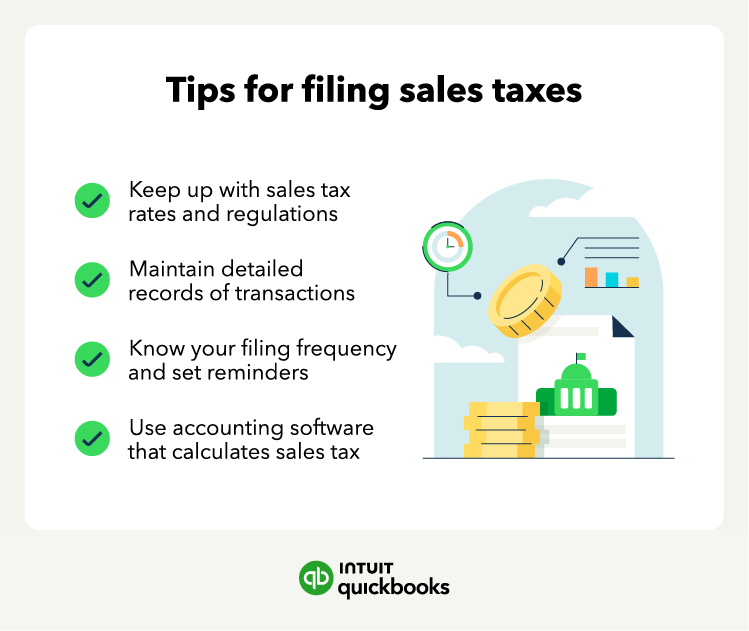
Find the rate for the municipality the sale is sourced to, in effect on the sale date and for the product sold. Then multiply the pre-tax price by it. In the City and Borough of Juneau, the general sales tax rate on ARSSTC's list is 5%. There, a $1,200 sale carries $60 in tax for a $1,260 total.
Alaska has no state sales tax. It does have local sales taxes. More than 100 boroughs and cities are local taxing jurisdictions. Many impose their own sales tax with their own rate, tax base, and exemptions, while others impose none. Whether a sale is taxed, and at what rate, depends on which municipality it is sourced to.
Neither imposes a general sales tax. They are among the Alaska municipalities, including some of the state's largest, that impose no general sales tax at all. That settles sales of ordinary goods there. But both cities tax specific products and services under their own codes. Anchorage taxes retail sales of alcoholic beverages (a tax that appears on ARSSTC's member list), short-term room rentals, and vehicle rentals. The City of Fairbanks taxes alcoholic beverages, marijuana, and hotel and motel rooms. So sellers of those check the city code.
If you ship from Anchorage into a municipality that does levy a sales tax, the sale is sourced to the delivery address. Once you are registered with ARSSTC, you collect that municipality's tax.
Yes, if you sell into a member municipality, once your statewide gross sales delivered into Alaska reach $100,000 in the current or previous calendar year. Register with ARSSTC within 30 days and collect each member municipality's tax at the point of delivery. There is no transaction-count test (the 200-transaction prong ended January 1, 2025). The test counts all sales into Alaska, taxable or not, marketplace sales included. Below the threshold you aren't required to collect if you have no physical presence in an Alaska taxing municipality. You may register voluntarily, though.
Not statewide. Some municipalities hold their own. The Ketchikan Gateway Borough and City of Ketchikan hold an annual fall holiday. The City of Kenai has historically held one around Thanksgiving weekend. Wasilla and Sitka have occasionally done the same. They are set locally year by year, so check the municipality's announcements.
Manage sales tax in QuickBooks with automation that helps you save time and stay compliant.
Save time with automated sales tax
Products are automatically matched to tax categories, so you can charge the right sales tax with less manual work. Returns are automatically prepared and formatted for your state, and if you sell into other states, you can automate multi-state filing from one place.
Stay confident and compliant
File with confidence using accurate, automated calculations. Tax rates and rules change, and they are updated automatically in QuickBooks, so what you charge keeps up. Get reminders before filing deadlines so you can plan ahead, and know your return status with real-time updates.
Your data stays protected
Securely send returns to tax agencies and track every filing in QuickBooks.
Manage your books and sales tax in one place
Automatically calculate, collect, and track applicable sales tax from your customers. One report breaks out taxable and non-taxable sales, so you always know what to pay each agency. Prepare, file, and pay directly from QuickBooks.
Explore QuickBooks sales tax software to spend less time on tax and more time running your business.
*Sales tax filing is available as an add-on service through QuickBooks Online for $40 per filing.
You've got the rates and the rules that apply in Alaska. The harder part is applying them correctly on every sale, every quarter. QuickBooks automated sales tax calculates the right combined rate, tracks what you've collected, and shows what you owe when it's time to file.
Call Sales: 1-800-285-4854


