Colorado sales tax calculator
Know exactly what to charge at any Colorado address. Find the combined rate, the tax on any amount, and the total. Free for your business, no sign-up.
Know exactly what to charge at any Colorado address. Find the combined rate, the tax on any amount, and the total. Free for your business, no sign-up.
Done checking rates one sale at a time? QuickBooks applies the right Colorado rate, state and local included, on every invoice automatically. See how automated sales tax works
Colorado's state sales tax rate is 2.9%, and that is where the simple part ends. County, city, and special-district taxes are added on top, so combined rates run much higher. The rate that applies is the one at the address where your customer receives the goods.
The average American side hustle brings in about $2,038 a month, according to Intuit QuickBooks entrepreneurship research. At that size, a Colorado seller is squarely in the system. You need a state sales tax license. You charge a combined rate that depends on where each sale is picked up or delivered. And your state return carries the state-collected local taxes with it.
What makes Colorado different isn't the state rate. It's the local layer. Dozens of home-rule cities run their own sales tax with their own rules. So the same sale can be taxed differently by the state and by the city.
Whether you run a boutique in Denver, build furniture in Fort Collins, or run a food truck in Colorado Springs, here's how Colorado's rate works. You'll also see which of your sales it reaches and what to know at filing time.
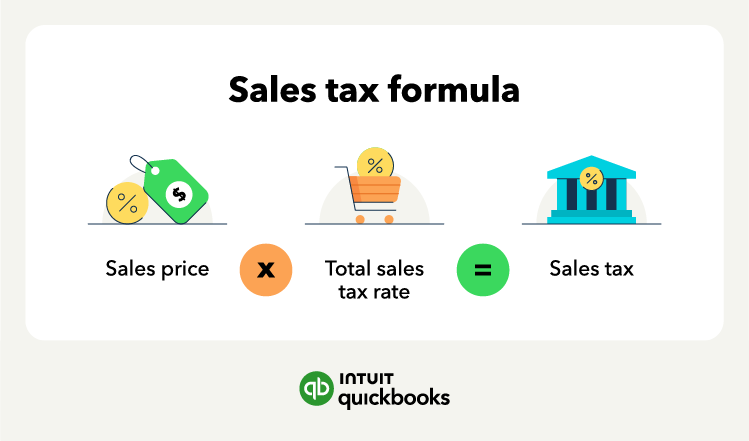
Colorado's state sales tax rate is 2.9%. County, city, and special-district sales taxes are added on top of it. Once they are, combined rates run much higher. The combined rate at any address is the sum of the layers that apply there:
State-collected local taxes ride along with the state tax. If a sale is subject to Colorado state sales tax, it is also subject to the state-collected local sales taxes at that location. The exceptions are those the Department lists in its rates publication. One state sales tax license and one state return cover the state and every state-collected county, city, and district. The home-rule cities are a separate matter, covered next.
Colorado has two kinds of local sales tax jurisdiction, and they ask different things of a seller.
State-collected jurisdictions: the state, all 50 state-collected counties, roughly 150 municipalities, and special districts such as RTD are administered by the Colorado Department of Revenue. One state license and one return cover all of them. The Department does not require you to register separately with any state-collected locality to collect its tax.
Self-collecting home-rule jurisdictions: about 72 municipalities, plus Denver and Broomfield counties, administer their own sales tax under the Colorado Constitution. Those municipalities include Denver, Boulder, Colorado Springs, Aurora, Fort Collins, and Lakewood. Each sets its own tax base. It can tax things the state exempts and exempt things the state taxes. Each applies its own nexus threshold. And each generally requires you to register and file directly with the city wherever you have nexus.
Three places the state and city rules part ways in practice:
The SUTS portal. The Department's Sales & Use Tax System lets you file the state return and returns for many participating home-rule cities in one place. That means a single consolidated return and payment. Participation is voluntary for the cities, and not every home-rule city joins. Even the ones that do keep their own tax base, licensing, and rules. If you have nexus in a home-rule city that doesn't participate, you register and file directly with that city.
State-collected county, city, and special-district taxes are administered in the same manner as the state tax. They use the same sourcing rules, so the place where your customer receives the goods decides which of them apply. They are reported and paid on the same return, at the same time, as the state tax.
The Department's address-level lookup shows the state, county, municipal, and special-district taxes for a Colorado address. What a self-collecting city taxes is the city's call, and the city is the place to ask.
Colorado is a destination-sourced state. Under Colo. Rev. Stat. § 39-26-104(3) and the Department of Revenue's sourcing rules, a sale is sourced to the place where your customer receives what they bought. For goods, that is where they take possession. For the few services Colorado taxes, it is generally where they first use the service.
If the customer receives it at your business location, the sale is sourced there. If it is delivered anywhere else, it is sourced to the location where the customer receives it. That includes the delivery address they gave you.
A shipping company holding a package on your customer's behalf doesn't count as the customer receiving it. So the place you ship from matters only as a last resort, when you have no other information about where the customer receives the goods. The same rules decide which state-collected county, city, and special-district taxes apply. Every Colorado seller has used these destination rules since October 1, 2022, when the old small-seller origin option ended. Find your situation:
If you sell goods in person at your location: the customer takes possession at your business location. So the sale is sourced there. Charge that location's combined rate. That is the 2.9% state rate plus every county, city, and special-district tax that applies at your address.
If you ship or deliver goods to Colorado customers: the sale is sourced to the location where the customer receives the goods. That includes the delivery address they gave you. That holds whether your own truck or a carrier delivers it. Charge the delivery address's combined rate.
If you don't have a complete street address but can tell the sale is in Colorado, the Department has a rule for that. You source the sale to the jurisdictions you can conclusively determine from the information you have. If that information points to two mutually exclusive jurisdictions, the sale isn't sourced to either of them. Deliveries by motor vehicle that include at least one taxable good also carry Colorado's Retail Delivery Fee, covered below.
If you sell services: Colorado taxes almost no services. Only telephone and telegraph service and gas and electricity for commercial use are taxable services by statute. The statute separately taxes the furnishing of rooms and accommodations. So building maintenance, janitorial work, landscaping and lawn care, pest control, dry cleaning, barber and beauty services, repair labor, photography services, advertising, and professional services carry no Colorado state sales tax. There is nothing to source.
One caution for photographers: the prints and digital image files you deliver are taxable goods. A single price that includes them is generally taxable in full. Some home-rule cities tax certain services, so check with the city.
A few things sold alongside or instead of services are taxable:
Fabrication labor and lumped-in labor are generally sourced with the good, to where the customer takes possession of it. Short-term lodging is taxed on the entire amount charged for the room or accommodation, unless the guest is a permanent resident under a written agreement for at least 30 consecutive days. County lodging and local marketing-district taxes apply on top. When a taxable service is sold, it is generally sourced to where the customer first uses it.
If you sell through a marketplace like Amazon or Etsy: a marketplace facilitator with more than $100,000 in Colorado sales must collect and send in the state and state-administered local sales taxes on everything it facilitates. So those sales are handled by the marketplace for state and state-collected local tax.
That state-level duty does not extend to the self-collecting home-rule cities. They impose their own facilitator and economic-nexus rules through a model ordinance many have adopted. Your own website checkout, invoices, and in-person sales remain yours to register for, collect, and report.
If you're out of state selling into Colorado: you must collect once your retail sales into Colorado exceed $100,000 in the previous or current calendar year. There is no transaction-count test. Colorado removed its 200-transaction threshold by permanent rule effective April 14, 2019. Sales you make through a marketplace are excluded from your own threshold. Once your current-year Colorado retail sales pass $100,000, you must be licensed and collecting by the first day of the month after the 90th day following the sales that took you over.
Until you've crossed the threshold, and as long as you have no physical presence in Colorado, you aren't required to collect Colorado state or state-collected local tax. That means no office, distribution facility, salesroom, warehouse, storage place, or employee working from a Colorado home. A seller with any place of business in Colorado must license and collect regardless of its sales volume.
Once you have crossed the threshold, you source each sale the same way an in-state seller does. That is the Colorado address where your customer receives the goods. You collect the 2.9% state rate plus that address's state-collected local taxes. Home-rule cities apply their own thresholds separately.
Sales with their own sourcing rules. Lease and rental payments are taxed only on leases longer than 36 months, or on a shorter lease when the Department has given you permission to buy the property tax-free and collect on the payments. Otherwise, for a lease of 36 months or less, you pay tax when you buy the property. The payments are not taxed. Where payments are taxed and recur, they follow a modified rule. The first periodic payment is sourced like a sale. Later payments are sourced to the primary property location, the address for the property that your lessee gives you.
Mobile telecommunications service is one of Colorado's few taxable services. It is taxed only when the customer's place of primary use is in Colorado and the service originates and terminates within the same state, under the federal Mobile Telecommunications Sourcing Act.
Worked example. You build furniture in Estes Park and sell a $900 table.
Same table, same week, and the delivery address decided the rate every time. So keep it with every sale. Your state return reports state-collected local tax by jurisdiction code. A delivery jurisdiction has to be set up as a non-physical site before you file.
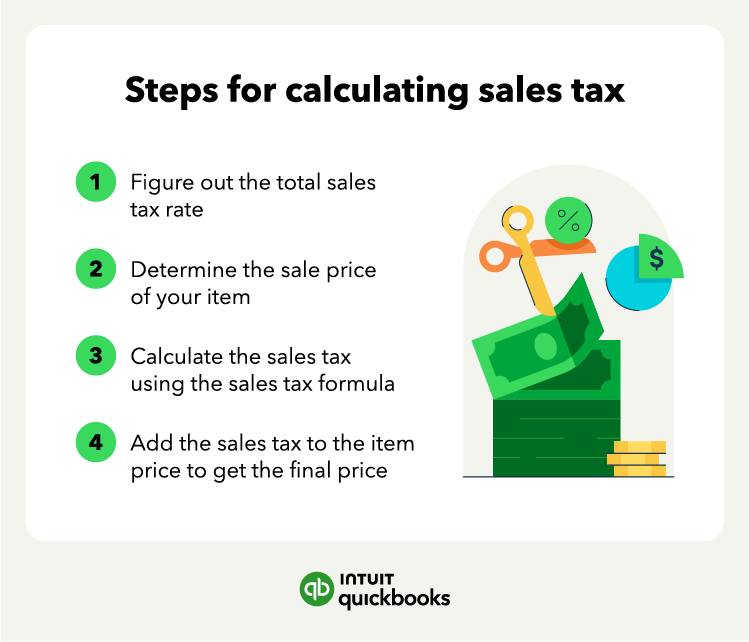
The exemptions below are the state's. Home-rule cities set their own rules. Some state-collected localities tax grocery food the state exempts. So check the local side too. The ones that matter most to small sellers:
Groceries: food for domestic home consumption is exempt from the 2.9% state tax. The exemption uses the federal food-stamp definition of food. The statute carves a few items a grocer or deli sells out of that definition. So they are taxable at the state level even when sold to take home. Those items are prepared salads and salad bars, packaged and unpackaged cold sandwiches, deli trays, chewing gum, and seeds and plants to grow food.
The exemption is state-level only. Many home-rule cities and state-collected localities still impose their local tax on grocery food. So a grocer often charges local-only tax on an otherwise exempt sale. Check the specific jurisdiction.
Candy and soft drinks: taxable even at the state level, and the definitions are narrow. Candy excludes anything containing flour or requiring refrigeration. So a flour-based or refrigerated item generally stays exempt food. A soft drink excludes beverages containing milk or milk substitutes or more than 50% juice. A sweetened non-carbonated drink is a taxable soft drink. Unsweetened bottled water is exempt, but carbonated water in containers is taxable. Dietary supplements and vitamins are taxable. They are not food.
Prepared food: taxable. Restaurant meals, catering, and prepared food are all taxed. Bakery items are exempt only as grocery food. Sold for immediate consumption by a dining establishment, they are taxable.
Clothing: taxable year-round at the state level. Clothing, footwear, accessories, protective clothing, and sports and recreational equipment are all taxable as tangible personal property. There is no exemption and no sales tax holiday. Home-rule cities set their own rules.
Software and digital products: Colorado taxes prewritten software only when it is prepackaged for repeated sale, governed by a tear-open license, and delivered on a tangible medium. Software delivered electronically, whether downloaded, load-and-leave, or accessed as SaaS, is not taxable at the state level. Neither are custom software, IaaS, PaaS, or internet access. Digital goods such as music, video, and e-books are taxable however they are delivered. So a downloaded song is taxable while downloaded software is not. Computer hardware is taxable.
That split is about to change: 2026 legislation (House Bill 26-1223) repeals the tangible-medium limitation effective January 1, 2027. From that date, prewritten software is taxable at the state level regardless of delivery method. That includes downloaded software, mobile apps, and SaaS. Custom software and software under an individually negotiated license remain exempt. Home-rule cities set their own software rules. Several tax SaaS and software differently.
Prescription drugs and medical items: prescription drugs are exempt. Over-the-counter drugs are taxable unless furnished by a practitioner as part of professional services. Prosthetic devices are exempt. Durable medical equipment and mobility-enhancing equipment are exempt only when dispensed pursuant to a prescription. Their repair and replacement parts are exempt too. Vitamins and dietary supplements are taxable. Medical services are not taxable.
Repair labor and maintenance agreements: repair labor is not taxable when it is separable from the property and separately stated from the parts. If labor and parts are billed as one lump price, the whole charge is taxable. The parts a repairer sells are taxable either way. Optional maintenance or service agreements are not taxable when the charge is separable and separately stated. A mandatory maintenance agreement included as a condition of the sale is taxable.
Newspapers, magazines, and printing: newspapers are excluded from the definition of tangible personal property and are exempt. Magazines and periodicals are not excluded, so they are taxable. Commercial printing sold to customers is taxable.
Selling a mix of taxable and exempt items is where receipts get messy. Track the two buckets separately from the start.
Use tax is the companion to sales tax. Colorado imposes it for the privilege of storing, using, or consuming tangible personal property in Colorado. In general, whenever you acquire tangible personal property without paying sales tax at the time of the sale, you must pay consumer use tax directly to the Department. That happens most commonly when you buy from an out-of-state seller that does not collect Colorado sales tax.
The rate is 2.9%, the same as the state sales tax rate. It is calculated the same way. If an item is exempt from sales tax, it is generally exempt from use tax as well. You can claim a credit for any legally imposed sales or use tax you already paid to another state on the same property.
For a business, this shows up when you order equipment, supplies, or software from a vendor that didn't charge Colorado tax. It also shows up when you pull an item you bought tax-free for resale out of inventory for your own use. Say your Estes Park café buys a $3,000 commercial espresso machine online and the invoice shows no Colorado tax. You owe $87 in Colorado state use tax.
Local use tax exists, in two forms. Some cities, counties, and special districts impose a use tax. The Department administers use tax for the state and for certain special districts. Those include RTD, the Scientific and Cultural Facilities District, and certain Regional Transportation Authorities. So a special district's use tax is reported along with the state's. The Department does not administer any city or county use tax. For those, contact the city or county directly.
How you report it. Businesses generally pay use tax as it accrues. If your business accrues less than $300 of consumer use tax over the year, you file one annual use tax return by January 20 of the following year. If the cumulative use tax you owe at the end of any month is more than $300, you must file a return by the 20th of the following month.
The return is the Consumer Use Tax Return (DR 0252). You also file the RTA Consumer Use Tax Return (DR 0251) if a Regional Transportation Authority applies. Both can be filed electronically at Revenue Online. Use tax that isn't filed and paid by the due date draws penalty and interest.
One Colorado-specific charge to know: the Retail Delivery Fee applies to deliveries by motor vehicle that include at least one taxable good (Colo. Rev. Stat. § 43-4-218, effective July 1, 2022). It is a flat per-delivery fee, adjusted for inflation each July. The fee is $0.31 for July 2026 through June 2027.
A business with $500,000 or less in Colorado retail sales the prior year is exempt from collecting it. The fee is sent to the Department through Revenue Online.
Colorado's filing calendar has one due date and several frequencies:
Monthly by default, due the 20th. Every retailer files a return for the preceding calendar month and pays the tax by the 20th of the following month, unless the Department has assigned a less frequent schedule. If your average monthly Colorado sales tax collection is less than $1,100 but more than $50, you may file quarterly. If it is $50 or less, you may file annually. "Colorado sales tax collection" here includes the state-administered local taxes you collect, not just the 2.9%.
Whatever your frequency, the return and payment are due the 20th of the month after the period closes. A monthly filer's June return is due July 20. A quarterly filer's third-quarter return is due October 20. If the 20th falls on a Saturday, Sunday, or legal holiday, the due date is the next business day.
The Department can move you up, not down. Each year it recalculates your average monthly collection. If you've outgrown your schedule, it increases your filing frequency effective January 1. It won't automatically move you to a less frequent schedule. But you can request the change if your collections have fallen.
One return form, filed by site. Your Colorado Retail Sales Tax Return (DR 0100) has to account not only for the state tax but for the tax collected and due for each state-administered local jurisdiction. The state and state-collected local taxes go on the same form.
Gross sales are reported per site, so you file a DR 0100 for each location, physical or non-physical. A new delivery jurisdiction has to be added as a non-physical site before you start the return. Home-rule city taxes are filed with the city, or through the SUTS portal where the city participates.
Electronic filing is phasing in. If your prior-year gross sales were $500,000 or more, you must file electronically for periods from January 2026. If they were $50,000 or more, you must file electronically for periods from January 2027. Every return for sales made in January 2028 or later must be filed electronically.
Once you're required to e-file, you stay required even if your sales later fall below the threshold. The penalty for failing to e-file is $50 or 5% of the tax due, whichever is greater. If your prior-year state sales tax liability exceeded $75,000, you must pay by electronic funds transfer.
File every return, including zero returns. You must file a sales tax return every filing period, even if no sales are made and no tax has been collected. If you don't, the Department files a return for you and estimates the amount to bill. That estimated return stays due and payable until you file the real one.
Tip: if a rate error slips through, fix the rate first, then correct the affected returns. Colorado's amended return replaces the original in its entirety. So it must show every tax column as corrected, not just the difference. Undercollect and the difference comes out of your pocket. Overcollect and you owe refunds. Tax you collected as tax is never yours to keep.
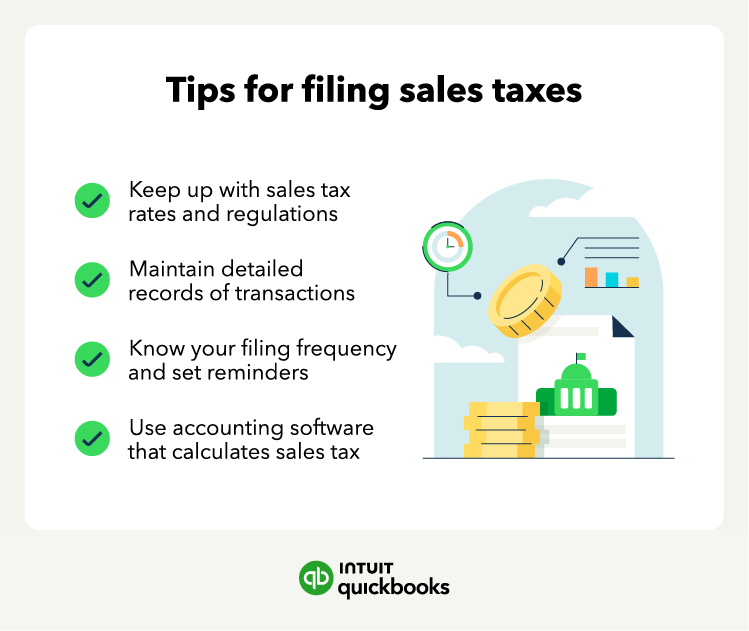
Multiply the pre-tax price by the combined rate at the address where your customer receives the goods. That is the 2.9% state rate plus every county, city, and special-district tax that applies there. In Estes Park, the Department's current list puts the combined rate at 8.95%. A $1,200 sale there carries $107.40 in tax for a $1,307.40 total.
The state rate is 2.9%. County, city, and special-district taxes are added on top. The combined rate depends on the address. So there is no single Colorado rate to quote. Goods are sourced to where the customer takes possession: the delivery address if you ship, your location if they pick up. The Department of Revenue's address-level lookup shows the state, county, municipal, and special-district taxes at an address. The calculator above does the same for any Colorado address.
Generally no. Colorado taxes goods, not services. The only services taxable by statute are telephone and telegraph service and gas and electricity for commercial use. Short-term lodging is taxable too. The statute taxes the entire amount charged for rooms and accommodations unless the guest is a permanent resident under a written agreement for at least 30 consecutive days.
Repair labor is not taxable when it is separately stated from the parts. But if labor and parts are billed as one lump price, the whole charge is taxable. Fabrication labor is taxable. Some home-rule cities charge sales tax on certain services, so check with the city.
Not by the state. Food for domestic home consumption is exempt from the 2.9% state tax. But many home-rule cities and state-collected localities still tax grocery food. So a grocery sale can carry local tax alone. Candy, soft drinks, dietary supplements, prepared food, and restaurant meals are taxable at the state level too.
No. Colorado has no back-to-school or any other sales tax holiday. Clothing, school supplies, and electronics are taxable every day of the year.
Manage sales tax in QuickBooks with automation that helps you save time and stay compliant.
Save time with automated sales tax
Products are automatically matched to tax categories, so you can charge the right sales tax with less manual work. Returns are automatically prepared and formatted for your state, and if you sell into other states, you can automate multi-state filing from one place.
Stay confident and compliant
File with confidence using accurate, automated calculations. Tax rates and rules change, and they are updated automatically in QuickBooks, so what you charge keeps up. Get reminders before filing deadlines so you can plan ahead, and know your return status with real-time updates.
Your data stays protected
Securely send returns to tax agencies and track every filing in QuickBooks.
Manage your books and sales tax in one place
Automatically calculate, collect, and track applicable sales tax from your customers. One report breaks out taxable and non-taxable sales, so you always know what to pay each agency. Prepare, file, and pay directly from QuickBooks.
Explore QuickBooks sales tax software to spend less time on tax and more time running your business.
*Sales tax filing is available as an add-on service through QuickBooks Online for $40 per filing.
You've got the rates and the rules that apply in Colorado. The harder part is applying them correctly on every sale, every quarter. QuickBooks automated sales tax calculates the right combined rate, tracks what you've collected, and shows what you owe when it's time to file.
Call Sales: 1-800-285-4854


