Connecticut sales tax calculator
Know exactly what to charge at any Connecticut address. Find the combined rate, the tax on any amount, and the total. Free for your business, no sign-up.
Know exactly what to charge at any Connecticut address. Find the combined rate, the tax on any amount, and the total. Free for your business, no sign-up.
Done checking rates one sale at a time? QuickBooks applies the right Connecticut rate on every invoice automatically. See how automated sales tax works
Connecticut's sales tax math is the same at every address in the state. The state rate is 6.35%. There is no city or county sales tax anywhere, and no separate local registration to keep up with.
The average American side hustle brings in about $2,038 a month, according to Intuit QuickBooks entrepreneurship research. At that size, a Connecticut seller is squarely in the system. You charge 6.35% on taxable sales wherever in Connecticut they are sourced, and you file one state return.
What makes Connecticut different isn't where you sell. It's what you sell. Connecticut has one rate at every address but not one rate for everything. Meals, high-priced clothing, and computer services each carry their own rate. The state also taxes a closed list of services that reaches many everyday business and personal services. Whether you run a boutique in Stamford, repair cars in Hartford, or build software in New Haven, here's how Connecticut's rate works. You'll also see which of your sales it reaches and what to know at filing time.
Connecticut's state sales tax rate is 6.35%, and it is the only sales tax layer. No city, county, or other local jurisdiction imposes a sales tax. So the rate is the same at every Connecticut address.
There is no local layer to add and no separate local sales-tax registration. The 6.35% rate is the standard rate on goods, which the law calls tangible personal property, unless a specific exemption applies. It is also the rate on the services Connecticut's statute names. Connecticut also applies special rates to particular categories. Meals and certain beverages are 7.35%. Luxury items, including clothing priced over $1,000, are 7.75%. Computer and data processing services are 1%. Those rates turn on what is sold, not where, and they are covered below.
Connecticut taxes sales of tangible personal property and a closed list of services named in its statute. Tangible personal property is taxable at the standard 6.35% rate unless a specific exemption applies. If a service is not on the statutory list, it is not taxable. On top of that single statewide rate sit several special rates that depend on what is sold:
Designing, creating, developing, adapting, or modifying custom software is a computer and data processing service taxable at 1%. If the sale includes any goods at all, the entire sale is taxed at 6.35% regardless of the buyer. That holds even for a box or card that merely authorizes a download. A $2,000 software subscription sold to a business for business use carries $20 in tax. The same subscription sold for personal use carries $127.
Connecticut taxes only the services named in its statute. But the list is long and reaches many everyday business and personal services. So check the list rather than assume a service is exempt. Taxable services include:
Services that are not on the list, and therefore not taxable, include accounting and bookkeeping, legal services, engineering, investment counseling, travel agency services, veterinary services, medical and home health care services, basic barber and beauty services such as haircuts and coloring, massage therapy by a licensed therapist (massage parlor services are taxable), babysitting and daycare (placement and referral services are taxable), butchering, dance instruction (health club classes are taxable), fishing and hunting guide services, furniture moving, safe deposit box services, taxidermy, and title searches.
The real property split. Services to real property are taxable to the customer when rendered to existing industrial, commercial, or income-producing real property. New construction, and work on owner-occupied residential property of three or fewer units, are not taxable to the customer. The exception: repair or maintenance of the building equipment listed above is taxed as repair of tangible personal property at an owner-occupied home too. Separately listed services such as landscaping, janitorial work, exterminating, pool cleaning, and window cleaning are analyzed under their own provisions. They may remain taxable regardless of property type or construction status.
Contractors generally pay sales tax on the materials, supplies, and equipment they buy for construction contracts. Under a contract with an exempt entity, a contractor may buy the materials and supplies that will be installed or placed in the project tax-free. Exempt entities include the state, a Connecticut city or town, and a qualifying nonprofit. The contractor does this by giving its vendor a CERT-141, Contractor's Exempt Purchase Certificate.
Before you price a service, check the Department of Revenue Services' list of services subject to sales and use taxes. Check it in both directions, for services you assumed were exempt and for services you assumed were taxable.
Connecticut has one sales tax rate, so its sourcing rules answer two questions. Is this a Connecticut sale at all? And which rate category does the item fall in? For goods, Connecticut works like a destination-sourced state. The Department of Revenue Services' rule is that Connecticut sales or use tax applies to any transaction where title to the goods transfers from the seller to the buyer in Connecticut. Under the same rule, Connecticut use tax applies where title transfers outside Connecticut but the goods are intended to be used in, and are brought into, Connecticut. Where your customer takes title or possession is what decides.
For services, Connecticut writes the rule service by service in the Department's regulations. Some of those rules look at where you do the work rather than where the customer is. There is no local rate to look up at any Connecticut address. Find your situation:
If you sell goods in person at your location: when the buyer comes to your Connecticut location and takes title or possession of the item there, the sale is subject to Connecticut sales tax. That is true even if the buyer then takes the item in their own vehicle to an out-of-state location. It is also true if the buyer arranges to have it picked up from you and delivered out of state by common carrier. Charge 6.35%, or the category rate if the item carries one.
If you ship or deliver goods to Connecticut customers: a sale delivered to a Connecticut address is a Connecticut sale. The rate is the same 6.35% whether the address is in Bridgeport, Greenwich, or Litchfield. There is no local tax to add.
If you ship goods out of state: a sale by a Connecticut seller is not subject to Connecticut sales tax in two situations. The first: the buyer does not come to a Connecticut location but orders by internet, telephone, or mail. The item is then delivered to an out-of-state address in a vehicle you own or rent or by common carrier. The second: the buyer comes to your location but does not take title in Connecticut. Instead, the buyer arranges for you to ship the item to their out-of-state address.
If you deliver the item to another state in your own vehicle, you may need to obtain a seller's permit from that state and collect its tax.
If you repair or maintain a customer's property: repair or maintenance services to tangible personal property are taxable if the repairs are made in Connecticut. Under the Department's rule, that holds even if the parts were bought outside Connecticut, or the contract was negotiated or signed outside Connecticut. It also holds if some of the work was done for you outside Connecticut, the invoice is mailed to or from an out-of-state address, or the customer is a nonresident.
The one exception runs the other way. Say you pick up, or are shipped, an item from outside Connecticut, repair it in Connecticut, and then deliver or ship it back to the customer at an out-of-state location. In that case, the repair service and any integral parts sold with it are not taxable in Connecticut. So a Hartford repair shop generally charges Connecticut tax on work it does in Hartford for an out-of-state customer who drops the item off and picks it up. It does not charge it when the item is shipped in from out of state and shipped back out.
A customer who buys repair services from an out-of-state repairer owes Connecticut use tax if the repaired item is intended for use, and is used, in Connecticut.
If you sell maintenance, repair, or warranty contracts: a contract sold in the same transaction as the property it covers is deemed sold where the property is sold. So the sale is taxable when it takes place in Connecticut. A contract sold after the property is treated as occurring where the benefit of the contract is realized. That is where the covered property is located. Absent evidence of where the property is located, the benefit is deemed to occur at a business buyer's principal place of business or at any other buyer's billing address.
If you provide computer and data processing services, software, or digital goods: computer and data processing services are subject to tax in Connecticut if the benefit of the services is received in this state. Unless contracts or other documents specifically state otherwise, the Department presumes a digital good is delivered to a Connecticut location when the consumer's or subscriber's billing address is in Connecticut. The rate is 1% for computer and data processing services, including electronically delivered canned software and software as a service sold to a business for business use. It is 6.35% for digital goods and for software sold for personal use.
If you perform a service at the customer's location: landscaping, janitorial work, pest control, snow removal, pool cleaning, and the other listed services that are taxable regardless of property type are generally rendered in Connecticut when performed at a Connecticut property. In that case they are taxable at 6.35%. Services to real property follow the property-type split in the section above. The Department's regulations apply that kind of location test to several listed services. Protection and patrol services, and interior design services, are taxable when rendered in connection with property located in Connecticut.
If you sell through a marketplace like Amazon or Etsy: a marketplace facilitator that facilitates retail sales of at least $250,000 during the prior twelve-month period is treated as the retailer of each sale it facilitates. The period is measured October 1 through September 30. The count includes sales to all buyers wherever located, not just in Connecticut. The facilitator must collect the tax, send it in, and keep records. The threshold is dollars only. There is no transaction count.
You are relieved of collecting on those sales when you have a contract or a good-faith certificate stating that the facilitator collects, and you gave the facilitator accurate information. Your direct sales outside the marketplace remain your responsibility under your own registration.
If you're out of state selling into Connecticut: you must register and collect once you have both $100,000 in retail sales into Connecticut and 200 or more transactions in the twelve-month period ending September 30. Both conditions must be met. Marketplace sales count toward your threshold even though the marketplace collects on them. Collection begins October 1 of the year in which you cross the threshold as of September 30.
The rule has been in effect since December 1, 2018. Connecticut lowered the dollar threshold from $250,000 to $100,000 effective July 1, 2019. The 200-transaction test did not change. Until you have met both tests, you aren't required to collect Connecticut tax on those sales under the economic nexus rule, if you have no physical presence in Connecticut. Once you have met them, you collect Connecticut tax on each sale delivered to a Connecticut address, at 6.35% or the category rate.
Physical presence requires registration regardless of these thresholds. Under the statute, maintaining or using an office, warehouse, storage point, or other place of business in Connecticut, even temporarily or through an agent, is engaging in business in Connecticut. So is having a representative, agent, or salesperson operating in the state to sell, deliver, or take orders. So inventory in a Connecticut warehouse or fulfillment center, or a Connecticut sales representative, means you register and collect without regard to the thresholds.
Sales with their own sourcing rules. Telecommunications services follow their own statute, Conn. Gen. Stat. § 12-407a. It turns on where the service originates and terminates and where the customer's telephone number or account is located.
Worked example. You build furniture in Hartford and sell a $900 table.
Same table, same week, and the only thing that changed the Connecticut answer was where your customer took possession. Keep the delivery address and the delivery method with every sale.
The exemptions that matter most to small sellers:
Groceries: food products for human consumption are generally exempt. Meals sold by eating establishments, caterers, and supermarkets under the applicable meal rules are taxed at 7.35%. So are alcoholic beverages, soft drinks, sodas, and beverages ordinarily dispensed at bars or soda fountains.
Candy, confectionery, and gum are excluded from the food exemption and taxable at 6.35%. Carbonated beverages, including carbonated water, are treated as non-food items. For other beverages and for bakery products, seller type, preparation, portion, packaging, and location of sale all have to be considered. A convenience store is treated as an eating establishment.
Clothing and footwear: taxable year-round at the standard 6.35% rate. Any item priced over $1,000 is taxed at the 7.75% luxury rate on the entire price. Bicycle helmets meeting safety requirements and child car seats are exempt. The annual Sales Tax Free Week in August is covered below.
School supplies: nonelectronic school supplies purchased for nonbusiness purposes are exempt year-round, effective July 1, 2026. The Department's Policy Statement 2026(1) lists the qualifying items and sets the business-purpose criteria.
Software and digital products: canned software, and digital goods such as downloaded or streamed music, movies, and e-books, are generally taxable at 6.35%. That holds whether sold individually, by subscription, or through an in-app purchase. Electronically delivered canned software and software as a service bought by a business for business use are taxed at 1%. So is custom software development.
A separately stated charge for the license or right to use custom software is not taxable. If the license charge is not separately stated from the development charge, it is taxed at 1%. Computer hardware is taxable at 6.35%. Internet access services are exempt.
Prescription and over-the-counter medicines: prescription medicines are exempt, as are syringes and needles sold only by prescription. Nonprescription drugs and medicines are exempt too. That expressly includes vitamin and mineral concentrates, dietary supplements, natural or herbal medicines, cough and cold remedies, analgesics, antacids, laxatives, and eye, ear, and nose medications. The exemption does not cover cosmetics, dentifrices, mouthwash, shaving and hair care products, soaps, or deodorants, which are taxable.
Medical equipment, by list: Connecticut exempts a specific list rather than durable medical equipment generally:
Repair and replacement parts and repair services for those items are also exempt. Items outside the list are taxable.
Newspapers and magazines: newspapers are exempt however they are sold, including over the counter and from honor boxes. Magazines are exempt when sold by subscription but taxable when sold at retail locations. Digital editions follow the same treatment.
Selling at more than one rate, or a mix of taxable and exempt items, is where receipts get messy. Track each rate's sales separately from the start.
Use tax is the tax you need to pay when you use a taxable good or service in Connecticut on which you did not pay sales tax to a retailer. It is the complement to the sales tax. Together, the two taxes treat purchases of taxable goods and services used in Connecticut the same whether they were bought inside or outside the state.
Anyone who purchases taxable goods or services for use in Connecticut and does not pay Connecticut sales tax must pay the use tax. Goods or services that are not subject to Connecticut sales tax are not subject to use tax.
The rates are identical to the sales tax rates. Most goods and services carry 6.35% use tax. Computer and data processing services carry 1%, and luxury items carry 7.75%.
Say you paid no tax because you bought from an out-of-state internet or mail-order company that did not collect it. Then the use tax due equals the Connecticut sales tax that would have been due had the sale occurred in Connecticut. Because Connecticut has no local sales taxes, there is no local use tax layer either. The use tax on a purchase for your business is 6.35%, or the category rate, and nothing more.
For a business, this shows up when you order equipment, supplies, or software from a vendor that didn't charge Connecticut tax. Say you buy a $3,000 commercial espresso machine online for your café in Stamford. The invoice shows no Connecticut tax. You owe $190.50 in Connecticut use tax. If a Connecticut retailer fails to collect tax on a taxable sale to you, the use tax falls to you as the business customer as well.
Tax paid to another state counts. Suppose another state's tax was properly paid on a purchase made in that state. The Connecticut use tax due is then limited to the amount, if any, by which the Connecticut tax exceeds the tax already paid.
The Department's own example: a business buys a $1,000 computer in another state for use in Connecticut. It pays that state $50 in sales tax. The Connecticut tax of $63.50 is reduced to $13.50 after the $50 credit. If no tax had been paid to the other state, the Connecticut use tax would be $63.50. There is no credit for tax that was incorrectly paid to another state.
How you report it. Businesses report taxable purchases on which sales tax was not paid on Form OS-114, the Connecticut Sales and Use Tax Return. They report them for the reporting period in which the purchase was made. A business that is not required to register to collect sales and use tax should still register, through myconneCT, to pay business use tax. Not paying, or paying late, brings a penalty of 15% of the tax due or $50, whichever is greater. Interest is added at 1% per month from the return's due date.
Connecticut holds an annual one-week sales tax holiday for clothing and footwear each August under a standing statute. Sales Tax Free Week runs from the third Sunday in August through the following Saturday. During the week, most items of clothing and footwear priced under $300 per item are exempt. The cap was raised from $100 to $300 by 2026 Conn. Pub. Acts 68. The same act added cleated shoes and backpacks to the qualifying items.
Clothing designed solely for athletic or protective use, and jewelry, handbags, luggage, umbrellas, wallets, and watches, do not qualify. The limit is per item, not per receipt. A $350 coat does not qualify and is taxed at the regular rate. Three $90 shirts on one ticket are all exempt. The Department of Revenue Services publishes the current year's dates and item lists on its Sales Tax Free Week page.
Connecticut's filing calendar is built around one date: the last day of the month after the period ends.
Every return is due the last day of the following month. Form OS-114, the Connecticut Sales and Use Tax Return, is due on or before the last day of the month following the end of the filing period. July's monthly return is due August 31. The July-through-September quarterly return is due October 31. Annual filers file one return for the calendar year by January 31. If the due date falls on a weekend or holiday, the next business day applies.
Your filing frequency is assigned by the Department and set by your tax liability. Under the statute, tax is due monthly unless your total tax liability for the twelve-month period ending the preceding June 30 puts you in a smaller tier. Less than $1,000 means you pay annually. $1,000 or more but less than $4,000 means you pay quarterly. Quarters run from the first day of January, April, July, and October. The Department assigns your monthly, quarterly, or annual frequency, and you report in accordance with it.
File and pay electronically through myconneCT. Form OS-114 must be filed and paid electronically using myconneCT, the Department's online portal. Taxpayers registered for sales and use taxes or business use tax must file returns electronically and pay by electronic funds transfer. A waiver is available for undue hardship.
File every return, including zero returns. You must complete and file Form OS-114 to report all sales activity in Connecticut even if no sales were made or no tax is due. Both taxable and nontaxable sales must be reported.
One return, no local lines. Connecticut imposes no local sales taxes and has no separate local sales-tax registrations. So there is no local schedule to fill in.
Tip: if a rate error slips through, fix the rate first, then correct the affected returns. Undercollect and the difference comes out of your pocket. Overcollect and you owe refunds. Tax you collected as tax is never yours to keep.
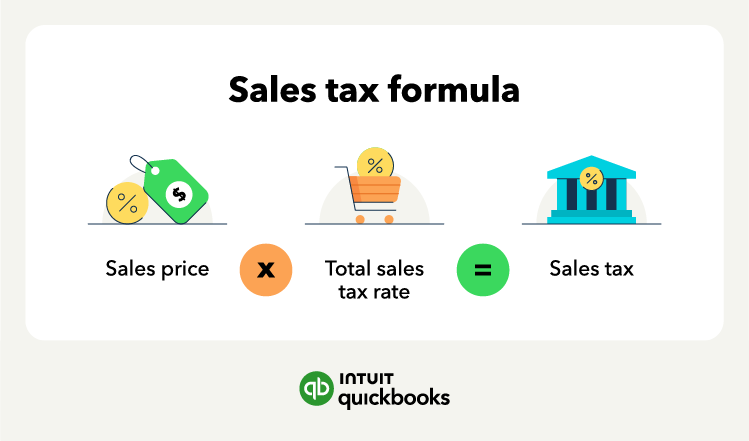
Multiply the pre-tax price by 6.35%, the rate at every Connecticut address, unless the item carries a category rate. Category rates include 7.35% for meals and certain beverages, and 7.75% for clothing, footwear, and certain accessories priced over $1,000 and for jewelry priced over $5,000. They also include 1% for computer and data processing services. On a $1,200 sale of general merchandise, that's $76.20 in tax and a $1,276.20 total.
Yes. The state rate is 6.35%, and no city, county, or other local jurisdiction adds a sales tax. So the rate is the same in Hartford, Stamford, New Haven, and at every other Connecticut address. What changes the rate is the item, not the address. Among the category rates: meals and certain beverages are 7.35%. Clothing, footwear, handbags, luggage, umbrellas, wallets, and watches priced over $1,000, and jewelry priced over $5,000, are 7.75% on the full price. Computer and data processing services, including electronically delivered software bought by a business for business use, are 1%.
Only if your service is on Connecticut's statutory list, but the list is long. Janitorial and building cleaning, landscaping and lawn care, pest control, snow removal, and dry cleaning and laundry are on it. So are management consulting, employment and personnel services, photographic studio services, pet grooming and boarding, manicures and spa services, self-storage, and repairs and maintenance to tangible personal property. Accounting, legal, engineering, veterinary, medical, basic barber and beauty services, and licensed massage therapy are not.
Services to real property are taxable for existing industrial, commercial, or income-producing property. They are not taxable for new construction or owner-occupied homes of three or fewer units. Building equipment repairs are taxable regardless of property type.
Food products for human consumption are generally exempt. But meals, alcoholic beverages, soft drinks, and sodas are taxed at 7.35%. Candy, confectionery, and gum are taxable at 6.35%. Clothing and footwear are taxable year-round at 6.35%. Any item priced over $1,000 is taxed at 7.75% on the entire price. During Sales Tax Free Week in August, most clothing and footwear priced under $300 per item is exempt.
The third Sunday in August through the following Saturday, every year. Most items of clothing and footwear priced under $300 per item are exempt for the week. That cap was raised from $100 by 2026 legislation. The same legislation extended the exemption to cleated shoes and backpacks. Clothing designed solely for athletic or protective use, jewelry, handbags, luggage, umbrellas, wallets, and watches don't qualify.
Manage sales tax in QuickBooks with automation that helps you save time and stay compliant.
Save time with automated sales tax
Products are automatically matched to tax categories, so you can charge the right sales tax with less manual work. Returns are automatically prepared and formatted for your state, and if you sell into other states, you can automate multi-state filing from one place.
Stay confident and compliant
File with confidence using accurate, automated calculations. Tax rates and rules change, and they are updated automatically in QuickBooks, so what you charge keeps up. Get reminders before filing deadlines so you can plan ahead, and know your return status with real-time updates.
Your data stays protected
Securely send returns to tax agencies and track every filing in QuickBooks.
Manage your books and sales tax in one place
Automatically calculate, collect, and track applicable sales tax from your customers. One report breaks out taxable and non-taxable sales, so you always know what to pay each agency. Prepare, file, and pay directly from QuickBooks.
Explore QuickBooks sales tax software to spend less time on tax and more time running your business.
*Sales tax filing is available as an add-on service through QuickBooks Online for $40 per filing.
You've got the rates and the rules that apply in Connecticut. The harder part is applying them correctly on every sale, every quarter. QuickBooks automated sales tax calculates the right combined rate, tracks what you've collected, and shows what you owe when it's time to file.
Call Sales: 1-800-285-4854


