Florida sales tax calculator
Know exactly what to charge at any Florida address. Find the combined rate, the tax on any amount, and the total. Free for your business, no sign-up.
Know exactly what to charge at any Florida address. Find the combined rate, the tax on any amount, and the total. Free for your business, no sign-up.
Done checking rates one sale at a time? QuickBooks applies the right Florida rate, state and county surtax included, on every invoice automatically. See how automated sales tax works
Florida's sales tax has two layers. The first is a 6% state rate set by the Legislature. The second is a discretionary sales surtax that most Florida counties add on top of it. The state administers both. One registration and one return with the Florida Department of Revenue cover the state tax and every county's surtax. The surtax you collect is based on the rate in the county where you deliver.
The average American side hustle brings in about $2,038 a month, according to Intuit QuickBooks entrepreneurship research. At that size, a Florida seller is squarely in the system. You register with the Department of Revenue. You charge 6% plus whatever surtax the delivery county imposes. Your state return carries the surtax on its back page.
The rate is only part of the math in Florida. The county surtax applies only to the first $5,000 of any single item. Almost all services are outside the tax entirely. A repair of goods is taxable in full whenever parts are involved. Whether you run a boutique in Miami, a commercial cleaning crew in Tampa, or a furniture store in Orlando, here's how Florida's rate works. You'll also see which of your sales it reaches and what to know at filing time.
Florida's state sales tax rate is 6%. Most counties add a discretionary sales surtax on top of it. So the combined rate depends on the county where the sale is delivered. There are two layers:
Not every county imposes a surtax. Where one applies, it reaches most transactions subject to the sales or use tax. But it reaches only the first $5,000 of the sales amount of any single item of goods, which the law calls tangible personal property. The amount above $5,000 is surtax-free.
There is no county registration. A seller registers once with the Department of Revenue. The seller collects the surtax at the rate of the county where the item is delivered, and reports state tax and surtax on the same return. The Department publishes every county's surtax rate on Form DR-15DSS, updated each November. Its Address/Jurisdiction Database identifies the county and the rate for any Florida address.
The 6% state sales tax applies to the full sales price of a taxable item. The county discretionary sales surtax does not. It applies only to the first $5,000 of the sales amount of any single item of goods. The amount above $5,000 is surtax-free. The Department of Revenue's own example: a $7,000 dining room set is delivered into a county with a 1% surtax. It carries $420 of state tax (6% of the whole $7,000) and $50 of county surtax (1% of the first $5,000), $470 in all.
The cap is per item. But two or more items count as a single item for the cap when all of these apply:
The cap covers leases and rentals too. Each lease or rental payment is a separate transaction, and the surtax applies to the first $5,000 of each payment. The cap does not apply to services, service warranties, admissions, transient accommodations, or parking, boat docking, and storage rentals. Those bear surtax on the full amount.
For a seller, the cap changes two things. A single high-ticket item carries less tax than the combined rate suggests. So on anything over $5,000, multiplying the whole price by the combined rate overstates the tax. And the return asks for the exempt amount of items over $5,000 on its own line. So track those sales separately.
The surtax is collected in addition to the 6% state tax. It is based on the rate in the county where you deliver taxable goods or services, no matter where your business is located.
For goods, that is where your customer takes possession: your location if they pick up in person, the delivery address if you deliver. That holds whether you deliver it yourself or a manufacturer or wholesaler delivers it to your customer for you. For taxable services, it is generally the county where the service is provided, or where the paperwork or other property representing the service is delivered.
If delivery is into a county that does not impose a surtax, no surtax is due. You register once with the Department of Revenue, never with a county. You report the surtax on the back of the same return as the state tax.
Florida is a destination-sourced state. Under Fla. Stat. § 212.054 and the Department of Revenue's surtax rules, a sale is treated as occurring in the county where the goods, or the service, are delivered. The surtax is collected at that county's rate. For goods, that is where your customer takes possession.
For taxable services, it is generally the county where the service is provided or where the property representing it is delivered. If there is no reasonable evidence of where a service was delivered, the sale occurs in the county where your customer accepts the bill.
Your own location matters only when the customer takes delivery there. The state portion is 6% wherever you deliver in Florida. Only the surtax changes with the county. Find your situation:
If you sell goods in person at your location: your customer takes possession at your counter. So the sale occurs in your county. Charge 6% plus your county's surtax, if your county imposes one. The Department's own example: a dealer in a county with no surtax sells a washing machine. The customer takes it at the dealer's location and then carries it to a surtax county. The sale occurred in the dealer's county, and no surtax is due from the seller or the buyer.
If you ship or deliver goods to Florida customers: the sale occurs in the county where the goods are delivered. That holds whether you deliver them yourself or a manufacturer or wholesaler delivers them to your customer on your behalf. Charge 6% plus that county's surtax at that county's rate. If it imposes none, charge 6% alone. The Department's examples: a dealer in one surtax county delivers a washing machine into a county with a different surtax rate. It collects the delivery county's rate. An office-equipment dealer has an out-of-state manufacturer ship directly to a customer in another county. It collects the rate where the customer took delivery.
If you repair or alter a customer's goods: a repair of goods is taxable on the total charge, parts and labor, whenever you furnish any parts or materials. For the surtax, the sale is generally treated as occurring where the repaired item is delivered back to the customer. That is your shop if they pick it up, their address if you deliver it. If there is no reasonable evidence of delivery, it's the county where the customer accepts the invoice.
If you perform a taxable service at the customer's location: nonresidential cleaning, nonresidential pest control, and security, detective, and burglar protection services are generally sourced to the county where you provide them. The Department's examples: a cleaning company based in a county with no surtax cleans a commercial building in a surtax county. The sale occurs in that county at its rate. A company that monitors burglar alarms at a customer's location in another county charges that county's rate.
When a service spread across several counties can't reasonably be allocated, the sale occurs in the county where the customer accepts the invoice. The Department's example is an armored car service covering a bank's branches in several counties, where the main bank receives the invoice.
If you sell through a marketplace like Amazon or Etsy: a marketplace provider with a Florida presence must register, collect, and pay sales tax and county surtax on every sale it facilitates. The same goes for a provider with more than $100,000 in taxable Florida remote sales in the previous calendar year. The marketplace provider certifies its collection to its sellers. Once the marketplace certifies, you may not collect tax on those marketplace sales. You must exclude them from your own return.
If you're located in Florida, you still register as a dealer. You still collect on sales made outside the marketplace, such as your own website or in person. If you're an out-of-state, or remote, seller whose only Florida sales run through certified marketplaces, those sales don't count toward your own registration threshold. Keep records of your marketplace sales and the provider's certification.
If you're out of state selling into Florida: Florida's economic nexus threshold is $100,000 in taxable sales into Florida, measured over the previous calendar year. There is no transaction-count test. The rule took effect July 1, 2021. Marketplace sales are excluded from the threshold for individual sellers. Once you meet the threshold, you register and begin collecting on the first of the calendar year after the year you met it.
Until you've met it, you aren't required to collect Florida tax on your remote sales, as long as you have no physical presence in Florida. A seller that has an office, salesroom, warehouse, or other place of business in the state, or that solicits orders here through representatives or agents, is a Florida dealer. That seller registers and collects regardless of sales volume.
Once you have met the threshold, the same rules apply to you as to a Florida seller. Each sale is delivered into a Florida county. You collect the 6% state tax plus that county's surtax, if any, at the rate where the item is delivered. Remote sellers and marketplace providers file and pay electronically.
Sales with their own sourcing rules. Motor vehicles and mobile homes that must be registered follow a different rule. The surtax is based on the county of the buyer's residence address on the registration or title. It is not based on where the vehicle is delivered. Admissions are sourced to the county where the event is held. Service warranties are sourced to the county where the covered property is delivered or located. Electricity and gas are sourced to the county where the consumer is located. A florist's sale is sourced to the county where the florist taking the original order is located.
Short-term lodging is sourced to the county where the accommodation is located. It also carries a county tourist tax that, in most counties, is registered and paid to the county directly. Leases and rentals of equipment are taxable on the gross rental charge. Each payment is a separate transaction for the surtax, and the surtax applies to the first $5,000 of each payment.
Worked example. You build furniture in Orlando, in Orange County, and sell a $900 table.
Same table, same week, a different surtax on your return. Florida's return asks separately for amounts subject to surtax at a rate different from your own county's. So keep the delivery address with every sale.
Florida taxes sales of physical goods unless exempt. It taxes only a short list of specific services. The lines that matter most to small sellers:
Groceries: food products for human consumption are exempt. The taxable carve-outs are prepared food, candy, and soft drinks. Prepared food: meals served with tables or counters, sandwiches sold ready for immediate consumption, food sold hot, and vending machine food. Florida defines soft drinks broadly to include non-carbonated drinks, tea sold in liquid form, and fruit drinks labeled "ade," "drink," "beverage," or "cocktail."
Natural 100 percent fruit or vegetable juice and plain bottled water are exempt. Ice cream, frozen yogurt, and similar frozen treats are taxable in pints or smaller. They are exempt in containers larger than a pint. Vitamins, dietary supplements, and meal replacements are exempt as groceries. Restaurant sales and catering are taxable.
Bakery items: sold by a bakery without eating facilities, exempt. A bakery with eating facilities charges tax unless the items are packaged for consumption off premises. Quantities of five or fewer are presumed taxable.
Clothing: taxable year-round. Florida has no general clothing exemption. Clothing, footwear, accessories, protective clothing, and sports equipment are all taxable. So are clothing alteration and repair charges. The annual back-to-school holiday is covered below.
Software and digital products: delivery method controls. Prewritten, or off-the-shelf, software sold on physical media is taxable. Software delivered electronically, with nothing tangible changing hands, is not subject to sales tax. Custom software is a nontaxable service regardless of delivery. SaaS, cloud hosting, and digital products such as e-books, downloaded music, and apps are not subject to sales tax. Streaming is different. Video and music streaming are subject to Florida's separate communications services tax. A seller of streaming subscriptions registers for and collects that tax instead of sales tax.
The bundling trap: digital content sold together with tangible property makes the whole charge taxable unless the digital portion is separately stated and optional. Computer hardware is taxable, including charges for services included in its sale or lease.
Services: most are not taxable. The taxable ones are:
Admissions are taxed separately. Charges to enter a place of amusement, sport, or recreation are generally taxable under Florida's admissions tax. The rate is 6% plus county surtax. Dues and fees paid to private or membership clubs providing recreational or physical fitness facilities are generally taxable the same way. Such clubs include gyms and other athletic, exercise, and fitness facilities.
Cleaning and pest control for homes and apartments are exempt. So are lawn care and landscaping, pool cleaning, barber and beauty services, pet grooming and boarding, and instruction and lessons. All professional services are exempt too, including legal, accounting, bookkeeping, engineering, medical, veterinary, and consulting. A seller of nontaxable services pays tax on the equipment and supplies it buys to perform them.
Two goods-adjacent rules catch service sellers. Photography delivered in tangible form is taxable on the full charge, including sitting fees and labor. Photos delivered only electronically are not taxable. Taxidermy, engraving, and printing are taxable as fabrication or sales of tangible property.
Repairs: if a repair of goods involves any parts or materials at all, the entire charge including labor is taxable. That holds even for trivial parts or materials that aren't separately billed. A repair is exempt only when it is purely labor and your records establish that no materials were incorporated into the repaired item. Service warranties covering taxable goods are taxable when sold, whether optional or required. Warranties covering property that is not taxable, such as custom software, are not.
Medical items: prescription drugs are exempt. So are over-the-counter common household remedies on the state's approved list, with or without a prescription. Those include pain relievers, cold and cough medicine, antacids, bandages, gauze, first aid kits, and similar items. Cosmetics and toiletries are taxable even when they contain medicinal ingredients, unless dispensed by prescription. Prescription eyeglasses, lenses, and contact lenses are exempt. Standard or stock eyeglasses sold without a prescription are taxable. Hearing aids, including parts and batteries, are exempt.
Commercial rent: Florida repealed its sales tax on commercial real property rent effective October 1, 2025. Rent and license fees for occupancy periods beginning on or after that date are not taxable. That goes for state tax and county surtax both. Rent for periods through September 2025 remains taxable even if paid late. Self-storage unit rentals became nontaxable with the repeal. Parking lots and garages, boat docks and marinas, and aircraft storage are taxed under a different statute. They remain taxable.
Selling a mix of taxable and exempt items is where receipts get messy. Track the two buckets separately from the start.
Use tax is the buyer's side of the same tax. It is due on the use or consumption of taxable goods or services when Florida sales tax was not paid at the time of purchase. Any of these triggers it:
Florida generally presumes that goods you used in another state for six months or longer before bringing them in were not purchased for use in Florida. So no use tax is due on them. The presumption does not extend to rented or leased property or to certain boats. The statute sets the use tax at 6 percent of the cost price. That is the same rate it sets for the state sales tax. The two taxes are complements. So property whose retail sale is specifically exempt from sales tax is not subject to use tax either.
For a business, this shows up when you order equipment, supplies, or software on physical media from a vendor that didn't charge Florida tax. Say your café in Fort Lauderdale, in Broward County, buys a $3,000 commercial espresso machine from an out-of-state vendor. The invoice shows no Florida tax. You owe $180 in state use tax (6% of $3,000). You also owe Broward County's 1% surtax on the same $3,000, since the machine is under the $5,000 cap. The surtax is $30. That is $210 in all.
There is a local use tax. A registered dealer that owes use tax on goods purchased outside Florida for use in a surtax county pays the surtax at the rate of the county where the goods are used. The $5,000-per-item limit applies to use just as it does to sales.
There are two exceptions. If you paid Florida sales tax and surtax to the seller at the time of sale, no additional surtax is due when you later use the item in a county with a higher rate. And a person who is not required to register as a dealer owes no surtax on use tax for goods bought out of state, in another country, or through a remote sale.
How you report it. A registered dealer reports use tax on the Taxable Purchases line of the regular Sales and Use Tax Return (Form DR-15). It goes on the return for the period in which you purchased, used, or consumed the item. The surtax is included and broken out on the back of the return.
If you paid another state's sales tax at a lower rate, you report the full Florida use tax. You also claim a credit for the tax lawfully paid to the other state. If that state's tax was equal to or greater than Florida's, no Florida use tax is due. Someone who isn't registered reports use tax on the Out-of-State Purchase Return (Form DR-15MO). It is due by the 20th day of the month after the end of the calendar quarter in which the item first came to rest in Florida.
Florida's back-to-school sales tax holiday is permanent. It runs July 20 through August 20 every year. During the window, these items are exempt:
The holiday does not apply to sales in theme parks, entertainment complexes, public lodging establishments, or airports. Sellers cannot opt out.
A hunting, fishing, and camping holiday has been enacted year by year rather than by standing law. The 2026 version runs September 1 through December 31, 2026. It covers firearms, ammunition, fishing gear, tents, and similar items with per-item caps. Check the Department of Revenue's sales tax holidays page each year rather than assuming it recurs.
Many disaster supplies are now exempt year-round instead of during a holiday:
Your filing frequency follows your annual collections. The Department of Revenue assigns monthly filing if you collect more than $1,000 in sales tax a year. Quarterly is for $501 to $1,000, semiannual for $101 to $500, and annual for $100 or less. Most new businesses are set up to file and pay quarterly.
Returns are due on the 1st and late after the 20th. Returns and payments are due on the first day of the month after the reporting period and are late after the 20th. That holds whether you file monthly, quarterly, twice a year, or yearly. January's monthly return is due February 1 and late after February 20. A January through March quarterly return is due April 1 and late after April 20. If the 20th falls on a Saturday, Sunday, or state or federal holiday, the first business day after it counts as timely.
If you pay electronically, you must initiate the payment and receive a confirmation number no later than 5 p.m. Eastern on the business day before the 20th to avoid penalty and interest.
Electronic filing is required at $5,000 or more. If you paid $5,000 or more in sales and use tax during Florida's prior fiscal year (July 1 through June 30), you must file and pay electronically during the next calendar year. That begins with the January return filed in February. Marketplace providers and remote sellers file and pay electronically regardless. Fail to when required and there is a $10 penalty for the return and another $10 for the payment, on top of any other penalty.
Anyone may file electronically. When you e-file and e-pay on time, you may take a collection allowance of 2.5% of the first $1,200 of tax due, up to $30 per return.
One return, but the surtax wants its own lines. You register each Florida business location with the Department of Revenue, never with a county. State tax and county surtax go on the same Sales and Use Tax Return (Form DR-15). The surtax is broken out on the back of the return:
If you're reporting surtax collected, you must complete the back of your return. Keeping the delivery county with each sale turns those lines into a sort, not a research project.
File every return, including zero returns. Florida law requires a return for each reporting period even when no tax is due. The late penalty, 10% of the tax owed but not less than $50, applies even when no tax is due.
Tip: if a rate error slips through, fix the rate first, then correct the affected returns. Undercollect and the difference comes out of your pocket. Overcollect and you owe refunds. Tax you collected as tax is never yours to keep. An amended Florida return replaces the return you previously filed for the same period. So complete it as it should have been filed originally, rather than entering only the corrections.
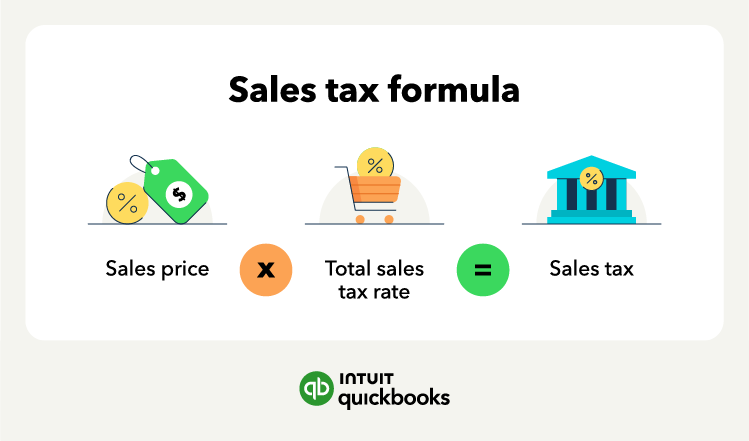
Multiply the pre-tax price by the combined rate for the county where you deliver. That is the 6% state rate plus that county's discretionary sales surtax, if it has one. On a $1,200 sale delivered into Orange County, where the surtax is 0.5%, the rate is 6.5%: $78 in tax and a $1,278 total.
No. The state rate is 6% wherever you deliver in Florida. But most counties add a discretionary sales surtax, a few don't, and the surtax rates vary by county. The surtax you collect is based on the county where you deliver the goods or service, not on where your business is. The Department of Revenue publishes each county's rate on Form DR-15DSS, updated each November. Its Address/Jurisdiction Database identifies the county and the rate for any Florida address.
Generally not. Florida taxes only the services named in the statute. Those are nonresidential cleaning and janitorial services, nonresidential building pest control, security, detective, burglar protection, and armored car services, and written or printed reports of compiled information sold to multiple customers. Admissions are taxed too. Charges to enter a place of amusement, sport, or recreation are generally taxable under Florida's admissions tax. Dues and fees for clubs providing recreational or physical fitness facilities, such as gyms and other athletic, exercise, and fitness facilities, are generally taxable too.
Residential cleaning, residential pest control, lawn care, landscaping, pool cleaning, barber and beauty services, pet grooming, lessons, and professional services such as legal, accounting, and consulting are not taxable. Two rules catch service sellers anyway. A repair of goods is taxable on the whole charge, labor included, whenever any parts or materials are involved. Photography delivered as prints or on a disc or drive is taxable on the full charge, sitting fee included.
No. Food products for human consumption are exempt. Candy, soft drinks (including many non-carbonated drinks), hot food, food sold ready to eat, and ice cream in pints or smaller are taxable. So are restaurant and catering sales. Vitamins and dietary supplements are exempt as groceries.
July 20 through August 20, every year. The holiday is permanent. Clothing, footwear, wallets, and bags priced at $100 or less per item are exempt. So are school supplies at $50 or less, and learning aids and jigsaw puzzles at $30 or less. Personal computers and related accessories at $1,500 or less, for noncommercial home or personal use, are exempt too. It does not apply to sales in theme parks, entertainment complexes, public lodging establishments, or airports. Sellers cannot opt out.
Manage sales tax in QuickBooks with automation that helps you save time and stay compliant.
Save time with automated sales tax
Products are automatically matched to tax categories, so you can charge the right sales tax with less manual work. Returns are automatically prepared and formatted for your state, and if you sell into other states, you can automate multi-state filing from one place.
Stay confident and compliant
File with confidence using accurate, automated calculations. Tax rates and rules change, and they are updated automatically in QuickBooks, so what you charge keeps up. Get reminders before filing deadlines so you can plan ahead, and know your return status with real-time updates.
Your data stays protected
Securely send returns to tax agencies and track every filing in QuickBooks.
Manage your books and sales tax in one place
Automatically calculate, collect, and track applicable sales tax from your customers. One report breaks out taxable and non-taxable sales, so you always know what to pay each agency. Prepare, file, and pay directly from QuickBooks.
Explore QuickBooks sales tax software to spend less time on tax and more time running your business.
*Sales tax filing is available as an add-on service through QuickBooks Online for $40 per filing.
You've got the rates and the rules that apply in Florida. The harder part is applying them correctly on every sale, every quarter. QuickBooks automated sales tax calculates the right combined rate, tracks what you've collected, and shows what you owe when it's time to file.
Call Sales: 1-800-285-4854


