Georgia sales tax calculator
Know exactly what to charge at any Georgia address. Find the combined rate, the tax on any amount, and the total. Free for your business, no sign-up.
Know exactly what to charge at any Georgia address. Find the combined rate, the tax on any amount, and the total. Free for your business, no sign-up.
Done checking rates one sale at a time? QuickBooks applies the right Georgia rate, state and local included, on every invoice automatically. See how automated sales tax works
Georgia's sales tax has two layers. The first is a 4% state sales tax. The second is the local sales taxes that counties layer on top of it: LOST, SPLOST, education, transportation, and MARTA taxes. Inside the City of Atlanta, a city sales tax applies as well. The Department of Revenue administers all of them on the same return.
The average American side hustle brings in about $2,038 a month, according to Intuit QuickBooks entrepreneurship research. At that size, a Georgia seller is squarely in the system. You register once through the Georgia Tax Center. You charge a combined rate that follows where the customer receives the goods. Your state return reports sales by jurisdiction.
What makes Georgia different isn't the local layer. It's what the tax reaches. Georgia taxes sales of physical goods and only a handful of named services. So most service businesses charge their customers no sales tax at all. They pay tax on their own materials and supplies instead. Since 2024 it also taxes digital goods a customer keeps permanently. Whether you run a boutique in Atlanta, build furniture in Savannah, sell books in Athens, or run a food truck in Macon, here's how Georgia's rate works. You'll also see which of your sales it reaches and what to know at filing time.
Georgia's state sales tax rate is 4%. Counties layer local sales taxes on top of it. So the combined rate at any address is 4% plus the local taxes imposed there. There are two layers:
The local layer is county by county, with one main exception. If your customer takes delivery in the City of Atlanta, a city sales tax generally applies in addition to the state and county taxes. So the Department's rate chart lists Fulton (Atlanta) and DeKalb (Atlanta) as their own jurisdictions. The chart also carries separate codes for Hapeville, College Park, and East Point in Fulton County. It carries a separate code for College Park in Clayton County as well. The Department of Revenue publishes that rate chart each quarter. It lists each jurisdiction's combined rate and the types of local tax that make it up.
There is no separate local registration. You register once with the Department of Revenue through the Georgia Tax Center. You collect every layer that applies where the sale is sourced. You report your sales by jurisdiction code on one state return. Sellers never register with a Georgia city or county for sales tax.
Georgia imposes sales tax on retail sales of goods, which the law calls tangible personal property. Services are generally not taxable. The named exceptions are short-term accommodations, in-state transportation of individuals, admissions, and charges for participation in games and amusement activities. Short-term accommodations means lodging furnished to transients. A stay of 90 continuous days or more is exempt. Lodging also carries Georgia's state hotel-motel fee and any local hotel-motel excise tax. Those are separate from sales tax and not covered here.
Outside those categories, services are generally not taxable to the customer. That includes janitorial and building cleaning, lawn care and landscaping, pest control, pool cleaning, window cleaning, moving, pet grooming and boarding, barber and beauty services, massage, tattooing, and instruction. It also includes all professional services (legal, accounting, engineering, medical, veterinary).
The trade-off is that service businesses are the consumers of what they use. A cleaning company pays tax on its supplies, a landscaper on its plants and mulch, a dry cleaner on its solvents. Georgia applies that treatment across service trades rather than naming each one.
Where it gets specific is the invoice. Three rules decide how much of a mixed bill is taxable:
A few goods-adjacent traps catch service providers:
Effective January 1, 2024, Georgia also taxes specified digital products, other digital goods, and digital codes sold to an end user with the right of permanent use that is not conditioned on continued payment. Those are digital audio, video, books, artwork, magazines, newspapers, photographs, and video games. The lines:
What this means for a seller: before you price a service or a digital product, check the Department's What is Subject to Sales and Use Tax? page. Check it in both directions, for charges you assumed were taxable and for charges you assumed were not.
Georgia is a destination-sourced state. Under O.C.G.A. § 48-8-77, a sale is sourced to the place where your customer receives what they bought. That is your business location if they receive it there. Otherwise it is the location where they, or someone they designate, take receipt, including the delivery address you were given. Receipt means taking possession of goods, making first use of a service, or taking possession or making first use of digital goods, whichever comes first.
The Department of Revenue puts it plainly. In most instances, sales tax is due at the rate of the county where the customer takes delivery. A dealer must collect at the rate of the local jurisdiction where the product is delivered, even if the dealer has no presence there. The local taxes follow the same rule. The local rate is the rate where your customer receives the goods. For a shipped order, that is the delivery address rather than your location. Find your situation:
If you sell goods in person at your location: the sale is sourced to your business location. You charge that location's combined rate.
If you ship or deliver goods to Georgia customers: the sale is sourced to the location where your customer receives the goods, including the delivery address you were given. You charge the combined rate for that address. In the Department's words, a dealer must collect sales tax at the rate of the local jurisdiction where the product is delivered even if the dealer has no presence in that local jurisdiction. Your delivery charge is part of the taxable sale, so it is taxed with the goods.
If you provide a service: most services are not taxable in Georgia. So for a cleaning company, a landscaper, a salon, or a repair shop's labor, there is generally no sales tax to source. You pay tax on the supplies you use instead. The services Georgia does tax are short-term accommodations, admissions, games and amusement activities, and in-state transportation of individuals. For those, the statute sources the sale to where your customer first uses the service. That is generally where you provide it.
If you repair a customer's goods (vehicles, boats, watches, furniture, appliances, clothing, and other tangible personal property): when you itemize parts and labor, only the parts are taxable. The parts are goods, so the sale is generally sourced to where the customer takes possession of the repaired item. That is your shop if they pick it up there, or their address if you deliver or ship it back. If you bill parts and labor as one unseparated charge, the entire amount is taxable. It is generally sourced the same way.
If instead you furnish materials and perform work that constructs, alters, repairs, or improves real property (a building or the land it sits on), you are a contractor. You pay tax on your materials and charge the customer no sales tax, itemized or not (see Contractors above).
If you sell digital goods: a digital product sold with the right of permanent use is sourced to where the customer takes possession of it or first uses it, whichever comes first. Where neither your location nor the place of receipt applies, the statute falls back to your business records. It uses the customer's address in the records you keep in the ordinary course of business.
If you sell through a marketplace like Amazon or Etsy: since April 1, 2020, a marketplace facilitator whose facilitated Georgia sales reach $100,000 in the current or previous calendar year is the dealer responsible for collecting and sending in state and local tax on the sales it facilitates. The $100,000 counts its own sales plus all its sellers', combined. Marketplace sellers are not required to collect on facilitated sales. They are not liable for tax the facilitator must collect. Your direct sales, on your own website or in person, remain your responsibility on your own Department of Revenue registration.
If you're out of state selling into Georgia: if you have no physical presence in Georgia, you must register and collect once your retail sales into Georgia reach $100,000, or 200 or more sales, in the previous or current calendar year. A business physically located in Georgia must register regardless of its sales volume, unless all of its sales are made through a marketplace. Either prong alone triggers the obligation, so a low-dollar seller can cross on transaction count.
Retail sales of tangible personal property delivered electronically or physically count toward the test, whether taxable or exempt. Sales facilitated by a registered marketplace are excluded from it. A seller excludes facilitated sales when testing its own threshold. The obligation starts with the next transaction after you meet the threshold.
Until you've crossed either prong, the economic nexus rule alone doesn't require you to collect Georgia tax. Once you have, the same sourcing rules apply to you. Each shipment is sourced to its Georgia delivery address. You collect the state tax plus that address's local taxes, even though you have no presence in that jurisdiction. Georgia lowered the sales threshold from $250,000 to $100,000 effective January 1, 2020. The 200-transaction test has been part of the rule since economic nexus took effect on January 1, 2019.
Sales with their own sourcing rules. Leases and rentals of equipment and other goods are outside the retail-sale rule. The statute sources payments after the first one to the primary property location. That is the address for the property that the lessee provides. Advertising and promotional direct mail, other direct mail, and telecommunications services have their own sourcing rules under the same Code section.
Worked example. You build furniture in Savannah and sell a $900 table.
Same table, same week, a different rate and a different jurisdiction code on your return. Georgia's return reports taxable sales by jurisdiction code, so keep the delivery address with every sale.
Georgia's exemptions turn on specific definitions. One of them, groceries, splits the state and local layers. The ones that matter most to small sellers:
Groceries: food and food ingredients sold to individuals for off-premises consumption are exempt from the state sales tax. They remain subject to local sales taxes, except in counties with an equalized homestead option sales tax. A grocer charges local-only tax on groceries. The exemption applies to purchases by individuals. A business buying food gets no exemption. More on this below.
Candy and packaged drinks: candy and packaged beverages of all kinds, including bottled water and packaged carbonated soft drinks, count as food. That makes them state-exempt and local-taxable. Fountain drinks are prepared food and fully taxable. Dietary supplements (anything with a Supplement Facts label) are excluded from food. They are taxable at state plus local rates.
Prepared food: fully taxable, state and local. That generally means:
Food the seller only cuts, repackages, or pasteurizes stays in the grocery bucket, such as deli meat sliced and sold by weight. So do raw meat, fish, poultry, and eggs the customer must cook. Restaurants, food trucks, caterers, and bakeries selling what they bake on site all fall under prepared food. Alcoholic beverages are fully taxable too.
Clothing: taxable year-round. Clothing, footwear, accessories, protective clothing, and sports equipment are all taxable as goods. Georgia has no sales tax holiday. Separately stated alteration charges are not taxable. But alteration charged as part of the garment's sale is part of the taxable price.
Software and digital products: off-the-shelf, or prewritten, software sold on tangible media (disk, drive) is taxable. Delivered electronically or by load-and-leave, it is not. So keep documentation of the delivery method, since tangible delivery is presumed otherwise. Custom software is a nontaxable professional service in any medium. SaaS and cloud-accessed software are not taxable, and neither is internet access. Computer hardware is taxable. Software maintenance agreements split three ways:
Digital goods sold with the right of permanent use are taxable (see above).
Prescription drugs and medical items: drugs dispensed by prescription are exempt. Over-the-counter drugs are taxable even when dispensed under a prescription. Durable medical equipment and mobility-enhancing equipment are exempt only when sold to the individual named in a prescription. Prosthetic devices are exempt when permanently transferred under a prescription. Hearing aids are exempt for all buyers. Eyeglasses and contacts are exempt only when sold to an individual under a prescription. Insulin, insulin syringes, and blood glucose test strips are exempt for everyone. Vitamins and supplements are taxable.
Resale and manufacturing: anything bought for resale is exempt with a Georgia resale certificate (Form ST-5). Containers, packaging, wrappers, and labels used in packaging products for sale are exempt. Machinery and equipment necessary and integral to manufacturing, repair and replacement parts, industrial materials that become part of the product, and packaging supplies are exempt.
Nonprofits: federal 501(c)(3) status does not by itself exempt a nonprofit's purchases in Georgia. A nonprofit pays sales tax unless it falls within a specific statutory exemption category and holds an exemption determination letter from the Department of Revenue.
Selling a mix of fully taxable, local-only, and exempt items is where receipts get messy. Track the buckets separately from the start.
Use tax is the buyer's side of the same tax. The Department of Revenue describes it two ways. The first is a tax imposed on non-exempt items brought into Georgia. The second, in the term's common use, is the tax on taxable goods and services that were not taxed at the point of sale.
The first kind is imposed upon the first instance of use, consumption, distribution, or storage in Georgia of non-exempt goods purchased at retail outside Georgia. If the property was used for six months or less outside Georgia before its first use here, the tax is on the purchase price. Property used longer than six months outside Georgia is taxed on the lesser of the purchase price or its fair market value. Your use tax liability is reduced by like taxes you previously paid in another state.
The rate mirrors the sales tax, local layer included. The use tax rate is the sum of the 4% state tax rate and the local tax rate. So there is a local use tax. Generally the applicable local rate is the rate imposed in the county where you receive the goods. If you transported the property in from another state, it is the rate of the jurisdiction where you first used the property.
Use tax also catches purchases that never crossed a state line. If you buy taxable goods or services in Georgia without paying tax, you must accrue and send in the tax yourself. The Department's example: a retailer buys light bulbs tax free for resale. Then she takes them out of inventory to light up the store. She now owes tax on the price she paid for the bulbs.
Its online example: Joe buys a bicycle online, and the seller charges no sales tax. The bicycle is delivered to Joe in Georgia. Joe owes use tax on the bicycle's sales price. Shipping and handling, transportation, and delivery fees charged by the seller of taxable goods are part of the amount subject to Georgia tax.
For a business, this shows up when you order equipment, supplies, or software from a vendor that didn't charge Georgia tax. Say your café in Atlanta buys a $3,000 commercial espresso machine from an out-of-state seller that doesn't collect Georgia tax. It is delivered to your door. You owe $120 in state use tax (4% of $3,000). You also owe local use tax on the same $3,000. The local rate is the rate for the jurisdiction where you received the machine. The Department's rate chart shows each jurisdiction's combined rate. Its instructions say to subtract the 4% state rate from that total to find the local rate.
How you report it. If you're a registered dealer, you report use tax on your regular sales and use tax return (Form ST-3). You enter the use tax accrued by jurisdiction code and reason code:
If you're not a registered dealer, you report it on Form ST-3 USE, the Consumer's Use Tax Return.
Georgia's grocery rule is the quirk to internalize. Food and food ingredients sold to individuals for off-premises consumption are exempt from the state sales tax. But they remain subject to the local sales taxes, except in counties with an equalized homestead option sales tax. So a grocer charges local-only tax on groceries.
Unusually, candy and packaged soft drinks count as food for this purpose. So they are state-exempt and local-taxable too. Fountain drinks, heated food, seller-combined dishes, and food sold with seller-provided utensils are generally prepared food. Those are fully taxable at state plus local rates. The exemptions section above lists what stays in the grocery bucket. The exemption is for individuals: a business buying food gets none.
On the return, sales exempt from the state tax go in the Total Exempt Sales field. Taxable sales are reported by jurisdiction code. The Department's instructions add a special indicator for exempt food sourced to DeKalb County outside the City of Atlanta.
Georgia has no sales tax holidays. It ran back-to-school and energy-efficiency holidays for years. But the authorizing statutes expired after the July 2016 event, and none has been authorized since. There is currently no holiday of any kind. Clothing and footwear are taxable year-round. Sellers should not honor holiday requests based on other states' August events.
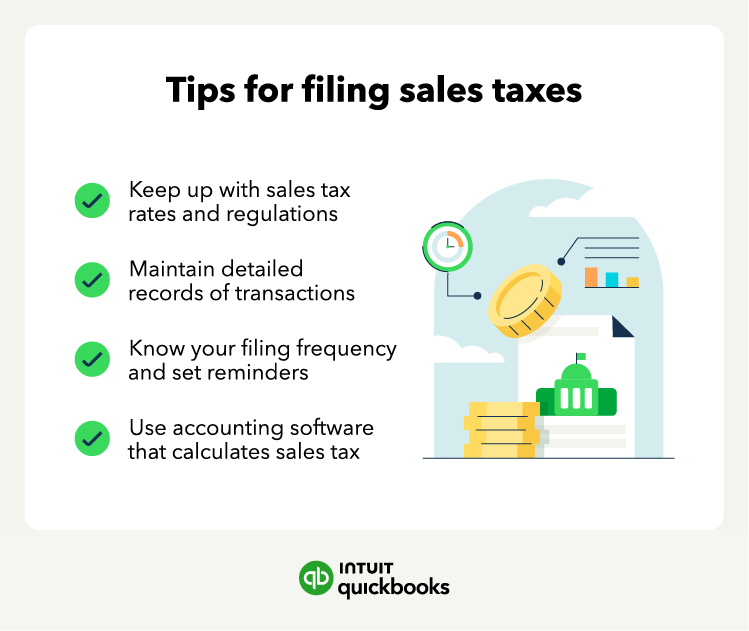
Georgia's filing calendar has one date to remember and a few mechanics that catch new sellers:
Returns are due the 20th of the following month. Sales and use tax returns are due and payable no later than the 20th day of the month following the period being reported. That holds whether you file monthly, quarterly, or annually. When the 20th falls on a Saturday, Sunday, or Georgia state holiday, you have through the next business day. For most taxpayers, returns are due every month.
New registrants file monthly for six months. Returns are filed on a calendar-month basis during the first six months from the date of registration. After that, a dealer whose sales and use tax liability has averaged less than $200 a month over a consecutive six-month period may be permitted to file quarterly. One whose liability has averaged less than $50 a month may be permitted to file annually. An annual return covers the calendar year and is due January 20.
Either change requires a written request and the Commissioner's written approval. The Commissioner can return a dealer to monthly or quarterly filing if its liability exceeds those limits or it files or pays late.
File and pay through the Georgia Tax Center. You need to file and pay electronically if you owe more than $500 in connection with any return, report, or other document pertaining to sales or use tax. That holds even if some later payments fall below $500. Anyone who pays electronically, whether required to or voluntarily, must file the associated returns electronically. If you are not required to file electronically and choose paper, you file Form ST-3.
One return, with the local breakout. There is no separate local return and no local permit. On the return you report total sales sourced to Georgia, sales exempt from the state tax, and taxable sales separated by jurisdiction code. Jurisdiction codes are three-digit numbers, one for the state (000) and one for each county. Sales sourced to the City of Atlanta use a combined county/city code. Use tax accrued is reported the same way, by jurisdiction code and reason code. A business with four or more separate locations files a consolidated return under a master sales tax number, broken down by location.
File every return, including zero returns. A sales tax return must be filed even when no tax is due or no sales were made. Records of sales and purchases, books of account, and invoices must be kept for at least three years.
Tip: if a rate error slips through, fix the rate first, then correct the affected returns. Undercollect and the difference comes out of your pocket. Overcollect and you owe refunds. Tax you collected as tax is never yours to keep.
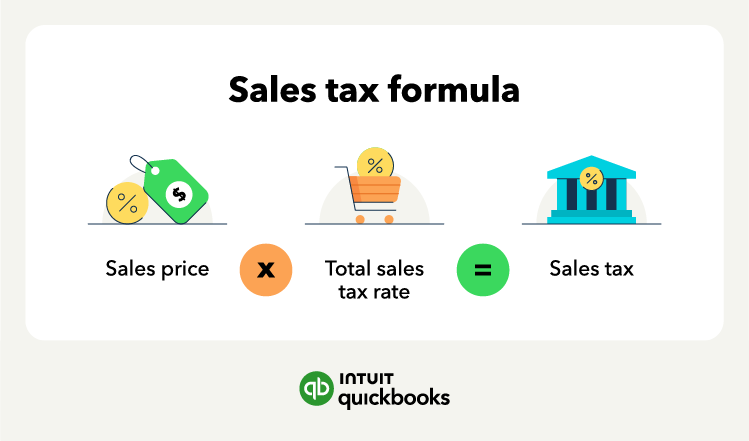
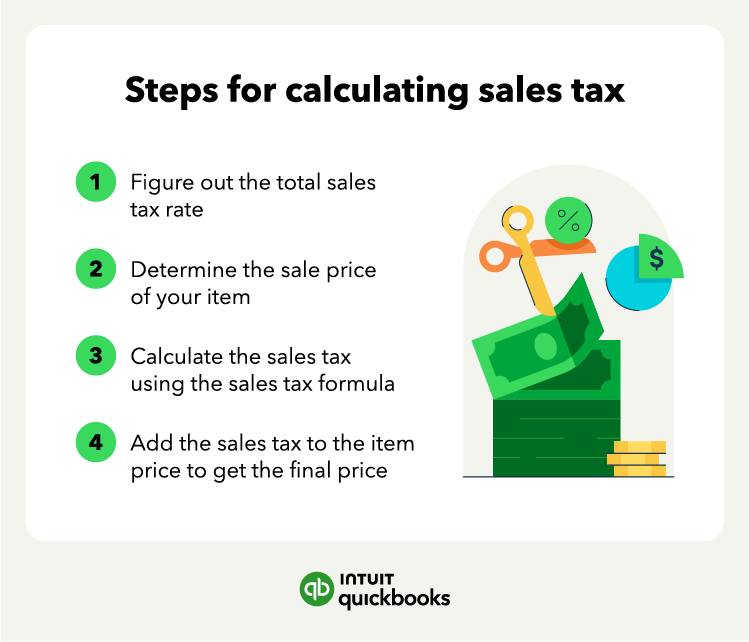
Multiply the pre-tax price by the combined rate where the sale is sourced. That is the 4% state rate plus the local sales taxes imposed where your customer takes delivery. Your customer takes delivery at your location if they pick up, or at the delivery address if you ship. The local taxes are the county's local taxes, plus the city sales tax if the address is inside the City of Atlanta. In Chatham County, the Department's rate chart effective October 1, 2026 shows a combined rate of 7%. There, a $1,200 sale carries $84 in tax and a $1,284 total.
Generally no. Apart from a few named categories, services are generally not taxable. The named categories are short-term accommodations, admissions, games and amusement activities, and in-state transportation of individuals. Cleaning, lawn care, pet grooming, repair labor, barber and beauty services, instruction, and professional work are not taxable to the customer. Instead you pay tax on the materials and supplies you use. Watch the goods that travel with a service:
Partly. Food and food ingredients sold to individuals for off-premises consumption are exempt from the state sales tax. They remain subject to local sales taxes, except in counties with an equalized homestead option sales tax. So grocers collect local-only tax on them. Candy and packaged beverages, including bottled water and packaged soft drinks, count as food. Prepared food, fountain drinks, dietary supplements, and alcoholic beverages are fully taxable at state plus local rates. Prepared food generally means food sold heated, mixed or combined by the seller as a single item, or sold with seller-provided utensils.
It depends on how it is delivered and whether the customer keeps it. Prewritten software on tangible media is taxable. Software delivered electronically or by load-and-leave is not. Neither are custom software, SaaS, cloud-accessed software, or internet access. Since January 1, 2024, digital audio, video, books, artwork, magazines, newspapers, photographs, and video games are taxable when sold to an end user with the right of permanent use not conditioned on continued payment. A download the customer keeps is taxable, even inside a subscription. An access-only streaming subscription is not.
No. Georgia's last sales tax holiday was held in 2016, and none has been authorized since. Clothing and footwear are taxable year-round.
Manage sales tax in QuickBooks with automation that helps you save time and stay compliant.
Save time with automated sales tax
Products are automatically matched to tax categories, so you can charge the right sales tax with less manual work. Returns are automatically prepared and formatted for your state, and if you sell into other states, you can automate multi-state filing from one place.
Stay confident and compliant
File with confidence using accurate, automated calculations. Tax rates and rules change, and they are updated automatically in QuickBooks, so what you charge keeps up. Get reminders before filing deadlines so you can plan ahead, and know your return status with real-time updates.
Your data stays protected
Securely send returns to tax agencies and track every filing in QuickBooks.
Manage your books and sales tax in one place
Automatically calculate, collect, and track applicable sales tax from your customers. One report breaks out taxable and non-taxable sales, so you always know what to pay each agency. Prepare, file, and pay directly from QuickBooks.
Explore QuickBooks sales tax software to spend less time on tax and more time running your business.
*Sales tax filing is available as an add-on service through QuickBooks Online for $40 per filing.
You've got the rates and the rules that apply in Georgia. The harder part is applying them correctly on every sale, every quarter. QuickBooks automated sales tax calculates the right combined rate, tracks what you've collected, and shows what you owe when it's time to file.
Call Sales: 1-800-285-4854


