Illinois sales tax calculator
Know exactly what to charge at any Illinois address. Find the combined rate, the tax on any amount, and the total. Free for your business, no sign-up.
Know exactly what to charge at any Illinois address. Find the combined rate, the tax on any amount, and the total. Free for your business, no sign-up.
Done checking rates one sale at a time? QuickBooks applies the right Illinois rate, state and local included, on every invoice automatically. See how automated sales tax works
Illinois sales tax has a 6.25% state rate. Municipalities, counties, and transit districts add local taxes on top of it. One state return carries all of them.
The average American side hustle brings in about $2,038 a month, according to Intuit QuickBooks entrepreneurship research. At that size, an Illinois seller is squarely in the system. That means one registration with the Illinois Department of Revenue and one return. Your combined rate depends on where the sale is sourced.
What makes Illinois different isn't the rate. It's two things. Illinois taxes goods and leaves services alone. So a service business's tax bill rides on the parts and products it hands over. And for a seller located in Illinois, the local rate generally follows the seller's own location rather than the customer's address. Whether you sell furniture in Champaign, run a boutique in Naperville, or repair appliances in Rockford, here's how Illinois's rate works. You'll also see which of your sales it reaches and what to know at filing time.
Illinois's state sales tax rate is 6.25%. Municipalities, counties, and transit districts impose local retailers' occupation taxes on top of it. So the combined rate at an Illinois address is 6.25% plus whatever local taxes apply there. The Illinois Department of Revenue administers all of them. The layers:
What Illinois calls sales tax is formally the retailers' occupation tax, or ROT. It is imposed on retail sales of goods, which the law calls tangible personal property. Illinois is unusual in using reduced state rates rather than exemptions for staples. Qualifying medicines and medical appliances are taxed at a 1% state rate. Groceries moved to a 0% state rate on January 1, 2026. Municipalities and counties can impose a local grocery tax of exactly 1%. Both are covered below.
There is one registration and one return, Form ST-1, for the state tax and every local tax the Department administers. Sellers never register with a municipality for sales tax. The correct combined rate for any location is in the Department's MyTax Illinois Tax Rate Finder. The exception is Chicago. It runs several of its own city taxes outside the Department's system. It requires separate registration with the city.
No service is taxable under the Illinois sales tax. There is no service tax and no list of taxable services. Cleaning, janitorial work, lawn care, landscaping, snow removal, pest control, pool cleaning, moving, instruction, pet grooming and boarding, barber and beauty services, and photography sittings are not taxed as services. The same goes for professional services such as legal, accounting, engineering, medical, and veterinary work.
Repair labor is not taxable either. Installation labor is not taxable when it is separately contracted for. If you sell the goods and install them, the installation charge is part of the taxable price unless the installation is separately contracted (see the installation bullet below).
A few service-like transactions are taxed under separate acts rather than the sales tax: short-term room rentals under the Hotel Operators' Occupation Tax, phone and wireless service under the Telecommunications Excise Tax, and Chicago's own lease transaction and amusement taxes. Renting out goods is different. Since January 1, 2025, a lease or rental of goods is a retail sale taxed under the sales tax itself, on the same registration and return (see below).
What a service business owes instead is the service occupation tax, or SOT. It applies to the tangible personal property the business transfers to customers as part of the service: repair parts, lawn chemicals and fertilizer, medicines a veterinarian administers, products a salon uses. How that plays out:
A $400 appliance repair in Rockford carries no tax on the labor. The parts are what the tax rides on. A de minimis repairer handles that by paying use tax on what the parts cost rather than collecting anything from the customer.
What this means for a seller: the question in Illinois is not whether your service is on a list, because there is no list. It is what you hand over, and how much of your receipts it represents. The Department's overview of the service occupation tax is the place to start.
The City of Chicago self-administers several city taxes outside the Department's system: the Personal Property Lease Transaction Tax, the Amusement Tax, the Restaurant Tax, and others. A business with those obligations registers and files separately with the Chicago Department of Finance.
They matter most to digital sellers and restaurants. For customers in Chicago, the lease transaction tax applies to SaaS, cloud software, and cloud infrastructure used in the city. The amusement tax applies to streaming video, music, and gaming delivered to Chicago customers. Both apply even though the state taxes none of it. Sellers in Chicago also collect two city beverage taxes: a 3% soft drink tax on soft drinks other than fountain drinks, and a $0.05 per bottle tax on bottled water.
Local retailers' occupation taxes ride on the same registration and return as the state tax. The local rate that applies can differ by how the sale happens. In-store sales use the store's location, while remote and marketplace sales are taxed at the delivery destination. Which rate applies to each of your sales is the subject of the next section.
Illinois sources sales by origin for retailers located in Illinois. It sources by destination for remote retailers, marketplace sales, and sales an Illinois retailer makes from a location outside the state. The 6.25% state rate is the same statewide on general merchandise. What changes with location is the local layer.
Under 35 ILCS 120/2-12 and the Department of Revenue's sourcing rule (86 Ill. Adm. Code 270.115), local tax is owed in the jurisdiction where the retailer is "engaged in the business of selling." The Department decides that from the seller's own selling activities rather than from the customer's address.
For a retailer with one Illinois location, that generally means your location's combined rate on every sale. That holds whether the customer carries the item out or you deliver it across the state. Destination sourcing applies to a remote retailer with no Illinois presence, a marketplace facilitator, or an Illinois retailer selling from a location outside the state. For them, the sale is sourced to the Illinois location where the goods are shipped, delivered, or picked up. That address's combined rate applies. Find your situation:
If you sell goods in person at your location: when a customer with no prior commitment to you agrees to buy and pays at your place of business, the sale is an over-the-counter sale at that place of business, provided you regularly stock the item there. That holds whether the customer takes it with them or you deliver it. Charge your location's combined rate. The same is true when a customer orders by phone, in writing, or online and picks the item up at your place of business where you regularly stock it.
If you ship or deliver goods from your Illinois location: an Illinois retailer collects state and local tax at the origin rate. The Department defines that as the rate in effect at the location of the Illinois inventory from which the sale is fulfilled, or where the selling activities occur. That could be a brick-and-mortar store or a home office in Illinois.
For online orders, the Department's rule sources the sale to the Illinois jurisdiction where the goods were in your inventory at the time of sale. Or it sources the sale to where the customer picks them up at your place of business. The rule also says that retailers with a single location where the primary selling activities predominate are the vast majority of retailers in the state. If that is you, your sales are generally sourced to that location. The delivery address does not change the rate.
A business that splits its selling across several Illinois locations has a more fact-specific test. The Department looks at:
It generally sources a sale to the location with three or more of those activities. When no location has three, it falls back to a set of secondary factors and then to the inventory location or the headquarters.
The Department's own example: a pet-supply company is headquartered in Chicago, with a salesperson working from home in Peoria, a fulfillment center in Champaign, a payment processor in Kankakee, and invoices sent from Chicago. The company sources a phone order shipped to a customer in Kankakee to Chicago. No single location hosts three of the primary activities. So the choice falls to the inventory location or the headquarters, whichever is the site of more selling activities. That is Chicago.
If you perform services: Illinois does not tax the service itself, so there is no rate to charge on your labor. If you transfer parts, materials, or products as part of the service, the service occupation tax on that property is sourced under the same location rules as a retailer's sales. For a service business operating from one Illinois location, that generally means your own location's rate.
Most small service businesses qualify as de minimis. They pay use tax on their cost of the items instead of collecting from the customer. Selling goods separately from any service, like a salon retailing shampoo, is an ordinary retail sale sourced under the goods rules above.
If you sell through a marketplace like Amazon or Etsy: a marketplace facilitator that meets the threshold is the retailer for the sales made through it. It collects state and local tax at the delivery destination. Facilitated sales are excluded from your own returns. Keep the facilitator's certification. An Illinois-based seller still registers and files for its direct sales through its own store or website. A seller whose only sales run through a collecting marketplace may be able to close its Department account entirely.
If you're out of state selling into Illinois: you must register and collect once your retail sales into Illinois reach $100,000 over the preceding 12-month period. There is no transaction-count test. Illinois removed its 200-transaction threshold effective January 1, 2026. You determine on a quarterly basis whether you met the threshold for the preceding 12 months. Your sales through a collecting marketplace are excluded from the count. Illinois has required remote sellers over its threshold to collect since October 1, 2018.
Until you've crossed the threshold, and provided you have no physical presence in Illinois, you aren't required to collect Illinois tax. Once you have crossed it, you collect state and local tax at the destination rate. That is the combined rate at the Illinois address where the goods are shipped, delivered, or picked up.
One more change reaches sellers with a foot in both places. Since January 1, 2025, a retailer that has a place of business in Illinois but makes a sale from a location outside the state is sourced to the Illinois delivery address. It collects state and local tax at that rate.
Sales with their own sourcing rules. Sales through a vending machine are sourced to where the machine sits. Coal and other minerals mined in Illinois are sourced to the mine. A sale to a nominal lessee under a lease with a dollar or other nominal purchase option is sourced to where the property is first delivered for its intended use.
The lease tax in effect since 2025 has its own rule for a lease with recurring payments where the lessor delivers the property. Each periodic payment is sourced to the property's primary location for that period. Other leases, including ones where the lessee picks the property up at the lessor's place of business, are sourced like sales. Motor vehicles and other items that must be titled or registered with the state are reported on their own transaction return (Form ST-556), not on Form ST-1. They are not covered on this page. Chicago's self-administered city taxes are outside the Department's system altogether.
Worked example. You build furniture at your only location in Champaign, where the combined rate is 9.25%. You sell a $900 table.
Same table, same customer, a different local rate depending on who sold it and from where. Illinois's return reports destination-based sales by location code, so a remote seller keeps the exact delivery address with every sale.
Because Illinois uses reduced state rates rather than exemptions for some staples, the lines below are about rates as much as exemptions. The ones that matter most to small sellers:
Groceries: food for human consumption off the premises where it is sold has been exempt from state tax since January 1, 2026. That category excludes candy, soft drinks, alcohol, and food prepared for immediate consumption. Municipalities and counties may impose a local grocery tax of exactly 1% by ordinance, and hundreds have. The transit-district tax on grocery food in the RTA and Metro-East areas continues. A grocery seller checks its locations in the Tax Rate Finder. It reports grocery sales on the dedicated line of Form ST-1.
Candy, with a flour rule: candy is taxed at the full rate. But a product whose ingredient list includes flour, or that requires refrigeration, is not candy and gets grocery treatment. So many chocolate bars with a wafer or cookie inside are groceries. Your point of sale needs to know the difference.
Soft drinks: full rate. A soft drink is a sweetened beverage. Drinks containing milk or milk substitutes, and drinks that are more than 50% fruit or vegetable juice, are excluded. Liquid supplements are the trap. An energy drink, sweetened flavored water, or juice blend that is not more than 50% juice and contains no milk or milk substitute is a soft drink at the full rate. A supplement facts panel does not change that.
Prepared food: generally full rate. Hot food is always in this category. So are made-to-order sandwiches, even sold to go. A retailer with seating is presumed to sell everything at the full rate unless its grocery area is physically separated with separate receipts.
Bakery items sold to go without eating facilities get grocery treatment. Sold hot or for on-premises consumption, the full rate applies. The Department's rule also treats premade sandwiches set out in a deli case as outside the prepared-food category when they are sold to go. The same goes for cold salads and similar deli items sold by weight or by the pint or quart. Restaurant and catering sales are taxable at the full rate. Local meals taxes stack on top in some places.
Vitamins and supplements: in pill, powder, or food form they are treated as food, unless the label purports to have medicinal qualities. In that case they are nonprescription medicines at the 1% rate. The Department has said few supplements actually make medicinal claims, so food treatment is the norm.
Medicines and medical appliances: Illinois does not exempt medicines. It taxes them at a reduced 1% state rate, prescription and over-the-counter alike. For over-the-counter items, the label controls: medicinal claims (treat, cure, relieve) make it a medicine at 1%. Insulin and medical appliances such as wheelchairs, crutches, and prosthetic and orthopedic devices also get the 1% rate.
Home rule and non-home rule municipal and county taxes are not imposed on these items. So the rate stays at 1% across most of the state. The transit districts are the exception. The combined rate inside the RTA and Metro-East districts is higher. Veterinary medicines do not qualify for the 1% human-medicine rate and are full rate when sold at retail.
Clothing: taxable year-round at the full rate, including footwear, accessories, protective clothing, and sports equipment. Clothing alteration and garment repair are services, so the labor is not taxable. The tailor has service occupation tax obligations on buttons, fabric, and other materials transferred. The 2026 back-to-school rate reduction is covered below.
Software and digital products: prewritten (canned) software is taxable however delivered, including downloads. Custom software written to a customer's special order is exempt. A canned software license is not taxable if the written license agreement meets all five statutory conditions, including a signature by both parties. A click-through "I agree" does not qualify, and most off-the-shelf sales fail the signature test.
SaaS and cloud-hosted software accessed remotely, with nothing downloaded, are not subject to state tax. But giving the subscriber a downloadable app, desktop agent, or API client counts as transferring software. That can make the arrangement taxable unless the five-part license test is met. E-books and downloaded or streamed music and video are not subject to state sales tax. Computer hardware is taxable. For customers in Chicago, the city's own lease transaction tax reaches SaaS and cloud software, and its amusement tax reaches streaming. Both are administered by the city.
Shipping and delivery charges: part of the taxable sale unless the customer could have avoided them. Separately stating the charge is not enough on its own. Where you offer a genuine alternative, such as customer pickup or a delivery charge the buyer can decline, the delivery charge is not taxable. The charge must also reflect your actual cost of delivery, since any markup above cost is taxable. A delivery charge on a mixed order is allocated between the taxable and non-taxable goods.
Sales for resale and to exempt organizations: anything bought for resale is exempt with a resale certificate (Form CRT-61). Sales to charitable, religious, and educational organizations, schools, and governmental bodies are exempt only if the buyer holds an active exemption identification number (E-number) issued by the Department and you keep that number on file. Federal 501(c)(3) status does not by itself exempt a purchase. The E-number covers what the organization buys for its own exempt purpose, not what it sells.
Newspapers and magazines: exempt when published periodically in newsprint-and-ink form. The exemption does not extend to books, recordings, or news on physical media like discs.
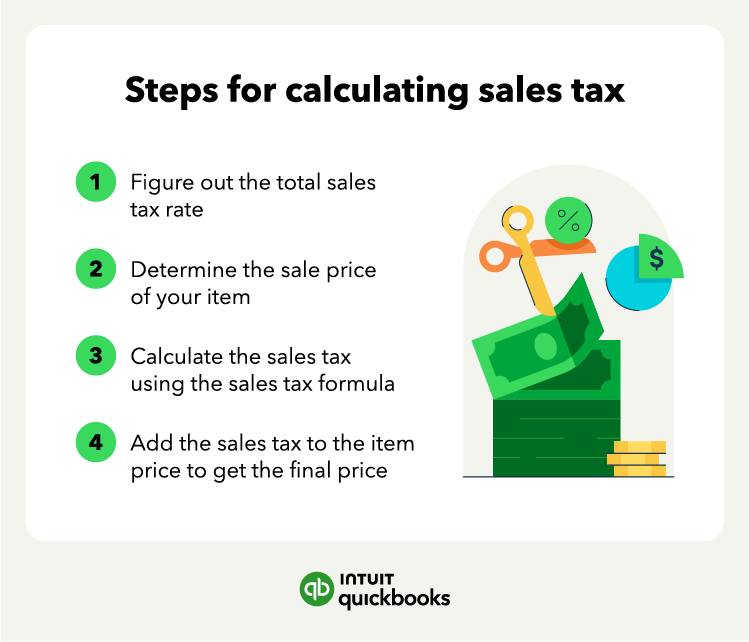
Selling a mix of full-rate, 1%, and grocery items is where receipts get messy. Track the buckets separately from the start.
Illinois has two separate but complementary taxes on the sale and use of tangible personal property. The retailers' occupation tax is imposed on the seller. The use tax is imposed on the privilege of using in Illinois property bought at retail anywhere. Together they are what Illinois calls sales tax.
When a retailer collects tax from you, it is satisfying your use tax. When a retailer does not collect it on something you will use in Illinois, you owe the use tax directly to the state. The rate is 6.25% on general merchandise, the same as the state sales tax rate. It is 1% on qualifying drugs and medical appliances. Use tax is not a destination-based tax. It is a flat rate throughout the state, so there is no local layer on it for ordinary goods.
For a business, this shows up when you order equipment, supplies, or software from a vendor that didn't charge Illinois tax. Say you buy a $3,000 commercial espresso machine online from an out-of-state seller that did not collect Illinois tax. You owe $187.50 in Illinois use tax. If you already paid another state's sales tax on the purchase, Illinois generally credits the tax properly due and paid to that state against the use tax you owe. So you owe Illinois only the difference if the other state's rate was lower. The credit does not extend to tax paid to another country.
Local use taxes reach titled items, and Chicago is its own case. The one local use tax the Department collects is Chicago's, on items that must be titled or registered with the state, such as vehicles. Those items are outside this page. Home rule municipalities and counties may impose their own use taxes on titled or registered items as well.
State law also lets a municipality of 2,000,000 or more residents impose a use tax of up to 1% on other goods bought from retailers outside the city. That means Chicago. Chicago administers its own city taxes separately from the Department. So a Chicago business should check with the city's Department of Finance.
How you report it. If you are a registered Illinois retailer, you report use tax on your own Form ST-1, in the tax-on-purchases step. That step covers the cost of general merchandise you bought to use from an out-of-state retailer that did not collect Illinois tax. It also covers the cost of goods you bought tax-free to resell but used yourself. If you do not file returns as a retailer, you file Form ST-44, the Illinois Use Tax Return.
If your use tax for the year is more than $600, the return and tax are due the last day of the month after the month of purchase. If it is $600 or less, they are due April 15 of the following year. A user who owes use tax only occasionally need not register with the Department. But a business with a frequently recurring use tax liability must.
Illinois has no standing annual sales tax holiday. The legislature enacted one for 2026. From August 7 through August 16, 2026, the state portion of the rate was reduced by 5 percentage points, from 6.25% to 1.25%. The reduction covered qualifying clothing and footwear and qualifying school supplies. Local taxes still applied in full. So the combined holiday rate was 1.25% plus your location's local rate.
The $125 cap applied only to clothing and footwear and was tested per item. A $130 coat got no relief, while three $60 pairs of shoes each qualified. School supplies used by students in the course of study had no price cap. Sellers who made qualifying sales during the holiday complete Schedule K-12 with their Form ST-1 to claim the credit. Illinois ran a structurally identical holiday in 2022. These holidays are enacted year by year rather than by standing law. So check the Department's bulletins each summer rather than assuming the holiday recurs.
Effective January 1, 2025, leases and rentals of tangible personal property are retail sales. Lessors register with the Department and collect tax on lease and rental receipts as they are received. That replaces the old system in which lessors paid use tax up front on their purchase. This applies to receipts on pre-existing contracts too.
Property that must be titled or registered with the state, such as motor vehicles, generally stays under the prior regime. Software licenses meeting the five-part test are exempt. Property already subject to Chicago's lease transaction tax is exempt from the state-level lease tax. For sourcing, each periodic payment on a lease where you deliver the property is sourced to the property's primary location, as described above.
One return carries the state tax and every local tax the Department administers. You report on Form ST-1, Sales and Use Tax and E911 Surcharge Return. The home rule, non-home rule, and other local taxes the Department collects are reported as part of the combined rate on that return. If you sell from more than one location, you attach Form ST-2, Multiple Site Form, to break out the tax collected at each site. MyTax Illinois calculates each location and combines them on a single ST-1.
Destination-based sales are sales by remote retailers, marketplace facilitators, and Illinois retailers selling from locations outside the state. They are reported on Form ST-2 by the location code of the local jurisdiction where the customer took delivery. Use the "Search by Address" function of the Tax Rate Finder to find the rate and the code.
Returns are due the 20th. Your return and payment are due on or before the 20th day of the month following the end of your reporting period. If the 20th falls on a weekend or holiday, they are due the next business day. The Department decides how often you file based on your initial registration and annual liability. It may move you to:
A monthly return is due the 20th of the following month. A quarterly return is due the 20th of the month following the quarter. An annual return is due January 20 of the following year. The Department reviews accounts annually and notifies you if your filing status changes.
Large filers pay quarter-monthly. If your average monthly liability is $20,000 or more, you must make quarter-monthly payments. They are due the 7th, 15th, 22nd, and last day of the month.
Electronic filing is required at $20,000 of receipts. Retailers whose annual gross receipts average $20,000 or more must file electronically, through MyTax Illinois or approved software. Retailers who show they lack internet access or face hardship may petition for a waiver. Taxpayers whose average tax due on Form ST-1 is at least $20,000 a year must also pay electronically. Timely filers who pay on time keep a retailer's discount of 1.75% of the tax due, capped at $1,000 a month. A seller required to file electronically earns the discount only by filing electronically on time.
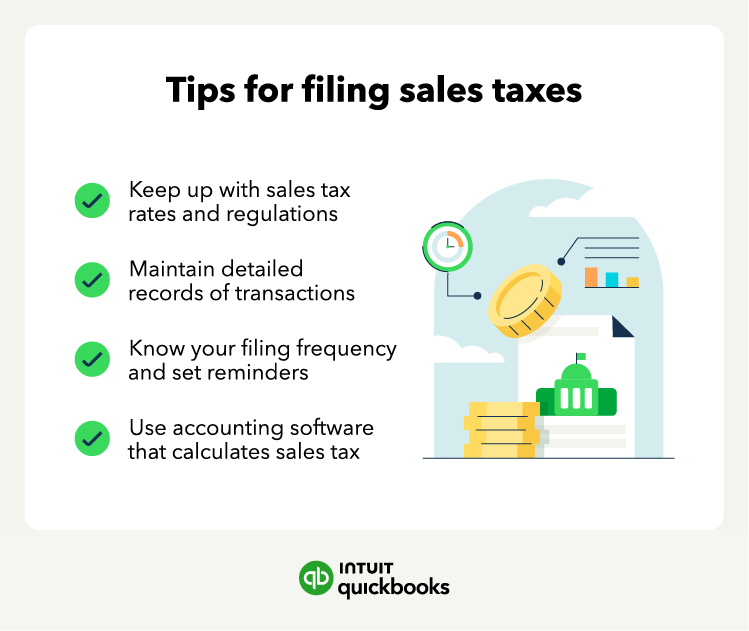
File every return, including zero returns. You must file a processable Form ST-1 for each reporting period regardless of whether there are receipts to report. With nothing to report, you file a "zero" return. States penalize missing paperwork, not just missing money.
Keep the exact delivery address on destination-based sales. Beginning January 1, 2026, if a seller's records do not let the Department determine the location of a destination-based sale, the Department assesses tax on those receipts at a 15% rate for undetermined locations. Records must include the customer's exact delivery address, including street number, city, county, state, and ZIP code. They must also include documentation of where the goods shipped from.
Local rates generally change on January 1 and July 1. The Department publishes a sales tax rate change summary bulletin for each date. Re-check your locations in the Tax Rate Finder then.
Tip: if a rate error slips through, fix the rate first, then correct the affected returns. Undercollect and the difference comes out of your pocket. Overcollect and you owe refunds. Tax you collected as tax is never yours to keep.
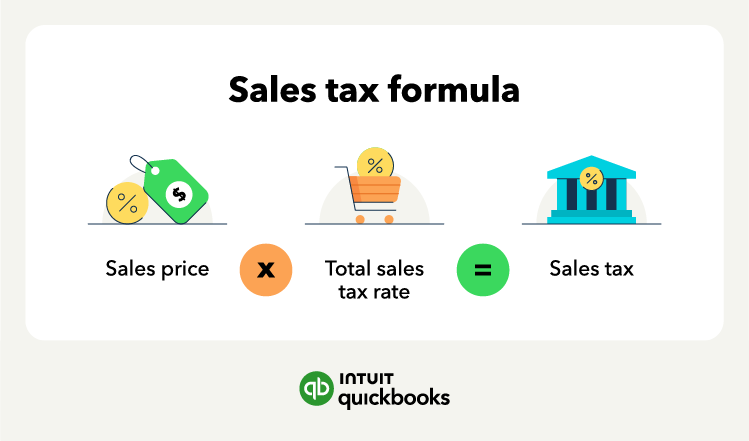
Multiply the pre-tax price by the combined rate at the location where the sale is sourced: 6.25% state plus the local taxes in effect there. At a Champaign address where the combined rate is 9.25%, a $1,200 sale carries $111 in tax and a $1,311 total.
The state rate is 6.25%. Municipalities, counties, and transit districts add local retailers' occupation taxes on top, so the combined rate depends on the location. The Department of Revenue's MyTax Illinois Tax Rate Finder gives the combined rate for any address. Two categories carry reduced state rates. Qualifying medicines and medical appliances are taxed at 1%. Groceries have been at a 0% state rate since January 1, 2026, with a local grocery tax of exactly 1% where a municipality or county has imposed one. For a seller located in Illinois, the local rate generally follows the seller's own location. For remote and marketplace sales, it follows the delivery address.
No. Illinois does not tax services. There is no service tax and no list of taxable services, and repair labor is not taxable. Installation labor is not taxable when it is separately contracted for. If you sell the goods and install them, the installation charge is part of the taxable price unless the installation is separately contracted.
What a service business owes is the service occupation tax on the parts, materials, and products it transfers to customers. Most small service businesses qualify as de minimis, meaning the cost of the items they transfer is under 35% of their service receipts. They simply pay use tax on their cost of those items rather than collecting anything from customers. At or above 35%, you register and collect service occupation tax on the parts. Goods you sell separately from a service are ordinary taxable retail sales.
Not by the state, since January 1, 2026. Groceries, meaning food for human consumption off the premises where it is sold, are exempt from state tax. But municipalities and counties may impose a local grocery tax of exactly 1%. The transit-district tax on grocery food continues in the RTA and Metro-East areas. So what a grocer charges depends on the location. Candy, soft drinks, alcohol, and food prepared for immediate consumption are taxed at the full rate. A product whose ingredient list includes flour, or that requires refrigeration, is not candy.
Not a standing one. The legislature enacted a back-to-school holiday for August 7 through 16, 2026. It reduced the state portion of the rate from 6.25% to 1.25% on qualifying clothing and footwear, with a $125 per-item cap, and on qualifying school supplies. Local taxes still applied in full. Illinois ran a structurally identical holiday in 2022. Because these are enacted year by year, check the Department of Revenue's bulletins each summer rather than assuming one recurs.
Manage sales tax in QuickBooks with automation that helps you save time and stay compliant.
Save time with automated sales tax
Products are automatically matched to tax categories, so you can charge the right sales tax with less manual work. Returns are automatically prepared and formatted for your state, and if you sell into other states, you can automate multi-state filing from one place.
Stay confident and compliant
File with confidence using accurate, automated calculations. Tax rates and rules change, and they are updated automatically in QuickBooks, so what you charge keeps up. Get reminders before filing deadlines so you can plan ahead, and know your return status with real-time updates.
Your data stays protected
Securely send returns to tax agencies and track every filing in QuickBooks.
Manage your books and sales tax in one place
Automatically calculate, collect, and track applicable sales tax from your customers. One report breaks out taxable and non-taxable sales, so you always know what to pay each agency. Prepare, file, and pay directly from QuickBooks.
Explore QuickBooks sales tax software to spend less time on tax and more time running your business.
*Sales tax filing is available as an add-on service through QuickBooks Online for $40 per filing.
You've got the rates and the rules that apply in Illinois. The harder part is applying them correctly on every sale, every quarter. QuickBooks automated sales tax calculates the right combined rate, tracks what you've collected, and shows what you owe when it's time to file.
Call Sales: 1-800-285-4854


