Rhode Island sales tax calculator
Know exactly what to charge at any Rhode Island address. Find the combined rate, the tax on any amount, and the total. Free for your business, no sign-up.
Know exactly what to charge at any Rhode Island address. Find the combined rate, the tax on any amount, and the total. Free for your business, no sign-up.
Done checking rates one sale at a time? QuickBooks applies the right Rhode Island rate on every invoice automatically. See how automated sales tax works
Rhode Island's sales tax math is the same at every address in the state. There is a single statewide 7% rate on retail sales of goods, which the law calls tangible personal property. There is no city or town sales tax on an ordinary retail sale, and there is one state return.
The average American side hustle brings in about $2,038 a month, according to Intuit QuickBooks entrepreneurship research. At that size, a Rhode Island seller is squarely in the system. You charge 7% on taxable sales wherever in Rhode Island they are sourced, and your return is due the 20th of the following month.
The rate is the easy part. The judgment calls are about what you sell. Rhode Island taxes goods and a short list of specifically named services. It exempts clothing and footwear up to $250 per item. It exempts food, but not candy, soft drinks, or prepared food. Whether you sell furniture in Warwick, groom dogs in Providence, or sell software subscriptions from Pawtucket, here's how Rhode Island's rate works. You'll also see which of your sales it reaches and what to know at filing time.
Rhode Island's state sales tax rate is 7%, and it is the only sales tax layer on an ordinary retail sale. No city or town sets its own sales tax rate or add-on for an ordinary sale of goods. So the rate is the same at every Rhode Island address.
There is no local layer to add and no local sales tax line on the return. Two separate taxes do sit alongside the sales tax on particular kinds of sales, and neither is set by a city or town. State law itself imposes a 1% local meals and beverage tax on meals and beverages sold in or from an eating or drinking establishment. State law also imposes a local hotel tax on lodging. In both cases the state collects the tax and distributes the proceeds to the city or town. Both are separate taxes with their own rules, not sales tax layers. Both are covered below.
Rhode Island taxes retail sales of goods at its single 7% rate. It also taxes a short list of specifically named taxable services. A service that is not on the list is generally not taxable. The exceptions are activities Rhode Island treats as taxable sales rather than as services. Fabrication, printing, and photography are covered below. Under the statute's definition of a sale, telecommunications service (including prepaid wireless and prepaid calling cards) and cable and subscription television are also taxable sales. The taxable services are:
Beyond that list, fabrication and printing services are taxable. Photography services are taxable too, including film processing charges specifically. Engraving services are not taxable. Some services are connected to the sale of prewritten software, such as training, maintenance, or consultation needed to complete the sale. Those services are taxable along with the software. Services incidental to a sale of custom software are not.
Because the list is short, most services are not taxable simply because they fall outside it. Services that are not taxable in Rhode Island include building maintenance, dry cleaning, lawn care, linen services, pest control, pool cleaning, snow removal, trash and garbage removal, tree care and trimming, window cleaning, home health care, medical services, babysitting and daycare, barbering and beauty services, dance instruction, flying instruction, furniture moving, massage therapy, self-storage, tanning salon services, tattoo parlor services, accounting, advertising, bookkeeping, credit reporting, engineering, interior design, investment counseling, legal services, management consulting, payroll, public relations, title search services, travel agency services, and veterinary services.
Repairs turn on the invoice. Repair labor charges are not taxed as long as they are separately stated from parts. The separate statement can be on the invoice or in the seller's records. If labor and parts are not separated, the entire charge is presumed to be a taxable sale of parts. HVAC installation and repair follows the same separately-stated-labor rule. Say a $400 brake job is billed as $250 in parts and $150 in labor on separate lines. It carries $17.50 in tax, on the parts. The same job billed as a single $400 line is presumed to be all parts and carries $28.
That rule is for repairs of goods. A contractor repairing, remodeling, or improving real property is generally the consumer of the materials it installs. It pays the 7% to its supplier and charges the customer no sales tax. There are two exceptions. One is a contractor that contracts to sell the materials at an agreed price while also providing the service. The other is a contractor that is independently in the business of selling them at retail. In either case it is a retailer that must register and collect tax on those sales.
Clothing and footwear intended to be worn or carried on the body are exempt up to $250 of the sales price per item. The portion of an item's price above $250 is taxable. The exemption does not cover clothing accessories or equipment. It also does not cover clothing and footwear primarily designed for athletic activity or protective use. All of those are fully taxable at any price. So are protective clothing and equipment and sports or recreational equipment generally.
The line is per item, and the tax applies to the increment above it:
Rhode Island does not hold a sales tax holiday, so the $250 line is the clothing rule all year.
Rhode Island has one sales tax rate, so its sourcing rules decide one thing: whether a sale is a Rhode Island sale at all. Rhode Island is a destination-sourced state. It adopted the Streamlined Sales and Use Tax Agreement's sourcing rules. Under R.I. Gen. Laws § 44-18.1-11, a retail sale is sourced to the place where your customer receives what they bought. That is your business location if they receive it there. Otherwise it is the location where the customer, or someone the customer designates, takes receipt, including the delivery address the customer gave you.
"Receipt" means taking possession of goods, or making first use of a service. A shipping company holding the goods on the customer's behalf does not count as the customer receiving them. Where you did the work and where you shipped from decide the answer only when none of the customer-location rules can be applied. Find your situation:
If you sell goods in person at your location: when the customer receives the item at your business location, the sale is sourced there and is a Rhode Island sale. Charge 7%. That holds for a resident of another state who buys at your shop and takes possession in Rhode Island. Under the Division of Taxation's rule, it also holds for goods you hand to the buyer, or to the buyer's agent other than a common carrier, in Rhode Island. That is true even if the buyer then transports them out of state.
If you ship or deliver goods to Rhode Island customers: the sale is sourced to the location where the customer takes receipt, including the delivery address the customer gave you. The rate is the same 7% whether that address is in Providence, Westerly, or Woonsocket, because there is no local tax to add.
If you ship goods out of state: the Division of Taxation's answer is that you do not collect Rhode Island sales tax when you make a sale and deliver the goods outside Rhode Island. Depending on your activities in the other state, though, you may be required to register and collect that state's tax.
Under the Division's rule, the sale is outside Rhode Island tax when you are obligated to deliver the goods to a point outside the state. The same holds when you are obligated to hand them to a common carrier or the mails for transportation outside the state. In both cases, the rule applies provided the goods are not returned to a point within Rhode Island. Keep proof: a waybill or bill of lading, a postal receipt, or a trip sheet signed by your delivery agent showing who received the goods outside the state. These sales are reported as an interstate sales deduction on your return.
If you sell a taxable service: a service is received where the customer first uses it. So a taxable service is generally sourced to the place where your customer first makes use of it. For pet grooming, kenneling, or pet training at your Providence shop, that is generally your shop, where the customer takes the animal back. For a parking space, it is the lot. Rhode Island's taxable-services list is short, and most services are not taxable because they fall outside it.
If you sell through a marketplace like Amazon or Etsy: Rhode Island's marketplace facilitator and remote seller law made collection mandatory effective July 1, 2019. The threshold is $100,000 in gross revenue or 200 separate transactions delivered into Rhode Island in the immediately preceding calendar year. Marketplace sales count toward your own threshold as a seller even though the marketplace collects on them. The threshold itself applies only to sellers with no physical presence in Rhode Island, as covered in the next item. Your own website checkout, invoices, and in-person sales remain yours to collect and report.
If you're out of state selling into Rhode Island: you must register and collect once you have $100,000 in gross sales or 200 or more separate transactions into Rhode Island in the immediately preceding calendar year. Either test alone is enough. Marketplace sales are included toward the threshold. The registration trigger is January 1 following the year in which you exceed the threshold. Mandatory registration has applied since July 1, 2019. From August 17, 2017 through June 30, 2019, a remote seller over the threshold had to either register or comply with notice requirements.
The threshold is for sellers with no physical presence in Rhode Island. If you have an office, warehouse, or storage place here, you are engaging in business in Rhode Island. The same is true if you have a representative, agent, or salesperson operating here to sell, deliver, or take orders. Either way, you must register and collect regardless of your sales volume.
If you have no physical presence in Rhode Island, you aren't required to collect Rhode Island tax under the economic nexus rule until you've crossed the threshold. Once you have crossed it, the Division's rule applies. An out-of-state retailer has the same obligation to add, collect, and remit the tax on Rhode Island sales, in the same manner as a local retailer. So you collect 7% on each sale delivered to a Rhode Island address.
Sales with their own sourcing rules. Watercraft, modular homes, manufactured homes, and mobile homes are outside the general rule. So are retail sales of motor vehicles, trailers, semi-trailers, and aircraft that are not transportation equipment. All of those are sourced under Rhode Island's own requirements for those items.
Telecommunications services follow their own statute, R.I. Gen. Laws § 44-18.1-15. Direct mail is sourced from the delivery information or Direct Mail Form the purchaser gives you. If the purchaser gives you neither, it is sourced to the address you shipped from. Leases and rentals of equipment follow a modified rule. The first periodic payment is sourced like a sale. Later payments are sourced to the primary location of the leased property.
Worked example. You build furniture in Warwick and sell a $900 table.
Same table, same week, and the only thing that changed the Rhode Island answer was where your customer took possession. Keep the delivery address and the delivery method with every sale.
The exemptions that matter most to small sellers:
Groceries: food and food ingredients are exempt. Candy, soft drinks, dietary supplements, alcoholic beverages, tobacco, vending-machine food, and prepared food are all excluded from the exemption. They follow their own rules. A beverage is a taxable soft drink rather than exempt food if it contains a natural or artificial sweetener. That definition excludes any beverage containing milk or a milk substitute. It also excludes any beverage that is more than 50% fruit or vegetable juice by volume.
Candy has its own statutory definition as well. Candy is a preparation of sugar, honey, or other sweeteners combined with chocolate, fruits, nuts, or other ingredients, in the form of bars, drops, or pieces. It does not include any preparation containing flour or one that requires refrigeration, so those items are not candy for this purpose.
Prepared food and bakery items: prepared food is generally taxable. Bakery items are exempt as long as they are not sold with utensils the seller provides. Such utensils include plates, cutlery, glasses, cups, napkins, or straws. A bakery item sold with those utensils becomes taxable prepared food.
Two other kinds of food are treated as exempt food rather than taxable prepared food. One is food sold by a manufacturer-seller in the bread and bakery products manufacturing sector (other than the bakery subsector itself). The other is food sold unheated by weight or volume as a single item. Meals and beverages sold in or from an eating or drinking establishment also carry the separate 1% local meals and beverage tax. That tax is covered at filing time below.
Vitamins and dietary supplements: taxable unless sold on a doctor's prescription.
Alcohol, split by product and venue: wine and spirits sold at package and liquor stores have been exempt from sales tax since December 1, 2013. The exemption was made permanent in 2015 and remains in effect. Beer and other malt beverages sold at package stores are taxable. Alcoholic beverages served by bars and restaurants are taxable, plus the 1% local meals and beverage tax.
Clothing and footwear: exempt up to $250 per item, with the portion above $250 taxable. Accessories, athletic and protective items, and sports and recreational equipment are fully taxable at any price, as covered above. Rhode Island does not hold a sales tax holiday.
Software and digital products: custom computer software is exempt. Prewritten computer software is taxable whether delivered on a tangible medium, electronically, or by load-and-leave. Computer hardware is taxable as ordinary tangible personal property. Software as a service is taxable effective October 1, 2018. That holds regardless of whether access is permanent or temporary and regardless of whether anything is downloaded. It covers paid subscriptions to hosted software such as office, payroll, accounting, HR, or CRM applications. It also covers paid access to online platforms. Digital audio-visual works, digital audio works, and digital books transferred electronically are taxable effective October 1, 2019.
A maintenance agreement for prewritten software that includes updates or upgrades is taxable, delivered electronically or otherwise. A contract limited to technical support, with no updates or upgrades, is not taxable. Maintenance and related services for custom software are not taxable regardless of what they cover.
Prescription drugs and medical items: prescription drugs are exempt. Over-the-counter drugs are not. Durable medical equipment is exempt, but only for home use. Mobility enhancing equipment, including wheelchairs, crutches, and canes, along with prosthetic devices sold on prescription, is exempt with no home-use limitation.
Newspapers and magazines: newspapers, meaning unbound publications printed on newsprint with news and editorial content, are exempt. The exemption specifically excludes magazines, handbills, circulars, flyers, and sales catalogs. Magazines and other periodicals, whether sold over the counter or by subscription, are taxable.
Selling a mix of taxable and exempt items is where receipts get messy. Track the two buckets separately from the start.
Use tax is the buyer's side of the same tax. Rhode Island imposes it on the storage, use, or other consumption in the state of these things, purchased from any retailer:
Every person storing, using, or consuming those things in Rhode Island is liable for it. The liability is not extinguished until the tax has been paid to the state. One exception: a receipt showing the tax from a Rhode Island retailer, or from a retailer authorized to collect it, relieves you for that purchase. Property whose sale was already in the sales tax base is exempt from use tax, so the two taxes never stack. The rate is 7%, the same as the state sales tax rate.
For a business, this shows up when you order equipment, supplies, or software from a vendor that didn't charge Rhode Island tax. Say you buy a $3,000 commercial espresso machine online for your café in Cranston and the invoice shows no Rhode Island tax. You owe $210 in Rhode Island use tax. A hosted software subscription billed without Rhode Island tax works the same way, because vendor-hosted prewritten software is in the use tax base.
Under the Division of Taxation's rule, your liability arises when the item is first stored, used, or consumed in Rhode Island. For a completed item, that means its delivery into the state. The tax is due by the 20th of the month after that happens, regardless of when or how you paid the vendor.
Tax paid to another state counts. Say you paid another state's sales or use tax on a purchase made there. If it was equal to or greater than Rhode Island's 7%, Rhode Island's use tax does not apply. If it was less, you pay Rhode Island the difference. Buy $1,000 of shelving in a state that charged 5%, and you owe Rhode Island $20: $70 at 7%, less the $50 already paid. You must be able to show proof of the other state's tax, such as the invoice showing the tax paid.
There is no local use tax. Rhode Island's use tax is imposed by state law at a single statewide 7%. The state has no local sales tax on general retail sales. So the use tax on a purchase for your business is 7% and nothing more.
How you report it. If you hold a Rhode Island sales tax permit, you report use tax on line 6 of your regular Form RI-STR, the Sales and Use Tax Return. You use the Use Tax Worksheet in the instructions. It covers:
The worksheet has a credit line for tax paid to other states. Keep a listing of those purchases with your records. A business that is not a seller files Form T-205, the Consumer's Use Tax Return. It is due on or before the 20th of the month following the month of the purchases. Individuals may instead report use tax on non-business purchases once a year on the use tax line of the Rhode Island personal income tax return.
Lodging is where Rhode Island's one-rate picture changes. Lodging is taxable for the first 30 consecutive days of occupancy. A rental exceeding 30 consecutive days, or one calendar month, is exempt. Short-term rentals of 30 days or fewer are within the lodging tax structure, including platform bookings.
The rate structure as of January 1, 2026: room-type lodging carries the 7% sales tax plus the 5% state hotel tax plus the 2% local hotel tax. A whole-home short-term rental carries the 7% sales tax plus a new 5% whole-home short-term-rental tax plus the 2% local hotel tax. That is 14% combined either way.
The local hotel tax is not a matter of municipal choice. State law itself imposes it statewide, at 2% effective January 1, 2026 (previously 1%). The state collects it and distributes the proceeds to the city or town where the hotel is located. A three-night, $600 stay in a Newport inn carries $42 of sales tax, $30 of state hotel tax, and $12 of local hotel tax. That is $84 in all, for a $684 total.
Rhode Island's filing calendar has two dates to know. Which one is yours depends on permission from the Division of Taxation:
Monthly returns are due the 20th of the following month. The taxes are due and payable monthly on or before the 20th day of the month following the month being reported. The return for the previous month, Form RI-STR, the Sales and Use Tax Return, is filed by the same date. July's return is due August 20. A sales tax return is required of every person engaged in the business of making retail sales whose gross receipts are included in the measure of the tax.
Quarterly filing is by written permission, and due the last day of the month. If your sales and use tax liability for six consecutive months has averaged less than $200 per month, you may apply to file quarterly instead of monthly. Quarterly filing cannot begin until the Tax Administrator's permission is received in writing. Once approved, returns are due on or before the last day of July, October, January, and April for the preceding three months.
The permission can be revoked if you become delinquent on a return or payment. It can also be revoked if your liability exceeds $600 in sales and use taxes in any later quarter. In either case you go back to monthly. A registrant operating a seasonal business may apply to be relieved of reporting for the months the business is inactive.
File and pay electronically if you are above either threshold. Under the statute, anyone whose average monthly sales and use tax liability was $200 or more for the previous calendar year must pay by electronic funds transfer or other electronic means. The penalty for not doing so is the lesser of 5% of the amount not transferred electronically or $500, unless there was reasonable cause. A waiver is available for undue hardship.
Separately, a "larger business registrant" must file returns and pay electronically for tax periods beginning on or after January 1, 2023. That means a business whose combined annual liability for all taxes the Division administers is $5,000 or more, or whose annual gross income is over $100,000. The Division recommends that every taxpayer who is able to register, file, and pay electronically do so through its Taxpayer Portal at taxportal.ri.gov.
Report sales in the month you make them. All retailers report on an accrual basis. A sale is reported in the month it takes place, regardless of when the customer pays.
File every return, including zero returns. If you have made no sales, you are still required to complete and file a return, listing "zero sales" and "zero taxes." States penalize missing paperwork, not just missing money.
One return, no local sales tax lines, and a second return if you serve meals. There is no local sales tax to break out on Form RI-STR. Eating and drinking establishments, however, collect the separate 1% local meals and beverage tax and file it on its own return. That return is filed at the same frequency as the sales tax account. Monthly returns are due by the 20th of the following month. Quarterly returns are due by the 30th of the month after the quarter ends.
That return reports the tax by the city or town where the meals and beverages were delivered, because the state distributes it to that city or town. The tax does not apply to a meal or beverage delivered outside the state. On the customer's check, the 1% is to be separately stated from the 7% sales tax. A business for which that is a hardship may show the two combined at 8%. Its books must still segregate the two taxes.
Tip: if a rate error slips through, fix the rate first, then correct the affected returns. Undercollect and the difference comes out of your pocket. Overcollect and you owe refunds. Tax you collected as tax is never yours to keep.
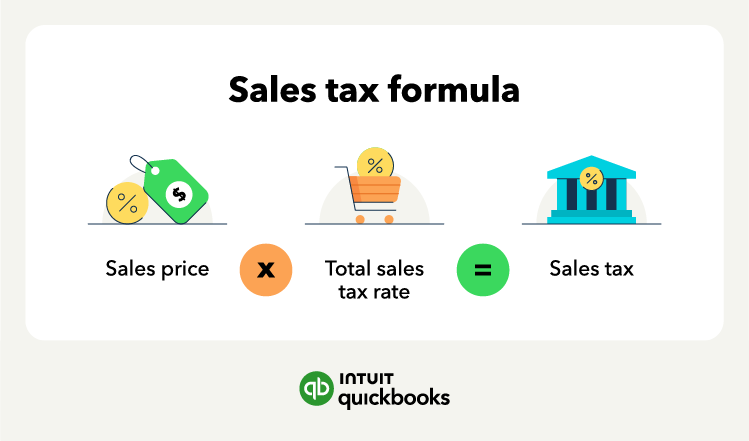
Multiply the pre-tax price by 7%, the rate at every Rhode Island address. On a $1,200 sale, that's $84 in tax and a $1,284 total.
Yes. The state rate is 7%. No city or town sets its own sales tax rate or add-on for an ordinary sale of tangible personal property. So the rate is the same in Providence, Warwick, Cranston, and at every other Rhode Island address. The taxes that do vary by what you sell are separate taxes, not sales tax layers. One is the 1% local meals and beverage tax on meals and beverages from eating and drinking establishments. The others are the state and local hotel taxes on lodging and short-term rentals, which bring a short stay to 14% combined.
Only if your service is on Rhode Island's short list of taxable services, or is one of the few activities Rhode Island treats as a taxable sale instead. The list: ground passenger transportation such as taxicabs, limousines, charter buses, and ride-hailing; pet care services such as kenneling, grooming, and training; hotel room resales and travel packages; investigation, guard, and armored car services; and short-term parking, taxable since October 1, 2025.
Fabrication, printing, and photography services are taxable too. So are telecommunications service (including prepaid wireless) and cable and subscription television, which the statute defines as sales rather than services. A service that is not on the list is generally not taxable. That leaves out lawn care, cleaning, barbering and beauty, accounting, legal, consulting, veterinary, and medical services, among many others. Repair labor is not taxed when it is separately stated from parts. If the two are not separated, the whole charge is presumed to be a taxable sale of parts.
Food and food ingredients are exempt. Candy, soft drinks, dietary supplements, alcoholic beverages, and prepared food are not. A bakery item sold with seller-provided utensils counts as prepared food. Clothing and footwear are exempt up to $250 per item, with only the portion above $250 taxable. A $400 coat is taxed on $150, for $10.50. Clothing accessories and equipment, athletic and protective clothing and footwear, and sports and recreational equipment are fully taxable at any price. Rhode Island does not hold a sales tax holiday.
Mostly yes. Prewritten software is taxable however it is delivered. Software as a service is taxable effective October 1, 2018. Digital audio-visual works, digital audio works, and digital books transferred electronically are taxable effective October 1, 2019. All of those are taxed at 7%. Custom software is exempt. So is a maintenance contract limited to technical support with no updates or upgrades. If you buy hosted software for your business from a vendor that doesn't charge Rhode Island tax, you owe the 7% as use tax. That's because vendor-hosted prewritten software is in Rhode Island's use tax base.
Manage sales tax in QuickBooks with automation that helps you save time and stay compliant.
Save time with automated sales tax
Products are automatically matched to tax categories, so you can charge the right sales tax with less manual work. Rhode Island returns are automatically prepared and formatted for the Division of Taxation, with the 8% meals and beverage line kept separate from your 7% sales, and if you sell into other states, you can automate multi-state filing from one place.
Stay confident and compliant
File with confidence using accurate, automated calculations. Rhode Island's rate is flat, but its category rules change, and tax rates and rules are updated automatically in QuickBooks, so what you charge keeps up. Get reminders before Division of Taxation deadlines so you can plan ahead, and know your return status with real-time updates.
Your data stays protected
Securely send returns to tax agencies and track every filing in QuickBooks.
Manage your books and sales tax in one place
Automatically calculate, collect, and track applicable sales tax from your customers. One report breaks out taxable and non-taxable sales, so you always know what to pay each agency. Prepare, file, and pay directly from QuickBooks.
Explore QuickBooks sales tax software to spend less time on tax and more time running your business.
*Sales tax filing is available as an add-on service through QuickBooks Online for $40 per filing.
You've got the rates and the rules that apply in Rhode Island. The harder part is applying them correctly on every sale, every quarter. QuickBooks automated sales tax calculates the right combined rate, tracks what you've collected, and shows what you owe when it's time to file.
Call Sales: 1-800-285-4854


