Texas sales tax calculator
Know exactly what to charge at any Texas address. Find the combined rate, the tax on any amount, and the total. Free for your business, no sign-up.
Know exactly what to charge at any Texas address. Find the combined rate, the tax on any amount, and the total. Free for your business, no sign-up.
Done checking rates one sale at a time? QuickBooks applies the right Texas rate, state and local included, on every invoice automatically. See how automated sales tax works
Texas sales tax has three numbers worth memorizing. The state rate is 6.25%. All local taxes combined are capped at 2%. And 8.25% is the most any Texas address can reach.
One in three US adults plans to start a business or side hustle in 2026, nearly double last year's share, according to Intuit QuickBooks research on entrepreneurship in 2026. A new Texas seller starts in the same place as every other. You need a sales tax permit from the Comptroller. You charge a rate somewhere between 6.25% and 8.25%, depending on which local taxes apply where the sale is sourced. And you file one return that carries state and local tax together.
The question to get right in Texas isn't the rate. It's whose rate. If you sell from a place of business in Texas, local sales tax is generally based on your location, not your customer's. Shipping an order across town can add a local use tax on top.
Whether you run a taqueria in San Antonio, a landscaping crew in Fort Worth, or a software company in Austin, here's how Texas's rate stacks and which rate you charge. You'll also see which of your sales are taxable and what to know at filing time.
Texas's state sales tax rate is 6.25%. Cities, counties, transit authorities, and special purpose districts can add local sales tax on top of it, up to 2% combined. So the combined rate at a Texas address runs from 6.25%, where no local tax applies, to 8.25%. There are two layers, but the local one can be made of as many as four kinds of jurisdictions:
No matter how many local jurisdictions overlap at an address, the local tax due cannot be more than 2%. So the most tax you can collect is 8.25%. Texas is not a home-rule state for sales tax. The Comptroller administers every local sales tax, and a single Texas sales tax permit covers all of them. You report state and local tax together on one return filed with the Comptroller. Sellers never register with or file separately to a Texas city or county.
In Texas, physical goods are taxable unless a specific exemption applies. Services are taxable only if they appear on the state's list of taxable services. Any service not on that list is not taxed. Selling an item digitally instead of physically does not change its tax status. The list is specific enough that it is worth checking each service you sell against it. The services on it that small sellers encounter most:
A $400 appliance repair at a location at the 8.25% cap carries $33 of tax on the whole invoice, parts and labor.
Services that are not taxable, because they are not on the list, include legal, accounting, bookkeeping, engineering, architecture, medical, and veterinary services; barber and beauty services; babysitting and daycare; pet boarding and training; moving services; self-storage rentals (though storing motor vehicles is taxable); car washes; instruction and training such as dance, flying, and tutoring; travel agency services; and consulting. Massage by a licensed massage or physical therapist is not taxable. A seller of nontaxable services still pays tax on the equipment and supplies it buys to perform them.
What this means for a seller: before you price a service, check it against the Comptroller's list of taxable services. Check it in both directions, for services you assumed were exempt and for services you assumed were taxable.
Texas has four types of local taxing entities: cities, counties, special purpose districts, and transit authorities. Each has its own boundaries, and different types can cross or share boundaries. But their combined local rate at any location cannot be more than 2%. Those boundaries do not follow ZIP codes. Many Texas cities share a ZIP code, and many ZIP codes take in area both inside and outside a taxing jurisdiction. That is why the Comptroller's Sales Tax Rate Locator looks up rates by street address.
If you are required to collect Texas sales tax, you collect the applicable local taxes as well. The same permit covers them, and they go on the same return. Which jurisdictions' taxes apply to a given sale is the subject of the next section. In Texas, the answer generally starts with your own address.
Texas sources local sales tax by origin for sellers with a place of business in the state. It layers a destination-based local use tax on top when the delivery address has a higher local rate. Under Tex. Tax Code § 321.203 and the Comptroller's local tax rule (34 Tex. Admin. Code § 3.334), every sale is "consummated" at one location. Local sales tax is due to the jurisdictions in effect there. In general, that location is your place of business, not your customer's address, regardless of where title or possession transfers.
If you ship or deliver into a jurisdiction with a higher local rate than the one where the sale was consummated, you also collect that jurisdiction's local use tax. But you collect it only if the whole of it fits under the 2% cap. A local use tax that would push the local total past 2% is not collected at all. And no use tax is due to a jurisdiction of the same type (city, county, special purpose district, or transit authority) as one whose sales tax you already collected on the sale.
The 6.25% state tax applies to every taxable sale in Texas. Taxable services are "taxable items" too. So a service is generally sourced under the same rules, unless it is one of the few with its own rule, listed below. Find your situation:
If you sell in person at your place of business: when a customer places an order in person at your place of business, the sale is consummated there, regardless of where you fulfill it. Charge that location's combined rate. If you have only one place of business in Texas, your sales are generally consummated there.
A "place of business" is a store, office, or other location you operate to sell taxable items, where sales personnel receive three or more orders during the calendar year. A warehouse, website, server, or software application is not one. If you are a small business that runs everything out of a single location, the Comptroller presumes that location is your place of business.
If you take orders by phone, email, or online and ship or deliver to Texas customers: where the sale is consummated depends on where the order is received and where it is fulfilled. An order received at your place of business and fulfilled from a place of business of yours is consummated at the place of business that fulfills it. If an order received at your place of business is fulfilled from somewhere that is not your place of business, such as a third-party fulfillment warehouse, it is consummated at the place of business that received it.
An order that is not received at a place of business is consummated at the place of business that fulfills it. Under the Comptroller's rule, orders not received at a place of business include an order that comes in through an automated online ordering system. If an order not received at a place of business is fulfilled from a Texas location that is not your place of business, it is consummated at the delivery address.
The Comptroller's seller guide notes that, under an agreed temporary injunction, the agency agreed not to enforce the provision on orders not received by sales personnel while its validity is challenged in court. So confirm the Comptroller's current guidance before you change how you source web orders. In every case, if the delivery address has a higher combined local rate than the place where the sale was consummated, collect the additional local use tax due, up to the 2% cap. You cannot collect a local use tax, or any part of it, that would push the local total past 2%.
The Comptroller's own example: a store in Pipe Creek, where there is no city sales tax and Bandera County imposes 0.5%, sells a rocking chair. Bandera County's 0.5% sales tax is due. If the seller ships the chair to the customer's home in the city of Bandera, which imposes a 1.5% city sales and use tax, the seller must also collect the 1.5% Bandera city use tax.
The cap at work, from the same guide: a furniture store outside the Corsicana city limits in Navarro County takes an in-person order and delivers it to an address in Ennis, which imposes 1.5%. The seller collects Navarro County's 0.5% sales tax plus 1.5% Ennis city use tax, for 8.25% in all. A second customer at the same store has furniture delivered to Waxahachie, which imposes a 2% city tax. The seller collects the 0.5% county tax but cannot collect Waxahachie's 2% use tax without exceeding the cap. So the total is 6.75%, the state's 6.25% plus the county's 0.5%.
If you perform taxable services: repair of goods, cleaning and lawn care, data processing, and the other services on Texas's list are taxable items. So they are generally sourced like goods, to your place of business, under the rules above. For local use tax, a taxable service is "used" where the customer derives direct or indirect benefit from it. So when your location's local rate is under the 2% cap and you perform the service at a customer's address in a higher-rate jurisdiction, additional local use tax may be due there.
A few services have their own rule. Amusement services are sourced to where the performance or event takes place. Cable television is sourced to the point of delivery to the customer. Garbage and other solid waste collection is sourced to where the waste is located when collection begins. Repair and remodeling of nonresidential real property is sourced to the job site. And, under a separated contract, the materials for new construction or residential repair and remodeling are sourced to the job site.
If you sell through a marketplace like Amazon or Etsy: a marketplace provider must collect, report, and remit state and local sales tax on every sale made through the marketplace. It must also certify to its sellers that it is doing so. The tax on those sales is based on the shipping destination. Once the marketplace certifies that it collects, you do not collect tax on your marketplace sales.
A seller located in Texas still needs a Texas sales tax permit and still files returns on time, even if all of its sales run through a marketplace. An out-of-state, or remote, seller whose only Texas sales go through certified marketplaces does not need its own Texas permit. Sales made outside the marketplace, such as on your own website, remain your own collection responsibility. Records of all marketplace sales must be kept for at least four years.
If you're out of state selling into Texas: you must get a permit and collect once your gross revenue from sales into Texas reaches $500,000 in the preceding 12 calendar months. Gross revenue means all of it: taxable, nontaxable, and tax-exempt sales. Your sales through marketplaces count toward the threshold even though the marketplace collects on them. There is no transaction-count test.
Collection must begin no later than the first day of the fourth month after the month in which you exceed the threshold. Until you've crossed it, you aren't required to collect Texas tax, provided you have no physical presence in Texas. A business location, salespeople, or representatives in the state make you a Texas seller rather than a remote seller, with the obligations above.
Once you collect, there is no origin rule for you, because your sales are not consummated in Texas. You collect the 6.25% state use tax plus local use tax based on the delivery address. Or you may elect the single local use tax rate instead. That is a flat local rate the Comptroller publishes in the Texas Register before each calendar year, 1.75% for 2026. You choose it on your permit application or by filing Form 01-799. Marketplace providers and businesses located in Texas cannot use the single rate.
Sales with their own sourcing rules. Natural gas and electricity are sourced to the point of delivery to the consumer. Telecommunications services follow their own rules. Call-by-call services are sourced to where the call originates, and mobile service to the customer's place of primary use. Florists collect local tax based on the place of business that takes the order, regardless of where the order is delivered. Motor vehicle parking is sourced to where the vehicle is parked. Marketplace sales, as above, go to the shipping destination.
Worked example. You build furniture at a shop in Austin, your only place of business. There the local tax is at the 2% cap and the combined rate is 8.25%. You sell a $900 table.
Same table, three different lines on your return. Texas's return reports local tax by jurisdiction code, so keep the delivery address with every sale you ship.
Physical goods are taxable in Texas unless a specific exemption applies. The exemptions that matter most to small sellers:
Groceries: basic groceries, meaning food products for human consumption, are exempt. The exemption is lost for several categories a food seller needs to watch. Prepared food is generally taxable. That means:
Food the seller only cut, repackaged, or pasteurized is not prepared food. Raw meat, fish, eggs, and poultry that the customer must cook stay exempt. Selling food with eating utensils such as plates, forks, or cups also makes it taxable. Catering is taxable on the full charge, including separately stated delivery, staff, and equipment charges. Beer and wine sold by grocery and convenience stores carry regular sales tax. Mixed drinks sold by bars and restaurants holding a mixed beverage permit fall under Texas's separate mixed beverage taxes instead of sales tax (Tex. Tax Code ch. 183).
Candy, soft drinks, and snacks: candy and soft drinks are taxable. Soft drinks include both carbonated and non-carbonated sweetened beverages. Drinks that are more than 50% fruit or vegetable juice, and milk-based drinks, are exempt as food products. Snack items such as chips, nuts, granola bars, and ice cream are taxable only when sold in individual-sized portions or through a vending machine. An individual-sized portion is one labeled as one serving or less, or under 2.5 ounces. Multi-serving packages are exempt. Dietary supplements are exempt.
Bakery items: sold by a bakery, they are exempt regardless of heating or utensils. Sold anywhere else, they are exempt only when sold without plates or other eating utensils.
Clothing: taxable year-round, with one carve-out. Clothing, footwear, accessories, protective clothing, and sports or recreational equipment are taxable. Texas has no general clothing exemption. But maternity clothing, including nursing bras and nursing pads, is exempt (Tex. Tax Code § 151.3133). Garment services are taxable too: alterations, mending, dry cleaning, and laundry, though self-service washing and drying on coin-operated machines the customer operates is not (Tex. Tax Code § 151.0045; 34 Tex. Admin. Code § 3.310(e)). The other exception is the August back-to-school sales tax holiday, covered below.
Software and digital products: software is taxable whether prewritten or custom. It is taxable whether delivered on physical media or downloaded to a Texas location. The one carve-out is contract programming, where the customer ends up owning all rights to the program. That is a nontaxable service. Digital products follow their physical equivalents: e-books, downloaded music, movies, and apps are taxable. Streaming video subscriptions are taxable as cable television service. Streaming game subscriptions are taxable as amusement services. Internet access service is not taxable. SaaS is covered above: taxable as data processing, on 80% of the charge.
Prescription drugs and medical items: Texas exempts specific categories rather than everything health-related. Prescription drugs and insulin are exempt. Over-the-counter drugs are exempt without a prescription if federal law requires them to carry a Drug Facts label.
Wheelchairs, walkers, canes, crutches, and hospital beds are exempt without a prescription. Hearing aids, prosthetic and orthopedic devices, and dental devices are exempt. Corrective lenses are exempt when prescribed or dispensed by an ophthalmologist or optometrist. Therapeutic appliances beyond these, such as CPAP machines, oxygen equipment, and lift chairs, are exempt only when prescribed by a licensed practitioner. Hypodermic syringes, blood glucose test strips, wound care dressings, adult and children's diapers, and baby wipes are exempt. Other health-related equipment and general wellness products are taxable.
Family care items: feminine hygiene products, maternity clothing, breast pumps and other breast milk pumping products, and baby bottles are exempt year-round (Tex. Tax Code §§ 151.3132–151.3135). The diapers, baby wipes, and wound care dressings above are exempt too.
Items you buy for resale: exempt with a resale certificate.
Selling a mix of taxable and exempt items is where receipts get messy. Track the two buckets separately from the start.
Use tax is the complement to sales tax. It is imposed on the storage, use, or other consumption in Texas of a taxable item. The item is one bought from a retailer for use here.
A Texas buyer owes state and local use tax when it buys taxable goods or services that are stored, used, or consumed in Texas from a seller who does not charge Texas sales tax. If the seller does not have a permit or fails to charge the tax, the buyer must pay the use tax directly to the Comptroller unless an exemption applies. Items bought in another country and brought back to Texas are subject to use tax too.
The state use tax rate is 6.25%, the same rate as the state sales tax. You may owe up to an additional 2% in local use taxes. That depends on where you use, store, or consume the item. Every local taxing jurisdiction with a local sales tax also has a local use tax, at the same rate.
For a business, this shows up when you order equipment, supplies, or software from an out-of-state vendor that didn't charge Texas tax. Say you buy a $3,000 commercial espresso machine online for your café. The café sits in a city at the 2% local cap. The invoice shows no Texas tax. You owe $187.50 in state use tax and $60 in local use tax, $247.50 in all.
How you report it. If you hold a Texas sales and use tax permit, report the purchase in Item 3, "Taxable Purchases," of your Texas Sales and Use Tax Return. Report it on your next regularly scheduled due date. Include it in the amount subject to local tax for the jurisdiction where you used it.
If you don't have a permit, report and pay on Form 01-156, Texas Use Tax Return. A buyer who owes less than $1,000 of use tax for the year files and pays by January 20 of the following year. A buyer who reaches $1,000 must file and pay by the 20th of the month after the month the $1,000 threshold is reached. Texas generally allows a credit against the use tax for sales or use tax you paid to another state on the same item. One condition: that state gives Texas taxpayers a similar credit.
Texas holds three sales tax holidays every year, on dates set by statutory formula. Sellers must honor the exemptions on qualifying items. No exemption certificate is needed from customers.
The Comptroller announces the exact dates for each year on its sales tax holiday pages.
Returns are due on the 20th. The Comptroller tells you by letter, when your permit is approved, whether you file monthly or quarterly. Both the report and the payment are due on the 20th of the month after the reporting period ends. For monthly filers, that is the 20th of the following month (April's report is due May 20). For quarterly filers, it is April 20, July 20, October 20, and January 20. For yearly filers, it is January 20 for the previous year. If a due date falls on a Saturday, Sunday, or legal holiday, the next working day is the due date.
Frequency follows how much state tax you report. Permit holders with less than $1,500 in state sales and use tax to report per quarter may file quarterly. Reporting $1,500 or more per quarter means monthly returns. Permit holders with less than $1,000 in state sales and use tax to report during a calendar year may file yearly with the Comptroller's authorization. That authorization is automatically revoked if your liability passes $1,000 during the year.
Paper stops being an option as you grow. If you paid $50,000 or more in sales and use tax in the preceding state fiscal year (September 1 through August 31), paper reporting is not available. You report through Webfile or electronic data interchange. The Comptroller also notifies you by letter when you must pay electronically through TEXNET.
Two discounts for paying on time. Permitted sales taxpayers can keep 0.5% of the tax they timely report and pay. Monthly and quarterly filers who prepay a reasonable estimate of the period's state and local tax earn an additional 1.25% on the prepayment. A reasonable estimate means at least 90% of the current period's amount or 100% of the same period's tax last year. To earn it, you prepay by the 15th of the month for monthly filers, or by the 15th of the second month of the quarter for quarterly filers.
One return, by jurisdiction. State and local tax go on the same Texas Sales and Use Tax Return. Local tax is reported for each city, county, transit authority, and special purpose district by its seven-digit local code. You report it by outlet, or on the List Supplement when the local amounts differ or you are an out-of-state seller, a marketplace provider, or a remote seller. Keeping the delivery address with each sale turns that supplement into a sort, not a research project.
File every return, including zero returns. Returns must be filed for every period even if there is no amount subject to tax or any tax due. A $50 penalty is assessed on each report filed after the due date, whether or not any tax was due. Late tax carries a 5% penalty if paid 1 to 30 days late and 10% if paid more than 30 days late. Interest begins 61 days after the due date.
Amending a return. You can file an amended return electronically through Webfile or electronic data interchange. Or file on paper with "Amended Return" written at the top.
Tip: if a rate error slips through, fix the rate first, then correct the affected returns. Undercollect and the difference comes out of your pocket. Overcollect and you owe refunds. Tax you collected as tax is never yours to keep.
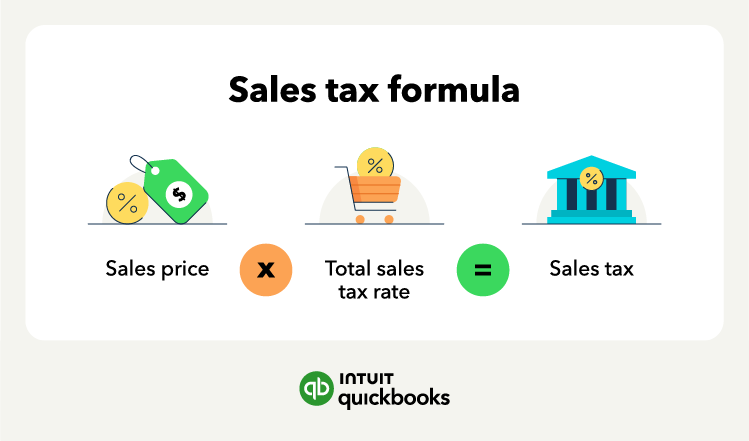
Multiply the pre-tax price by your combined rate: 6.25% state plus up to 2% in local taxes, for a maximum of 8.25%. On a $1,200 sale at 8.25%, that's $99 in tax and a $1,299 total.
Both, depending on the local taxes in effect where the sale is consummated. The state rate is 6.25% everywhere. Cities, counties, transit authorities, and special purpose districts add up to 2% combined on top of it. So 8.25% is the ceiling, and a location with no local tax is 6.25%. Which local taxes apply generally depends on your place of business, not your customer's address. When you ship into a higher-rate jurisdiction, the destination's local use tax is added, in full or not at all under the 2% cap. The Comptroller's Sales Tax Rate Locator gives the rate at a specific street address.
If you have a place of business in Texas, generally your rate. An in-person sale is consummated at your place of business. A shipped order is generally consummated at the place of business that fulfilled it or, if it was fulfilled from somewhere that is not your place of business, at the place of business that received it. Say your location's local rate is under the 2% cap and you ship into a jurisdiction with a higher local rate. Then you also collect the destination's local use tax if the whole of it fits under the cap.
Out-of-state sellers with no Texas place of business are the exception. Their sales are not consummated in Texas. So they collect use tax based on the delivery address or, by election, at the single local use tax rate.
Only if your service is on Texas's list of taxable services, but the list reaches many small businesses. Repair of goods other than motor vehicles, aircraft, and commercial vessels; janitorial work; landscaping and lawn care; pest control; pool cleaning; nonresidential repair and remodeling; laundry and dry cleaning; data processing, including SaaS; security; amusement; parking; pet grooming; and photography are all on it. Legal, accounting, medical, veterinary, barber and beauty, daycare, moving, instruction, and consulting services are not. Residential repair labor and new construction labor are not taxable either.
No. Basic groceries, meaning food products for human consumption, are exempt. Prepared food, candy, soft drinks, and individual-sized snack portions are taxable, as are restaurant, food truck, and catering sales. Bakery items sold by a bakery are exempt regardless of heating or utensils.
Manage sales tax in QuickBooks with automation that helps you save time and stay compliant.
Save time with automated sales tax
Products are automatically matched to tax categories, so you can charge the right sales tax with less manual work. Texas returns are automatically prepared and formatted for the Comptroller, with your collections allocated by jurisdiction, and if you sell into other states, you can automate multi-state filing from one place.
Stay confident and compliant
File with confidence using accurate, automated calculations. Local rates change as jurisdictions adopt and abolish them, and tax rates and rules are updated automatically in QuickBooks, so the rate you charge keeps up. Get reminders before Comptroller deadlines so you can plan ahead, and know your return status with real-time updates.
Your data stays protected
Securely send returns to tax agencies and track every filing in QuickBooks.
Manage your books and sales tax in one place
Automatically calculate, collect, and track applicable sales tax from your customers. One report breaks out taxable and non-taxable sales, so you always know what to pay each agency. Prepare, file, and pay directly from QuickBooks.
Explore QuickBooks sales tax software to spend less time on rates and more time running your business.
*Sales tax filing is available as an add-on service through QuickBooks Online for $40 per filing.
You've got the rates and the rules that apply in Texas. The harder part is applying them correctly on every sale, every quarter. QuickBooks automated sales tax calculates the right combined rate, tracks what you've collected, and shows what you owe when it's time to file.
Call Sales: 1-800-285-4854


