Utah sales tax calculator
Know exactly what to charge at any Utah address. Find the combined rate, the tax on any amount, and the total. Free for your business, no sign-up.
Know exactly what to charge at any Utah address. Find the combined rate, the tax on any amount, and the total. Free for your business, no sign-up.
Done checking rates one sale at a time? QuickBooks applies the right Utah rate, state and local included, on every invoice automatically. See how automated sales tax works
Utah runs its sales tax through one agency. The Utah State Tax Commission administers every local sales tax along with the state tax. So a seller registers once and collects one combined state-plus-local rate for each location. There are no separately administered city or county sales taxes.
The average American side hustle brings in about $2,038 a month, according to Intuit QuickBooks entrepreneurship research. At that size, a Utah seller is squarely in the system. You register once. You charge a 4.85% state rate with local layers added on top. On most in-state sales, that is one combined rate at your own location. Your return, filed with the Tax Commission, carries every local layer with it.
What makes Utah different starts at the grocery store. Utah taxes grocery food at a reduced 3% rate instead of exempting it. That reduced rate reaches candy, bottled soft drinks, and dietary supplements with a Supplement Facts label. The other surprise is where the rate comes from. For most in-state sales, Utah sources the sale to the seller's location, not the buyer's.
Whether you run a boutique in Salt Lake City, repair bikes in Provo, or bake in St. George, here's how Utah's rate works. You'll also see which of your sales it reaches and what to know at filing time.
Utah's state sales tax rate is 4.85%. The combined rate at any location is that state rate plus the local layers imposed where the sale is sourced. Those layers are local option, county option, transit, resort, and similar district taxes. The Tax Commission combines them into one rate per location.
The 4.85% state rate is the sum of two statutory components, 4.70% and 0.15%. A supplemental state tax of up to 0.05% applies only in locations where the state imposes it. The Tax Commission shows that supplemental tax as a separate line on its rate chart.
A single registration, on form TC-69 or online through Taxpayer Access Point, covers the state tax and every local layer. Two related levies are also administered by the Tax Commission but reported on their own returns under the same account. The first is the county restaurant and customized food tax, imposed at 1% by all 29 Utah counties and reported on form TC-62F. The second is transient room taxes on lodging, reported on form TC-62T. Neither requires a separate registration. Grocery food has its own statewide rate, 3%, covered next.
Utah taxes grocery food at a reduced statewide 3% rate instead of exempting it. That is 1.75% state tax plus a uniform 1.25% of local taxes, the same 3% everywhere in Utah. A 2023 law would have removed the state 1.75% portion, contingent on a 2024 constitutional amendment. But the amendment was voided before votes were counted. So the repeal never took effect, and 3% remains the current rate. On $60 of groceries, the tax is $1.80.
The 3% rate covers items you might expect to be taxed in full. Utah does not carve candy or soft drinks out of grocery food. Candy is taxed at the 3% grocery rate, and so are bottled or canned soft drinks from the cooler.
The food-versus-nonfood test is label based. An item with a Nutrition Facts or Supplement Facts box is food at the grocery rate. So vitamins and dietary supplements carrying a Supplement Facts panel are taxed at 3%, not the full rate. An ingestible item carrying a Drug Facts box is nonfood and taxable at the full rate. Alcoholic beverages and tobacco are excluded from grocery food and taxable at the full rate. Purchases made with WIC or SNAP benefits are exempt.
Prepared food takes the full rate, plus the restaurant tax. Heated food, food combined by the seller, and food sold with utensils are generally prepared food, taxed at the full combined rate. Fountain drinks are prepared food at the full rate. Because all 29 counties impose the restaurant tax, restaurants and caterers charge an additional 1% on top of sales tax.
The restaurant tax applies to all of the restaurant's food sales, prepared food and grocery food alike, and to alcoholic beverages. It does not apply to non-food merchandise such as souvenir apparel. On a $50 restaurant bill, that is $0.50 of restaurant tax in addition to the sales tax. A restaurant that also sells grocery food may apply the 3% grocery rate to those items only if they are listed separately on the receipt or invoice.
Effective January 1, 2026, the restaurant tax also reaches "customized food." That means food prepared or heated by the seller at the customer's request for on-site or immediate consumption, sold by a grocery store, convenience store, or gas station. A customer asking only for a certain quantity does not make food customized.
Bakeries get a split. Bakery items sold without utensils and not heated qualify as grocery food at 3%. Sold with utensils or heated, they take the full rate. The same croissant can be a 3% sale in a box and a full-rate sale served with a fork.
Not everything a seller handles becomes prepared food. Under the statute's definition, prepared food does not include:
Those items are generally grocery food at 3%.
Home cooks are exempt. Effective July 1, 2026, sales of food and food ingredients or prepared food by a home cook are exempt from sales tax (Utah Code § 59-12-104(103), added by 2026 S.B. 217). A home cook means an individual who prepares the food exclusively in a private, noncommercial home kitchen.
Food bundled with non-food merchandise for one nonitemized price is generally taxed as a bundle at the full combined rate. That applies when the taxable non-food items are more than 50% of your purchase price, or of the sales price, for that sale. When they are 50% or less, the bundle is generally taxed as food at 3%. Test on one basis, purchase price or sales price, not a mix of the two. Itemizing the components on the receipt or invoice keeps the sale out of the bundling rules altogether. A price separately identified by item is not one nonitemized price. If you sell gift baskets or snack boxes, itemize.
Utah is a modified-origin state. It is unusual in sourcing most in-state sales to the seller rather than to the buyer. Under Utah Code §§ 59-12-211 and 59-12-212, when a Utah seller receives an order in Utah and the customer receives the goods in Utah, the sale is sourced to the location where the seller received the order. That holds whether or not the goods are delivered. The Tax Commission calls this the seller's fixed place of business. When the order is received outside Utah, the sale is sourced instead to the location where the buyer receives the goods. That is why out-of-state, or remote, sellers collect at the delivery address. Taxable services follow their own rule. They are sourced to where the customer receives the service, meaning where they first use it. Sellers who also sell goods have an election on where to source the service. Find your situation:
If you sell goods in person at your location: the sale is sourced to your business location where the customer receives the goods. Charge that location's combined rate.
If you ship or deliver goods to Utah customers from your Utah location: the sale is generally still sourced to the location where you received the order: your store, office, or order system. It is not sourced to the customer's address, and not to the location where the order was fulfilled or the goods were shipped from. Charge your location's combined rate even when you deliver to the other end of the state. The statute attaches a record-keeping condition. The system you use to calculate tax must capture where the order was received.
If you perform taxable services and sell no goods: repairs and renovations of tangible personal property, assisted cleaning, laundry and dry cleaning, and the other listed services are generally sourced to the customer's location. The statute defines that as where the customer first uses the service. For work on a customer's item, that is generally where they get the item back: their address if you deliver it or work on site, your shop if they pick it up there.
If you perform taxable services and also sell goods: you may source the service either to your fixed place of business or to the customer's location, your choice. One exception: when you sell goods on the same invoice as the service, the whole invoice must be sourced to your fixed place of business.
If you sell through a marketplace like Amazon or Etsy: since October 1, 2019, a marketplace facilitator with gross revenue over $100,000 from Utah sales it makes or facilitates in the previous or current calendar year is treated as the seller of each facilitated sale. It must license, collect, file, and respond to audits. Marketplace sellers do not need a Utah license for facilitated sales unless they have their own nexus. They do not report facilitated sales, and they are not liable for tax the facilitator is required to collect. Your own website checkout, invoices, and in-person sales remain yours to collect and report under your own registration.
If you're out of state selling into Utah: you must collect once your gross sales into Utah exceed $100,000 in the previous or current calendar year, beginning with the next transaction. There is no transaction-count test. Utah removed its 200-transaction threshold effective July 1, 2025, so only dollars matter. Sales made through a marketplace are excluded from your own threshold.
Until you've crossed the threshold, you don't need to register or collect Utah tax. You may register voluntarily, though. In that case, you collect at the combined rate for the delivery location. Once you have crossed it, each sale is sourced to the buyer's location, the place the buyer receives the goods or the service. You collect that location's combined rate based on the buyer's nine-digit ZIP code.
If you have Utah physical presence, you must collect regardless of your sales volume. Physical presence includes an office, a warehouse, a stock of goods in the state, and regular solicitation of orders in Utah other than by mail, email, internet, or telephone.
Sales with their own sourcing rules. Motor vehicles, aircraft, watercraft, and manufactured, mobile, and modular homes are outside these rules. So is telecommunications service. Leases and rentals of equipment follow a modified rule. The down payment and the first periodic payment are sourced like a sale. Later payments are sourced to the address where the equipment is kept.
Admissions are sourced to the location of the activity or event, regardless of where the ticket was bought. Sales at special events (fairs, swap meets, festivals, markets, and similar events) are sourced to the event location. So you charge that location's combined rate, not your shop's. Vending machine and mobile inventory sales are sourced to the location where the inventory is warehoused.
Remotely accessed prewritten software is sourced to the buyer's location. If the buyer gives you a reasonable and consistent allocation method, it is allocated among multiple locations instead. Direct mail has its own section of the statute.
Worked example. You build furniture in Salt Lake City and sell a $900 table.
Same table, same week, and for the Utah seller the same rate. Utah's return identifies the location of each transaction, so keep the order-receipt location with every sale.
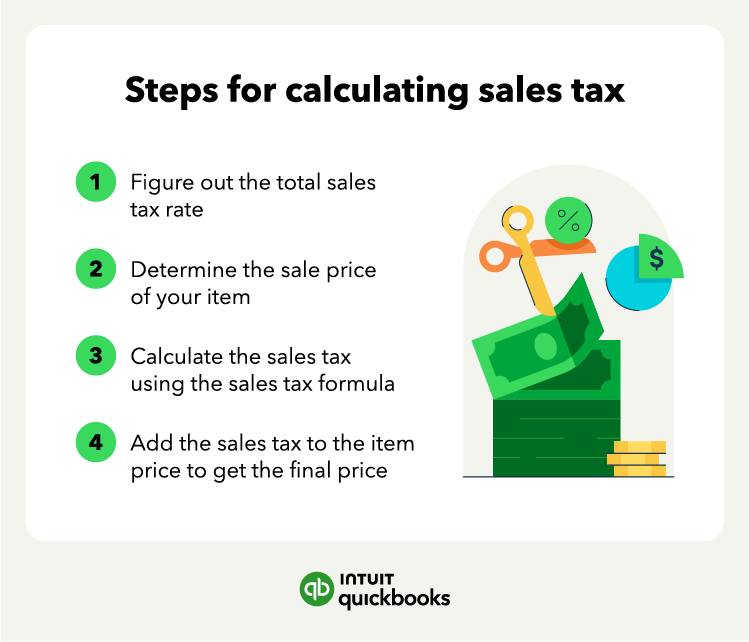
Retail sales of goods are taxable in Utah unless a specific exemption in Utah Code § 59-12-104 applies. Goods are what the law calls tangible personal property. Services are taxable only when the statute lists them. The lines that matter most to small sellers:
Groceries: not exempt, but taxed at the reduced 3% statewide rate described above. Candy, soft drinks, and Supplement Facts items are included. Prepared food, alcoholic beverages, and tobacco take the full rate.
Clothing: taxable at the full combined rate, with no exemptions, caps, or holidays. All apparel, clothing accessories, protective clothing and equipment, and sports and recreational equipment are taxable. Charges for clothing alterations are taxable as labor to repair or renovate goods.
Shipping charges: a separately stated charge to deliver goods to the buyer is not taxable. A delivery charge that is not separately stated stays in the taxable sales price. Delivery charges include transportation, shipping, postage, handling, crating, and packing.
Freight-in, the cost of getting the goods to you, is not a delivery charge. It remains part of the taxable price whether or not it is separately stated. A pickup charge to return an item to a location you designate is taxable. Separately stated installation charges are likewise excluded from the sales price.
Software and digital products: off-the-shelf, or prewritten, software is taxable regardless of delivery method. That means boxed, downloaded, load-and-leave, or hosted by the seller and accessed remotely. Effective July 1, 2026, the statute expressly names seller-hosted prewritten software. That codifies the Tax Commission's long-standing position. Under that position, license fees for remotely accessed prewritten software are taxable when the software is used in Utah.
Custom software is exempt as a personal service, regardless of the form in which it is transferred. Charges to maintain, support, or upgrade custom software are not taxable. Software built to one customer's specifications stays custom only for that customer. Sold to anyone else, it is taxable off-the-shelf software.
Music, video, e-books, and similar products transferred electronically are taxable whether the buyer gets permanent or temporary use. Effective July 1, 2026, access to digital audio-visual works, digital audio works, digital books, and gaming services is taxable too. That includes streaming and subscription access.
Prescription drugs and medical items: prescription drugs for human use, plus syringes and stoma supplies, are exempt. Durable medical equipment is exempt only when dispensed under a prescription and for home use only. Mobility enhancing equipment is exempt when purchased under a prescription. Prosthetic devices for use on or in a human are exempt when the device requires a prescription or is purchased by a hospital or medical facility.
Over-the-counter items with a Drug Facts label are taxable at the full rate. Vitamins and supplements with a Supplement Facts label fall under the 3% grocery food rate.
Newspapers and magazines: newspapers and newspaper subscriptions are exempt. But the definition is narrow. So magazines and other periodicals are taxable as ordinary goods.
Religious and charitable customers, with a $1,000 line: sales to a religious or charitable institution in the conduct of its regular religious or charitable functions are exempt. But the exemption is allowed at the register only if the sale is at least $1,000 or is made under a contract between you and the institution. On a sale under $1,000 with no contract, you charge tax. The institution recovers it by claiming a refund.
The practical consequence: an exempt religious or charitable customer will still see sales tax on your invoices below $1,000 unless a contract is in place. Exemption claims are documented on form TC-721.
Business purchases: products purchased for resale, in original form or as an ingredient or component of a manufactured product, are exempt under the resale exemption. Manufacturing machinery, equipment, normal operating repair or replacement parts, and materials, except office equipment and supplies, used in the manufacturing process by an in-state manufacturing facility are exempt. Tangible personal property used or consumed primarily and directly in farming operations is exempt, and so is hay. The farming exemption does not cover:
Exemption claims are documented on form TC-721.
Selling a mix of full-rate items, 3% grocery food, and exempt items is where receipts get messy. Track the buckets separately from the start.
Use tax is the buyer's side of the same tax. Utah applies it to purchases of goods, products transferred electronically, and certain services. It applies when sales tax is due but was not collected by the seller. Sales tax and use tax have the same exemptions and the same rates. Either sales tax or use tax applies to any transaction, not both.
Under Utah Code § 59-12-107(2)(f), you owe it when the seller did not collect Utah tax on a taxable transaction and you store, use, or consume the property in Utah.
For a business, the Tax Commission's own examples are:
Items you take out of inventory and consume are taxed on your cost. They are not taxed on the price you would have sold them for. Say your Salt Lake City print shop buys a $2,500 wide-format printer from an out-of-state vendor. The vendor doesn't collect Utah tax. You have it delivered to the shop. You owe Utah use tax on the $2,500 at Salt Lake City's combined rate of 8.45%, which is $211.25. It goes on your sales and use tax return.
Local tax applies on the use side too. The state portion of the use tax is 4.85%, the same as the state sales tax rate. But Utah's local layers are sales *and* use taxes. So the use tax you owe is the combined state and local rate, not 4.85% alone. That rate is the one for the location where the item is delivered, stored, used, or consumed.
If you paid another state's sales or use tax on the purchase, it is exempt from Utah use tax unless the other state's tax was lower than Utah's. If it was lower, you pay Utah the difference. If it was equal or higher, you owe Utah nothing more. But Utah does not refund or credit the excess.
How you report it. If you have, or are required to have, a Utah sales and use tax license, you report use tax on your Utah sales and use tax return. That is form TC-62S or TC-62M. You report it in the same filing period as your sales. If you do not have and are not required to have a license, you report it on your Utah business income tax return, or, for an individual, on the Utah individual income tax return, form TC-40.
Utah taxes a short, specific list of services, mainly work on goods. Services not named in the statute are not taxable. Services to real property and professional services are not taxed. Taxable services include:
The same list also reaches leases and rentals of equipment and other goods. It also reaches short-term lodging, meaning tourist home, hotel, motel, or trailer court accommodations rented for fewer than 30 consecutive days. Pet grooming is taxable because pets are tangible personal property and grooming is cleaning of that property. A veterinarian's charges for medical services are not taxable.
Cleaning and washing real property is expressly not taxable. So janitorial service on buildings and building washing are not taxed. Landscape maintenance and tree trimming are services to real property and are not taxable.
Also not taxable, because the statute does not list them: lawn care, pest control, snow removal, trash removal, babysitting and daycare, barber and beauty services, dance and flying instruction, furniture moving, pet boarding, pet training, massage therapy, self-storage, tanning, tattooing, veterinary services, and professional and business services generally, including accounting, bookkeeping, legal, engineering, advertising, management consulting, and payroll.
Repairs. Charges for labor and parts to repair or renovate goods are taxable, unless the property itself and its repair parts are exempt. In that case, the repair is exempt too. Service plan and extended warranty charges covering future taxable repairs are taxable. Tax also applies to the deductible the customer pays on a covered repair.
Diagnostic or testing charges that do not result in a repair are not taxable. Separately stated installation charges are exempt. Repairers buy parts tax free for resale and collect tax from the customer.
Equipment attached to a building. For goods permanently attached to real property, labor charges are exempt when separately stated. Parts remain taxable unless otherwise exempt. An unitemized combined charge is fully taxable. Repairs to real property itself are not taxable. Real property contractors are the consumers of the materials they install and pay tax when they buy them. The finished improvement and construction labor are not taxed to the customer.
Items that become real property on installation, such as furnaces and built-in air conditioning systems, follow these rules. So a furnish-and-install HVAC contractor pays tax on its material purchases and does not charge the customer sales tax. Window and portable units remain tangible personal property, with fully taxable sales and repairs. If your work touches both categories, pools, built-in fixtures, equipment bolted to a building, itemize labor and parts on every invoice.
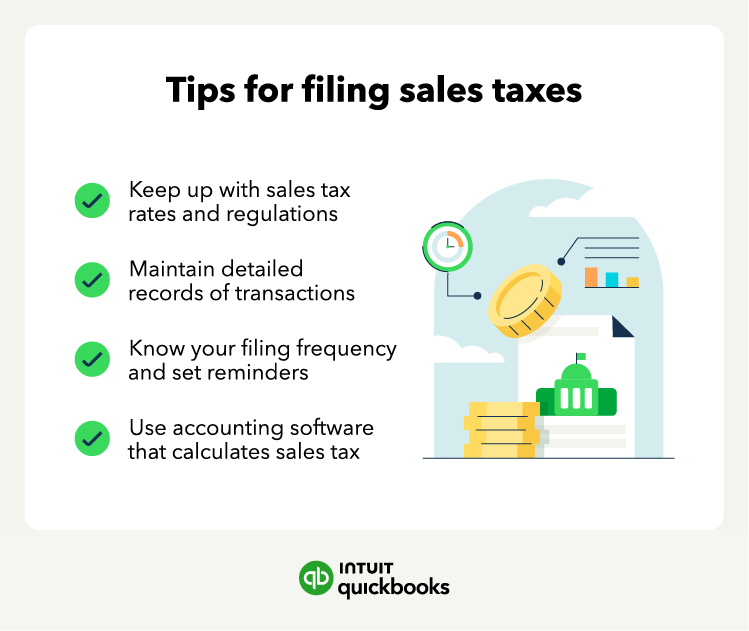
Utah's filing system runs through one portal and one return. The local breakout depends on how many locations you have:
Returns are due the last day of the month after the period. Sales and use tax is due quarterly by default, on or before the last day of the month following each calendar quarter: April 30, July 31, October 31, and January 31. A seller whose Utah sales and use tax liability for the previous calendar year was $50,000 or more must file monthly. Monthly returns are due on or before the last day of the following month. A seller whose liability was $96,000 or more must also pay by electronic funds transfer.
If a due date falls on a Saturday, Sunday, or legal holiday, the due date is the next business day. New businesses estimate their liability when they apply for a license and are assigned a filing status. The Tax Commission reviews accounts annually and notifies you in writing if your filing status changes.
Everything is electronic. All Utah sales and use tax returns must be filed electronically through Taxpayer Access Point (TAP). Payments can be made there as well.
One return, with a location breakout. A seller with one fixed Utah location files form TC-62S and needs no schedules. All other sellers file form TC-62M. That means sellers with multiple Utah locations, no Utah location, or no fixed place of business. It also means sellers who ship goods into Utah from outside the state. TC-62M filers attach schedules that report tax by location:
The statute requires every return to identify the location of each transaction. That is why the order-receipt location or the delivery address belongs on every sale record.
File every return, including zero returns. Every sales tax license holder must file a timely return even if no sales tax was collected for the period. If your business is active but you collected nothing, you file the return with zeros. Failing to file on time can bring penalties and interest.
Tip: if a rate error slips through, fix the rate first, then correct the affected returns. Undercollect and the difference comes out of your pocket. Overcollect and you owe refunds. Tax you collected as tax is never yours to keep.
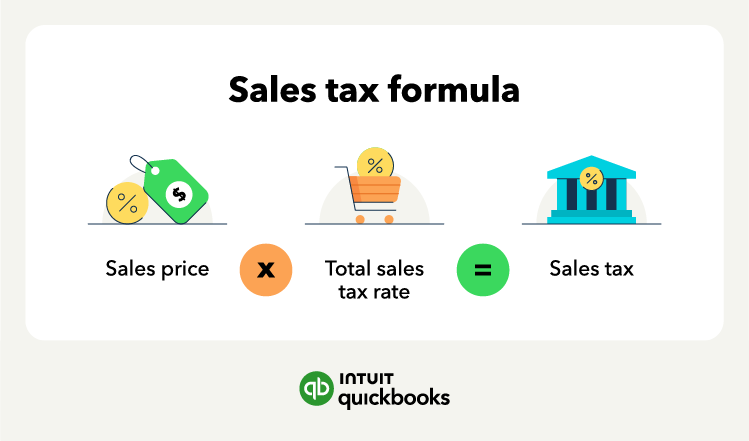
Multiply the pre-tax price by the combined rate for the location the sale is sourced to. That is your own location for most in-state sales, or the buyer's location if you are an out-of-state seller. Salt Lake City's combined rate on the Tax Commission's chart effective October 1, 2026 is 8.45%. On a $1,200 sale sourced there, that's $101.40 in tax and a $1,301.40 total. Grocery food works the same way at Utah's one statewide figure: $100 of groceries at 3% is $3 in tax and a $103 total.
No. Every taxable Utah sale carries the 4.85% state rate. Counties, cities, and towns layer local option, county option, transit, resort, and similar district taxes on top of it. So the combined rate depends on where the sale is sourced. For a Utah seller, that is generally your own location, whether or not you deliver. For an out-of-state seller, it is the buyer's location.
The Tax Commission administers every local rate on one return. It publishes the combined rate for each location on its Sales & Use Tax Rates page, and offers an address and nine-digit ZIP lookup in Taxpayer Access Point. Rates can change quarterly. The one exception to location-based rates is grocery food, which is 3% statewide.
Only if your service is on Utah's list, and the list is short. It covers repairs and renovations of tangible personal property, assisted cleaning or washing of tangible personal property, laundry and dry cleaning, fabrication, photography, admissions, telecommunications, and hunting and fishing guide services. The same list also reaches leases and rentals of equipment and other goods, and short-term lodging of fewer than 30 consecutive days. Services to real property are not taxed. So janitorial work, landscaping, lawn care, pest control, and snow removal are not taxable. Neither are barber and beauty services, massage, tanning, tattooing, self-storage, veterinary services, or professional services such as accounting, legal, and consulting.
When you do perform a taxable repair, labor and parts are both taxable, unless the item is permanently attached to a building and you state the labor separately on the invoice. Then the labor is exempt and only the parts are taxed.
Yes, at a reduced rate. Grocery food is taxed at 3% statewide, 1.75% state plus a uniform 1.25% local. The 3% rate covers candy, bottled and canned soft drinks, and vitamins and supplements with a Supplement Facts label. Prepared food, fountain drinks, alcoholic beverages, and tobacco are taxed at the full combined rate. Restaurants in all 29 counties add a 1% restaurant tax on their food and alcohol sales. Purchases made with WIC or SNAP benefits are exempt.
No. Utah does not hold a sales tax holiday. No exempt shopping periods appear in the Tax Commission's publications or on its sales tax pages. Clothing and footwear are taxable year-round at the full combined rate.
Manage sales tax in QuickBooks with automation that helps you save time and stay compliant.
Save time with automated sales tax
Products are automatically matched to tax categories, so you can charge the right sales tax with less manual work. Returns are automatically prepared and formatted for your state, and if you sell into other states, you can automate multi-state filing from one place.
Stay confident and compliant
File with confidence using accurate, automated calculations. Tax rates and rules change, and they are updated automatically in QuickBooks, so what you charge keeps up. Get reminders before filing deadlines so you can plan ahead, and know your return status with real-time updates.
Your data stays protected
Securely send returns to tax agencies and track every filing in QuickBooks.
Manage your books and sales tax in one place
Automatically calculate, collect, and track applicable sales tax from your customers. One report breaks out taxable and non-taxable sales, so you always know what to pay each agency. Prepare, file, and pay directly from QuickBooks.
Explore QuickBooks sales tax software to spend less time on tax and more time running your business.
*Sales tax filing is available as an add-on service through QuickBooks Online for $40 per filing.
You've got the rates and the rules that apply in Utah. The harder part is applying them correctly on every sale, every quarter. QuickBooks automated sales tax calculates the right combined rate, tracks what you've collected, and shows what you owe when it's time to file.
Call Sales: 1-800-285-4854


