Arizona sales tax calculator
Know exactly what to charge at any Arizona address. Find the combined rate, the tax on any amount, and the total. Free for your business, no sign-up.
Know exactly what to charge at any Arizona address. Find the combined rate, the tax on any amount, and the total. Free for your business, no sign-up.
Done checking rates one sale at a time? QuickBooks applies the right Arizona rate, state, county, and city included, on every invoice automatically. See how automated sales tax works
Arizona's version of a sales tax is the transaction privilege tax, or TPT. It is a tax on the seller for the privilege of doing business in the state. The tax is sorted into business classifications. Under those classifications, retail sales of goods are taxable and most services are not.
The average American side hustle brings in about $2,038 a month, according to Intuit QuickBooks entrepreneurship research. At that size, an Arizona seller is squarely in the system. You need a single TPT license from the Arizona Department of Revenue. Your combined rate is built from a 5.6% state rate plus county and city layers. One state return carries all three.
What makes Arizona different is where the lines fall. Goods are taxable, and most services are not. Software as a service is taxable. Construction has its own 65-percent-base rule. Arizona cities add their own TPT, with rates and bases that can differ from the state's. Whether you run a boutique in Tempe, sell software subscriptions from Scottsdale, or serve breakfast in Tucson, here's how Arizona's rate works. You'll also see which of your sales it reaches and what to know at filing time.
Arizona's TPT has up to three layers at an address. The first is the state rate. The second is a county excise tax, in counties that levy one. The third is a city or town tax, where the city or town levies one. The state rate on retail sales is 5.6%. That is a 5% rate set in A.R.S. § 42-5010 plus a 0.6% increment in effect through June 30, 2041.
Cities set their own rates and, through the Model City Tax Code, parts of their own tax base. But since 2017 the state collects all of it. The Arizona Department of Revenue (ADOR) is the single point of licensing, administration, and collection for state, county, and city TPT. That holds even for the large home-rule cities (Phoenix, Tucson, Mesa) that used to collect their own.
A business registers once with ADOR and files one return: TPT-2, or TPT-EZ for a single location. It does not register or file separately with any city. ADOR collects the tax for the counties and cities. Rates vary by the type of business activity, the city, and the county. The Department publishes the state and county rates in Table 1 of its TPT rate table. The city rates are in Table 2. The rate table also lists the business, region, and city codes you report with. Which city and county a sale belongs to is the sourcing question, covered below.
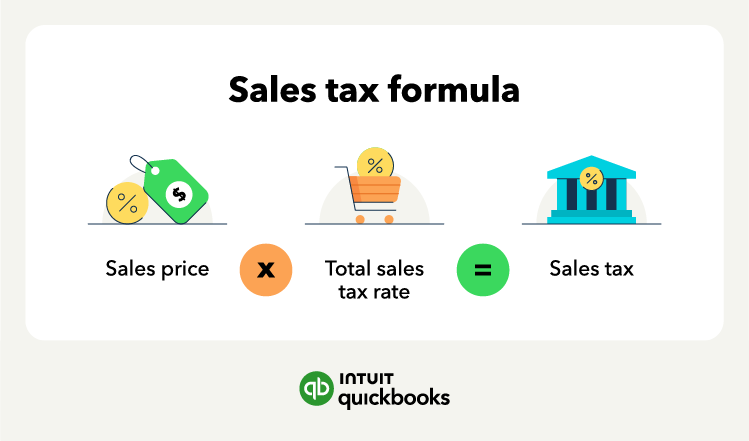
Arizona's TPT taxes a seller for the privilege of doing business. It is organized by classification, rather than as a tax on the buyer. The retail classification taxes retail sales of goods, which the law calls tangible personal property. Professional and personal services that involve tangible property only as an "inconsequential element" are not taxable under the retail classification. So most services escape tax. Construction is taxed under a separate prime contracting classification. Remotely accessed software is taxed as a rental of tangible personal property.
Services that are not taxable, because they fall outside the retail classification, include janitorial and building cleaning, dry cleaning, lawn care and landscaping, pest control, pool and window cleaning, snow removal, tree trimming, barber and beauty services, massage, tanning, tattooing, moving, kenneling, pet grooming and training, garment repair, sign painting, and all professional services (legal, accounting, engineering, medical, veterinary).
Repair labor itself is not taxable when it is separately stated on the invoice and in your records. The parts a repairer sells are taxable, though. Bundled repair labor and parts may be taxable in full. Optional maintenance and warranty agreements are not taxable when sold as separate, distinct items with the charge stated separately. But the parts and other tangible property you furnish under such a contract are subject to use tax. You report it on your TPT return.
The taxable exceptions run through separate classifications rather than the retail one:
Cities still control their rates and, through the Model City Tax Code, parts of their tax base. The most important divergence for a small seller is groceries. Many Arizona cities tax groceries even though the state exempts them. So a seller must apply the correct city's treatment, not assume the state answer. Which city's rate and base a sale carries follows the same sourcing rules as the state tax, covered next.
For goods, Arizona is a modified-origin state. Sales are origin-sourced for sellers who receive orders at a business location in Arizona. They are destination-sourced for sellers who receive orders outside the state. Under A.R.S. § 42-5040, a retail sale of goods is sourced to your business location if you receive the order at a business location in Arizona. If you receive the order at a business location outside the state, the sale is sourced to the purchaser's location in Arizona. If there is no delivery address, it is sourced to the purchaser's billing address.
An order is received when all of the information necessary to accept it has been received by or on behalf of the seller. That holds regardless of where the order is accepted or approved. The purchaser's place of business or residence does not determine where the order is received.
Services are a different story. Most are not taxable at all. So for a service business, the sourcing question is generally about the goods it sells alongside the service. Find your situation:
If you sell goods in person at your location: you receive the order at your Arizona business location. So the sale is sourced there. Charge that location's combined rate: the state rate plus the county and city layers that apply at your address.
If you take orders at your Arizona location and ship or deliver to Arizona customers: the sale is still sourced to the business location where you received the order. That holds whether the customer walked in, called, or, generally, ordered through your website. What matters is where the order information is received, not where the customer is. The statute is explicit that the purchaser's place of business or residence does not determine where the order is received. So the delivery address does not change the rate.
If you repair, alter, or otherwise work on a customer's property: repair labor is not taxable when it is separately stated on the invoice and in your records. So there is generally no TPT to source on the labor. The parts you sell are taxable retail sales of goods. They are generally sourced like any other goods: to your shop if you receive the order there. If labor and parts are bundled in one charge, the whole amount may be taxable.
If you perform services at the customer's location or on the customer: lawn care, landscaping, pest control, janitorial work, barber and beauty services, massage, and the other services outside the retail classification are not taxable. So there is no rate to charge on the service itself.
If you rent out equipment or other goods: leases and rentals of goods are taxable under the personal property rental classification. They have their own sourcing rule. The receipts are sourced to your business location if you have one in Arizona. That means the business address on your TPT license. If you do not, they are sourced to the renter's address. That is an individual's residential address or a business's primary business address, with the billing address as the fallback. In that case, they are taxable when the property is shipped, delivered, or otherwise brought into Arizona for use here.
If you sell through a marketplace like Amazon or Etsy: marketplaces collect state, county, and city TPT on the sales they facilitate. You only have to report marketplace sales if you also make taxable direct sales into Arizona on your own. In that case, you deduct the marketplace sales on your return using deduction code 804.
The Department sources sales made through a marketplace facilitator located outside Arizona to your customer's shipping address, or billing address if there is none. A facilitator located in Arizona reports with the rates and codes of its own Arizona location when the order information is received in Arizona. It reports with the customer's address when the order information is received outside Arizona. Your own website checkout, invoices, and in-person sales remain yours to report.
If you're out of state selling into Arizona: if you have no physical presence in Arizona, you must obtain a TPT license and begin paying the tax once you have $100,000 in gross sales into Arizona in the previous or current calendar year. The threshold is for out-of-state, or remote, sellers only.
The statute defines a remote seller as one with no physical presence or other legal requirement to obtain a TPT license in Arizona. The Department describes the economic nexus standard as one for businesses that have no physical presence in the state. So a seller with a physical presence in Arizona is subject to the ordinary TPT rules regardless of its sales. There is no transaction-count test, so only dollars matter. Sales you make through a marketplace are excluded from your threshold.
Once the threshold is met, you must obtain the license and begin paying the tax. The start date is the first day of the month that starts at least 30 days after you meet it. Collection continues for the remainder of that calendar year and the next one. Until you've met it, the economic nexus rule alone doesn't require a seller with no physical presence in Arizona to collect Arizona TPT. The Department's guidance for a remote seller that has not met the threshold is to inform its Arizona customers. The message: it is not collecting tax, and they should pay use tax.
Once you're over, the rule for you is destination. You receive orders at a business location outside Arizona. So each sale is sourced to the purchaser's location in Arizona. The Department says to report to the customer's shipping address, or billing address if there is none.
Sales with their own sourcing rules. Construction is outside these rules. The sourcing statute excepts prime contracting, which is taxed under its own classification. The amounts a contractor owes on materials bought tax-free and built into certain projects are calculated and reported based on the location of the project. Peer-to-peer car sharing has its own rule, tied to the vehicle owner's address or the vehicle's location. Restaurants, lodging, publishing, and job printing are taxed under their own classifications rather than as retail sales of goods. Every return reports by the location codes the Department assigns to the places where your business transactions take place.
Worked example. You run a boutique in Tempe, your only business location, and sell a $900 dress. On the Department's rate table, Tempe's combined retail rate is 8.1%. That is the 5.6% state rate, Maricopa County's 0.7%, and the City of Tempe's 1.8%. Flagstaff's is 9.386%: 5.6% state, Coconino County's 1.3%, and the City of Flagstaff's 2.486%.
Same dress, $72.90 or $84.47 in tax, depending on who took the order and where. Arizona's return reports by location code and city code. So keep a record of where each order was received. Keep your customer's address too, for the sales where that decides the rate.
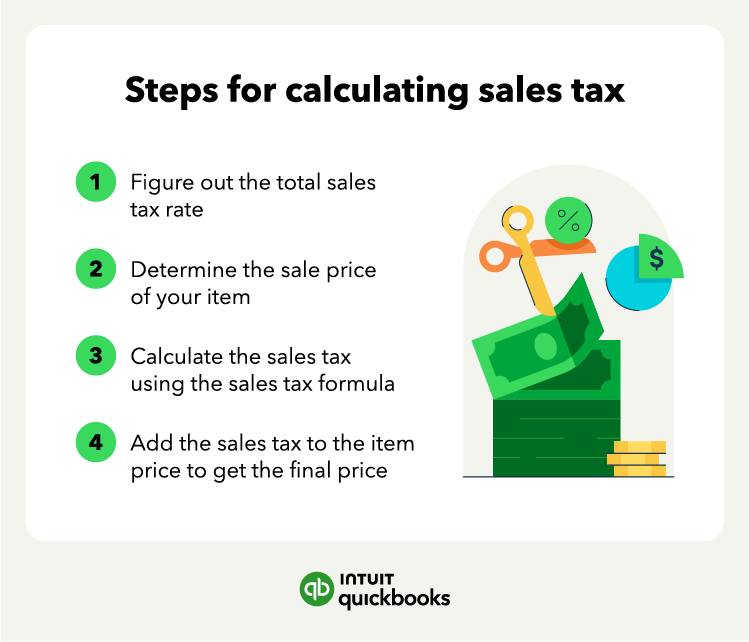
Arizona's exemptions have a state layer and a city layer, and they do not always match. The categories that matter most to small sellers:
Groceries: exempt from the state-level tax, and the state definition is broad. Food for home consumption, including candy, carbonated and non-carbonated beverages, and bottled water, all generally counts as exempt food at the state level.
The state exemption does not reach food for consumption on the premises. The statute defines that to include hot prepared food, hot or cold sandwiches, beverages sold in cups or open containers, food sold by caterers, and food sold at amusement venues, even when sold to go. A seller that provides tables, counters, or other eating facilities qualifies for the exemption only on the statute's terms. One example is a delicatessen with a separate counter or register for exempt sales.
The city layer is the catch. Many Arizona cities have voted to apply tax to food for home consumption. So a seller must apply the correct city's treatment. Prepared food and restaurant meals are taxable, state and city, under the restaurant classification. Vitamins and dietary supplements are taxable, and so are alcoholic beverages.
Clothing: taxable year-round. Clothing, footwear, accessories, protective clothing, and sports equipment are all taxable under the retail classification. There is no exemption and no sales tax holiday. Separately stated clothing alteration is a nontaxable service.
Software and digital products: prewritten (canned) software is taxable as goods, whether on media or downloaded. Custom software written to a customer's order is an exempt professional service. Hosted prewritten software can be taxable under the personal property rental classification. That happens when the customer's rights amount to sufficient possession, use, or control of the software. Specified digital products and services are treated as taxable. Computer hardware is taxable. Internet access is not taxable. Software maintenance agreements that deliver canned updates are taxable as sales of goods.
Prescription drugs and medical items: prescription drugs and prescribed medical oxygen are exempt. Over-the-counter drugs are generally taxable. Durable medical equipment is generally exempt when prescribed by a licensed professional. Prosthetic appliances are exempt. Equipment and supplies that assist a person with a physical or developmental disability are separately exempt. Vitamins and dietary supplements are taxable. Medical services are not taxable.
Resale, packaging, and manufacturing: anything bought for resale is exempt with a resale certificate. Containers, packaging, and labels transferred with the product sold are exempt. Machinery and equipment used directly in manufacturing, and materials that become part of the finished product, are exempt. A supplier's sale of materials to a contractor is otherwise a taxable retail sale, except that a prime contractor buys the materials it incorporates tax-free with an exemption certificate.
Selling a mix of taxable and exempt items, or selling groceries in a city that taxes them, is where receipts get messy. Track the buckets separately from the start.
Use tax is the buyer's side of Arizona's TPT. It is an excise tax on the storage, use, or consumption in Arizona of tangible personal property purchased from a retailer. It is measured as a percentage of the sales price. Every person storing, using, or consuming such property in Arizona is liable for it until it has been paid. It comes up when a retailer does not collect tax on goods that are used, stored, or consumed in Arizona. The Department's list of who owes it includes:
A receipt showing the tax from a retailer that maintains a place of business in Arizona, or that the Department has authorized to collect the tax, relieves you of further liability for the tax it covers. If you paid another state's sales or excise tax on the purchase at a rate equal to or higher than Arizona's, no Arizona use tax is due. If the other state's rate was lower, Arizona reduces its use tax by the tax you already paid. You owe only the difference. The same items that are exempt from TPT, such as prescription medicines and most grocery food, are exempt from use tax too.
The rate matches the state TPT rate. The state use tax rate is 5.6%, equal to the state transaction privilege tax rate. By statute, that is the rate prescribed for retailers under A.R.S. § 42-5010 plus the additional 0.6 percent increment in effect through June 30, 2041. The Department's rate table lists 5.6% for use tax purchases in every county. There is no county use tax. Some cities impose an additional use tax, at rates that vary by city. The Department's rate table and look-up tool carry the city use tax rates.
How a business reports it. Your TPT license is a transaction privilege tax and use tax license. Form TPT-2 is the Transaction Privilege, Use and Severance Tax Return. Businesses with income subject to TPT, county excise tax, use tax, or severance tax must file it even if there is no tax liability due for the period. Use tax goes on that same return under its own business codes. Those are 029 for use tax purchases and 030 for use tax from inventory. The cities that impose a use tax list the same codes with their own rates. Failure to pay use tax may result in penalties and interest.
Say your café in Tucson buys a $3,000 commercial espresso machine from an out-of-state seller that does not collect Arizona tax. You owe $168 in state use tax (5.6%) plus $78 in Tucson city use tax (2.6%), $246 in all. You report it on your next TPT return.
Arizona cities levy their own TPT on top of the state and county tax. But since 2017 the state collects all of it. What cities still control is their rates and, through the Model City Tax Code, parts of their tax base. Cities can tax some things the state exempts, most notably food for home consumption. Many Arizona cities tax groceries even though the state exempts them. So a seller must apply the correct city's treatment, not assume the state answer.
The Department's rate table carries a separate line, "Retail Sales Food for Home Consumption," in the cities that tax it. City rate changes are announced through the Model City Tax Code's rate and code updates and the Department's monthly TPT newsletter.
The law has moved the other way in one place. Since January 1, 2025, cities may not tax long-term residential rentals of 30 days or more. Short-term lodging remains taxable, though.
Arizona's filing system runs through one department and one return, which makes its particulars easy to miss:
Your filing frequency depends on tax owed, not sales. Filing frequency is set by your total estimated annual combined state, county, and city TPT liability, not your total sales or gross receipts. Less than $2,000 a year, you file annually. From $2,000 to $8,000, quarterly. More than $8,000, monthly. A seasonal frequency exists for businesses with eight months or less of business activity.
Your initial frequency comes from the estimate you give when you apply for the license. If that estimate turns out wrong, you request a change by mailing the Business Account Update Form. That is the only way to change it. The change takes effect at the beginning of the next filing period.
Returns are due the 20th, with a grace period. TPT is due on the 20th of the month following the end of the tax period. That holds whether you file electronically or on paper. An electronic return and payment are timely if the Department receives them on or before the last business day of the month in which they are due. A paper return and payment are timely if received on or before the second-to-last business day. Penalties and interest on an untimely return accrue from the statutory due date of the 20th, not from the end of the grace period.
Most businesses must file and pay electronically. The electronic filing and payment threshold is $500 in annual TPT and use tax liability (for 2021 and beyond). If you have more than one location, you are required to file electronically. Filing a paper return when you are required to file electronically carries a penalty of 5% of the tax due. A $25 minimum applies even to zero-liability filings. Electronic filers can claim an accounting credit of 1.2 percent of the state tax due, up to $12,000 in a calendar year. Paper filers can claim 1 percent, up to $10,000.
One return carries state, county, and city tax. You register once with ADOR and file one return: TPT-2, or TPT-EZ for a single location. You do not register or file separately with any city. County excise taxes are included, reported, and paid with the state TPT. City tax for all cities is also reported on Form TPT-2, by the two-letter city code. Each place you do business is identified by the three-digit location code on your license. By law, if you collected more tax than is calculated as due, the excess tax must be reported and paid to the Department.
File every return, including zero returns. Once your filing frequency is set, you must report on that cadence. That holds even if your gross receipts for the period are $0.00 or you have $0.00 to pay. The Department's due-date page puts it plainly: even if you had no sales or tax due for a filing period, you must still file a $0 TPT return.
Tip: if a rate error slips through, fix the rate first, then correct the affected returns. Undercollect and the difference comes out of your pocket. Overcollect and you owe refunds. Tax you collected as tax is never yours to keep.
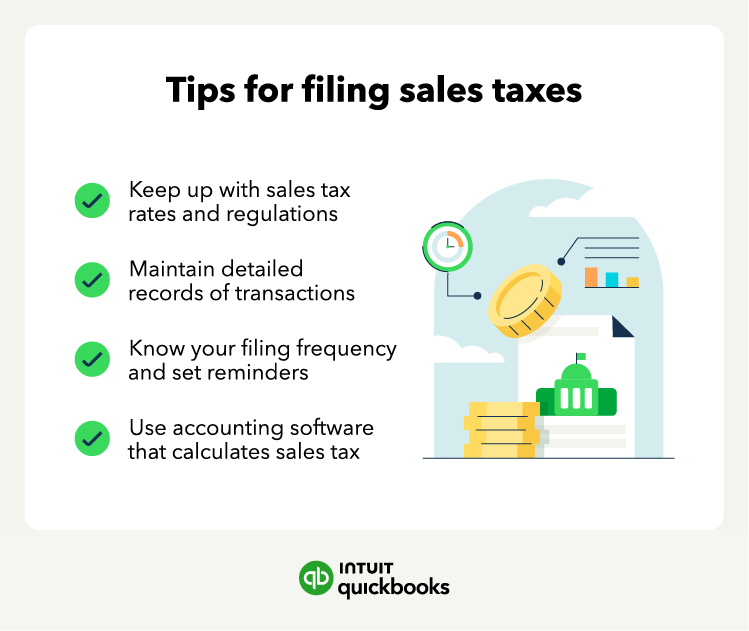
Multiply the pre-tax price by the combined rate for the location the sale is sourced to. That is the 5.6% state rate plus the county and city layers that apply there. For a Tempe seller, whose combined retail rate is 8.1%, a $1,200 sale carries $97.20 in tax and a $1,297.20 total.
Not a conventional one. Arizona has the transaction privilege tax, or TPT. It is a tax on the seller for the privilege of doing business, sorted into business classifications. The state rate on retail sales is 5.6%. Retail sales of goods are taxable, and most services are not. Construction and cloud software have their own rules. Cities levy their own TPT on top of the state and county tax. Since 2017 the state collects all of it on one return.
Generally, no. Services are generally not subject to tax in Arizona. Cleaning, lawn care, repair labor, personal care, and professional services are all outside the retail classification. The exceptions run through separate classifications: construction (prime contracting), restaurants, transient lodging, amusement (admissions and entertainment fees), publishing, and job printing. Software as a service is also an exception. It is generally taxed as a rental of software. Repair labor is not taxable when it is separately stated, but the parts you sell are.
Not by the state, but often by the city. Food for home consumption, including candy, carbonated and non-carbonated beverages, and bottled water, is generally exempt from the state-level tax. But many Arizona cities have voted to apply tax to food for home consumption. Prepared food and restaurant meals are taxable, state and city.
No. Arizona has no back-to-school or any other TPT holiday. Clothing, school supplies, and electronics are taxable every day of the year.
Manage sales tax in QuickBooks with automation that helps you save time and stay compliant.
Save time with automated sales tax
Products are automatically matched to tax categories, so you can charge the right sales tax with less manual work. Returns are automatically prepared and formatted for your state, and if you sell into other states, you can automate multi-state filing from one place.
Stay confident and compliant
File with confidence using accurate, automated calculations. Tax rates and rules change, and they are updated automatically in QuickBooks, so what you charge keeps up. Get reminders before filing deadlines so you can plan ahead, and know your return status with real-time updates.
Your data stays protected
Securely send returns to tax agencies and track every filing in QuickBooks.
Manage your books and sales tax in one place
Automatically calculate, collect, and track applicable sales tax from your customers. One report breaks out taxable and non-taxable sales, so you always know what to pay each agency. Prepare, file, and pay directly from QuickBooks.
Explore QuickBooks sales tax software to spend less time on tax and more time running your business.
*Sales tax filing is available as an add-on service through QuickBooks Online for $40 per filing.
You've got the rates and the rules that apply in Arizona. The harder part is applying them correctly on every sale, every quarter. QuickBooks automated sales tax calculates the right combined rate, tracks what you've collected, and shows what you owe when it's time to file.
Call Sales: 1-800-285-4854


