Arkansas sales tax calculator
Know exactly what to charge at any Arkansas address. Find the combined rate, the tax on any amount, and the total. Free for your business, no sign-up.
Know exactly what to charge at any Arkansas address. Find the combined rate, the tax on any amount, and the total. Free for your business, no sign-up.
Done checking rates one sale at a time? QuickBooks applies the right Arkansas rate, state, county, and city included, on every invoice automatically. See how automated sales tax works
Arkansas stacks three layers of sales tax on a sale: the state's 6.5%, the county's, and the city's. All three are administered by the Arkansas Department of Finance and Administration (DFA) and reported on one combined return. No home-rule city administers its own sales tax separately.
Small businesses carrying unpaid invoices are owed about $17,500 on average, according to the Intuit QuickBooks Late Payments Report. At that size, an Arkansas seller has one return to file. The state, county, and city tax are each reported on it.
What makes Arkansas different isn't the stack. It's which sales the tax reaches. Arkansas taxes goods and a closed list of specifically named services. A service that isn't on the list isn't taxable, no matter how much it resembles one that is. Whether you sell clothing in Bentonville, clean offices in Little Rock, or mow lawns in Jonesboro, here's how Arkansas's layers fit together. You'll also see which of your sales they reach and what to know at filing time.
Arkansas's state sales tax rate is 6.5%. Counties and cities can each levy their own tax on top of it. The three layers are collected together on one DFA return:
Sellers collect the state, city, and county tax at their full rates on the invoice total. A local-tax cap once limited local tax on large single purchases. It was eliminated for most transactions effective January 1, 2008. It survives only for motor vehicles, aircraft, watercraft, and manufactured housing. For business purchases, a buyer-side rebate took its place. It applies to a single invoice over $2,500 for a business expense. The buyer, not the seller, claims back the city and county tax paid on the amount above $2,500 (see the use tax section). There is no separate local return. The same DFA return carries the state, county, and city tax.
Arkansas taxes retail sales and rentals of goods, which the law calls tangible personal property. It also taxes a closed list of specifically named services. Unlike states with a broad services tax, Arkansas taxes a service only if the legislature has named it in the statute. A service that is not on the list is not taxable, no matter how similar it is to a taxable one. If your service is on the list, you charge the full combined rate on it. Taxable services include:
The bullets above are a selection, not the whole statute. Before you conclude a service is untaxed, check the full list. It is in Ark. Code Ann. §§ 26-52-301 and 26-52-316 and DFA's Gross Receipts Tax Rules (GR-6 through GR-11).
Services that are not on the list, and so are not taxable, include general barbering and beauty services, accounting, legal, engineering, bookkeeping, consulting, employment and staffing, massage therapy, dating services, dance instruction, pet training, babysitting and daycare, home health care, medical services, and self-storage. General barbering and beauty services are distinct from body piercing, tattooing, and electrolysis. Those are taxable, though they are performed at the same kind of shop. Arkansas once taxed self-storage rental but repealed that tax effective July 1, 2011. General or prime contracting services are not taxable either. Contractors, though, pay tax on the machinery and materials they buy to perform a construction contract.
The edges are where the list bites. Lawn care and landscaping are taxable, but tree trimming and tree removal are carved out. The statute's definitions of "lawn care" and "landscaping" specifically exclude them. Within HVAC repair, repair or replacement of the mechanical and electrical components (the units themselves) is taxable. Repair or replacement of the ductwork is not, unless the two are billed together without separating the charges. In that case, the whole charge becomes taxable.
Clothing alteration and repair labor is generally not taxable. The charge is exempt when separately stated. Shoe alteration and repair is taxable. Industrial laundering of linens for a commercial account is taxable. Long-term rentals of uniforms, linens, towels, and similar items are not taxed as a laundering service. The lessor instead pays or collects tax on the rental of the property itself.
Repairs, warranties, and maintenance agreements. Repair labor charges on the categories of goods Arkansas's statute lists are generally taxable. Maintenance agreements, service contracts, and extended warranties covering non-computer goods are taxable when sold in connection with a taxable service or item. That holds whether the agreement is optional or required.
Say a repair is already covered by a taxable service contract, maintenance agreement, extended warranty, or home warranty. Sales tax is not separately collected on the labor or parts used to perform it. Tax was already collected when the contract itself was sold. Maintenance agreements for computer hardware are taxable whether optional or required. Maintenance agreements for computer software are exempt whether optional or required.
The county and city taxes apply to the same sales as the state tax. They follow the same sourcing rules, which decide which county's and which city's tax a sale carries. For goods, that is the place where your customer takes possession. That means your counter if they pick up in person, or the delivery address if you ship. For services, it is the place where your customer first uses the service. For repair-type work, that means wherever they get the item back. You report all three layers on the same DFA return. The local tax is broken out by city and county code.
Arkansas is a destination-sourced state. Under Ark. Code Ann. § 26-52-521 and DFA's sourcing rule (GR-76), a sale is sourced to the place where your customer receives what they bought. The same rule applies to every state and local tax DFA administers. For goods, receipt means taking possession. For services, it means making first use of the service. Possession by a shipping company on the customer's behalf doesn't count as receipt. Since January 1, 2008, local tax on merchandise has been based on the point of delivery. If possession doesn't occur at your store, the delivery address decides. Find your situation:
If you sell goods in person at your location: when the customer receives the goods at your business location, the sale is sourced to that location. Charge that location's combined rate: the state tax plus the county and city tax in effect there. Say you only sell merchandise and perform services at your store and never deliver or ship. DFA says to keep collecting local tax based on your store location, because delivery occurs at the store.
If you ship or deliver goods to Arkansas customers: when the customer doesn't receive the goods at your business location, the sale is sourced to the place of receipt. That is where they, or someone they designate, receive the goods. It includes the delivery address they gave you. Charge the combined rate at that address. That is the state tax plus whatever county and city tax is in effect there, not at your shop. If you never learn a delivery address, the statute falls back, in order, to:
If you repair or work on a customer's property: a taxable repair is received where the customer gets the repaired item back and can first use it. Where you did the work does not decide the rate.
DFA's own example: a shop in Jacksonville repairs an automobile motor. If the customer picks the motor up at the shop, the shop collects the state tax, Jacksonville's city tax, and Pulaski County's tax. Now say the shop instead ships the motor by common carrier to the customer in Conway. The customer took receipt of the service in Conway. So the shop collects the state tax, Conway's city tax, and Faulkner County's tax. DFA says the same split applies to taxable repair services generally:
This generally covers computer and hardware repair, HVAC unit repair, shoe repair, and the other repair labor on Arkansas's list.
If you perform a service at the customer's location: a service received where it's performed is sourced there. So the sale carries the combined rate at the customer's address. DFA's example: a landscaping job in Monticello carries the state tax, Monticello's city tax, and Drew County's tax. Say you're a landscaper or commercial lawn care provider with customers in many cities and counties. DFA tells you to collect local tax for the cities and counties where you perform the taxable services.
Security and alarm monitoring is sourced to the residence, business, or other fixed premises where the service is rendered. The same logic generally applies to janitorial cleaning, pest control, pool cleaning, snow removal, and HVAC installation in an existing building.
If you're a photographer: DFA sources photography, including any sitting fee, to where the customer receives the product of the service. That means where they view the proofs or pictures, not where you shot them. Say a Fayetteville photographer shoots senior pictures in Eureka Springs and hands the prints over at the Fayetteville studio. The photographer collects the state tax plus Fayetteville's and Washington County's tax.
If the proofs are instead posted to a website for viewing, the local tax follows the first of these that you know. The order is the customer's address, then the customer's billing address, then your own. Say a Conway videographer films a wedding in Little Rock and mails the video to the customer's home in Mayflower. The videographer collects the state tax plus Mayflower's and Faulkner County's tax.
If you provide a service on the customer or their pet in person: body piercing, tattooing, electrolysis, indoor tanning, and pet grooming are generally sourced to the place where you perform them. That is where the customer first uses the service.
If you sell through a marketplace like Amazon or Etsy: Arkansas's marketplace facilitator law took effect July 1, 2019. A marketplace facilitator that crosses Arkansas's threshold must collect, remit, and report tax on all sales made through its platform for delivery into Arkansas. It does so on behalf of the sellers using it. The threshold: sales into Arkansas that exceed $100,000, or more than 200 separate transactions into Arkansas, in the current or previous calendar year.
Sales you make outside the platform, through your own website checkout, invoices, or in person, are not covered by the facilitator's collection. They remain yours to collect and report. Marketplace sales are excluded from your own threshold as an individual seller. That threshold matters only if you have no physical presence in Arkansas. An Arkansas-based seller registers and collects regardless of volume.
If you're out of state selling into Arkansas: the economic-nexus threshold is for remote sellers, which DFA defines as out-of-state sellers with no physical presence in Arkansas. If you have a physical presence here, such as a place of business, you generally must register and collect. That holds regardless of your sales volume.
As a remote seller, you must collect once you cross the threshold. The threshold is more than $100,000 in taxable sales into Arkansas or more than 200 separate transactions in the previous or current calendar year. The duty to collect starts on the next transaction after you meet the threshold. Arkansas still has both tests. DFA's guidance continues to show the dollar and transaction-count thresholds as in effect. So don't assume the transaction prong has been repealed.
Sales made through a marketplace are excluded from your own threshold. Until you've met the threshold, a remote seller with no physical presence in Arkansas isn't required to collect Arkansas tax. Once you have, you source each sale the same way an in-state seller does. The sale is sourced to the Arkansas delivery location. You collect the state tax plus that location's county and city tax. The threshold took effect July 1, 2019.
Sales with their own sourcing rules. Motor vehicles, trailers, and semitrailers that require licensing are outside these rules. When one is sold to an Arkansas resident, the sale is sourced to the buyer's residence. Florists are excluded from the destination rules. Printing services that produce direct mail follow a separate direct mail sourcing statute. Prepaid calling services have their own rule.
Leases and rentals of equipment follow a modified rule. The first periodic payment is sourced like a sale. Later payments are sourced to the address where the equipment is kept. DFA's example: a Little Rock dealer leases a forklift. The customer picks it up in Little Rock and takes it to a warehouse in North Little Rock. The down payment carries Little Rock's and Pulaski County's tax. The monthly payments carry North Little Rock's and Pulaski County's tax.
Rentals of goods for less than 30 days also carry Arkansas's 1% short-term rental tax. It comes on top of the state and local sales tax. It generally does not apply to:
Worked example. You build furniture in Little Rock and sell a $900 table.
Same table, same week, $4.50 more in tax and different local codes on your return. Both local rates are from DFA's list for October through December 2026. DFA publishes a new list each quarter, so check the current one. Arkansas's return reports local tax by city and county code, so keep the delivery address with every sale.
The exemptions that matter most to small sellers, and the lines inside them:
Groceries: as of January 1, 2026, the state-level rate on food and food ingredients purchased for home consumption is zero. City and county sales tax still applies to groceries. So a grocery purchase is free of the state's layer of tax, not tax-free.
Candy, soft drinks, and prepared food: the definition of "food and food ingredients" excludes all three. They stay taxable at the full general state rate plus local tax. Under the statute, a soft drink is a nonalcoholic beverage that contains natural or artificial sweeteners, carbonated or not. A beverage that contains milk or milk products, soy, rice, or similar milk substitutes is not a soft drink. Neither is a beverage that is more than 50% vegetable or fruit juice by volume.
Unsweetened bottled water is not a soft drink. At the state level it is treated as food and food ingredients and is exempt. Local sales tax can still apply, though.
Clothing: taxable year-round. Arkansas has no general exemption for clothing. Clothing, clothing accessories, protective clothing and equipment, sports and recreational equipment, and special-order clothing and footwear are all taxable like any other retail sale. The exception: the annual sales tax holiday covered below. Clothing alteration and repair labor is generally not taxable. The charge is exempt when separately stated. Shoe alteration and repair is taxable.
Software and digital products: Arkansas draws its software line at how software is written and how it is delivered. Custom (non-prewritten) software is treated as a nontaxable programming service and is exempt. That holds even when it is provided on a tangible medium. Say you sell hardware or other goods together with the custom programming for one price. Arkansas's bundled-transaction rules apply to the goods portion. Prewritten (canned) software is taxable only when delivered on a tangible medium such as a CD or flash drive. Software delivered electronically or by "load and leave" is not taxed, whether custom or prewritten.
Software as a Service, Infrastructure as a Service, and Platform as a Service are not taxable. None of them is named in the statute. Digital audio works, digital audio-visual works, digital books, and the digital codes that unlock them are taxable. Computer hardware is taxable. A maintenance agreement for hardware is taxable whether optional or required. A maintenance agreement for software is exempt whether optional or required. Internet access service is exempt.
Prescription drugs and medical equipment: a drug is exempt when it can only be legally dispensed by a doctor's prescription. A drug that is available over the counter is not exempt, even if a physician writes a prescription for it. So what controls is whether the drug is over the counter or prescription-only, not whether a doctor happened to prescribe the item. The same rule governs contraceptives.
Durable medical equipment, mobility enhancing equipment, prosthetic devices, and disposable medical supplies are generally exempt when sold, rented, or repaired for a specific patient under a physician's prescription. The prescription has to be written before the sale. The phrase "for home use" is part of how durable medical equipment is defined. A prosthetic device does not include eyeglasses, contact lenses, or dental prostheses.
Separately, any medical equipment sold or rented to a Medicare- or Medicaid-eligible person and reimbursed through that program is exempt on its own. No prescription is required. That includes durable medical equipment, mobility enhancing equipment, prosthetics, contacts, and eyeglasses.
Newspapers and magazines: newspapers are exempt, with no subscription requirement. Magazines and other periodicals are exempt only when sold by regular subscription. A single-copy or newsstand sale is taxable.
Selling a mix of taxable and exempt items, or items taxed at different rates, is where receipts get messy. Track the buckets separately from the start.
Use tax is the buyer's side of the same tax. DFA says businesses and individuals should pay it when they:
Taxable services bought out of state are covered too. DFA's example is an Arkansas company that sends a motor to a repair shop in Tulsa, Oklahoma. The shop repairs it, ships it back, and charges no Arkansas tax. Both the parts and the labor are subject to Arkansas use tax.
The state use tax rate is 6.5%, the same as the state sales tax rate. DFA says you must also remit the city and county use tax. That is for the place where the items are first delivered in Arkansas. So the use tax you owe has the same three layers as the sales tax you collect. Say you legally paid sales tax on the items in another state. For purchases other than motor vehicles, you may be entitled to a credit for that tax against the tax due Arkansas. If you paid less than the Arkansas rate there, you owe Arkansas the difference.
For a business, this shows up when you order equipment, supplies, or furniture from a vendor that didn't charge Arkansas tax. Say you buy a $3,000 commercial espresso machine online for your coffee shop in Little Rock. The invoice shows no Arkansas tax. You owe $195 in state use tax, plus Pulaski County's and the City of Little Rock's use tax. On a business purchase like this one, DFA tells a business that self-reports use tax to limit the city and county tax to the first $2,500 on each invoice. So the local use tax here is figured on $2,500, not $3,000.
The same rule runs the other way. Say a single business-expense invoice is over $2,500 and the seller has collected the full local tax on it. The buyer, not the seller, claims the city and county tax on the amount above $2,500 back from DFA. The claim goes on the sales tax return if you hold a permit, or on Form ET-179A if you don't. You have one year from the purchase or from paying the tax, whichever is later. Sellers still collect on the full invoice.
How you report it. If you're registered to remit Arkansas sales tax, DFA says to report any use tax due on your regular monthly, quarterly, or annual return. It goes in Column B. A business that makes use-taxable purchases on a frequent and recurring basis needs to register as a consumer use tax filer. It reports the tax on Form ET-1. Individuals report on the Consumer Use Tax Report, Form CU-1. DFA shares sales information with other states and bills Arkansas residents for unpaid use tax, plus penalty and interest. A business that is audited without having paid is liable for the unpaid tax plus penalties and interest.
Arkansas's Grocery Tax Relief Act eliminated the remaining state-level tax on food and food ingredients effective January 1, 2026. Before that date, groceries were taxed at a reduced state rate. As of January 1, 2026, the state-level rate on food and food ingredients purchased for home consumption is zero.
Two things keep this from being a clean zero on the receipt. Local city and county sales tax continues to apply to groceries. So grocery purchases are not entirely tax-free in Arkansas, only free of the state's own layer of tax.
And the definition of "food and food ingredients" excludes candy, soft drinks, and prepared food. So they remain taxable at the full general state rate plus local tax, unaffected by the change. Soft drinks here means sweetened nonalcoholic drinks, carbonated or not, but not milk-based drinks or drinks that are more than 50% juice. If you sell food, your point of sale needs to tell the two groups apart.
Arkansas holds one sales tax holiday a year, from 12:01 a.m. on the first Saturday of August through 11:59 p.m. the Sunday that follows. During the holiday, these items are exempt from state and local sales tax:
The statute lists calculators, cellular phones, computer mice, monitors, and keyboards, desktop and laptop computers, e-readers, printers, and tablets as electronic devices. It excludes video game consoles, televisions, music or video players, and devices designed primarily for recreation. Unlike clothing and accessories, its electronic-device definition carries no price limit. DFA's 2026 retailer instructions list the devices without one. Check DFA's current-year sales tax holiday guidance for the exact dates and the eligible-item lists.
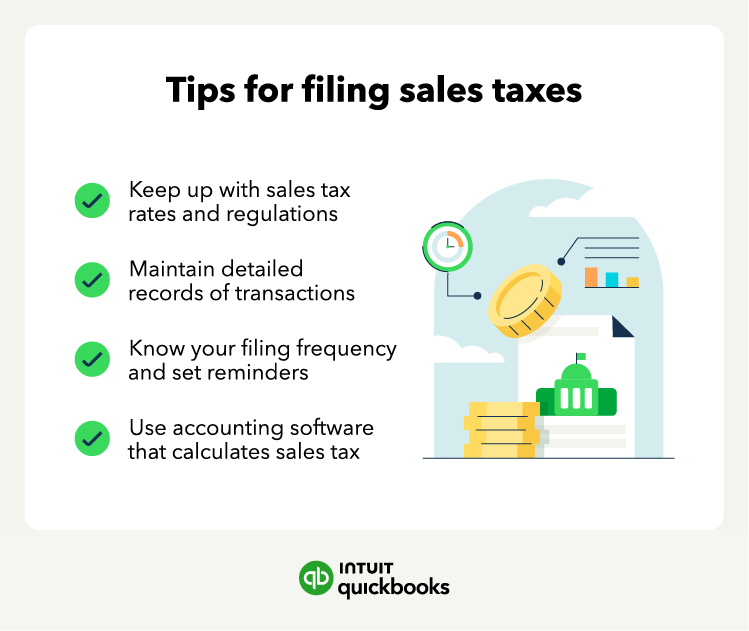
Every Arkansas sales tax return, monthly, quarterly, or annual, is due on a 20th. The rest of filing is about which layers go where:
Monthly returns are due on the 20th of the following month. The statute requires every taxpayer to deliver a return on or before the 20th, with payment. The return shows the tax due on all taxable sales during the preceding calendar month. For the three months of 2026 whose 20th falls on a weekend, DFA's due-date calendar lists June 22, September 21, and December 21 instead.
Quarterly and annual filing come by notice, not by choice. If your average tax for the previous fiscal year did not exceed $100 a month, DFA may notify you that you may file quarterly. The fiscal year runs July 1 through June 30. Quarterly returns are due on or before July 20, October 20, January 20, and April 20. If it did not exceed $25 a month, DFA may notify you that you may file one yearly return on or before January 20. Until you receive the notice, keep filing monthly.
File and pay online through ATAP. The Arkansas Taxpayer Access Point lets you file and amend returns, make payments, and register for tax accounts. Electronic filing and payment is mandatory if your average monthly sales tax liability for the preceding fiscal year was $5,000 or more. Payment by electronic funds transfer is required if your average monthly liability is $20,000 or more. Retailers with average net sales of more than $200,000 a month also make prepayments during the month by electronic funds transfer.
One return, every location, every layer. Arkansas issues a separate permit for each business location. But you file a single report combining the tax from all your Arkansas locations registered under the same federal employer identification number. State, county, and city tax all go on that return. The local tax is reported line by line by city and county code. DFA publishes the list of every city and county that levies a local tax with its code and rate.
Use tax you owe on your own purchases goes in the use tax column of the same return. Keeping the delivery address with each sale turns the local schedule into a sort, not a research project.
File every return, including zero returns. Once you become liable to file a report, the statute says you must continue to file it, even though no tax is due. You must keep filing until you notify DFA in writing that you are no longer liable.
Tip: if a rate error slips through, fix the rate first, then correct the affected returns. Undercollect and the difference comes out of your pocket. Overcollect and you owe refunds. Tax you collected as tax is never yours to keep.
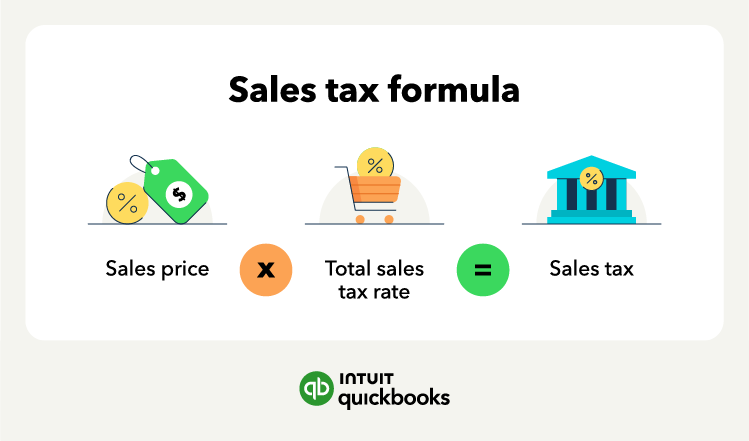
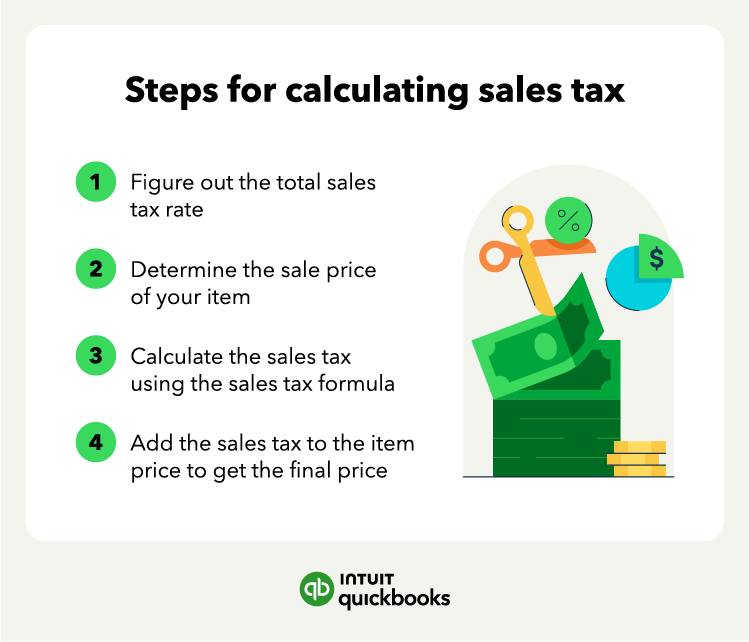
Multiply the pre-tax price by the combined rate at the place the sale is sourced to. That is the 6.5% state rate, plus the county's rate and the city's rate in effect there. In Little Rock that is 6.5% plus Pulaski County's 1% plus the city's 1.125%, for 8.625%. On a $1,200 sale, that's $103.50 in tax and a $1,303.50 total.
Your customer's. Arkansas sources a sale to the place where the customer receives the goods. So a shipped or delivered order carries the state tax plus the county and city tax at the delivery address. Your own location's rate applies when the customer receives the goods at your business location. For services, the sale is sourced to where the customer first uses the service. A repaired item picked up at your shop carries your shop's local tax. The same item shipped back to the customer carries the local tax where they receive it.
Only if your service is one the legislature has specifically named. Among the services on the list are building and janitorial cleaning, lawn care and landscaping, pest control, pool cleaning, dry cleaning and laundering, and computer hardware repair. Also on it: repair of motor vehicles, appliances, furniture, machinery, and the other goods the statute names. So are wrecker and towing, locksmith services, security and alarm monitoring, pet grooming, kenneling, body piercing and tattooing, photography, printing, health-club dues, admissions, and lodging.
The exceptions noted above still apply. They are self-service and coin-operated laundry, pest control for agricultural production, grooming that is part of veterinary treatment, pounds and shelters, and tree trimming and removal.
Barbering and beauty services, accounting, legal, consulting, massage therapy, medical services, and self-storage are not on it. Software as a Service is not taxable either, because remote access to software isn't a named service. This is a selection, not the whole statute. Check Ark. Code Ann. §§ 26-52-301 and 26-52-316 before concluding a service is untaxed.
Not by the state, as of January 1, 2026. The state-level rate on food and food ingredients bought for home consumption is zero under the Grocery Tax Relief Act. But city and county sales tax still applies to groceries. Candy, soft drinks, and prepared food are not "food and food ingredients" and are taxed at the full general state rate plus local tax. Soft drinks here means sweetened drinks, carbonated or not, but not milk-based drinks or drinks that are more than 50% juice.
The first Saturday in August through the following Sunday, from 12:01 a.m. Saturday to 11:59 p.m. Sunday. Clothing and footwear under $100 per item and clothing accessories and equipment under $50 per item are exempt for those two days. So are school supplies, school art supplies, and school instructional materials. So are electronic devices commonly used by students: computers, tablets, cellular phones, calculators, printers, e-readers, monitors, keyboards, and mice. Game consoles, televisions, and music or video players are not included. The statute sets no price limit on electronic devices. Check DFA's current-year guidance for the exact dates and the eligible-item lists.
Manage sales tax in QuickBooks with automation that helps you save time and stay compliant.
Save time with automated sales tax
Products are automatically matched to tax categories, so you can charge the right sales tax with less manual work. Arkansas returns are automatically prepared and formatted for the DFA, with your collections allocated by city and county, and if you sell into other states, you can automate multi-state filing from one place.
Stay confident and compliant
File with confidence using accurate, automated calculations. Arkansas cities and counties change their rates on quarterly cycles, and tax rates and rules are updated automatically in QuickBooks, so the rate you charge keeps up. Get reminders before DFA deadlines so you can plan ahead, and know your return status with real-time updates.
Your data stays protected
Securely send returns to tax agencies and track every filing in QuickBooks.
Manage your books and sales tax in one place
Automatically calculate, collect, and track applicable sales tax from your customers. One report breaks out taxable and non-taxable sales, so you always know what to pay each agency. Prepare, file, and pay directly from QuickBooks.
Explore QuickBooks sales tax software to spend less time on rates and more time running your business.
*Sales tax filing is available as an add-on service through QuickBooks Online for $40 per filing.
You've got the rates and the rules that apply in Arkansas. The harder part is applying them correctly on every sale, every quarter. QuickBooks automated sales tax calculates the right combined rate, tracks what you've collected, and shows what you owe when it's time to file.
Call Sales: 1-800-285-4854


