California sales tax calculator
Know exactly what to charge at any California address. Find the combined rate, the tax on any amount, and the total. Free for your business, no sign-up.
Know exactly what to charge at any California address. Find the combined rate, the tax on any amount, and the total. Free for your business, no sign-up.
Done checking rates one sale at a time? QuickBooks applies the right California rate, statewide base and district taxes included, on every invoice automatically. See how automated sales tax works
California's sales tax has two layers. The first is a 7.25% statewide base rate that already includes a uniform local share. The second is voter-approved district taxes, which vary by city and county and are added on top of the base.
The California Department of Tax and Fee Administration (CDTFA) administers every layer. So one sales tax return covers state, local, and district taxes. Sellers never register with a California city or county for sales tax.
The average American side hustle brings in about $2,038 a month, according to Intuit QuickBooks entrepreneurship research. At that size, a California seller making direct sales is squarely in the system. You need a seller's permit, and you charge a rate that depends on where the sale is sourced. Your one state return carries the district taxes on a schedule.
What makes California different isn't the layers. It's what the tax reaches. California taxes sales of physical goods, while services and most digital products are not taxed. So the question for a seller is whether goods, which the law calls tangible personal property, change hands.
Whether you run a boutique in Los Angeles, print signs in Sacramento, build furniture in Fresno, or sell hot food from a truck in San Diego, here's how California's rate works. You'll also see which of your sales it reaches and what to know at filing time.
California's statewide base sales tax rate is 7.25%, and it applies at every California address. It is made up of a 6.00% state portion and a 1.25% uniform local share. Of that local share, 1.00% goes to the city or county where the sale or use occurs and 0.25% goes to the county transportation fund.
Voter-approved district taxes vary by city and county. They are added on top of the statewide base where a city, county, or other local jurisdiction has imposed one. A countywide district tax applies across the county. A city district tax applies only to addresses within the incorporated city limits. More than one district tax may be in effect at a single location. The layers:
The statewide base already includes the uniform local share. So the 7.25% quoted as California's rate is a state-and-local figure, not a state-only one. The rate at any given address is 7.25% plus whatever district taxes are in effect there. There is no separate local registration. The CDTFA administers every layer, you file one return, and you report district taxes on a schedule of that return.
California imposes sales tax on retail sales of tangible personal property. Services are not taxable unless they are part of the sale of tangible goods. When a transaction mixes service and property, taxability turns on the true object of the contract. The question is whether the buyer is really paying for the service or for the property it produces.
California does not list taxable services. The rule is simply that sales tax reaches goods, not services. That puts nearly everything a service business does outside the tax: janitorial and building cleaning, window cleaning, lawn care and landscaping, tree trimming, pest control, pool cleaning, snow removal, pet grooming and boarding, barber and beauty services, massage, tattooing, moving, self-storage, security services, instruction of any kind, and all professional services, including legal, accounting, engineering, medical, and veterinary work.
The line that catches sellers is fabrication. Making, producing, or processing new tangible property for a customer counts as a taxable sale. That holds even from materials the customer supplies, and even when it is billed as labor.
Repairs split the invoice. Labor to repair or restore existing property is not taxable. Parts and materials are taxable.
A 10 percent threshold decides who owes the tax on the parts. If the retail value of parts exceeds 10 percent of the total repair charge, or parts are billed separately, the repairer is a retailer. As a retailer, it must separately state the parts and collect tax on them. At 10 percent or below, the repairer simply pays tax on its own cost of the parts.
Separately stated installation labor is generally not taxable. Optional maintenance agreements on equipment are not taxable to the customer. You pay tax on the parts you use under them, though. Mandatory ones, required as a condition of the sale, are taxable as part of the sale price.
Delivery method decides software, through 2026. Prewritten software is generally taxable when transferred on physical media. It is generally not taxable when delivered electronically, where nothing tangible changes hands. SaaS, web hosting, online database access, e-books, downloaded music and movies, apps, and streaming subscriptions are not subject to sales tax. Custom software written to a customer's special order is exempt regardless of how it is delivered. Computer hardware is taxable, including parts and supplies.
That changes on January 1, 2027. Under Senate Bill 122 (Stats. 2026, ch. 23), prewritten software becomes a taxable digital product however it reaches the customer: on media, by download, or accessed remotely. That brings SaaS and most downloaded apps into the tax. Custom software stays exempt. E-books, music, movies and video, video games, and cloud platforms that run a customer's own software stay outside it.
Service businesses still pay tax, just on the other side of the counter. They do not collect tax from customers, but they pay tax on the supplies and equipment they buy and use. A salon, for example, is the taxed consumer of the products it uses in services.
Construction contractors run the other way. If you furnish and install materials into real property, you are generally the consumer of those materials. That covers materials such as lumber, roofing, windows, or wall-to-wall carpeting. You pay tax on your cost, under both lump-sum and time-and-material contracts. You do not charge the customer sales tax on them.
A time-and-material contractor is treated as the retailer of materials only if the contract passes title to them before installation and states their price separately. It is also treated as the retailer if it bills sales tax on a marked-up materials charge. You are a retailer of fixtures you furnish and install, such as lighting and plumbing fixtures. You collect tax on those.
What this means for a seller: before you price a job, ask what the customer walks away with. If it is new tangible property you made, printed, or altered, the charge is generally taxable, labor included. If it is a construction job on real property, the contractor rule above applies instead. If it is a service, or, through 2026, something delivered only electronically, it generally is not.
Every layer rides on the same taxable sale. When state sales tax applies to a transaction, the Bradley-Burns local tax applies too. When state use tax applies, local use tax applies. District sales tax likewise applies in any case where state sales tax applies, if the place of sale is in a district imposing one. It does not apply where state sales tax does not. So, with a few exceptions, the question of what is taxable is answered once, for every layer.
The exceptions are layer-specific. The manufacturing partial exemption covered below removes only part of the state portion of the rate. It leaves the local share and district taxes in place. The district-tax exemptions covered next remove district tax while the statewide base still applies. Those exemptions cover property shipped out of your district for use outside it. They also cover qualifying fixed-price contracts entered into before a district tax took effect. The question of which rate, covered next, is answered by where the sale is sourced.
California uses a mixed sourcing rule. The 7.25% statewide base rate is the same at every California address. The uniform local share inside it is allocated to your place of business, not your customer's. District taxes, by contrast, follow the property. District sales tax applies where the place of sale is in a district and the customer takes delivery there. District use tax is owed where the customer first stores, uses, or consumes the property.
In plain terms, for goods the base is origin-sourced on your return and the district layer is destination-sourced. So what your customer pays is the statewide base plus the district taxes in effect where they receive the goods. That holds so long as you are required to collect those district taxes.
Services are generally not taxable in California, so there is usually no rate to source. Where your work creates new tangible property, the charge is a sale of goods and follows the goods rule. Find your situation:
If you sell goods in person at your location: the place of sale is your place of business. Charge the statewide base plus the district taxes in effect at your location. District sales tax applies when your customer takes delivery there. That holds even if they intend to immediately transport and use the property outside the district.
If your location is not in a district, your sales there are generally not subject to district sales tax. The uniform local share is allocated to the city or county where your business is located.
If you have more than one California location, the place of sale is generally the one where the principal negotiations are carried on. That is true even if the order is forwarded elsewhere for acceptance, credit approval, shipment, or billing.
If you ship or deliver goods to California customers: the statewide base applies to every delivery. District taxes follow the delivery address. Property you ship, according to the contract of sale, to a point outside your district for use outside it is exempt from your own district's sales tax. Instead, the district where the property is delivered and first used is owed its district use tax.
You must collect that district use tax if you are engaged in business in the delivery district and you ship or deliver the property into it. Delivering in your own vehicle makes you engaged in business in that district. Delivering by common carrier generally does not, unless you are otherwise engaged in business there or your California sales exceed the $500,000 threshold below.
If you are not engaged in business in the delivery district, you aren't required to collect its district use tax. Your customer owes it. You may collect it as a courtesy. If you do, you must separately state it on the invoice and report it on your return.
The Department's own example: a retailer in Santa Clara County sells property that is delivered to and used by the buyer in unincorporated Alameda County. The sale is exempt from Santa Clara County's district taxes, because the property was delivered outside the county for use outside it. But use of the property in Alameda County makes it subject to Alameda County's district use tax. If the retailer is engaged in business in Alameda County and delivers there, the retailer collects it. If not, the buyer generally reports and pays it.
One thing shipping does not change is the uniform local share. When a California location of yours participates in the sale, that share of the statewide base is still allocated to that location on your return.
The $500,000 rule. Any retailer whose total California sales exceed $500,000 in the current or prior year is treated as engaged in business in every district statewide. Sales by persons related to the retailer count toward that total. A retailer over the threshold must collect the district use tax on taxable sales delivered into any district that imposes one.
The obligation starts immediately after the sale that puts you over the threshold. It lasts at least through the end of the following calendar year. It applies whether you are located inside or outside California. Marketplace-facilitated sales count toward the $500,000 total.
If you perform services: California does not tax services as such. So a cleaning, landscaping, consulting, or grooming invoice generally carries no sales tax, wherever you perform the work.
Where your work is fabrication, you are selling goods, and the rate follows the goods rules above. Fabrication includes printing, engraving, sign making, photography delivered as prints or on a drive, and alterations to new garments (qualifying clothes cleaners and dyers aside). The rate is the statewide base plus the district taxes in effect where the customer takes delivery of the finished item.
The Department's own example is an alteration. A customer who lives outside your district brings in new, unworn clothing to be altered. The taxable alteration charge carries your district's tax if the customer picks the clothing up in your district. If they take delivery outside the district for use outside it, your district's sales tax does not apply. The district where they use the clothing may then be owed its use tax.
On a repair invoice, the labor carries no tax. The parts, where the 10 percent rule above makes you the retailer of them, generally carry the rate of the place where the customer takes the repaired item back.
If you sell through a marketplace like Amazon or Etsy: under the Marketplace Facilitator Act, effective October 1, 2019, a marketplace facilitator registered with the CDTFA is the seller and retailer for every sale it facilitates. It collects and sends in the tax.
You are not responsible for tax on sales a registered marketplace facilitates for you. A seller whose retail sales are all facilitated by registered marketplaces is not required to hold a seller's permit. That includes a seller located in California. A seller making any direct sales, through its own website or in person, needs a permit and collects tax on those sales.
Marketplace-facilitated sales still count toward your $500,000 California total for the district-tax threshold. For an out-of-state seller with no physical presence here, they also count toward the registration threshold. So keep records of them.
If you're out of state selling into California: if you have no physical presence in California, you must collect once your gross sales of goods into California exceed $500,000 in the preceding or current calendar year. There is no transaction-count test. California removed its transactions threshold and raised its sales threshold to $500,000 in 2019, so only dollars matter. Marketplace sales count toward your threshold even though the marketplace collects on them. The obligation begins the day you exceed the threshold.
The $500,000 test is only for sellers with no physical presence here. Suppose you maintain or use, even temporarily or through an agent, an office, place of distribution, warehouse, or storage place in California. That includes inventory you store in a warehouse here that someone else operates. Or suppose you have a representative, agent, salesperson, or independent contractor operating in the state to sell, deliver, install, or take orders for you. In either case, you are already a retailer engaged in business in California. You must register and collect regardless of your sales total.
Until your sales cross $500,000, a seller with no physical presence in California isn't required to collect California tax on its direct sales into the state. Once they have, the same rules apply to you as to an in-state seller. Each shipment carries the statewide base rate. Because a retailer over $500,000 is engaged in business in every district, you collect the district use tax in effect at each California delivery address.
Sales with their own rules. Vehicles, undocumented vessels, and aircraft are taxed at the rate in effect where the buyer registers or licenses them. That holds regardless of where the item is sold or delivered.
Leases of tangible property are continuing sales, and the tax on them is generally use tax. You collect it from the lessee on each rental payment. One exception: you lease the item in substantially the same form you bought it and paid sales or use tax on your purchase price. Another: you make a timely election to pay tax on the purchase price with the return for the period the item first goes into rental service. In either case, the rental stream is not taxed.
District use tax applies to lease receipts only while the property is used in a district that imposes one. A fixed-price contract entered into before a district tax took effect may be exempt from that district's tax.
Worked example. You build furniture in Sacramento and sell a $900 table.
Same table, same week, the same $65.25 of base tax, and a different line on Schedule A. California's return reports district tax by district and the local share by location, so keep the delivery address with every sale.
The exemptions that matter most to small sellers:
Groceries: food for home consumption is generally exempt. Unlike most states, that includes candy, gum, and confectionery. Cold food sold to go is generally exempt, with two statutory exceptions. The first is food sold through a vending machine. There, tax applies to 33 percent of the operator's receipts from cold food and hot coffee, tea, and chocolate sold through the machine. The second is food sold for consumption inside a place that charges admission.
Hot prepared food is taxable whether sold for on-premises or off-premises consumption. Any food sold for on-site dining is taxable.
Hot coffee and pastries, with a catch: hot bakery goods and hot beverages like coffee sold to go for a separate price are exempt despite being hot. But a combination sold for one price, such as coffee plus a pastry, is always taxable.
Sellers who meet California's 80/80 rule lose the to-go exemptions. You meet the rule when more than 80 percent of your gross receipts come from food and more than 80 percent of your food sales are taxable. For those sellers, cold to-go food in ready-to-eat form and separately priced to-go hot bakery goods and hot beverages all become taxable. They can, though, elect to separately account for cold to-go food and keep it exempt.
Drinks and supplements: non-carbonated beverages and plain bottled water are exempt. Carbonated beverages, including carbonated water, are taxable. So are alcoholic beverages and vitamins and dietary supplements. Catering is taxable on the entire charge, including dishes, tables, and serving staff.
Clothing: taxable year-round, with no exemption and no sales tax holiday. Clothing, footwear, accessories, protective clothing, and sports or recreational equipment are all taxable as goods. Charges to alter new garments are generally taxable as fabrication labor. Alterations to used clothing are nontaxable repair work.
One exception: a qualifying clothes cleaning or dyeing business does not charge customers tax on alterations. It pays tax on the materials it uses instead. A business qualifies when it earns at least 75 percent of its gross receipts from garment cleaning or dyeing. Also, no more than 20 percent of its prior-year receipts can be from alterations.
Software and digital products: through 2026, delivery method decides. Prewritten software on a disk or drive is generally taxable. Delivered electronically, it is generally not. SaaS, web hosting, e-books, downloaded music and movies, apps, and streaming subscriptions are not subject to sales tax. Custom software written to a customer's special order is exempt however it is delivered.
Beginning January 1, 2027, under Senate Bill 122 (Stats. 2026, ch. 23), prewritten software is generally taxable however it is delivered or accessed. That includes SaaS and most downloaded apps. Custom software stays exempt. E-books, music, movies and video, video games, and cloud platforms that run a customer's own software remain outside the tax.
Optional software maintenance contracts are not taxable if every update arrives electronically. If updates ship on physical media, half of a lump-sum charge is taxable. Mandatory software maintenance follows the underlying software sale. Internet access is not taxable. Computer hardware, parts, and supplies are taxable. Separately stated installation labor is not.
Prescription medicines and medical items: prescription medicines are exempt when they are:
Over-the-counter drugs sold without a prescription are taxable. So are vitamins and supplements. Wheelchairs, crutches, canes, and walkers, plus replacement parts, are exempt when sold to an individual for personal use as directed by a physician. Prosthetic devices designed to be worn on or in the body are exempt when furnished under the prescription conditions.
Hearing aids are handled differently. The licensed dispenser is treated as the consumer and pays tax on its cost. So the customer is not charged sales tax. Medical services themselves are not taxable.
Resale and production inputs: anything bought for resale is exempt with a resale certificate. Materials that become ingredients or component parts of a product for sale are exempt. Packaging, containers, wrappers, and labels are exempt when sold for resale or used to package products for sale.
Manufacturers and certain research and development businesses qualify for a partial exemption from the state portion of the rate. It covers machinery and equipment used primarily in manufacturing. That partial exemption is currently in effect through June 30, 2030.
Room rentals: hotel and short-term room rentals are outside the sales tax entirely. Instead, cities and counties levy transient occupancy taxes on stays of 30 days or less. The local governments administer those taxes themselves. A lodging operator registers with and pays the city or county directly, not the CDTFA. This is the one common case where a California seller deals with a local agency rather than the state.
Selling a mix of taxable and exempt items is where receipts get messy. Track the two buckets separately from the start.
Use tax is the buyer's side of the same tax. California's sales tax generally applies to the sale of merchandise in the state. Its use tax applies to the use, storage, or other consumption of those same kinds of items in California.
Say sales tax would apply when you buy physical merchandise in California. Generally, use tax then applies when you make a similar purchase without tax from a business located outside the state. The buyer is required to pay it. Items that are exempt from sales tax are exempt from use tax as well.
The rate is the same. The sales and use tax rates are the same. So use tax is owed at the rate in effect where you use the item. That is the 7.25% statewide base rate plus any district use tax in effect where the property is first used. The CDTFA presumes the ship-to address is the place of first use.
For a business, use tax shows up when you buy equipment or merchandise from an out-of-state retailer without paying California tax and use it for a purpose other than resale. It also shows up when you take an item out of your resale inventory and use it yourself.
Say you buy a $3,000 commercial espresso machine online from an out-of-state seller. The invoice shows no California tax, and the machine is delivered to your shop in an area with no district tax. You owe $217.50 in use tax ($3,000 × 7.25%). If your shop is in a district, add that district's use tax on the same $3,000.
There is local use tax. Both the uniform local share of the statewide base and district taxes have a use tax side. The local share of a use tax transaction is allocated through a countywide pool to the place where the property is first functionally used. It goes there rather than to your place of business.
How you report it. If you hold a seller's permit, you pay the use tax due on business-related purchases with your sales and use tax return. You report it in the period when you first used, stored, or consumed the item in California. The purchase amount goes under "Purchases subject to use tax." District use tax on those purchases goes on Schedule A of the same return. If you properly paid another state's sales or use tax on the item, you can deduct it on your return. The deduction is capped at the amount of the California tax due.
A business that is not required to hold a seller's permit is a "qualified purchaser" if it makes more than $10,000 in purchases subject to use tax in a calendar year on which the tax was not paid to a retailer. A qualified purchaser must register with the CDTFA and file an annual use tax return by April 15. That definition applies from January 1, 2024 through December 31, 2028. After that, it reverts to a $100,000 gross-receipts test.
Someone without a permit who is not a qualified purchaser can report a one-time use tax purchase through the CDTFA's online services. It is due by April 15 of the following year. For personal purchases, they can report it on the state income tax return. Either way, review your receipts from internet and other out-of-state purchases to determine whether tax was charged.
Delivery by common carrier is generally not taxable in California when the charge is separately stated. Delivery in the seller's own vehicle generally is. A charge labeled "handling" is taxable either way. The details, from the CDTFA's transportation charges regulation (Cal. Code Regs. tit. 18, § 1628):
A delivery charge that is taxable is part of the measure for the local and district layers too. The Bradley-Burns law and the district tax regulation both count delivery charges in gross receipts. They do so whenever those charges are subject to the state tax.
California's filing runs through one agency and one return. The features worth knowing:
The CDTFA assigns your filing frequency. When you get your seller's permit, the CDTFA tells you whether to file monthly, quarterly, quarterly with prepayments, yearly, or fiscal yearly. It bases that on your reported sales tax or your anticipated taxable sales at the time of registration.
Returns are due the last day of the month after the period closes. Your return and payment are due after the close of each reporting period:
If the due date falls on a weekend or state holiday, it moves to the next business day. You must file and pay by the due date. Not receiving a return or reminder from the CDTFA does not excuse you from filing.
Larger sellers prepay. Businesses with average taxable sales of $17,000 or more per month are required to make tax prepayments for the first two months of each quarter. Each prepayment is due on the 24th of the following month. The business then files the quarterly return. The CDTFA notifies you in writing if this applies to you. Do not make prepayments without that written authorization. Businesses that pay an average of $10,000 per month in sales and use taxes must pay by electronic funds transfer.
Returns are filed online. The CDTFA's online filing system handles all types of sales and use tax returns. A one-year exemption from filing online is available only to accounts that make sales at a single location, and only where filing online causes hardship.
One return, three layers. State, local, and district taxes all go on the same return. District taxes are reported on Schedule A, by district, for the areas where you are engaged in business. Any district use tax you collected as a courtesy must be reported and paid as well, since you are liable for tax you collect. The CDTFA prompts you to file Schedule A when you file online if you make sales in taxing districts.
The uniform local share is allocated on Schedule C to your registered California location or locations. For transactions the CDTFA routes through a countywide pool, such as goods shipped from out of state with title passing outside California, it is allocated on Schedule B by county. Keeping the delivery address with each sale turns those schedules into a sort, not a research project.
File every return, including zero returns. Even if you owe no taxes for the reporting period, you must still file a return. The same goes if you have no sales for the period, or all your sales are nontaxable.
If you collect too much tax, you must either return the excess to the customer or pay it to the CDTFA and report the excess tax collected on your return.
Tip: if a rate error slips through, fix the rate first, then correct the affected returns. Undercollect and the difference comes out of your pocket. Overcollect and you owe refunds. Tax you collected as tax is never yours to keep.
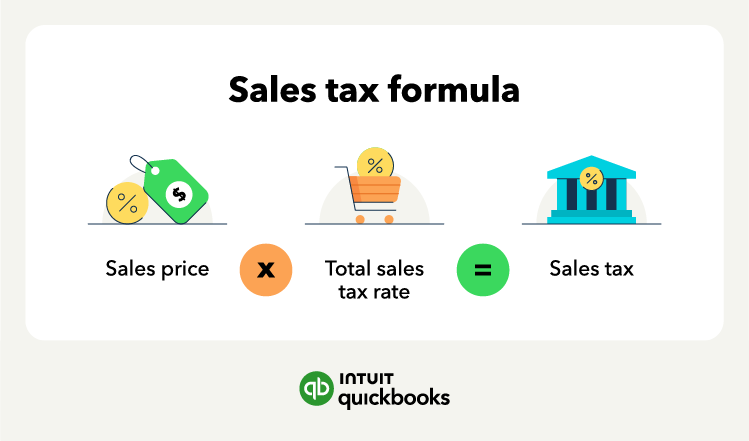
Multiply the pre-tax price by the combined rate for the place the sale is sourced to. That is the 7.25% statewide base plus any district taxes in effect there. On a $1,200 sale at an address with no district tax, that's $87 in tax and a $1,287 total. Where a district tax applies, use the full combined rate in place of 7.25%.
No. The 7.25% statewide base rate is the same at every California address. But voter-approved district taxes vary by city and county, and more than one can be in effect at a single address. So the combined rate at an address is 7.25% plus any district taxes in effect there.
For goods your customer picks up at your location, the rate is your location's. For goods you ship, the 7.25% base always applies. The district taxes are those in effect at the delivery address. You collect them when you are engaged in business there, including whenever your California sales exceed $500,000. The CDTFA's California City & County Sales & Use Tax Rates page and its rate lookup by address are the places to check a specific location.
Generally not. California taxes tangible personal property, not services, and does not list taxable services. Cleaning, lawn care, pet grooming, repair labor, and professional work are all tax-free to the customer. The exception is work that creates new tangible property, which is taxed as a sale. That includes printing, engraving, sign making, photography delivered in tangible form, and, generally, alterations to new clothing. On repairs, the labor is not taxable but the parts generally are. Service businesses pay tax on the supplies and equipment they buy and use.
No. Food for home consumption is generally exempt, including candy, gum, and confectionery. Hot prepared food, food sold for on-site dining, carbonated drinks, alcoholic beverages, and vitamins and dietary supplements are taxable. Cold food sold to go is generally exempt, apart from vending machine sales and sales inside a place that charges admission.
No. California does not hold sales tax holidays. There is no back-to-school weekend and no emergency preparedness event. Clothing, school supplies, and electronics are taxable every day of the year. California has never enacted a sales tax holiday.
Manage sales tax in QuickBooks with automation that helps you save time and stay compliant.
Save time with automated sales tax
Products are automatically matched to tax categories, so you can charge the right sales tax with less manual work. California returns are automatically prepared and formatted for the CDTFA, and if you sell into other states, you can automate multi-state filing from one place.
Stay confident and compliant
File with confidence using accurate, automated calculations. District rates change with election cycles, and tax rates and rules are updated automatically in QuickBooks, so the rate you charge keeps up. Get reminders before CDTFA deadlines so you can plan ahead, and know your return status with real-time updates.
Your data stays protected
Securely send returns to tax agencies and track every filing in QuickBooks.
Manage your books and sales tax in one place
Automatically calculate, collect, and track applicable sales tax from your customers. One report breaks out taxable and non-taxable sales, so you always know what to pay each agency. Prepare, file, and pay directly from QuickBooks.
*Sales tax filing is available as an add-on service through QuickBooks Online for $40 per filing.
You've got the layers, the sourcing rule, and the traps. The harder part is applying them correctly on every sale, at every address, every quarter. QuickBooks automated sales tax calculates the combined rate down to the district line, tracks what you've collected, and shows what you owe the CDTFA when it's time to file. Explore QuickBooks sales tax software to spend less time on rates and more time running your business.
Call Sales: 1-800-285-4854


