Hawaii sales tax calculator
Know exactly what to charge at any Hawaii address. Find the combined rate, the tax on any amount, and the total. Free for your business, no sign-up.
Know exactly what to charge at any Hawaii address. Find the combined rate, the tax on any amount, and the total. Free for your business, no sign-up.
Done checking rates one sale at a time? QuickBooks applies the right Hawaii rate, state and county surcharge included, on every invoice automatically. See how automated sales tax works
Hawaii's version of a sales tax is a general excise tax, or GET. It differs from a sales tax in two ways that matter to a seller. First, it falls on the seller's gross income from almost every kind of business done in the state, including sales of goods, services, and rentals. Second, the legal duty to pay it rests on the seller, not the buyer. Sellers often pass the GET through to customers as a line item on the bill.
The average American side hustle brings in about $2,038 a month, according to Intuit QuickBooks entrepreneurship research. At that size, a Hawaii seller is squarely in the system. That means a 4% state rate with a 0.5% wholesale tier, a county surcharge in each of the four counties, and a state return that carries the surcharge on it.
What makes Hawaii different isn't a long list of taxable services. It's that there is no list to check. A catch-all rule taxes every service business or calling not otherwise specifically taxed. So a service doesn't need to be named in the law to be taxed.
Whether you run a surf shop in Honolulu, keep the books for restaurants in Hilo, or mow lawns in Lihue, here's how Hawaii's rate works. You'll also see which of your sales it reaches and what to know at filing time.
Hawaii's GET is a state-level tax with one local layer. There is no separate city or county sales tax as such. Instead, Honolulu, Kauai, Hawaii, and Maui counties each add a surcharge on top of the state rate. The surcharge looks like a local sales tax and is treated like one. But the state Department of Taxation computes and collects it on the same state return. The counties do not collect it themselves.
The state rate is 4% on retail sales of goods and on services, and it has two main tiers. A lower wholesale rate of 0.5% applies to sales between businesses in a production or resale chain. The standard, higher retail rate of 4% applies to a sale to the end user. A separate 0.15% rate applies to the commissions of licensed insurance producers. The county surcharge does not apply to income taxed at that rate.
In Hawaii you don't hunt for a list of taxable services the way you would in most other states. A catch-all rule taxes "every person engaging or continuing within the State in any service business or calling, including professional services not otherwise specifically taxed" at the standard 4% rate. So a service does not need to be named in the law to be taxed. The catch-all reaches it on its own. Expect any new type of service to be taxable in Hawaii unless a specific, named exemption applies.
The named exemption most likely to reach a small service business is for exports. Gross income from services or contracting performed in Hawaii for resale, consumption, or use outside the state is generally exempt when you take the customer's certificate. So is income from goods you ship to a point outside Hawaii to be resold, consumed, or used there (Haw. Rev. Stat. §§ 237-29.53 and 237-29.5). Services the catch-all reaches include:
None of these categories has its own dedicated provision in the statute. The same general catch-all reaches them all. One exception took effect January 1, 2026. Amounts a hospital, infirmary, medical clinic, health care facility, or pharmacy receives for healthcare-related goods or services purchased under Medicare, Medicaid, or TRICARE are exempt. So are amounts a licensed physician, dentist, advanced practice registered nurse, or pharmacist receives for those goods or services (Haw. Rev. Stat. § 237-24.3(12)). The exempt amounts include the patient's deductibles, copayments, and coinsurance for covered care. Other medical services remain taxable.
Repair services are taxable too, including repair labor. There is no broad repair-labor exemption in Hawaii.
There are two narrow, named exceptions. One is for servicing and maintenance performed at a large commercial aircraft maintenance facility that meets a minimum size threshold (Haw. Rev. Stat. § 237-24.9). The same exception covers the construction of such a facility. From January 1, 2027, Act 20 of 2026 extends that exception to materials, parts, and tools sold to an air carrier for that work. The other is for shipbuilding and ship repairs rendered to surface vessels that are federally owned or engaged in interstate or international trade (§ 237-28.1). Neither extends to repair work generally.
Software and cloud services follow the same logic. Custom or made-to-order software is taxable as a service under the catch-all. Infrastructure as a service, platform as a service, and software as a service are taxable like any other unlisted service. That holds even though no Department guidance names them. Optional and required computer hardware and software maintenance agreements are all taxable. That is because Hawaii's GET exemption statutes have no exemption for maintenance or service contracts of any kind.
Two things on the services side are worth a second look. Employment and help supply services are taxable with narrow exceptions, chiefly this one. A professional employer organization registered with the Hawaii Department of Labor and Industrial Relations is exempt on pass-through reimbursements from a client company for an assigned employee's wages, payroll taxes, insurance, and benefits. It loses the exemption if its registration lapses, or if the Department of Taxation finds it failed to send in withholding taxes.
And rentals are in the net as well. Leased and rented personal property is taxable like any other business activity reached by the GET. Lodging and room rentals are taxable under the GET. A separate transient accommodations tax applies to gross rental proceeds from transient lodging on top of it. Counties may add their own surcharge to that tax as well.
The tax is on you, not your customer. The GET falls on the seller's gross income. The legal duty to pay rests on the seller, not the buyer. Sellers often pass the GET through to customers as a line item on the bill. But what Hawaii taxes is the seller's income from the sale. Any GET you add to the bill is itself part of that income. So the tax is computed on the full amount you receive, passed-on tax included.
The surcharge sits on top of the state rate in all four counties. The Department computes and collects it on the same state return. Which county's surcharge a sale carries follows the Department's allocation rules for its four taxation districts (Oahu, Maui, Hawaii, and Kauai). Goods go to the district where they are delivered. Services generally go to the district where they are used or consumed. The next section walks through those rules.
For the county surcharge, Hawaii is a destination-based state. The 4% state rate does not change from island to island. What changes is which county's surcharge attaches. The Department's rules assign each sale to one of four taxation districts:
Goods are assigned to the district where they are delivered, regardless of where title passes. Services are generally assigned to the district where they are used or consumed. The rules say where that is for each kind of service: where a repaired item is handed back, where an in-person service is performed, where the property a service relates to is located, or where the customer lives or does business. Where you are located generally matters only when the goods are delivered or the service is used there. Find your situation:
If you sell goods in person at your location: a customer who takes the item at your counter takes delivery there. So the sale is assigned to your district. A surf shop in Honolulu that hands a board across the counter has an Oahu-district sale.
If you ship or deliver goods to Hawaii customers: the sale is assigned to the district where the goods are delivered, regardless of where title passes. The Department's own examples: a retailer on Oahu accepts an order and delivers the products to the Maui district. It assigns the income to Maui, where the products were delivered. And a Maui retailer's Kauai manufacturer ships the products, on the buyer's instructions, to the buyer's office on Maui. The retailer assigns the income to Maui for the same reason.
If you repair, alter, clean, or otherwise work on a customer's property: services related to goods, which the law calls tangible personal property, are used or consumed where the item is delivered after the work is done. The Department's rule says these services include inspection, appraisal, testing, and repair. Generally, that means your district if the customer picks it up at your shop, and the customer's district if you ship it back to them.
The Department illustrates the principle with a phone repair shop. When the customer picks the phone up at the shop, the service is used or consumed where the shop is. When the shop ships the repaired phone to the customer, it is used or consumed where the phone was delivered.
If your customer has to be there: services that require the customer to be physically present when the service is performed are used or consumed where you perform them. For a salon, a massage therapist, a tattoo studio, or a dance instructor, that is generally your location, or the customer's if you travel to them. The Department's example is an esthetician whose client receives a facial and manicure at her Hawaii studio.
If your service relates to a building or land: contracting is used or consumed where the real property is located. So are services related to real property, which the rule says include property management, real estate sales, inspections, and appraisals. A landscaper, pest control operator, or cleaning service working at a customer's property generally has a sale in the district where that property sits.
If you provide professional or business services: accounting, bookkeeping, consulting, design, and other services not covered by a more specific rule are generally used or consumed where a business customer's related business activities occur. For an individual customer, that is generally where the customer resides. If a service is used in more than one district, the rule lets you allocate the income by any reasonable method. That holds provided you use it consistently and can support it with verifiable data.
If you sell through a marketplace like Amazon or Etsy: since January 1, 2020, Hawaii has treated a marketplace facilitator as the seller on sales it facilitates for third-party sellers. The facilitator is responsible for collecting the GET on those sales. The treatment is mandatory for facilitators. Your sale to the facilitator is treated as a wholesale transaction. That puts it in the lower wholesale tier rather than the retail tier.
If you are engaged in business in Hawaii, you still report those marketplace sales on your own return as wholesale income. You pay the 0.5% rate on them. The facilitator pays the 4% retail rate and the county surcharge on the same sales. The Department notes that the wholesale rate is not available for sales of intangible property. Your own website checkout, invoices, and in-person sales remain yours to report and pay at the retail rate.
If you're out of state selling into Hawaii: Hawaii's economic nexus threshold reaches you once you have $100,000 or more in gross sales into Hawaii, or 200 or more separate transactions, in the current or preceding calendar year. Hawaii uses both a dollar test and a transaction-count test, so either one crosses the line. Marketplace sales count toward your threshold even though the marketplace is responsible for the retail-level tax on them.
If you met the threshold in the preceding calendar year, you are subject to GET for the whole of this year. If you cross it during the year, the Department gives you one period's grace to file your first periodic return. But the GET reaches your Hawaii income for the whole year, including what you earned before you crossed. The Department lets you report that catch-up income on the first return or spread it over the year's remaining periods, without penalty or interest.
Say you have no physical presence in Hawaii and have not crossed either threshold. Then the economic nexus rule alone doesn't require you to pay Hawaii GET on your sales into the state. Having a physical presence in Hawaii makes you subject to GET regardless of these thresholds. The Department says physical presence includes an office, employees or representatives, or inventory or other property in the state. It also includes providing services in Hawaii such as installation, training, maintenance, or repair.
Once you are subject to GET, the same allocation rules apply to you. The Department's own example is a retailer located out of state that sells and delivers products to a buyer in the Oahu district. It assigns the income to Oahu, where the products were delivered.
Sales with their own allocation rules. Rentals and leases of equipment and other personal property are assigned to the district where the property is used, not where you are. The Department's example is an Oahu equipment rental company that rents to a Maui business for a job on Kauai. That company assigns the income to Kauai. Rentals of real property are assigned to the district where the property is located. Theaters, amusements, and events are generally assigned to the district where the event takes place.
Worked example. You run a surf shop in Honolulu and sell a $900 board.
Same board, same tax, a different column on Form G-75. Hawaii's return assigns your taxable income by district, so keep the delivery address with every sale. And if you pass the GET on to the customer, the amount you add is itself gross income and is taxed as well. So the tax due is figured on the full amount you receive, not on $900.
Hawaii has no grocery exemption and no clothing exemption. It taxes software however it is delivered, and it defines its prescription-drug exemption narrowly. The categories that matter most to small sellers:
Groceries: taxable. Food and groceries, candy, carbonated and non-carbonated beverages, bakery items, and prepared food all pay the standard retail rate. They are taxed like any other sale of goods. The only food-related relief is narrow and does not exempt food as a category. Purchases made with SNAP or WIC benefits are excluded from the GET base. That relief attaches to the payment method, not to the food itself.
Clothing: taxable year-round. Clothing, clothing accessories, protective clothing and equipment, sports and recreational equipment, special-order clothing and footwear, and clothing alteration are all taxable. They are taxed as ordinary sales of goods or services. Hawaii does not hold a sales tax holiday.
Software and digital products: taxable, however delivered. Prewritten, or off-the-shelf, software is taxed as a sale of goods whether it ships on a disc or transfers electronically. Custom software is taxable as a service under the catch-all. Computer hardware is taxable as ordinary goods. Hawaii has no statute or rule that defines digital products as their own taxable category. So a digital product is taxed either as a service or as a sale of goods, depending on how the deal is structured.
Internet access charges are governed by federal law rather than a Hawaii exemption. The federal Internet Tax Freedom Act's ban on state taxes on internet access has applied to Hawaii since July 1, 2020. But the Department has not published its own guidance on the change. So sellers should confirm the current treatment of internet access charges with the Department before relying on an exemption.
Prescription drugs and prosthetic devices: exempt, narrowly. Licensed pharmacists, physicians, hospitals, infirmaries, medical clinics, and other health care facilities can claim the exemption. It covers amounts received from selling prescription drugs and prosthetic devices to an individual. The exemption applies when the drug or device is dispensed or prescribed by a practitioner licensed to do so. A prosthetic device means an artificial device that replaces a missing or surgically removed body part. It does not include any auditory, ophthalmic, dental, or ocular device. Cannabis and manufactured cannabis products do not count as prescription drugs here.
Durable medical equipment and mobility-enhancing equipment do not qualify. Wheelchairs, walkers, and hospital beds stay taxable as ordinary goods. Vitamins and dietary supplements do not meet the prescription-drug definition and are taxable. An over-the-counter contraceptive is taxable as ordinary goods. A prescription contraceptive dispensed by a licensed practitioner falls under the prescription-drug exemption.
Alcohol: taxable on the full sale. Hawaii's separate liquor tax law imposes its own excise tax, which permitted dealers collect and pass through. That pass-through liquor tax is excluded from the GET measure, so it is not taxed twice. That is far short of a full exemption for alcohol sales. Sellers should not describe alcoholic beverage sales themselves as GET-exempt.
Use tax is the GET's counterpart for purchases from sellers the GET does not reach. It applies to goods, intangibles, services, and contracting purchased from an unlicensed seller located outside Hawaii and imported for use in Hawaii. An unlicensed seller is one not subject to the GET. The two taxes are complementary. A sale is subject to either the GET or the use tax, but not both. So if the seller was subject to GET on your purchase, you owe no use tax on it.
The tax is based on the landed value of what you import. Landed value includes the purchase price, shipping and handling fees, insurance costs, customs duty, and other related costs. It does not include sales tax paid to another state. The tax is imposed when the goods, intangibles, services, or contracting are imported into the state.
The rates mirror the GET. The use tax is imposed at the same rates as the GET:
There is a local use tax: the county surcharge applies to the use tax on imports taxed at 4%, and not to imports taxed at 0.5%.
Who owes it, and how a business reports it. The buyer who imports the goods or services is responsible for reporting and paying the use tax to the Department. A business with a GET license reports use tax on the same periodic Form G-45 and annual Form G-49 it files for the GET. It goes on the "Imports for Consumption" line at 4% or the "Imports for Resale" line at 0.5%. The county surcharge is computed in the return's county surcharge section.
Business customers report their own use tax even when an out-of-state seller has registered to collect it. That is because the seller's collection relieves only nonbusiness customers. Sales or use tax you paid to another state on the same item can be credited against the Hawaii use tax due on that item. The credit is capped at the lesser of the two amounts.
Say your café in Honolulu buys a $3,000 commercial espresso machine from a mainland seller that is not subject to Hawaii's GET. You pay $200 to ship it. The landed value is $3,200. You owe $128 in state use tax (4%) plus $16 in Oahu county surcharge (0.5%), $144 in all. You report it on your next Form G-45.
The GET has two main rate tiers, and the split matters. A lower wholesale rate, 0.5%, applies to sales between businesses in a production or resale chain. One example is materials sold to a manufacturer that become part of a finished product. Another is containers sold to a manufacturer for that purpose. The standard, higher retail rate, 4%, applies to a sale to the end user. The split is a rate rule, not an exemption. It comes up across the categories a small business touches:
Hawaii's GET is filed on two forms, and both are required:
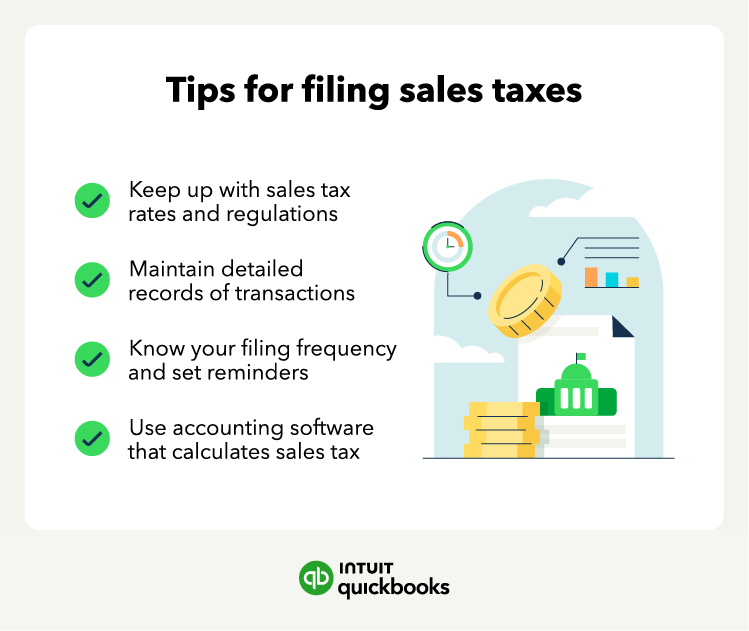
Periodic returns are due the 20th of the following month. Form G-45, the periodic return, is due on the 20th day of the calendar month following the close of your filing period. That holds whether you file monthly, quarterly, or semiannually. How often you file depends on how much GET, county surcharge included, you will pay in a year:
The semiannual return for January through June is due July 20. If you file more often than your frequency requires, the Department changes your filing frequency to monthly. If your total tax liability for the year is $100 or less, you are not required to file periodic returns at all for tax years beginning after December 31, 2022. But the annual return is still required.
The annual return is also the correction form. Form G-49, the annual return and reconciliation, is due on the 20th day of the fourth month following the close of your taxable year. For a calendar-year filer, that is April 20. Every filer must file it in addition to the periodic returns. It summarizes the year's activity, and there is no additional tax due if the periodic returns were accurate.
It is also where you fix a periodic-return error. Report the correct amounts on Form G-49, or file an amended Form G-45. An amended Form G-45 is allowed only until the annual return for that year has been filed. Filing the annual return is what starts the three-year statute of limitations.
Larger filers file electronically. If your GET liability exceeds $4,000 for the year, you must file your returns electronically through Hawaii Tax Online unless you obtain a waiver. A 2% penalty on the total tax applies if a taxpayer required to file electronically fails to do so.
One return, but it wants the district breakout. The county surcharge is computed and reported on Forms G-45 and G-49. Every taxpayer must complete Part V of the return, the schedule of assignment of taxes by district, marking the taxation district where it did business. If you did business in more than one district, you mark "Multi" and attach Form G-75. Form G-75 assigns your taxable income for each business activity to the Oahu, Maui, Hawaii, and Kauai districts.
Failing to complete Part V, or assigning income to the wrong district, carries a penalty of 10% of the combined state and county surcharge taxes due on that return. Keeping the delivery address with each sale turns Form G-75 into a sort, not a research project.
File every return, including zero returns. If you are required to file periodic returns, a return must be filed for every periodic and annual filing period even if no tax is due. The $100-or-less relief above still requires the annual Form G-49. If you had no gross income during the period, you write a zero in each column of the line for your main business activity and on the total amount due line.
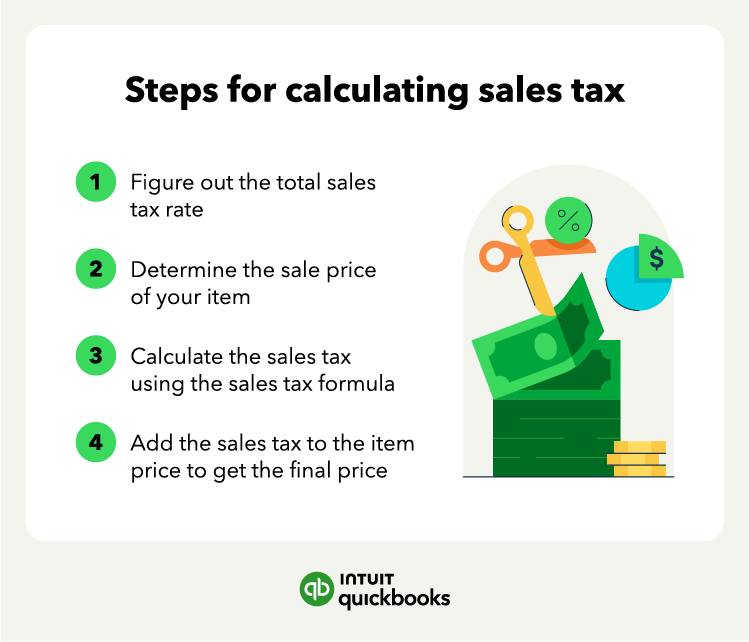
Tip: if a rate error slips through, fix the rate first, then correct the affected returns. Undercollect and the difference comes out of your pocket. Overcollect and you owe refunds. Tax you collected as tax is never yours to keep.
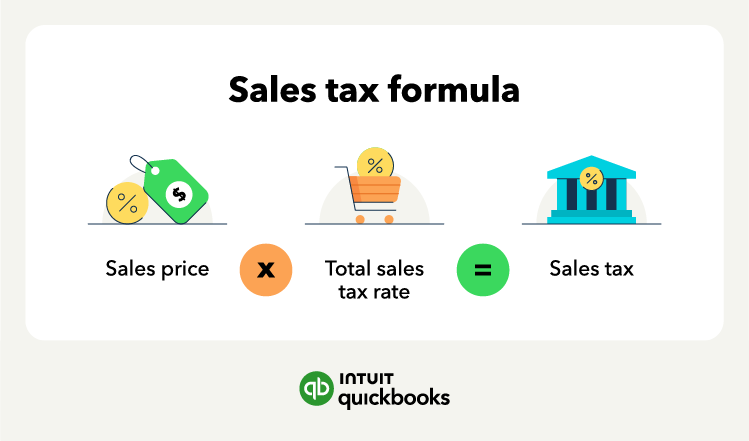
Hawaii's tax is computed on your gross income from the sale. The rate is the 4% state rate plus the surcharge of the county the sale is assigned to. Take $1,200 of gross income from a sale assigned to the Oahu district, where the surcharge is 0.5%. The tax due is $54, which is 4.5% of $1,200.
Strictly, no. Hawaii does not have a sales tax. It charges a general excise tax, or GET, on the seller's gross income from almost every kind of business done in the state. That includes sales of goods, services, and rentals. Sellers often pass the GET through to customers as a line item on the bill. But the legal duty to pay it rests on the seller, not the buyer. There is a 4% state rate, with a 0.5% rate for wholesale sales. On top of that is a county surcharge in each of the four counties, which the state computes and collects on the same return.
Generally, yes. Hawaii's catch-all rule taxes every service business or calling not otherwise specifically taxed. So a service does not need to be named in the law to be taxed. Any new type of service is taxable unless a specific, named exemption applies. Accounting, legal, management consulting, engineering, medical, and veterinary services are all generally taxable. So are repair labor, lawn care, barber and beauty shop services, and software as a service.
The narrow exceptions include a registered professional employer organization's pass-through reimbursements, servicing performed at a qualifying large commercial aircraft maintenance facility, and ship repairs to federally owned or interstate or international trade vessels. They also include, since January 1, 2026, amounts eligible health care providers receive for healthcare-related goods or services purchased under Medicare, Medicaid, or TRICARE.
Yes. Hawaii has no grocery exemption. Food and groceries, candy, carbonated and non-carbonated beverages, bakery items, and prepared food all pay the standard retail rate. Purchases made with SNAP or WIC benefits are excluded from the GET base. But that relief attaches to the payment method, not to the food itself.
No. Hawaii does not hold a sales tax holiday. Clothing and footwear are taxable year-round.
Manage sales tax in QuickBooks with automation that helps you save time and stay compliant.
Save time with automated sales tax
Products are automatically matched to tax categories, so you can charge the right sales tax with less manual work. Returns are automatically prepared and formatted for your state, and if you sell into other states, you can automate multi-state filing from one place.
Stay confident and compliant
File with confidence using accurate, automated calculations. Tax rates and rules change, and they are updated automatically in QuickBooks, so what you charge keeps up. Get reminders before filing deadlines so you can plan ahead, and know your return status with real-time updates.
Your data stays protected
Securely send returns to tax agencies and track every filing in QuickBooks.
Manage your books and sales tax in one place
Automatically calculate, collect, and track applicable sales tax from your customers. One report breaks out taxable and non-taxable sales, so you always know what to pay each agency. Prepare, file, and pay directly from QuickBooks.
Explore QuickBooks sales tax software to spend less time on tax and more time running your business.
*Sales tax filing is available as an add-on service through QuickBooks Online for $40 per filing.
You've got the rates and the rules that apply in Hawaii. The harder part is applying them correctly on every sale, every quarter. QuickBooks automated sales tax calculates the right combined rate, tracks what you've collected, and shows what you owe when it's time to file.
Call Sales: 1-800-285-4854


