Idaho sales tax calculator
Know exactly what to charge at any Idaho address. Find the combined rate, the tax on any amount, and the total. Free for your business, no sign-up.
Know exactly what to charge at any Idaho address. Find the combined rate, the tax on any amount, and the total. Free for your business, no sign-up.
Done checking rates one sale at a time? QuickBooks applies the right Idaho rate, state and local included, on every invoice automatically. See how automated sales tax works
Idaho has one state sales tax rate, 6%, and it applies at every Idaho address. There is no broad, statewide city or county sales tax on top of it. Apart from the taxes on short-term lodging covered below, the only local sales taxes are the resort city local-option taxes. A small number of resort cities with populations under 10,000 may adopt one. Those cities administer their own taxes rather than running them through the Idaho State Tax Commission.
The average American side hustle brings in about $2,038 a month, according to Intuit QuickBooks entrepreneurship research. At that size, an Idaho seller is squarely in the system. You need a seller's permit and you charge 6% on every taxable sale. Your return goes to the Tax Commission by the 20th of the following month.
The rate is the easy part. The harder question in Idaho is which of your sales are taxable at all. Idaho taxes goods plus a short, specifically named list of transactions. A service that isn't on the list isn't taxable, no matter how much it resembles one that is. Whether you run a boutique in Boise, a restaurant in Idaho Falls, a print shop in Coeur d'Alene, or build custom furniture in Meridian, here's how Idaho's rate works. You'll also see which of your sales it reaches and what to know at filing time.
Idaho's state sales tax rate is 6%, set by the Legislature. It is the same at every Idaho address. There is no broad, statewide city or county sales tax. The only local layer is the local-option tax that a small number of resort cities with populations under 10,000 may adopt. Those taxes are self-administered by the city rather than by the Idaho State Tax Commission. For most sales there are two layers:
Resort city taxes are not collected through the state. A seller located in one of those cities deals with the city directly for its tax. A marketplace facilitator collecting Idaho sales tax on your behalf does not collect, report, or remit any resort city tax.
Short-term lodging is the exception to the two-layer picture. Hotel, motel, vacation-rental, and private-campground stays of 30 days or less also carry Idaho's 2% travel and convention tax. That is a statewide sales tax on providing a place to sleep. It applies throughout Idaho and not only in resort cities. The Tax Commission administers it on its own return. Lodging inside one of the auditorium districts whose tax the Tax Commission administers carries that district's tax as well. Confirm the taxes in effect at your location with the Tax Commission.
Idaho taxes retail sales of goods, which the law calls tangible personal property, plus a short, specifically named list of transactions:
A service that does not fall into one of those categories is not taxable. That holds no matter how similar it looks to a taxable one.
That makes the list of untaxed services long. Services that are not taxable in Idaho because they are not on the list include building maintenance, janitorial work, lawn care, pest control, pool cleaning, snow removal, trash and garbage removal, tree care and trimming, window cleaning, dry cleaning, home health care, medical services, babysitting and daycare, barbering and beauty services, dance instruction, flying instruction, furniture moving, kenneling, massage therapy, pet grooming and training, self-storage, tanning salon services, tattoo parlor services, accounting, bookkeeping, credit reporting, engineering, interior design, investment counseling, legal, management consulting, payroll, security, title search, travel agency, veterinary services, and general or prime contracting.
A few services are taxable even though they look like the untaxed ones:
The repair rule turns on the invoice. Idaho's repair rule applies broadly across garment alteration, HVAC work, and general repairs to goods. Repair labor is not taxed as long as it is separately stated from the charge for parts and materials on the bill. If parts and labor are not separated, the entire charge, including the labor, becomes taxable. An appliance repair shop in Nampa bills $250 for parts and $150 for labor as two lines. It charges tax on the $250, which is $15 in tax. The same job billed as a single $400 line is taxed on the whole $400, which is $24 in tax.
Rentals turn on the operator. A bare equipment rental, meaning equipment rented without an operator, is a taxable sale. The owner collects tax on each rental payment. A fully operated rental is one where the owner supplies the equipment together with an operator. It is a service rather than a retail sale. No sales tax is due on it.
Warranties turn on choice. If a warranty or service agreement is required as a condition of the sale, the gross sales price is taxable. That holds whether or not the warranty charge is separately stated. If the agreement is optional, no tax is charged on the sale of the agreement itself. The taxable event is the repair. That is when the seller of the agreement pays sales or use tax on the parts it applies.
Shipping turns on which leg of the trip it covers. A separately stated charge for delivering goods to your customer is not part of the taxable sales price. That is true regardless of when title passes. A charge for delivering goods to you, commonly called freight-in, is part of the sales price. It is taxable whether or not it is separately stated. Transportation and handling charges that are not separately stated fall into the taxable sales price. A charge presented as shipping that is in substance part of the purchase price is taxable in full. One example is nominal-value merchandise paired with an inflated shipping charge.
Idaho's state sales tax applies at one rate everywhere in the state. So for the state tax, the question is not which rate but whether the sale is an Idaho sale at all. That is decided by where the goods are delivered. Goods delivered to your customer in Idaho are taxable. Goods you ship to a point outside Idaho for use outside Idaho are exempt. Idaho follows a destination rule. The delivery location, not where your business sits, decides whether Idaho tax applies. Resort city local-option taxes are separate from all of this. Each city that imposes one administers it itself. Find your situation:
If you sell goods in person at your location: goods that are in Idaho at the time of sale and delivered in Idaho are taxable "irrespective of where the parties to the contract of sale are located," in the Tax Commission's words. An out-of-state visitor who buys at your Boise counter makes an Idaho sale. So does one who brings an item into Idaho to have it repaired. Charge the Idaho state rate. If your shop is in one of the resort cities that has adopted a local-option tax, that tax is the city's to administer. Check with the city directly.
If you ship or deliver goods to Idaho customers: goods that are in Idaho when you sell them and are delivered within Idaho are taxable. Property sold for delivery in Idaho is presumed to be sold for use in Idaho. Charge the state rate. If you deliver somewhere other than your place of business, keep records that prove where delivery took place.
If you ship goods out of state: the sale is exempt from Idaho tax when you ship the goods to a point outside Idaho for use outside Idaho. That holds whether you ship by your own trucks, by handing them to a carrier for shipment to the customer at that point, or through a customs broker or forwarding agent. Keep records that support the exemption. If the customer instead takes possession in Idaho, it is an Idaho sale. That is true even if they are taking the goods home to another state.
If you sell food, lodging, admissions, or fabrication: most services are not taxable in Idaho at all. The transactions that are taxable are generally tied to a place in Idaho. Admission to a place or for an event in Idaho is taxable. Meals and drinks you serve, lodging and campground stays you provide, and labor to produce, fabricate, or print tangible personal property are generally taxed as Idaho sales when the meal is served, the room is provided, or the finished item is delivered to the customer in Idaho.
Lodging and campground stays of 30 days or less also carry the 2% Idaho travel and convention tax. Lodging inside an auditorium district carries that district's tax too. Both are administered by the Tax Commission, separately from the 6% sales tax. Repair labor is not taxable when it is separately stated. But the parts you sell for a repair made in Idaho are an Idaho sale. That is so even when the customer brought the item in from another state.
If you rent out equipment: a bare equipment rental is a taxable sale. You collect tax on each rental payment. Rental or lease payments on bare equipment used outside Idaho are not subject to Idaho sales tax. But if the equipment is delivered in Idaho, the payment for the first rental period is subject to Idaho tax. That is so even though the equipment will be used outside the state. A fully operated rental is a nontaxable service.
If you sell through a marketplace like Amazon or Etsy: a marketplace facilitator whose combined Idaho gross receipts exceed $100,000 in the current or preceding calendar year registers, collects, reports, and remits Idaho sales tax on the retail sales it facilitates. Combined gross receipts means its own sales plus the sales it facilitates for third-party sellers. That relieves you of the obligation for those sales. Its duty is limited to the state-level tax. A marketplace facilitator does not collect, report, or remit any local resort city tax.
Your own website checkout, invoices, and in-person sales remain yours to collect and report. You do not report sales made through a registered marketplace facilitator that already reports them to the state on your own return.
If you're out of state selling into Idaho: you must collect once you have $100,000 in gross sales into Idaho in the previous or current calendar year. There is no transaction-count test. Only dollars matter. Marketplace sales count toward your threshold even though the marketplace collects on them. Collection begins with your next transaction after you cross the threshold. The state does not specify a different timeline.
Until you've crossed the threshold, you aren't required to collect Idaho tax if you have no physical presence in Idaho. A seller with an office, warehouse, storage place, or stock of goods in Idaho is a retailer engaged in business in the state. So is a seller with a salesperson, agent, or representative who comes into Idaho to sell, deliver, install, or take orders. Either one must collect regardless of its sales volume.
Once you have crossed the threshold, every sale you deliver into Idaho carries the state rate. That is the same as it would be for a seller based in Idaho. That is because Idaho law requires every retailer engaged in business in the state that sells goods for use in Idaho to collect the tax from the buyer. The threshold has applied since June 1, 2019.
If a third party ships for you: in a drop shipment, you bill your customer and a manufacturer or distributor ships the goods. You collect Idaho sales tax from the buyer if you are required to. The shipper is not required to collect from your customer, because there is no sales transaction between the two of them.
Worked example. You build custom furniture in Meridian and sell a $900 dining table.
Same table, same week, and the only thing that changed the tax was where it was delivered. Keep the delivery address and the shipping documents with every sale.
The exemptions that matter most to small sellers each come with specific conditions attached:
Groceries: taxable. Idaho has no point-of-sale grocery exemption. Food, groceries, candy, carbonated and non-carbonated beverages, bakery items, and prepared food are all taxable at the general sales tax rate. Idaho instead provides relief through a refundable income tax credit, commonly called the grocery tax credit. It is claimed on the individual income tax return rather than applied at checkout. It is an income tax mechanism, entirely separate from the sales tax itself.
Purchases made with SNAP or WIC benefits are exempt from sales tax at the point of sale. That is the one true sales-tax-level food exemption Idaho has. A charge to participate in a paid food or beverage tasting is taxable.
Clothing: taxable year-round. Idaho has no clothing exemption. Clothing, clothing accessories, protective clothing and equipment, sports and recreational equipment, and special-order clothing and footwear are all taxable. Clothing alteration follows the repair rule. The items and materials needed for the alteration are taxable. The labor is not taxable as long as it is separately stated on the bill. Idaho does not currently hold a sales tax holiday.
Prescription drugs and medical items: exempt through a single gate. The exempt items include prescription drugs, insulin and syringes, eyeglasses and contact lenses, hearing aids, braces and orthopedic appliances, dental prostheses, prosthetic devices, and diabetic testing equipment. They also include durable medical equipment such as canes, crutches, walkers, wheelchairs, hospital beds, and oxygen equipment. All of these are exempt only when administered or distributed by a practitioner, or purchased by or on behalf of an individual for that individual's use under a prescription or work order of a practitioner. An otherwise qualifying item bought off the shelf without that prescription or work order is taxable.
Vitamins and dietary supplements do not meet Idaho's definition of an exempt drug. They are taxable.
Software and digital products: the line is the delivery method. It is covered in its own section below.
Purchases for resale: not taxable. A buyer that will resell an item in the regular course of business buys it without tax. To do so, the buyer gives the seller a completed Idaho Form ST-101, the Sales Tax Resale or Exemption Certificate. The seller keeps the certificate on file. The tax is collected instead when the item is later sold at retail. The exemption reaches only property the buyer actually resells, not property the buyer consumes in its own operations. That is why a contractor cannot buy its materials for resale.
Production machinery and materials: exempt when directly used in production. Idaho's production exemption is not limited to factory manufacturing. Machinery and equipment directly used in a production activity is exempt. The qualifying activities include manufacturing, processing, farming, mining, logging, and fabricating. Materials that become an ingredient or component part of the finished product are also exempt. The exemption turns on direct use in the production process itself. So property used in a non-production capacity remains taxable, even when the buyer is a manufacturer, farmer, miner, or logger.
Selling a mix of taxable and exempt items is where receipts get messy. Track the two buckets separately from the start.
Use tax is the buyer's side of the same tax. Idaho imposes it on the storage, use, or other consumption in Idaho of tangible personal property. The tax is 6% of the property's value. A recent sales price is the presumptive evidence of value. The use tax rate is the same as the sales tax rate. In the Tax Commission's words, it is a tax on goods you use or store in Idaho that haven't been properly taxed. You owe it if you didn't pay sales tax on goods that aren't exempt.
Every person storing, using, or consuming goods in Idaho is liable for the tax until it has been paid. A receipt from a retailer doing business in Idaho that separately states the tax you paid is what relieves you of it. The Tax Commission's list of situations where a business probably owes use tax includes:
Say a coffee roaster in Coeur d'Alene buys a $3,000 commercial espresso machine from an out-of-state vendor whose invoice shows no Idaho tax. The roaster owes $180 in Idaho use tax.
How you report it. If you are a retailer or wholesaler, you report and pay the use tax you owe on your regularly filed sales tax return. A business that isn't a retailer or wholesaler gets a use tax permit if it owes use tax most months. It pays infrequent large purchases on Form 850-U, the Self-Assessed Use Tax Return, by the 20th of the month after the purchase. It can report small, frequent purchases once a year on Idaho Form 41 or 41S, the corporation income tax returns. An individual can report small purchases on Form 850-U or on the Form 40 or Form 43 individual income tax return.
If you correctly paid another state's sales tax on the item at a rate equal to or greater than Idaho's, you owe no Idaho use tax. If the other state's rate was lower, you owe the difference.
One layer. Idaho's use tax is the state's. The resort city local-option taxes are the city's own, administered by the city itself. They are not part of it.
Idaho decides whether software is taxable by how it reaches you, not by what it does. Custom software is excluded from the definition of taxable tangible personal property and is not taxed. So is any computer software that is delivered electronically, accessed remotely, or delivered by a load-and-leave arrangement. In a load-and-leave arrangement, the vendor installs the software at your location without leaving behind any tangible personal property containing it. Prewritten, or canned, software is taxable only when it is delivered on a tangible medium. The same software delivered by any of those exempt methods is not taxed. Computer hardware is taxable as ordinary tangible personal property.
Digital products run on a different test. Digital music, books, videos, and games are taxable when the buyer has a permanent right to use the product. That is true regardless of how it is delivered or accessed. If the right to use the product is conditioned on continued payment, such as a subscription, it is not a permanent right of use. It is not taxed under that provision.
Infrastructure as a Service, Platform as a Service, and Software as a Service are not taxable in Idaho. There is no dedicated statute or rule naming these cloud models. Their non-taxable treatment follows from the same remotely-accessed-software exclusion that applies to any electronically delivered or remotely accessed software. Idaho also treats charges to store data on storage media owned and controlled by another party as a nontaxable service. Internet access service is not taxed.
Maintenance agreements follow the same logic. A required software maintenance agreement is one you must buy as a condition of the software sale. It is taxable whether or not the maintenance charge is separately stated.
An optional software maintenance agreement is taxed only when its upgrades arrive on physical storage media, and then by apportionment. If the support fee is separately stated, only the upgrade portion is taxable. If support and upgrades are billed as one unseparated fee, half the fee is taxable. A contract that provides only media-delivered upgrades is taxable in full. One that provides only support is not taxed. An optional agreement that delivers its updates electronically is not taxable unless you actually receive an update on storage media.
Optional computer hardware maintenance agreements are not taxable, though parts used in repairs performed under them remain taxable. Required hardware maintenance agreements are taxable on the full price regardless of separate statement.
When you file and send in the sales tax you've collected depends on the type of seller's permit you have. Most of the schedule runs on the 20th:
Most retailers file monthly, due the 20th of the following month. You forward the tax due for each month by the 20th day of the next month. If the 20th falls on a weekend or holiday, the return and payment are due the next workday. The tax you collect in July is due by August 20. Sales tax is due on the accrual method. So you forward the tax with the return for the period in which you made the sale. That holds even if your customer hasn't paid you yet.
Smaller sellers can file less often. Retailers who owe less than $750 in tax per quarter pay quarterly, within 20 days after the end of the quarter. A distributor or wholesaler with only a few sales can apply to file every six months, due July 20 and January 20. It can instead apply to file once a year, due January 20.
Returns are filed online through TAP. The Tax Commission no longer mails paper returns. You file through its Taxpayer Access Point and can pay there too. Any payment of $100,000 or more must be made by electronic funds transfer. Report all your sales on Form 850. But don't report sales you made through a registered marketplace facilitator that already reports them to the state. Use tax you owe as a retailer goes on the same return.
Resort city taxes are not on the state return. Those local-option taxes are self-administered by the city rather than by the Tax Commission. A seller in one of those cities handles the city's tax with the city directly.
File every return, including zero returns. You must file a return if you have any type of seller's permit, even if you made no sales. The Tax Commission's only exception is an Idaho resident who qualifies for the small seller exemption. If you report $0 in sales for 12 months in a row, your permit is cancelled. A late return costs 5% of the tax due for each month it is late, up to 25%, and a late payment costs 0.5% per month, up to 25%, with a $10 minimum penalty and interest from the original due date. No penalty is due if no tax is due.
Tip: if a rate error slips through, fix the rate first, then correct the affected returns. Undercollect and the difference comes out of your pocket. Overcollect and you owe refunds. Tax you collected as tax is never yours to keep.
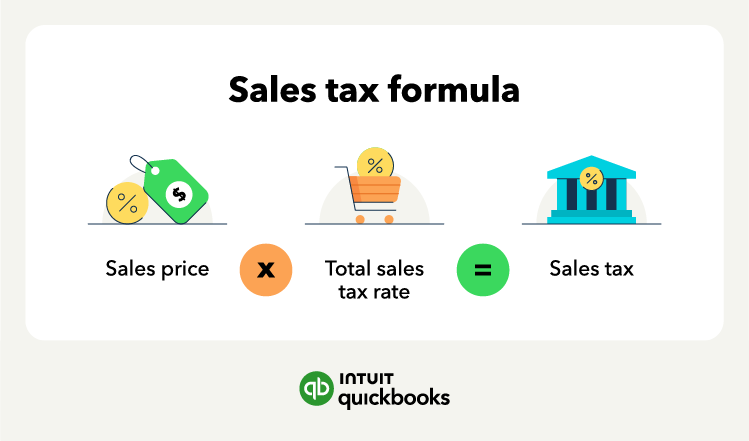
Multiply the pre-tax price by Idaho's 6% state rate, plus a resort city's local-option tax if your sale is subject to one. On a $1,200 sale taxed at the state rate alone, that's $72 in tax and a $1,272 total.
Not a broad one. Idaho has no statewide city or county sales tax. The 6% state rate is the same at every Idaho address. A small number of resort cities with populations under 10,000 may adopt their own local-option taxes. Those are self-administered by the city rather than by the Idaho State Tax Commission. So a seller located in one of them deals with the city directly. A marketplace facilitator collecting Idaho tax on your sales does not collect any resort city tax.
Short-term lodging is different. Stays of 30 days or less carry Idaho's statewide 2% travel and convention tax and, inside an auditorium district, a district lodging tax. Both are administered by the Tax Commission rather than by a city. The Tax Commission's City Sales Taxes page lists the cities and directs questions about each tax to the city itself.
Yes. Idaho has no point-of-sale grocery exemption. Food, groceries, candy, beverages, bakery items, and prepared food are all taxable at the general rate. Purchases made with SNAP or WIC benefits are exempt at the register. Idaho's relief for groceries is a refundable grocery tax credit claimed on the individual income tax return. That is an income tax mechanism separate from the sales tax.
Generally not. Idaho taxes goods plus a short list of named transactions. A service that isn't on the list isn't taxable. That includes janitorial work, lawn care, barbering and beauty services, pet grooming, self-storage, accounting, legal, consulting, veterinary, and medical services. The exceptions are the named transactions: fabrication, printing, engraving, photography, taxidermy, outfitter and guide services, linen rental, food and drink service, admissions, recreation, lodging, and equipment rentals without an operator. Repair labor is not taxed when it is separately stated from parts on the bill. If the two are combined, the entire charge is taxable.
No. Idaho does not currently hold a sales tax holiday. Clothing and footwear are taxable year-round.
Manage sales tax in QuickBooks with automation that helps you save time and stay compliant.
Save time with automated sales tax
Products are automatically matched to tax categories, so you can charge the right sales tax with less manual work. Returns are automatically prepared and formatted for your state, and if you sell into other states, you can automate multi-state filing from one place.
Stay confident and compliant
File with confidence using accurate, automated calculations. Tax rates and rules change, and they are updated automatically in QuickBooks, so what you charge keeps up. Get reminders before filing deadlines so you can plan ahead, and know your return status with real-time updates.
Your data stays protected
Securely send returns to tax agencies and track every filing in QuickBooks.
Manage your books and sales tax in one place
Automatically calculate, collect, and track applicable sales tax from your customers. One report breaks out taxable and non-taxable sales, so you always know what to pay each agency. Prepare, file, and pay directly from QuickBooks.
Explore QuickBooks sales tax software to spend less time on tax and more time running your business.
*Sales tax filing is available as an add-on service through QuickBooks Online for $40 per filing.
You've got the rates and the rules that apply in Idaho. The harder part is applying them correctly on every sale, every quarter. QuickBooks automated sales tax calculates the right combined rate, tracks what you've collected, and shows what you owe when it's time to file.
Call Sales: 1-800-285-4854


