Indiana sales tax calculator
Know exactly what to charge at any Indiana address. Find the combined rate, the tax on any amount, and the total. Free for your business, no sign-up.
Know exactly what to charge at any Indiana address. Find the combined rate, the tax on any amount, and the total. Free for your business, no sign-up.
Done checking rates one sale at a time? QuickBooks applies the right Indiana rate on every invoice automatically. See how automated sales tax works
Indiana charges one flat 7% state sales tax rate everywhere in the state. There is no local sales tax to add on, which keeps setup simple.
Nearly half of Americans (47%) earned side-hustle income in the past year, but only 20% have registered that hustle as a business. Both figures come from Intuit QuickBooks entrepreneurship research. In Indiana, the collection math is the same for all of them. Register once with the state, then apply the single 7% rate to every taxable Indiana sale. That holds whether your counter is in Indianapolis, Fort Wayne, or Evansville.
What makes Indiana different isn't the rate. It's what the tax reaches. Goods are taxable, and most services are not. Groceries are exempt, but candy and soft drinks are not. Cloud software is not taxed, while downloaded software and digital products are.
Whether you run a boutique in Indianapolis, sell computer hardware in Fort Wayne, or rent out equipment in Evansville, here's how Indiana's single rate works. You'll also see which of your sales it reaches and what to know at filing time.
Indiana's sales tax rate is 7%, statewide. There is one layer:
Indiana has no local sales taxes. Unlike most states, Indiana does not authorize any county or city general sales tax. So 7% is the entire combined rate at every Indiana address. You register once with the state and apply the single rate to every Indiana sale. Separate county innkeeper's taxes on lodging and local food-and-beverage taxes exist. But they are not general sales taxes.
Indiana imposes sales and use tax on retail sales of goods, which the law calls tangible personal property. A service is taxable only if a statute specifically names it. So nearly all everyday services are outside the tax. Services that are not taxable include building maintenance, janitorial work, lawn care and landscaping, pest control, dry cleaning, barber and beauty services, self-storage, moving, HVAC installation and repair, photography services, garment alteration, sign painting, and repair labor. They also include professional services of every kind: legal, accounting, engineering, consulting, advertising, public relations, employment and staffing, veterinary, pet grooming, and training. Medical services are not taxable either.
Repair labor is the line that matters most on a mixed invoice. Repair labor that is separately stated from the parts is not taxable. The parts themselves are. Say a $400 brake job is billed as $250 in parts and $150 in separately stated labor. It carries $17.50 in tax on the parts and none on the labor. The total is $417.50. The exemption depends on the labor being separately stated, so itemize parts and labor.
Photography is generally a nontaxable service. But tax can apply to tangible prints or products the photographer transfers. Clothing alteration billed as a separate service after the sale is not taxable. But alteration done as part of the retail sale is included in the taxable price.
Maintenance agreements are taxable. An agreement that entitles the customer to parts, updates, or other tangible property is taxable, whether it is optional or required. That is because there is a reasonable expectation that tangible personal property will be provided. Optional maintenance for prewritten software is taxable. For custom software it is exempt.
Contractors. Under a lump-sum contract, the contractor is the consumer of the construction materials. It pays sales or use tax when it buys them. Under a time-and-materials contract that separately states the materials, the contractor instead collects tax from the customer on those materials.
Rentals and short stays. Leases and rentals of equipment and other goods are taxable retail transactions, just like selling them. Renting rooms or accommodations for less than 30 days is taxable at the 7% state rate. Where one applies, the county innkeeper's tax is charged on top. A stay of 30 continuous days or more is not taxable.
Prewritten (canned) software is taxable however it is delivered, including downloaded. Custom software is exempt. Software as a service is not taxable. Remote access to prewritten software, where the customer does not take possession or ownership, is not a taxable retail transaction. The Department of Revenue confirmed that result in Revenue Ruling 2024-04-RST. Infrastructure and platform services (IaaS and PaaS) are likewise not taxable.
Digital products are taxable when the buyer gets permanent use (a download to keep). Those are specified digital products, meaning digital audio such as songs and ringtones, digital audiovisual works such as movies, and digital books transferred electronically. Streaming or subscription access is treated differently. Computer hardware is taxable. Internet access is not.
What this means for a seller: before you price a service or a software product, check the Indiana Department of Revenue's sales tax guidance. Check it in both directions, for items you assumed were exempt and for items you assumed were taxable.
Indiana is a destination-sourced state. Under Ind. Code § 6-2.5-13-1 and the Department of Revenue's sourcing bulletin, a sale is sourced to the place where your customer receives what they bought. For goods, that is where they take possession. For services, it is generally where they first use the service. For digital goods, it is whichever of those comes first. Possession by a shipping company on the customer's behalf doesn't count as receipt. Contract terms about transfer of title or risk of loss don't change the answer.
Because every Indiana address carries the same 7%, the sourcing question in Indiana is whether the sale is an Indiana sale at all. A sale sourced to Indiana is subject to Indiana sales tax and Indiana's rules, including economic nexus. A sale sourced to another state is subject to that state's tax and rules. Find your situation:
If you sell goods in person at your location: when the customer receives the product at your business location, the sale is sourced to that location. Charge 7%. The Department's own example: a customer shops at a hardware store in Indianapolis and buys a tool in the store. The sale is sourced to Indiana.
If you ship or deliver goods to Indiana customers: when the customer doesn't receive the product at your location, the sale is sourced to where they receive it. That includes the delivery address you were given, and it holds regardless of where you shipped from. Every Indiana delivery address is 7%.
If you ship goods to a customer in another state: the sale is sourced to where the customer receives it. So it is that state's sale, not Indiana's. The Department's own example: a customer in Kentucky orders a tool from an Indianapolis hardware store's website, and it ships to Kentucky. The sale is sourced to Kentucky. It is subject to Kentucky's sales tax and sales tax rules, including any economic nexus requirements.
If you sell downloads or digital products: a sale of a digital good is sourced to where the customer takes possession of it or first uses it, whichever comes first. That includes a delivery location you know of. When you don't know where that is, Indiana's rules fall back to the customer's address in your business records. After that comes an address obtained when the sale was made, such as a payment-card address. Only then do the rules reach the address the product was made available from.
If you sell services: Indiana taxes only a short, specifically named list of services. So most service invoices carry no sales tax at all (see above). For a service Indiana does tax, the sale is generally sourced to where your customer first uses the service.
If you sell through a marketplace like Amazon or Etsy: a marketplace facilitator with more than $100,000 in Indiana sales collects and sends in the tax on the sales it facilitates. So those sales are not yours to collect on. An Indiana seller still registers and collects on its own direct sales. Your own website checkout, invoices, and in-person sales remain yours to collect and report.
If you're out of state selling into Indiana: if you have no physical presence in Indiana (no inventory, employees, or location here), you must collect once you have $100,000 in gross sales into Indiana. That $100,000 is measured in the calendar year in which the sale is made or the preceding calendar year. There is no transaction-count test. Indiana removed its 200-transaction threshold effective January 1, 2024, so only dollars matter.
Marketplace sales are excluded from your threshold. Only your direct Indiana sales count. Collection begins with the next transaction after you meet the threshold. Until you've crossed it, you aren't required to collect Indiana tax. Once you have, the same sourcing rules apply to you. A sale shipped to an Indiana address is sourced to Indiana, and you collect 7% on it.
Sales with their own sourcing rules. Motor vehicles, trailers, semitrailers, and aircraft are outside these general rules. Watercraft and modular, manufactured, and mobile homes are outside them too. So are telecommunications, ancillary, and internet access services, and direct mail. Leases and rentals of equipment follow a modified rule. The first periodic payment is sourced like a sale. Later payments are sourced to the address where the equipment is kept. A floral order you take and pass to another florist for delivery is sourced to your shop, the one that took the order.
Worked example. You build furniture in Indianapolis and sell a $900 table.
Same table, same rate anywhere in Indiana. Keep the delivery address with every sale anyway. It is what tells you which sales are Indiana's.
Indiana uses the Streamlined definitions for food, which pull several items out of the grocery exemption. It has no clothing exemption at all. The lines that matter most to small sellers:
Groceries: food and food ingredients for home consumption are exempt.
Candy: taxable. Indiana defines it as sugar-based bars, drops, or pieces without flour and not needing refrigeration.
Soft drinks: taxable. A soft drink is a sweetened nonalcoholic beverage. That excludes anything with milk or more than 50 percent juice. Unsweetened and non-carbonated beverages such as bottled water stay exempt.
Dietary supplements and alcoholic beverages: taxable.
Prepared food: taxable. That means food sold heated, combined by the seller, or sold with eating utensils the seller provides. Bakery items sold without utensils are exempt.
Clothing: taxable year-round. There is no exemption, no price threshold, and no sales tax holiday. Clothing, footwear, accessories, protective clothing, and sports and recreational equipment are all taxable as ordinary goods.
Prescription drugs and medical items: prescription (legend) drugs and insulin are exempt. Durable medical equipment and mobility-enhancing equipment are exempt when the patient acquires them under a prescription or drug order. Contraceptives are exempt when dispensed by prescription. Over-the-counter drugs are taxable, and so are vitamins and dietary supplements.
Newspapers and magazines: qualifying newspapers are exempt. Magazines and periodicals are taxable when sold at retail. Job printing is taxable except when sold for resale.
Items bought for resale: exempt with an exemption certificate. Containers, packaging, wrappers, and labels transferred with the product are exempt too.
Selling a mix of taxable and exempt items is where receipts get messy. Track the two buckets separately from the start.
Use tax is the buyer's side of the same 7%. Indiana imposes it on the storage, use, or consumption of tangible personal property in Indiana when the property was acquired in a retail transaction. It applies regardless of where that transaction took place or where the seller is located. The rate is the same as the state sales tax rate, 7%.
The Department of Revenue describes the two taxes as complementary. Use tax accrues when a purchase was not subjected to sales tax at the time of purchase. If Indiana sales tax was paid on the purchase, no use tax is owed on it. The person who uses, stores, or consumes the property is personally liable for the use tax. That person pays it to the Department.
For a business, this shows up when you buy equipment, supplies, or furniture from a vendor that is not registered to collect Indiana sales tax. Say your auto repair shop in Fort Wayne orders a $3,000 tire-changing machine from an out-of-state vendor. The invoice shows no Indiana tax. You owe $210 in Indiana use tax. You report it on your next sales tax return.
Tax paid to another state counts. You are entitled to a credit against Indiana use tax for sales or use tax paid to another state on the same item. The Department's example: you pay a 5% sales tax on an item in another state. Then you bring it back for use in Indiana. You owe the difference in use tax. On a $3,000 machine taxed at 5% elsewhere, that difference is $60.
There is no local use tax. Indiana has no local sales tax. The use tax is imposed at the same rate as the state sales tax. So the use tax you owe is 7%, not more.
How you report it. If you are a registered retail merchant, use tax goes on the use tax line of your sales and use tax return. That return is Form ST-103. It is due on any purchase where no sales tax was paid and the property was not held for resale or another exempt purpose. That includes items removed from inventory for personal use or used as giveaways. It also includes items used as display models or promotional items not for sale. You multiply your cost by the use tax rate.
A business that is not a registered retail merchant reports and pays it on Form ST-115, the Consumer's Use Tax Return. That form is available through INTIME.
No. Indiana has never enacted a back-to-school or any other sales tax holiday. Clothing, school supplies, and electronics are taxable every day of the year. So there is no holiday weekend to program into your register. And there is no holiday price threshold to watch.
Indiana's return has no local breakout to wrestle with. So the moving parts are your filing frequency and your due date:
Your filing frequency comes from your average monthly liability. The Department of Revenue assigns it based on the average monthly liability throughout the tax year. The Department can change it if the amount of tax you owe goes up or down. You'll be notified of any change before the beginning of the next tax year. You can ask to file more often, but not less often.
Monthly returns are due the 20th or the 30th. The test is your average monthly sales and use tax liability for the prior fiscal year ending June 30 of the previous calendar year. If it was $1,000 or more, you are an early filer. Your return and payment are due the 20th of the following month. Under $1,000, they are due the 30th. A due date that falls on a weekend or a state or federal holiday moves to the next business day.
Smaller sellers may file once a year. If your sales and use tax liability in the previous calendar year does not exceed $1,000, the Department may permit you to report and pay for a calendar year. The return is due the last day of the month following the year's close: January 31.
Everything is filed and paid electronically. Retail merchants report and pay sales and use tax through the Department's online tax filing program, INTIME.
Marketplace sales go on the return, then come off. The ST-103 asks for your total sales, then lets you back out excluded sales. Those are sales where the obligation to collect the tax falls on another party, such as a marketplace facilitator. Use tax on your own purchases rides on the same return (see above).
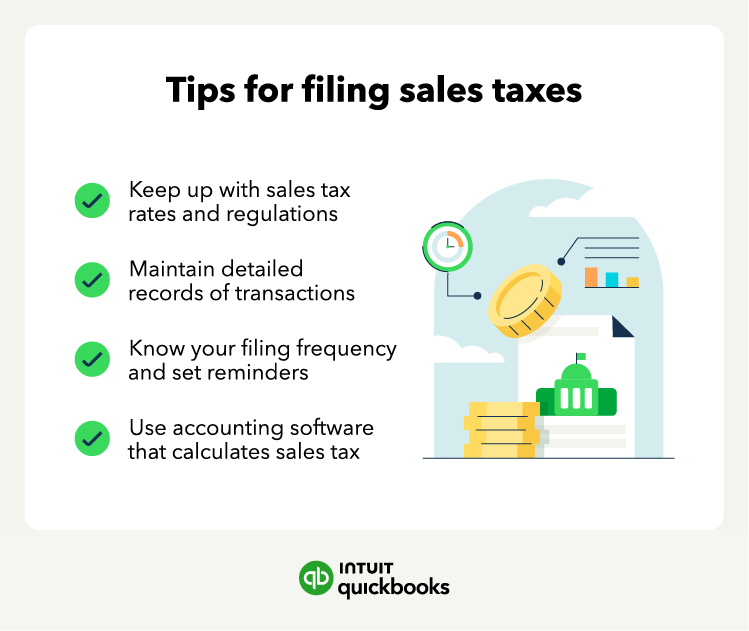
File every return, including zero returns. If you are registered for sales tax, you must still file a $0 return even if there is no tax revenue or activity for the period. That holds unless the account has been properly closed. Late-filed returns are subject to a penalty of up to 20%, with a minimum penalty of $5.
Tip: if a rate error slips through, fix the rate first, then correct the affected returns. Undercollect and the difference comes out of your pocket. Overcollect and you owe refunds. Tax you collected as tax is never yours to keep.
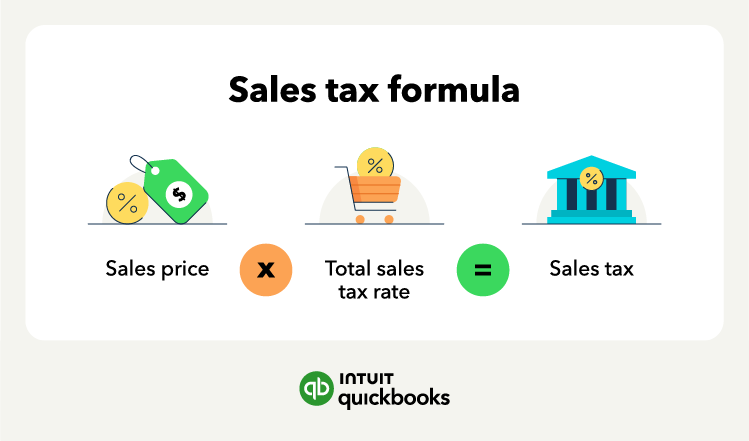
Multiply the pre-tax price by 7%. There is no local rate to add. On a $1,500 sale, that's $105 in tax and a $1,605 total, at any address in the state.
No. Indiana does not authorize any county or city general sales tax. So the 7% state rate is the entire combined rate everywhere. There is no local sales tax to register for or add on. County innkeeper's taxes on lodging and local food-and-beverage taxes exist where they apply. They are separate taxes, not general sales taxes.
Generally no. A service is taxable in Indiana only if a statute specifically names it. So lawn care, janitorial work, barber and beauty services, pet grooming, photography services, repair labor, and professional services such as legal, accounting, and consulting are not taxable.
Watch the goods side of a service invoice. Repair parts are taxable even when separately stated labor isn't. Maintenance agreements that entitle the customer to parts or updates are taxable. Software as a service is not taxable, but downloaded prewritten software is. So are digital products such as digital books, songs, and movies when the buyer gets permanent use (a download to keep). Streaming or subscription access is treated differently.
No. Food and food ingredients for home consumption are exempt. Candy, soft drinks, dietary supplements, alcoholic beverages, and prepared food are taxable. Bottled water and other unsweetened, non-carbonated beverages stay exempt. So do bakery items sold without utensils.
No. Indiana has never enacted a sales tax holiday of any kind. So clothing, school supplies, and electronics are taxable every day of the year.
Manage sales tax in QuickBooks with automation that helps you save time and stay compliant.
Save time with automated sales tax
Products are automatically matched to tax categories, so you can charge the right sales tax with less manual work. Indiana returns are automatically prepared and formatted for the DOR, and if you sell into other states, you can automate multi-state filing from one place.
Stay confident and compliant
File with confidence using accurate, automated calculations. Indiana's rate is flat, but taxability rules and exemptions change, and tax rates and rules are updated automatically in QuickBooks, so what you charge keeps up. Get reminders before DOR deadlines so you can plan ahead, and know your return status with real-time updates.
Your data stays protected
Securely send returns to tax agencies and track every filing in QuickBooks.
Manage your books and sales tax in one place
Automatically calculate, collect, and track applicable sales tax from your customers. One report breaks out taxable and non-taxable sales, so you always know what to pay each agency. Prepare, file, and pay directly from QuickBooks.
Explore QuickBooks sales tax software to spend less time on tax and more time running your business.
*Sales tax filing is available as an add-on service through QuickBooks Online for $40 per filing.
You've got the rates and the rules that apply in Indiana. The harder part is applying them correctly on every sale, every quarter. QuickBooks automated sales tax calculates the right combined rate, tracks what you've collected, and shows what you owe when it's time to file.
Call Sales: 1-800-285-4854


