Maryland sales tax calculator
Know exactly what to charge at any Maryland address. Find the combined rate, the tax on any amount, and the total. Free for your business, no sign-up.
Know exactly what to charge at any Maryland address. Find the combined rate, the tax on any amount, and the total. Free for your business, no sign-up.
Done checking rates one sale at a time? QuickBooks applies the right Maryland rate on every invoice automatically. See how automated sales tax works
Maryland charges one statewide sales tax rate, 6%, with no county or city sales tax to add. It taxes goods plus a specific list of services.
Aspiring owners guess it takes about $28,000 to start a business. Current owners report a median closer to $12,000, according to Intuit QuickBooks entrepreneurship research. At either size, a Maryland seller is in the system from the first taxable sale. You charge 6% on taxable sales, with no local rate to look up. Your return is due to the Comptroller of Maryland on the 20th of the month after the period ends.
The judgment calls in Maryland aren't about the rate. They're about the base. Maryland taxes only the services its statute lists, so most everyday services are not taxable. Repair labor is not taxed, only the parts. Since July 1, 2025, a new category is taxed at a reduced 3% rate: data, information technology, and software publishing services. Whether you run a boutique in Baltimore, host client data from a Columbia office, or run a print shop in Frederick, here's how Maryland's rate works. You'll also see which of your sales it reaches and what to know at filing time.
Maryland's sales and use tax rate is 6%. It is a single statewide rate, set by the state and applied to every Maryland sale. Counties and cities do not levy their own sales tax. So there is nothing local to register for or add on:
Where a category carries a different rate, the state sets that rate too, not any city, county, or district. Such categories include alcoholic beverages (9%) and data and information technology services (3%, covered below). One caveat for lodging businesses: the 6% state tax applies to charges to transient guests for rooms. Separate local hotel and lodging taxes apply on top.
Maryland imposes sales and use tax on retail sales of goods, which the law calls tangible personal property. It also taxes the services its statute specifically lists. A service that is not on the statute's list is not taxable. That is why most professional and personal services carry no Maryland sales tax. The listed services are a specific set. The statute also carries a few others beyond the ones below. Among them is the charge a restaurant, club, or hotel makes for the privilege of consuming wine the customer brings in. The ones most small businesses meet are these:
Photography is taxable too, but through a different door. The charge for portrait, wedding, or stock photography is taxable as the sale of the resulting photographs. That holds whether the photographs are tangible or digital. It is not taxed as a listed service. Separately stated charges for operating audio, video, or film production equipment are not taxable.
Services that are not taxable, because Maryland hasn't listed them, include:
A lump-sum price that includes installation is taxable in full. One quirk: cleaning a commercial or industrial building is taxable, but dry cleaning for individuals is not.
Repairs: labor isn't taxed, parts are. A lump-sum charge to repair goods is not taxable as to the labor. Parts are taxable when they are separately stated or sold over the counter. The materials a repairer uses in a lump-sum job are taxable to the repairer when it buys them. Optional maintenance contracts are exempt. A maintenance contract that must be purchased as a condition of the sale or lease of the property is taxable. A person who constructs, improves, alters, or repairs real property pays sales and use tax on the materials. That covers all materials that will be incorporated into the real property. The construction and repair labor is not taxable.
The data and IT services change. Since July 1, 2025, a 3% rate applies to data and information technology services and to software publishing services. These are the activities in NAICS sectors 518, 519, 5415, and 5132. The 3% rate covers:
Custom software was exempt before July 1, 2025. It is now taxable at the 3% rate. Software as a service depends on the buyer. SaaS bought solely for use in an enterprise computer system is taxed at 3%. That holds whether the system is housed by the buyer or on a cloud server. SaaS bought for individual use is a digital product taxed at the general 6% rate. If more than one rate could apply to the same sale, the higher rate applies.
Prewritten software and digital products such as downloaded music, video, and e-books are taxable at the general 6% rate. Computer hardware is taxable. Internet access is not. Cloud computing sold to a qualified cybersecurity business is exempt. Since July 1, 2026, so are sales of these services, digital products, and digital codes between members of the same affiliated group.
What this means for a seller: before you price a service, check whether it is on Maryland's list. If you sell software or IT services, check which rate the sale falls under. Also check which kind of buyer you are selling to. The Comptroller of Maryland's Technical Bulletin 56 is the Comptroller's own question-and-answer guide to the data and IT services rules.
With one 6% statewide rate, the question in Maryland is rarely which rate applies by location. It is whether a sale is a Maryland sale at all. For a few categories, it is also which category rate applies. Maryland's sales and use tax is imposed on a retail sale in the State and on the use in the State of tangible personal property, a digital code, a digital product, or a taxable service (Tax-Gen. § 11-102(a)). In practice the rule works like destination sourcing.
For goods, what matters is where your customer takes possession. A sale with possession taken in Maryland is taxed. A sale you deliver outside Maryland for use there is not. For digital products, and for data, IT, and software publishing services, the test is the customer's tax address. The sale is presumed to be made in that state. For the other listed services, the tax generally follows where the service is delivered to or used by the customer. Find your situation:
If you sell goods in person at your location: when goods are sold in Maryland and the buyer takes possession in Maryland, the tax applies. That holds even if the buyer is about to carry them out of the state. Charge 6% at your counter whether the customer lives in Bethesda or Pennsylvania.
If you ship or deliver goods to Maryland customers: delivery to a buyer in Maryland makes the sale a Maryland sale. That holds whether you hand the goods over in person or ship them by common carrier or mail. It also holds regardless of where they shipped from. Every Maryland delivery address carries the same 6%. Keep the delivery charge on its own line. A separately stated charge for delivery, freight, or other transportation of the goods to the buyer is excluded from the taxable price. Handling is part of the taxable price. A combined "shipping and handling" charge is taxable in full.
If you ship goods out of Maryland: when possession is taken by the buyer outside Maryland and the goods are not to be used in Maryland, the tax does not apply. Possession is taken outside the state only in two cases. Either you are obligated to personally deliver the goods outside Maryland. Or the sales contract obligates you to deliver them to a common carrier or to the mails for transportation outside Maryland. If you know, or exercising reasonable judgment should know, that the buyer intends to bring the goods into Maryland for use here, you must collect the tax. Keep the bills of lading and invoices with the sale. Maryland requires vendors to keep them.
If you sell digital products, or data, IT, or software publishing services: the sale is presumed to be made in the state where the customer tax address is located. That address runs down a list:
Some buyers know at the time of purchase that they will use the product or service both inside and outside Maryland. Such a buyer may give you a multiple points of use certificate. The Comptroller must authorize the certificate. A completed certificate relieves you of the obligation to collect and shifts it to the buyer. The buyer then apportions the tax to Maryland use.
If you perform another listed service for a customer: cleaning a commercial or industrial building, security services, fabrication by special order, and the rest of the list are generally taxed where the service is delivered to or used by the customer. For work on a building or a report delivered to a client, that means the customer's Maryland location. The Comptroller's own rule for security services says the tax is controlled by the delivery point of the service. An investigation that spans several states but results in a report delivered to a client in Maryland is subject to Maryland tax. An investigation conducted entirely in Maryland with the report delivered to an out-of-state client is not. A seller located outside Maryland that delivers a taxable service in Maryland owes the tax if it is an out-of-state vendor under the Comptroller's regulation.
If you sell through a marketplace like Amazon or Etsy: marketplace facilitators that meet Maryland's threshold must collect Maryland tax on the sales they facilitate. The threshold is more than $100,000 in gross revenue or 200 or more separate transactions into Maryland in the prior or current calendar year. The rule has been in effect since October 1, 2019. Sales through a collecting marketplace are not yours to collect on. Your own website checkout, invoices, and in-person sales remain yours to register for, collect, and report.
If you're out of state selling into Maryland: you must register and collect once you have more than $100,000 in gross sales or 200 or more separate transactions into Maryland in the previous or current calendar year. Maryland still has both prongs. Gross sales count. Marketplace sales are included toward your threshold even though the marketplace collects on them. Your registration obligation starts the first day of the month after you meet the threshold. Until you've crossed it, and provided you have no physical presence in Maryland, you aren't required to collect Maryland tax. No physical presence means:
Your Maryland customers still owe use tax on what they buy from you untaxed. Once you have crossed the threshold, you collect and pay Maryland sales and use tax. That covers all your taxable sales for use in the state. Each shipment delivered to a Maryland address is a Maryland sale at the 6% statewide rate.
Sales with their own rules. Cellular and other mobile telecommunications services are sourced under their own regulation. They are sourced to the customer's place of primary use, regardless of where the calls originate, terminate, or pass through.
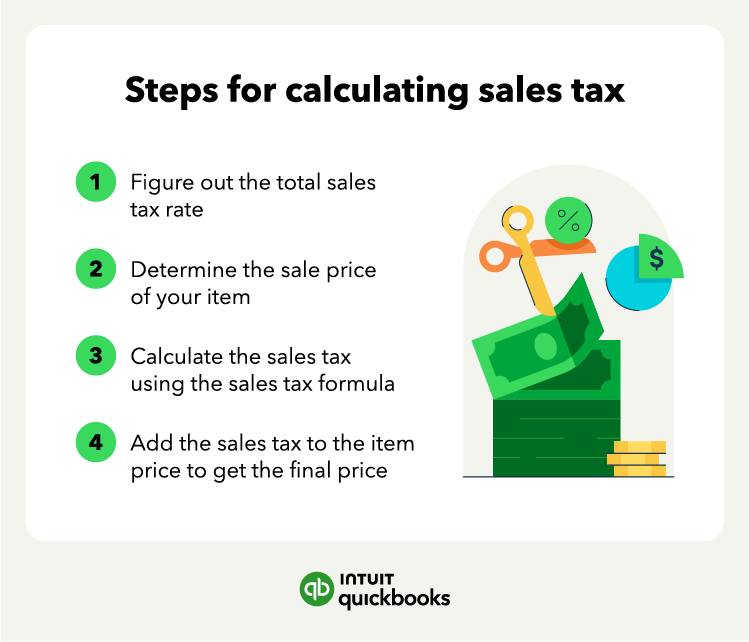
Worked example. You build furniture in Baltimore and sell a $900 table.
Same table, same week. The only thing that changed the tax was where the customer took possession. Keep the delivery address and the shipping documents with every sale.
The lines that matter most to small sellers:
Groceries: food sold for consumption off the premises by a person operating a substantial grocery or market business is exempt. A business is "substantial" if grocery-type food is at least 10 percent of its food sales. Vitamins and dietary and nutritional supplements are treated as grocery food. They are exempt when sold by a substantial grocery or market business.
Candy, soft drinks, and bottled water: taxable. Candy and confectionery are taxable. Carbonated beverages and soft drinks are taxable, and so is bottled water. "Soft drink" also reaches non-carbonated drinks that contain less than 10 percent juice. Energy and sports drinks are examples. Iced tea and coffee, kombucha, and drinks with 10 percent or more juice remain exempt.
Prepared food: prepared food and meals are generally taxable. At a substantial grocery or market business, the statute's taxable "food for immediate consumption" is a specific list:
Single-serving frozen desserts are taxable too. Ice cream, frozen yogurt, and other frozen desserts sold in containers of less than one pint are taxable. That holds even at a substantial grocery or market business. A package of one pint or more is exempt.
Snack food: chips, pretzels, popped popcorn, cheese puffs, nuts and edible seeds, and mixtures of those items are exempt when sold by a substantial grocery or market business for consumption off the premises. They are taxable when sold with a meal or as food prepared for immediate consumption. The separate exemption for snack food sold through a vending machine was repealed effective July 1, 2025. So vending machine snack sales are now taxable. Vending machine sales carry their own base. The 6% rate applies to 94.5% of the machine's gross receipts (Tax-Gen. § 11-104(b)). So the operator computes 6% on that base rather than on every dollar.
Alcoholic beverages: taxable, at Maryland's 9% alcohol rate rather than the general 6% rate.
Clothing: taxable year-round. Clothing, footwear, accessories, protective clothing, and sports and recreational equipment are all taxable as goods. An alteration charge on a garment you sell is part of the taxable price, even when billed separately. Altering a customer's own clothing is not one of the statute's listed services and is generally not taxable. The annual back-to-school tax-free week is covered below.
Software and digital products: taxable. Prewritten software and digital products are taxed at the general 6% rate. Data, IT, and software publishing services are taxed at the 3% rate described above. SaaS is taxed at one or the other, depending on the buyer.
Medicine and medical equipment: medicine is exempt, both prescription drugs and over-the-counter drugs, plus proprietary and patent medicines. Medical and "sickroom" equipment is exempt when it meets all four of these tests:
Wheelchairs, crutches, hospital beds, braces, and artificial limbs are examples. The same equipment is taxable if sold to a physician or professional rather than for the patient's home use. Disposable medical supplies are exempt. Medical services are not taxable.
Newspapers, magazines, and printing: magazines, periodicals, and newspapers distributed by the publisher for a charge are taxable. Only newspapers distributed free of charge on at least a monthly basis are exempt. Job printing is taxable except when sold for resale.
Resale, manufacturing, and packaging: anything bought for resale is exempt with a resale certificate. Machinery and equipment used directly in manufacturing are exempt. So are materials that become an ingredient or component of the manufactured product. Containers, packaging, labels, and wrappers used to deliver a product you sell are exempt.
Leases and rentals: renting out equipment or other goods is generally taxable just like selling it. The lease or rental of goods is a taxable sale. The exception is short-term vehicle rentals (180 days or less). They carry their own state rates under Tax-Gen. § 11-104(c). The rate is 11.5% for passenger cars, multipurpose passenger vehicles, and motorcycles. It is 8% for vehicles that may be registered as Class E, F, or G.
Selling a mix of taxable and exempt items is where receipts get messy. Track the two buckets separately from the start.
Use tax is the buyer's side of the same tax. Maryland imposes its sales and use tax both on a retail sale in the State and on the use in the State of tangible personal property, a digital code, a digital product, or a taxable service. The Comptroller offers a simple test. If you would pay tax on a purchase made in Maryland, you owe tax on the same item bought outside Maryland untaxed. That holds no matter where you bought it, including over the internet or by mail or phone.
The rate is 6%, the same as the sales tax rate. That is because the statute sets a single sales and use tax rate. The consumer use tax return carries separate lines for the category rates. These include the 3% rate on data and IT services and the 9% rate on alcoholic beverages. So an untaxed purchase in one of those categories owes use tax at that category's rate.
For a business, this shows up when you order equipment, supplies, or software from a vendor that didn't charge Maryland tax. The Comptroller lists computers, canned software, office supplies, office furniture, store fixtures, cleaning supplies, and copiers among the most common taxable out-of-state purchases businesses make. Say you run a bakery in Annapolis and buy a $3,000 commercial mixer online. The invoice shows no Maryland tax. You owe $180 in Maryland use tax.
Credit for tax paid elsewhere. Say you paid another state's sales tax on a purchase before the item entered Maryland. Maryland credits it up to the amount of the Maryland tax. If the other state's tax was lower, you pay the difference. The Comptroller's example: pay a 4 percent tax to another state, and you owe Maryland the remaining 2 percent. The credit turns on where you took possession. If you arranged for the vendor to deliver the purchase directly to your Maryland location, the full Maryland tax applies.
There is no local use tax. Maryland's sales and use tax is a single state tax. The statute bars counties, municipalities, and special taxing districts from imposing a retail sales or use tax. So the use tax you owe on purchases like these is the state rate.
How you report it. A buyer who did not pay the tax to the vendor is personally liable for it. The buyer pays it with a return.
If you hold a Maryland sales and use tax license, you report your untaxed out-of-state purchases on your regular sales and use tax return. If you are not licensed, you file the Consumer Use Tax Return (Form ST-118), which is due quarterly. Purchases made January through March are due April 20, April through June by July 20, July through September by October 20, and October through December by January 20. The Comptroller's Office regularly audits businesses to recover tax on out-of-state purchases.
Maryland holds two recurring sales tax holidays each year. Shop Maryland Tax-Free Week runs for seven days from the second Sunday in August through the following Saturday. It exempts each item of clothing or footwear, excluding accessories, priced $100 or less. It also exempts the first $40 of any backpack or bookbag. The limit is per item. A $120 jacket does not qualify. Three $40 shirts on one receipt all do.
Shop Maryland Energy Weekend runs from the Saturday immediately preceding the third Monday in February through that third Monday. It covers qualified Energy Star products and solar water heaters.
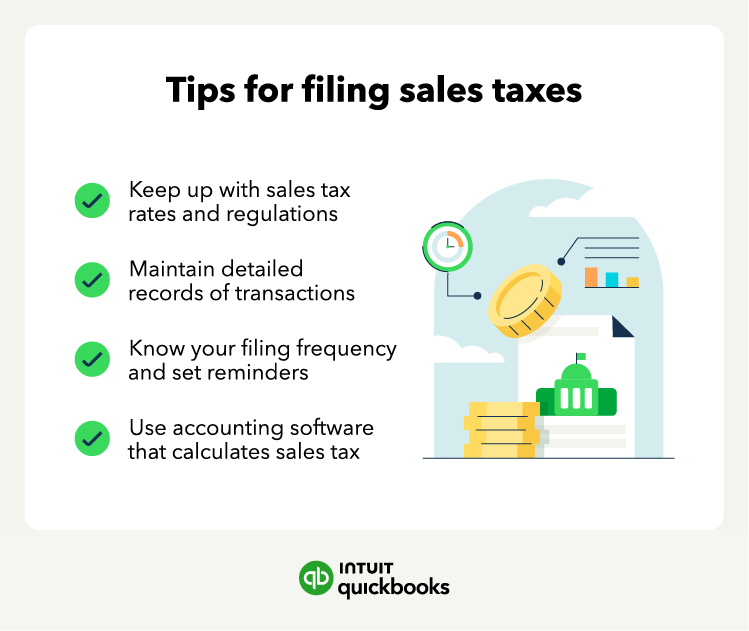
Maryland's return has nothing local to break out, since there is no local sales tax. But it has its own rhythm:
Returns are due on the 20th. Your sales and use tax return is due on the 20th day of the month following the month in which the period ends. If the 20th falls on a Saturday, Sunday, or legal holiday, the return is due the next business day. Quarterly returns are due April 20, July 20, October 20, and January 20.
The Comptroller sets your frequency. New accounts start on a quarterly basis. Depending on the amount you actually pay, the Comptroller may change your schedule to monthly, quarterly, bi-annual, or annual. The Comptroller will notify you in advance of any change. By regulation, monthly filing is the baseline. A less frequent basis is available when the Comptroller expects you to pay less than $100 a month. If you are on a less-than-monthly schedule and have reason to believe your tax will average more than $100 a month, you must notify the Comptroller. A filer on a schedule less frequent than four times a year must file a supplemental return for any month in which the tax due exceeds $100.
File through Maryland Tax Connect. You can file and pay your sales and use tax return online, free, through Maryland Tax Connect. That is the Comptroller's portal that opened to businesses in February 2024. You can also file and pay through an independent software provider or tax preparer. Taxpayers making payments of $10,000 or more must file and pay electronically. Everyone else is encouraged to. For periods beginning after December 31, 2026, every sales and use tax return must be filed electronically. Narrow exceptions apply for disability, religious belief, or a Comptroller-determined special need.
File every return, including zero returns. If you have no taxable sales to report and owe no tax, you still need to file a return for the period. You can file a zero return through Maryland Tax Connect. Skip one and the Comptroller sends a notice of delinquency.
Tip: if a rate error slips through, fix the rate first, then correct the affected returns. Undercollect and the difference comes out of your pocket. Overcollect and you owe refunds. Tax you collected as tax is never yours to keep.
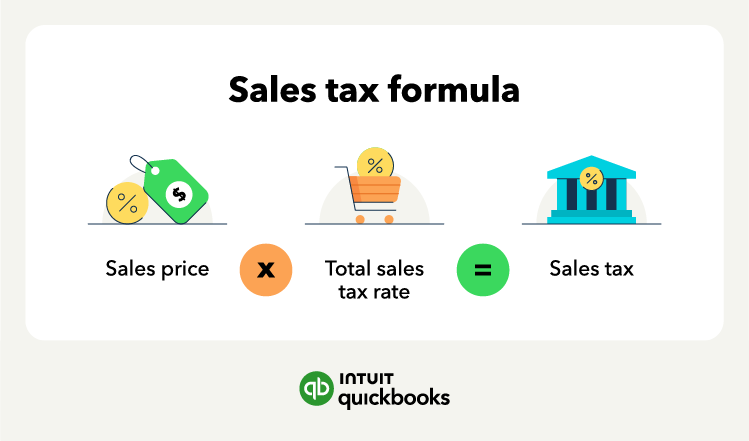
Multiply the pre-tax price by 6%. There is no local rate to add at any Maryland address. On a $1,200 sale, that's $72 in tax and a $1,272 total.
No. Maryland has no local sales tax. The state rate is the same statewide, and counties and cities do not levy their own sales tax. So there is nothing local to register for or add on. Where a category carries a different rate, the state sets it. Separate local hotel and lodging taxes do apply to accommodations, on top of the state tax on transient room charges. So lodging businesses still have a local tax to track.
Only if your service is on Maryland's list. The list includes:
Professional services, landscaping and lawn care, pest control, barber and beauty services, repair labor, separately stated installation labor, and personal services are not taxable. A lump-sum price that includes installation is taxable in full. Repair labor is not taxed, but separately stated parts are.
Not when a substantial grocery or market business sells food for consumption off the premises. That food is exempt, and so are vitamins and supplements sold the same way. Candy, soft drinks, bottled water, prepared food, and single-serving frozen desserts are taxable. Snack food is taxable when sold with a meal, as food prepared for immediate consumption, or through a vending machine.
Shop Maryland Tax-Free Week runs from the second Sunday in August through the following Saturday. It exempts clothing and footwear items priced $100 or less (accessories excluded). It also exempts the first $40 of a backpack or bookbag. Shop Maryland Energy Weekend runs from the Saturday before the third Monday in February through that Monday. It covers qualified Energy Star products and solar water heaters.
Manage sales tax in QuickBooks with automation that helps you save time and stay compliant.
Save time with automated sales tax
Products are automatically matched to tax categories, so you can charge the right sales tax with less manual work. Maryland returns are automatically prepared and formatted for the Comptroller, with the 9% alcohol line and the 3% technology services line kept separate from your 6% sales, and if you sell into other states, you can automate multi-state filing from one place.
Stay confident and compliant
File with confidence using accurate, automated calculations. Maryland's location rate is flat, but its category rates and taxability rules change, and tax rates and rules are updated automatically in QuickBooks, so what you charge keeps up. Get reminders before Comptroller deadlines so you can plan ahead, and know your return status with real-time updates.
Your data stays protected
Securely send returns to tax agencies and track every filing in QuickBooks.
Manage your books and sales tax in one place
Automatically calculate, collect, and track applicable sales tax from your customers. One report breaks out taxable and non-taxable sales, so you always know what to pay each agency. Prepare, file, and pay directly from QuickBooks.
Explore QuickBooks sales tax software to spend less time on tax and more time running your business.
*Sales tax filing is available as an add-on service through QuickBooks Online for $40 per filing.
You've got the rates and the rules that apply in Maryland. The harder part is applying them correctly on every sale, every quarter. QuickBooks automated sales tax calculates the right combined rate, tracks what you've collected, and shows what you owe when it's time to file.
Call Sales: 1-800-285-4854


