Missouri sales tax calculator
Know exactly what to charge at any Missouri address. Find the combined rate, the tax on any amount, and the total. Free for your business, no sign-up.
Know exactly what to charge at any Missouri address. Find the combined rate, the tax on any amount, and the total. Free for your business, no sign-up.
Done checking rates one sale at a time? QuickBooks applies the right Missouri rate, state and local included, on every invoice automatically. See how automated sales tax works
Missouri's sales tax math starts simple and gets local fast. The state rate is 4.225%. Then come city, county, and special district taxes, which are large and vary widely by location. The Department of Revenue collects all of it on one return.
The average American side hustle brings in about $2,038 a month, according to Intuit QuickBooks entrepreneurship research. At that size, a Missouri seller is squarely in the system. You need a sales tax license. You charge a combined rate that starts at 4.225% and climbs with the local taxes at your own location. And your state return carries the local tax on it.
Missouri taxes goods and a short list of named services. Two things make it distinctive. It taxes groceries, at a reduced state rate rather than exempting them. And its local tax on an in-state sale is sourced to the seller's location, not the customer's. Whether you run a boutique in Kansas City, bake bread in Columbia, build furniture in Springfield, or run a gym in St. Louis, here's how Missouri's rate works. You'll also see which of your sales it reaches and what to know at filing time.
Missouri's state sales tax rate is 4.225%. Cities, counties, and special districts add their own sales taxes on top of it. So the combined rate at a Missouri address is 4.225% plus whatever local taxes are in effect there. The layers:
There is no separate local registration. A seller does not register with each city, county, or district. The same sales tax license that covers the state tax satisfies the local sales tax law. State and local tax go on the same return to the Department of Revenue, which then distributes the local share. Which local rate you charge on an in-state sale depends on where your business is located, not where your customer is. That rule is covered below.
Missouri does not exempt groceries. It taxes them at a reduced state rate of 1.225% instead of 4.225%, plus the full local tax for your location. What qualifies for the reduced rate is the unusual part. Under Mo. Rev. Stat. § 144.014, food qualifies if it is eligible to be purchased with food stamps under the federal program (7 U.S.C. § 2012). That definition produces results a seller would not expect:
The local tax does not drop with the state rate. In Columbia, outside the city's special taxing districts, the Department of Revenue's rate table lists 7.975% on general sales and 4.975% on qualifying food. A $200 grocery order carries $9.95 in tax. At the same counter, $200 of general merchandise carries $15.95. Food sales get their own line on your Missouri return, separate from sales at the full rate. So your point of sale needs to know which bucket each item belongs in.
Groceries remain taxed at the reduced rate. Missouri has not enacted a full grocery exemption.
Missouri is an origin-sourced state for local tax on in-state sales. Under Mo. Rev. Stat. § 32.087 and the Department of Revenue's local tax rule (12 CSR 10-117.100), a sale is deemed consummated at the retailer's place of business. So the local sales tax is the one in effect where your business is located, not where your customer is. The state rate is the same 4.225% everywhere.
The rule flips for goods shipped into Missouri from outside the state. Those are use tax transactions, and the local use tax is destination-based. It is charged at the rate in effect where the goods are first delivered in Missouri. Taxable services carry the local tax in effect where the service is rendered or delivered. Find your situation:
If you sell goods in person at your location: the sale is consummated at your place of business. So you charge the combined rate in effect there: 4.225% plus your location's local taxes. A place of business is a place where business is transacted in Missouri that you or your agent maintain, occupy, or use. If more than one of your Missouri locations participates in a sale, the local tax is the one in effect where the initial order is taken. That holds even if another location approves credit, ships the goods, or bills the customer.
If you ship or deliver goods to Missouri customers from your Missouri location: the local rate still follows you. An order taken at your Missouri place of business carries the local sales tax in effect at that place of business, regardless of where the buyer is. The Department's own example: a seller in Kirkwood, in St. Louis County, receives an order from a buyer in Macon and ships the merchandise to Columbia. The sale is subject to Kirkwood city and St. Louis County sales taxes.
A delivery into a higher-rate city does not raise what you charge. A delivery into a lower-rate one does not lower it. Ship to a customer outside Missouri by common carrier and the sale is generally not subject to Missouri sales tax. That is because title does not transfer in Missouri.
If your goods ship from outside Missouri: this is where the rule flips. When an order is approved outside Missouri and the goods ship from outside Missouri directly to the buyer, the sale is a use tax transaction, not a sales tax one. In that case, a seller with Missouri nexus collects vendor's use tax: 4.225% state use tax plus the local use tax, if any, in effect where the item is first delivered in Missouri.
The line between the two generally turns on where the order is approved and where the goods ship from. The Department's rule treats an order accepted at a Missouri location and filled from an out-of-state warehouse as a sales tax transaction. The local tax is the one at the Missouri location. An order placed directly with a seller's out-of-state location and shipped from there, with the Missouri office uninvolved, is a use tax transaction. If your business does both, read 12 CSR 10-113.200 before you set up your rates.
If you perform taxable services: admissions and fees to places of amusement, entertainment, or recreation, hotel rooms, restaurant meals and drinks, and the other services Missouri names are generally sourced to where the service is rendered or delivered. For a venue, a hotel, or a restaurant, that is generally your own location's combined rate. A taxable service is subject to Missouri sales tax when it is performed in Missouri.
If you rent out equipment or other goods: leases and rentals of goods, which the law calls tangible personal property, are taxable. The local tax on a lease is sourced to your location as the lessor.
If you sell through a marketplace like Amazon or Etsy: a marketplace facilitator whose gross receipts from taxable sales delivered into Missouri exceed $100,000 must register, collect, and remit on the sales it facilitates. The threshold is measured the same way as an out-of-state, or remote, seller's: over the preceding 12-month period, checked at the end of each calendar quarter. The rule took effect January 1, 2023. There is no transaction-count threshold.
Sales through a collecting marketplace are not yours to collect on. A Missouri seller still registers and collects on its own direct sales. Taxable marketplace sales are deemed consummated at the Missouri location where the item is shipped or delivered, or where the buyer takes possession. So the local tax on your marketplace sales follows the buyer, even though the local tax on your own direct sales follows you.
If you're out of state selling into Missouri: you must register and collect once you have $100,000 in taxable sales of tangible personal property into Missouri in the previous 12-month period. That figure includes marketplace sales. The test is reviewed quarterly. There is no transaction-count threshold. Registration is due no later than three months following the close of the quarter in which you exceeded the threshold. Missouri's economic nexus rule took effect January 1, 2023. Missouri was the last state with a sales tax to adopt one.
Once you collect, there is no origin rule for you, because your sales are use tax transactions. You collect the 4.225% state use tax plus the local use tax in effect where the goods are first delivered in Missouri. Where the delivery address is in a city or county that has not adopted a local use tax, you collect the state 4.225% only.
If you have no physical presence in Missouri, then until you've crossed the threshold this rule alone does not require you to collect Missouri tax. But Missouri can require collection from any out-of-state company that has nexus, or a "direct connection," with the state. So the threshold is not the whole test.
Sales with their own sourcing rules. Metered sales such as natural gas and utilities carry the local tax in effect where the meter is located. Mobile telecommunications services follow the federal Mobile Telecommunications Sourcing Act. Sales made entirely at a temporary location, such as a food truck, carry the local tax in effect at that location. Motor vehicles, trailers, boats, and outboard motors that must be titled have their own rule and are not covered here.
Worked example. You build furniture at a shop in Columbia, your only place of business, and sell an $800 table. The Department of Revenue's rate table lists Columbia's base combined rate at 7.975%: 4.225% state plus 3.75% in local tax. Rates are higher inside some of the city's special taxing districts.
Same table, same price, two different taxes. Missouri's returns report tax by location, so keep your business location and each delivery address straight from the start.
Missouri taxes goods and a short list of named services. The lines that matter most to small sellers:
Groceries: not exempt, but taxed at the reduced 1.225% state rate plus full local tax, as covered above. Prepared food, hot food, dietary supplements, alcohol, and tobacco are taxed at the full rate.
Services: not taxable unless a statute specifically names them. That puts most everyday services outside the tax: building maintenance, janitorial, lawn care and landscaping, pest control, dry cleaning, barber and beauty, self-storage, moving, HVAC installation and repair, photography services, garment alteration, sign painting labor, veterinary, and all professional services (legal, accounting, engineering, consulting, advertising, public relations, employment and staffing).
A service business that also hands over goods collects on the goods. A photographer's prints and albums, for example, are taxable goods. When the true object of a package is the prints, the whole price is generally taxable. That holds even if the sitting fee is separately stated (12 CSR 10-103.600).
What Missouri does tax by statute:
Hotel rooms carry one carve-out. A permanent resident is not taxed on the room. A permanent resident is an individual who contracts in advance for a room for 30 consecutive days or more and actually stays that long. Businesses do not qualify as permanent residents (12 CSR 10-110.220).
Two cautions. Fabrication or production labor, making a new item, is taxable even when separately stated, unlike repair labor. And a finished sign sold as a product is taxable tangible personal property, even though the design work itself is a nontaxable service.
Repair labor: not taxable if it is separately stated from the parts. Then only the parts are taxed. If labor and parts are not separated, the whole charge is taxable, unless the parts are less than 10% of the total. In that case, none of the charge is taxed to the customer, and the repairer pays tax on the parts it buys.
Maintenance and service agreements follow the same logic. A separately stated agreement covering labor is not taxable. Whoever the contract makes responsible for parts pays tax on them. One exception covers a maintenance agreement for canned software delivered on a disk or other tangible medium. That agreement is always taxable when it is mandatory. When it is optional, it is taxable if the updates arrive on a tangible medium (12 CSR 10-109.050). Maintenance for custom software is not taxable.
Contractors: if you install materials into real property (HVAC, plumbing, landscaping, construction), your labor is not taxable. But you are generally the final consumer of the materials. You pay sales or use tax when you buy them rather than buying them for resale. Your supplier charges you tax on them (12 CSR 10-112.010).
Clothing: taxable year-round. Clothing, footwear, accessories, protective clothing, and sports and recreational equipment are all taxable goods. Clothing alteration by itself is a nontaxable service. The August back-to-school holiday, covered below, exempts clothing priced $100 or less per item.
Software and digital products: canned software is taxable only when it comes on a tangible medium such as a disk. Software delivered entirely by electronic transfer is not taxable. But the trap runs the other way: bundle even one disk with the download and the whole sale becomes taxable. Custom software is not taxable. Minor modifications to canned software do not make it custom. SaaS is not taxable. The regulation's SaaS definition expressly includes infrastructure as a service and platform as a service. So those are not taxable either. Digital products such as downloaded music, video, and e-books are not taxable. Internet access is not taxable. Computer hardware is taxable.
Prescription drugs and medical items: prescription drugs and insulin are exempt, along with certain drugs a practitioner prescribes over the counter. Durable medical equipment, prosthetic and orthopedic devices, and mobility-enhancing equipment are exempt. That includes their sale, rental, repair, and parts. Vitamins and dietary supplements are taxable at the full 4.225% rate.
Diapers, incontinence products, and feminine hygiene products: exempt from state and local sales and use tax for sales on or after August 28, 2025 (Mo. Rev. Stat. § 144.029). The exemption covers infant and adult diapers, products for urinary incontinence, and tampons, pads, liners, and cups.
Newspapers, magazines, and printing: newspapers, magazines, periodicals, and books are taxable goods when sold at retail. Job printing is taxable. The only newspaper-related exemption is for production inputs such as newsprint and ink, not the finished newspaper.
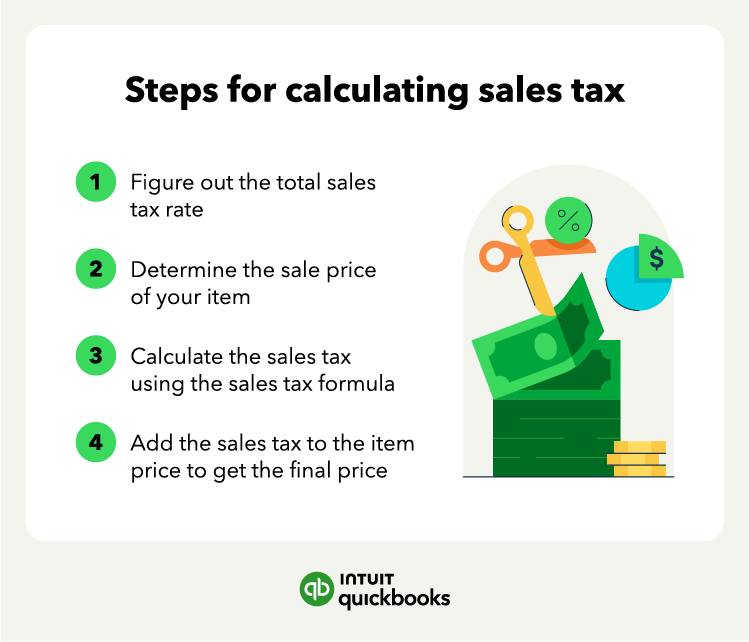
Selling a mix of full-rate goods and reduced-rate food is where receipts get messy. Track the two buckets separately from the start. Missouri's return wants them on separate lines anyway.
Use tax is the buyer's side of the same tax. Missouri imposes it on the storage, use, or consumption of tangible personal property in the state. The state use tax rate is 4.225%, the same as the state sales tax rate. Use tax does not apply when the purchase is from a Missouri retailer and subject to Missouri sales tax. A buyer can be charged sales tax or use tax on a single retail sale, never both.
The person storing, using, or consuming the property is the one liable for it. If an out-of-state seller with Missouri nexus collects the use tax on your invoice, that settles it. If the seller does not collect it, you pay it directly to the Department of Revenue.
If you paid another state's sales or use tax on the purchase, Missouri generally credits it. Property already taxed by another state is exempt from Missouri's state use tax. If that state's tax was lower, you owe only the difference (Mo. Rev. Stat. § 144.615(5)).
For a business, this shows up when you order equipment or supplies from a vendor that did not charge Missouri tax. The Department's own example: a grocery store buys a $5,000 freezer from an out-of-state seller that did not collect any use tax. The store must report and pay tax on the purchase on its next use tax return. At 4.225%, the state use tax is $211.25. Had the seller invoiced and collected Missouri use tax, the store would have nothing to report on that purchase.
Local use tax exists, where voters have adopted it. A city or county that imposes a local sales tax may also impose a local use tax, with voter approval. The rate is equal to its local sales tax. The use tax due on a purchase depends on the combined state and local use tax rate. That is the rate in effect at the Missouri location where the property is stored, used, or consumed. In a city or county that has not adopted one, only the state 4.225% applies.
Say that freezer lands in Columbia, where the Department's rate table lists a combined use tax rate of 7.975% outside the city's special districts. The use tax is $398.75.
How you report it. Businesses report consumer's use tax on Form 53-C, generally quarterly. The return is due the last day of the month following the quarter. An annual consumer's use tax return is due April 15.
You are not required to file a use tax return if your untaxed purchases come to less than $2,000 in a calendar year. But that is an exclusion from filing, not a $2,000 exemption. Once your untaxed purchases equal or exceed $2,000, you report and pay on the total, including the first $2,000. The 2% timely payment allowance that sellers take on sales tax is not allowed on consumer's use tax.
Missouri holds two recurring sales tax holidays each year.
Back-to-school holiday (August): the three-day period beginning at 12:01 a.m. on the first Friday in August and running through the following Sunday (Mo. Rev. Stat. § 144.049). Exempt items:
Two conditions in the statute. The holiday covers items bought for personal use only. And a retailer whose qualifying merchandise is less than 2% of what it offers for sale may choose not to apply the holiday at the register and instead offer customers a sales tax refund (§ 144.049).
Show Me Green holiday (April): the seven-day period from 12:01 a.m. on April 19 through midnight April 25 (Mo. Rev. Stat. § 144.526). It exempts Energy Star certified new appliances priced $1,500 or less each.
Missouri measures your filing frequency by the state tax you collect, not the local tax. The Department of Revenue reviews it once a year:
Monthly, quarterly, or annual, based on state tax alone. If you collect $500 or more in state sales tax a month, you file monthly. Less than $500 a month but $200 or more in a quarter, quarterly. Less than $200 a quarter, annual. The Department figures "state tax" for this purpose at 4% of taxable sales for regular locations and 1% for food locations. Local tax and the conservation and parks portions of the 4.225% are not counted. A new business is placed by its estimated taxable sales for the first year. The Department notifies you if its annual review changes your frequency.
Due dates. Monthly returns are due on or before the last day of the following month. That makes your March return due April 30. Quarterly returns are due the last day of the month following the end of the quarter. So January through March is also due April 30. Annual returns are due January 31. When a due date falls on a Saturday, Sunday, or state holiday, the return is due the next business day.
Large sellers pay weekly. If your Missouri state sales tax equals or exceeds $15,000 a month in at least six of the previous 12 months, the Department requires quarter-monthly payments. You pay at least 90% of the actual tax due electronically, within three banking days after the end of each quarter-monthly period. The monthly return is still due the last day of the following month. Local taxes are not part of the quarter-monthly payments. They go on the monthly return as usual.
One return, every location, with codes. State and local tax go on the same return, Form 53-1. The Department requires the jurisdiction code, item code, and site code for each business location, so the local tax reaches the right city, county, and district. Food sales go on their own line. Sellers with three or more registered business locations must file electronically. Any seller can file through the MyTax Missouri portal.
File every return, including zero returns. Every business with a sales tax license must file a return even though no sales were made during the period covered by the return.
Keep 2% for filing on time. File and pay by the due date and you deduct and retain 2% of the tax as a timely payment allowance. The Department's example: $100 of tax due becomes $98.
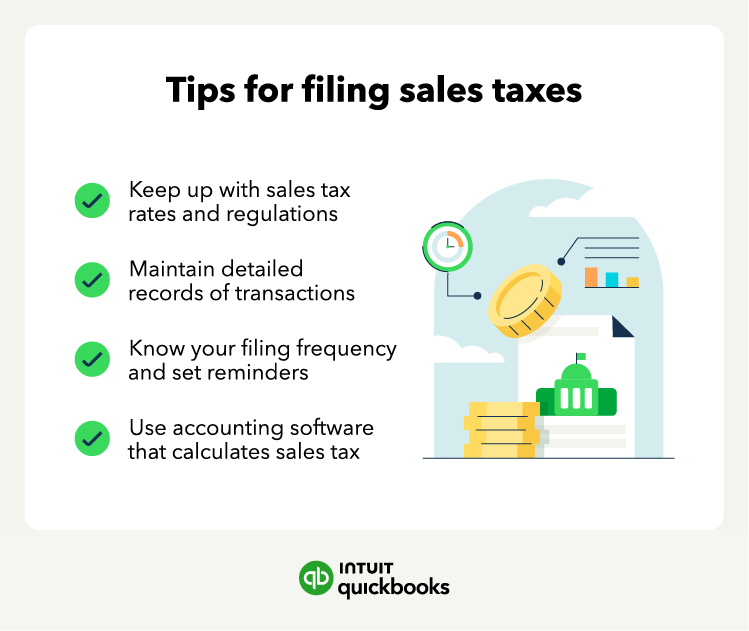
Tip: if a rate error slips through, fix the rate first, then correct the affected returns. Undercollect and the difference comes out of your pocket. Overcollect and you owe refunds. Tax you collected as tax is never yours to keep.
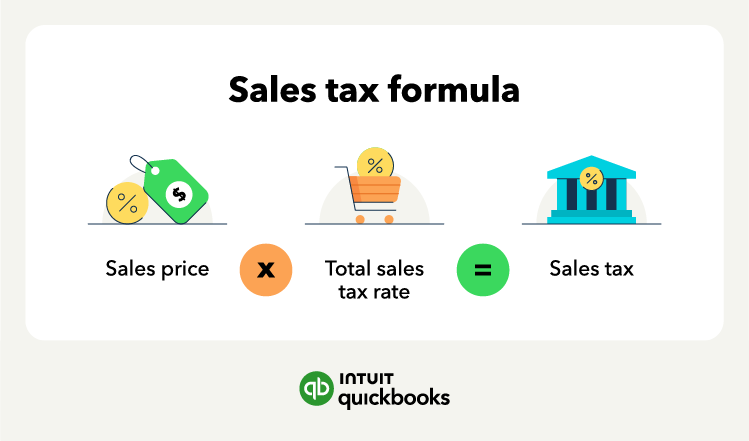
Multiply the pre-tax price by the combined rate for your business location: 4.225% state plus your city, county, and district taxes. In Columbia, outside its special taxing districts, the Department of Revenue's rate table puts that at 7.975%. On a $1,200 sale, that's $95.70 in tax and a $1,295.70 total.
The state rate is 4.225%, but what you charge is the combined rate. Cities, counties, and special districts add their own sales taxes, and they are large and vary widely by location. So the combined rate at your business location is 4.225% plus whatever is in effect there. On an in-state sale, the local rate is the one for your location, not your customer's. The Department of Revenue's sales and use tax rate tables list the combined rate for every city, county, and district combination.
Only if a statute names your service, and Missouri's list is short: admissions and fees to places of amusement, entertainment, or recreation, and athletic events; utilities; local and long-distance telecommunications; rooms, meals, and drinks at hotels and restaurants; intrastate transportation tickets; and leases and rentals of tangible personal property. A permanent resident's hotel room is the one carve-out. Lawn care, janitorial work, barber and beauty services, photography services, dry cleaning, and professional services are not taxable. But the prints and albums a photographer sells are taxable goods. Repair labor is not taxable if it is separately stated from the parts. Fabrication labor is taxable even when separately stated.
Yes, at a reduced state rate of 1.225% instead of 4.225%, plus the full local tax. Food qualifies for the reduced rate if it is eligible to be purchased with food stamps under the federal program. That means candy, soft drinks, and bottled water get the reduced rate too. Prepared food, hot food sold in a grocery store, dietary supplements, alcohol, and tobacco are taxed at the full rate.
Twice a year. The back-to-school holiday runs from 12:01 a.m. on the first Friday in August through the following Sunday. It covers clothing priced $100 or less per item, school supplies $50 or less per purchase, personal computers and peripherals $1,500 or less, computer software $350 or less, and graphing calculators $150 or less. The Show Me Green holiday runs from 12:01 a.m. on April 19 through midnight April 25. It covers Energy Star certified new appliances priced $1,500 or less each.
Manage sales tax in QuickBooks with automation that helps you save time and stay compliant.
Save time with automated sales tax
Products are automatically matched to tax categories, so you can charge the right sales tax with less manual work. Returns are automatically prepared and formatted for your state, and if you sell into other states, you can automate multi-state filing from one place.
Stay confident and compliant
File with confidence using accurate, automated calculations. Tax rates and rules change, and they are updated automatically in QuickBooks, so what you charge keeps up. Get reminders before filing deadlines so you can plan ahead, and know your return status with real-time updates.
Your data stays protected
Securely send returns to tax agencies and track every filing in QuickBooks.
Manage your books and sales tax in one place
Automatically calculate, collect, and track applicable sales tax from your customers. One report breaks out taxable and non-taxable sales, so you always know what to pay each agency. Prepare, file, and pay directly from QuickBooks.
Explore QuickBooks sales tax software to spend less time on tax and more time running your business.
*Sales tax filing is available as an add-on service through QuickBooks Online for $40 per filing.
You've got the rates and the rules that apply in Missouri. The harder part is applying them correctly on every sale, every quarter. QuickBooks automated sales tax calculates the right combined rate, tracks what you've collected, and shows what you owe when it's time to file.
Call Sales: 1-800-285-4854


