Nebraska sales tax calculator
Know exactly what to charge at any Nebraska address. Find the combined rate, the tax on any amount, and the total. Free for your business, no sign-up.
Know exactly what to charge at any Nebraska address. Find the combined rate, the tax on any amount, and the total. Free for your business, no sign-up.
Done checking rates one sale at a time? QuickBooks applies the right Nebraska rate, state and local included, on every invoice automatically. See how automated sales tax works
Nebraska layers a 5.5% state sales tax with city and county sales taxes. The Nebraska Department of Revenue collects and administers all of them together on one combined return. No Nebraska city or county administers its own sales tax separately from the state. So state and local tax go to one agency on one return.
The average American side hustle brings in about $2,038 a month, according to Intuit QuickBooks entrepreneurship research. At that size, a Nebraska seller is squarely in the system. You need a sales tax permit. You charge 5.5% plus the local rate of the city or county each sale is sourced to. And your return carries the local tax with the state tax.
What stands out about Nebraska is how short its list of taxable services is. Nebraska taxes retail sales of goods plus a narrow list of named services. That list is narrower than in many states. A service that falls in none of the named places, and isn't separately addressed by regulation, isn't taxable. Whether you run a boutique in Omaha, groom dogs in Lincoln, or run a pest control route in Grand Island, here's how Nebraska's rate works. You'll also see which of your sales it reaches and what to know at filing time.
Nebraska's state sales tax rate is 5.5%. Cities and counties may impose a local sales tax on top of it. So the combined rate at any address is 5.5% plus the local rate, if any, of the city or county the sale is sourced to. There are two layers:
Whatever the local layer is at your address, it rides on the same return as the state tax. The Department of Revenue collects and administers state and local sales taxes together on one combined return. No Nebraska city or county administers its own sales tax separately from the state. A seller operating or delivering within a city or county that imposes a local tax collects, reports, and remits the local tax along with the state tax. The permits and exemption certificates that work for the state tax satisfy the local tax too.
Nebraska taxes retail sales of goods, which the law calls tangible personal property, plus a short list of named services. The list is narrower than in many states. A service that falls in none of the named places, and isn't separately addressed by regulation, isn't taxable. Taxable services include:
Separately, the statute reaches a few broader categories that aren't on the services list: admissions, utility services, telecommunications, intellectual or entertainment properties, and short-term lodging.
Services that are not taxable, because they are not on the list, include accounting, bookkeeping, legal, engineering, management consulting, payroll, employment and staffing, interior design, investment counseling, title search, travel agency, veterinary professional services, babysitting and daycare, barbering and beauty services, dance instruction, massage therapy, flying instruction, furniture moving, self-storage, and tattoo parlor services. Medical professional services are not taxable either. But a medical provider pays tax on the supplies and items it uses in the practice of medicine. Lawn care isn't taxable. Neither are dry cleaning and laundering.
Where the line gets drawn. A lawn service that applies pest control chemicals must collect tax on that portion of the charge, even though the lawn care itself isn't taxable. Lawn care products are taxable. A dry cleaner or laundry doesn't tax the laundering, storage, or pressing. But it collects tax on alteration and repair charges and on retail sales such as soap and dryer sheets.
Painting or lettering applied to real property, such as a building or a window, is not taxable. The paint used in that work is a building material. It is taxed to the painter under the contractor option the painter has elected. Excavating, grading, and other construction or repair work on real estate or fixtures is generally exempt.
Don't assume a service is taxable in Nebraska because another state taxes it. Services that aren't on the list need direct confirmation from the Department before you treat them as taxable. For the ones that are on the list, the Department's sales tax on certain services FAQ is where to start.
The local sales tax applies to the same transactions as the state tax. Whether a sale falls inside a city or county with a local tax is decided by the same sourcing rules the state tax uses. For goods, that is the place where your customer takes possession: your counter if they pick up in person, the delivery address if you ship. For services, it is generally the place where your customer makes first use of the service. If you operate or deliver within a city or county that imposes a local tax, you collect, report, and remit the local tax along with the state tax. It goes on the same return.
Nebraska is a destination-sourced state. Under Neb. Rev. Stat. § 77-2703.01 and the Department of Revenue's rules, a sale is sourced to the place where your customer receives what they bought. For goods, that is where they take possession. For services, it is generally where they make first use of the service. The Department puts it plainly: the point of delivery determines the location of the sale. The rate is the one in effect at that location. Your own location sets the rate when the customer receives the goods or the service there. The local tax follows the same rule. It applies when the sale is sourced inside a city or county that imposes it. Find your situation:
If you sell goods in person at your location: when your customer receives the product at your business location, the sale is sourced to that location. Charge that location's combined rate.
If you ship or deliver goods to Nebraska customers: the sale is sourced to the location where your customer, or someone they designate, receives it. That includes the delivery address they gave you. A carrier taking possession on the customer's behalf doesn't count as the customer receiving it. Freight terms like FOB shipping point don't change where the sale occurs.
Charge the delivery address's combined rate. A delivery into a Nebraska city that imposes a local sales tax is taxed at the 5.5% state rate plus that city's local rate. A delivery to another state isn't subject to Nebraska sales tax at all. If the customer takes delivery in Nebraska and then carries the item to another state, the sale still occurred in Nebraska.
If you perform a service at the customer's location: pest control and building cleaning and maintenance are generally sourced to the customer's location. So is installing taxable goods at a customer's site, when the installed item doesn't become a fixture annexed to real property. That is because the customer makes first use of the service there. The Department's shorthand is that services are generally taxed at the location where the service is provided to the customer. Charge that address's combined rate.
If a customer brings you something to work on: repair labor on taxable goods, animal grooming and boarding, and vehicle washing, waxing, or painting done at your shop are generally sourced to your shop. That holds when the customer receives the service there, so you charge your location's combined rate. If you deliver the item back to the customer instead, the sale is generally sourced to where they receive it.
If you provide detective services: the statute fixes where these are first used. For an individual customer, that is the customer's residence. For a business customer, it is the customer's principal place of business.
If you sell through a marketplace like Amazon or Etsy: a marketplace facilitator without a physical presence in Nebraska must register and collect Nebraska and local sales tax once it crosses the threshold below. It collects, reports, and remits tax on the sales it facilitates for delivery into Nebraska. You are relieved of collecting on those sales to the extent the marketplace collected and remitted the tax. Sales you make outside the marketplace, through your own website, invoices, or in person, remain yours to collect and report.
If you're out of state selling into Nebraska: you must register and collect once you have more than $100,000 in retail sales into Nebraska, or 200 or more separate Nebraska transactions, in the previous or current calendar year. Either test alone is enough. Marketplace sales count toward your threshold even though the marketplace collects on them. The registration trigger is the first day of the second calendar month after you exceed the threshold. Until you've crossed it, you aren't required to collect Nebraska tax if you have no physical presence in Nebraska. A seller with an office, warehouse, or other place of business in Nebraska, or a representative or salesperson operating here, must register regardless of the threshold.
Once you have crossed the threshold, the same sourcing rules apply to you. Each delivery is sourced to its Nebraska delivery address, and you collect the 5.5% state rate plus that address's local rate, if any. The remote seller and marketplace facilitator law took effect April 1, 2019.
Sales with their own sourcing rules. Sales of motor vehicles, trailers, and semitrailers are sourced to the place of registration rather than the place of delivery. So are motorboat sales. Leases and rentals of other equipment follow a modified rule. The first periodic payment is sourced like a sale. Later payments are sourced to the address where the equipment is kept. Direct mail and telecommunications services have their own sourcing sections. Utilities are sourced to where the meter is located or the connection is furnished. A maintenance agreement sold with the covered property is sourced to where that property is delivered.
If none of the ordinary rules can be applied, because you have no delivery address or customer address at all, the sale falls back to the address in your business records. Next it falls back to an address obtained during the sale, such as the payment address. Finally it falls back to the location you shipped from or provided the service from.
Worked example. You build furniture in Omaha and sell a $900 table.
Same table, same week, a different line on your return. Nebraska's return reports local tax by city and county, so keep the delivery address with every sale.
The exemptions that matter most to small sellers, and the lines Nebraska draws inside them:
Groceries: food and food ingredients are generally exempt. Prepared food and food sold through vending machines are taxable. Nebraska's test for what counts as exempt food is the label on the package. That is why candy and soft drinks are exempt here while vitamins are not. That story is below.
Clothing: taxable year-round. Nebraska has no clothing-specific statute at all, neither an exemption nor a special taxing provision. So clothing, clothing accessories, protective clothing and equipment, sports and recreational equipment, and special-order clothing and footwear are taxed like any other retail sale of goods. Nebraska does not currently hold a sales tax holiday.
Software and digital products: taxable. Nebraska does not distinguish custom, prewritten, or electronically delivered software. Gross receipts from furnishing software are taxable no matter how it is conveyed. Computer hardware is taxable. So are hardware and software maintenance agreements, optional or required. That includes an agreement that promises future enhancements, changes, or modifications at no extra charge or at a reduced price. Digital audio works, digital audio-visual works, digital codes, and digital books delivered electronically are taxable if the same product would be taxable on a tangible storage medium.
Internet access charges are exempt, with one narrow exception. A provider's initial connection or setup fee is taxable if software is bundled with the connection. Software as a service is the open question. The Department's older guidance concluding that SaaS is not taxable no longer appears on its current list of information guides. So treat its status as unconfirmed, and confirm SaaS treatment directly with the Department before relying on an exemption.
Prescription drugs and medical items: prescription medicines dispensed for human use by a licensed practitioner are exempt. Insulin for human use is exempt with or without a prescription. Over-the-counter medicines are taxable whether or not a prescription accompanies them. Mobility-enhancing equipment is exempt whenever it is supported by a prescription. Durable medical equipment, home medical supplies, oxygen and oxygen equipment, and prosthetic devices are exempt only when three conditions are all met:
Newspapers, not magazines: a newspaper published at least 52 times a year, containing matters of general interest and reports of current events, is exempt. Magazines, journals, professional publications, and periodically updated information-service publications are taxable.
Manufacturing and resale inputs: machinery directly used in manufacturing or processing is exempt. So are materials that become ingredients or component parts of a manufactured item. Containers are exempt in the situations where they are sold along with, and as part of, a sale of their contents. A container purchased outside those situations is taxable.
Selling a mix of taxable and exempt items is where receipts get messy. Track the two buckets separately from the start.
Use tax is the buyer's side of the same tax. The Department of Revenue calls it a complement to the Nebraska sales tax. It is imposed on the storage, use, distribution, or consumption of tangible personal property and certain services purchased by the end user when Nebraska sales tax has not been paid. The Department's own example is a delivery into Nebraska from an out-of-state internet or catalog seller.
Use tax is imposed at the same rate and on the same transactions as the sales tax. If the seller doesn't collect the tax on a taxable sale, the buyer must pay it directly to the state. No permit is required to do so.
The rate is the sales tax rate. The state use tax rate is the same 5.5% as the state sales tax rate. If the local sales tax was not properly paid on the original purchase, the local use tax is owed as well. The rate that applies to use tax is the same as the rate for state and local sales taxes. So what you owe is generally the same combined rate you would have paid at the register.
Say your accounting firm buys a $3,000 computer from an out-of-state supplier that charges no Nebraska tax. It is delivered to your office in a Nebraska city that imposes a local sales tax. The Department's own example says use tax is due. Nebraska and local sales tax was not paid, and the computer was delivered to a Nebraska location. At the 5.5% state rate, that is $165 of state use tax, plus local use tax at that city's local rate.
How you report it. If you hold a Nebraska sales tax permit, you report use tax on the same Form 10, Nebraska and Local Sales and Use Tax Return, that you file for sales tax. You report both at the same time. State use tax goes on line 4 and local use tax on line 5, broken out by city and county on Schedule I. If you have no use tax to report for a period, put zeros on the use tax lines rather than leaving them blank. The form is both a sales tax return and a use tax return, and a blank use tax line means the use tax return has not been filed.
A business that isn't a retailer reports use tax on Form 2, the Nebraska and Local Business Use Tax Return. Form 2 is filed monthly if the business's annual use tax liability is $3,000 or more, quarterly from $900 to $2,999, and annually under $900. It is due the 20th of the month following the period.
If you paid another state's sales tax on the purchase, Nebraska generally credits that tax against the use tax you owe. At a rate equal to or greater than Nebraska's, no Nebraska use tax is due. At a lower rate, you owe only the difference. The Department may assess a penalty for a return that isn't filed or tax that isn't paid on time, with interest from the due date.
Nebraska draws the grocery line differently than many other states. It does not carve out candy and soft drinks by name. Instead, a product counts as exempt food if it carries a federal Nutrition Facts label. Candy and soft drinks both carry that label, so they stay exempt as food. Products that carry a federal Supplement Facts label are treated as dietary supplements instead. Dietary supplements are excluded from the food exemption and taxable. That is why vitamins and supplements are taxable in Nebraska while candy and soda are not. That holds even though candy and soda seem like the less healthy category.
Two more lines to know. Prepared food and food sold through vending machines are taxable. Bakery items that are not sold heated and not sold with eating utensils stay exempt as food rather than being reclassified as taxable prepared food. For a shop that sells snacks, drinks, and supplements side by side, your point of sale needs to know which label each product carries.
Nebraska runs state and local sales tax through one return, the Nebraska and Local Sales and Use Tax Return, Form 10. The pieces to know:
Returns are due the 20th of the month following the tax period. That holds for monthly, quarterly, and annual filers alike. The return and payment are due on or before the 20th day of the month after the reporting period closes. If the 20th falls on a Saturday, Sunday, or approved holiday, the return is timely on the next day that isn't.
Your filing frequency follows your yearly tax liability. You file annually if your yearly sales and use tax liability is under $900. You file quarterly if it is $900 or more but under $3,000. You file monthly if it is $3,000 or more. A retailer who hasn't yet been assigned a filing frequency files monthly. The Tax Commissioner may allow an annual return for seasonal retailers even when their liability exceeds those amounts.
File every return, including zero returns. A "zero" return must be filed by the due date even if there is no tax to report. The Department wants you to indicate on the return that there were no taxable sales or purchases for the period. The form is both a sales tax return and a use tax return. Enter a zero, N/A, a line, or a word on each tax line that has nothing to report. Leaving a line blank extends the Department's time to assess tax for that period.
Local tax goes on the same return, by jurisdiction. Nebraska Schedule I on the back of Form 10 lists each city and county you owe local tax to. It shows each one's code and rate, with separate columns for local use tax and local sales tax. The totals flow to lines 5 and 6 of the return. The schedule displays any city or county you've reported in the last 12 months. You add a new one in the blank boxes.
A seller operating or delivering within a city or county that imposes a local tax must collect, report, and remit that tax along with the state tax. Keeping the delivery address with each sale turns Schedule I into a sort, not a research project.
You may need to e-file. Any retailer may e-file Form 10 through NebFile for Business. Retailers approved to file a combined return, or required to pay electronically, must e-file. The electronic payment requirement applies if your sales and use tax payments in a prior tax year were above the Department's threshold. That threshold has been $5,000 since July 2017.
Two return mechanics worth knowing. You may deduct a collection fee of 2.5% of the first $3,000 of sales tax you send in each month. The fee reimburses you for the cost of collecting the tax. No fee may be deducted for use tax. And if you sell through a marketplace, you still include all of your Nebraska sales in gross receipts on your return. You then claim credit for the sales tax the marketplace collected and remitted on your behalf. Keep the marketplace's documentation of that amount.
Tip: if a rate error slips through, fix the rate first, then correct the affected returns. Undercollect and the difference comes out of your pocket. Overcollect and you owe refunds. Tax you collected as tax is never yours to keep.
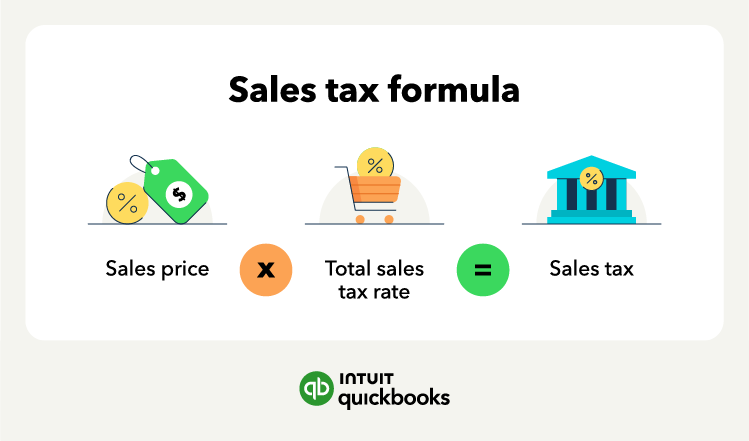
Multiply the pre-tax price by the combined rate for the place your customer receives the goods or service. That is the 5.5% state rate plus, where it applies, the local city or county rate. In Omaha, the Department's local rate chart shows a 1.5% city tax, so the combined rate is 7%. On a $1,000 sale, that's $70 in tax and a $1,070 total.
The rate where your customer receives what they bought. Nebraska sources a sale to the place of receipt. That is your location if the customer picks up there, and the delivery address if you ship or deliver. For services, it is generally the place where the customer makes first use of the service. The Department describes that as where the service is provided to the customer. The local tax follows the same rule. So a delivery into a city with a local sales tax carries that city's rate even if your shop is somewhere else.
The Department's local sales and use tax rate chart and its Sales Tax Rate Finder are the places to check a specific address.
Only if your service is on Nebraska's short list. The list covers building cleaning and maintenance, pest control, security and detective services, motor vehicle washing, waxing, towing, and painting, computer software training paid to the software's own retailer, installation of taxable goods that don't become fixtures annexed to real property, recreational vehicle park services, repair and maintenance labor on taxable property that isn't a fixture annexed to real property, animal specialty services such as grooming and boarding (other than services on livestock), photography, and printing. Accounting, legal, management consulting, barbering and beauty services, massage therapy, lawn care, and dry cleaning are not on the list and aren't taxable. Don't assume a service is taxable in Nebraska because another state taxes it.
Generally no. Food and food ingredients are exempt, and Nebraska's test is the label. A product with a federal Nutrition Facts label is exempt food, which is why candy and soft drinks stay exempt. A product with a Supplement Facts label is a dietary supplement and taxable. Prepared food and food sold through vending machines are taxable. Bakery items not sold heated and not sold with eating utensils stay exempt.
No. Nebraska does not currently hold a sales tax holiday. Clothing is taxable year-round under the general rule, with no clothing-specific exemption or special provision.
Manage sales tax in QuickBooks with automation that helps you save time and stay compliant.
Save time with automated sales tax
Products are automatically matched to tax categories, so you can charge the right sales tax with less manual work. Returns are automatically prepared and formatted for your state, and if you sell into other states, you can automate multi-state filing from one place.
Stay confident and compliant
File with confidence using accurate, automated calculations. Tax rates and rules change, and they are updated automatically in QuickBooks, so what you charge keeps up. Get reminders before filing deadlines so you can plan ahead, and know your return status with real-time updates.
Your data stays protected
Securely send returns to tax agencies and track every filing in QuickBooks.
Manage your books and sales tax in one place
Automatically calculate, collect, and track applicable sales tax from your customers. One report breaks out taxable and non-taxable sales, so you always know what to pay each agency. Prepare, file, and pay directly from QuickBooks.
Explore QuickBooks sales tax software to spend less time on tax and more time running your business.
*Sales tax filing is available as an add-on service through QuickBooks Online for $40 per filing.
You've got the rates and the rules that apply in Nebraska. The harder part is applying them correctly on every sale, every quarter. QuickBooks automated sales tax calculates the right combined rate, tracks what you've collected, and shows what you owe when it's time to file.
Call Sales: 1-800-285-4854


