New Jersey sales tax calculator
Know exactly what to charge at any New Jersey address. Find the combined rate, the tax on any amount, and the total. Free for your business, no sign-up.
Know exactly what to charge at any New Jersey address. Find the combined rate, the tax on any amount, and the total. Free for your business, no sign-up.
Done checking rates one sale at a time? QuickBooks applies the right New Jersey rate on every invoice automatically. See how automated sales tax works
New Jersey's sales tax math is the same at essentially every address in the state. There is one statewide rate of 6.625% on physical goods and a specific list of services. There is no general local sales tax, only a few narrow special zones.
The average US small business brought in about $52,440 in revenue in July 2026, according to the Intuit QuickBooks Small Business Index. At that size, a New Jersey seller is squarely in the system. You register with the state, you charge 6.625% on taxable sales wherever in New Jersey they are sourced, and you file a quarterly state return.
What makes New Jersey different isn't the rate. It's what the rate does and doesn't reach. Clothing and footwear are exempt, a signature New Jersey rule. A broad set of property-related services, from landscaping to repairs, is taxable. Whether you repair cars in Morristown, groom dogs in Montclair, or mow lawns in Cherry Hill, here's how New Jersey's rate works. You'll also see which of your sales it reaches and what to know at filing time.
New Jersey's sales tax rate is 6.625%, and it is essentially the only rate. The state has no general local sales tax, so there is no county or city sales tax rate to look up. There is one layer:
New Jersey does have a few special zones with reduced rates. Several localities impose tourism taxes or other self-administered rates. Those programs are outside this page.
Sales of articles of clothing and footwear for human use are exempt from New Jersey sales tax (N.J.S.A. 54:32B-8.4). It is one of the state's signature rules, with a short list of taxable exceptions. The exemption does not reach:
The exemption carries over to the work done on clothing. Clothing alteration and repair, dry cleaning and laundering of clothing, and shoe repair are all exempt. Monogramming or silk-screening is exempt when the clothing purchase is included. It is taxable when sold as a service on garments the customer supplies. So a tailor in Hoboken who hems a customer's suit charges no tax on the alteration. A shop that prints a customer's own blank T-shirts charges tax on the printing.
This is a permanent exemption, not a holiday. New Jersey has no sales tax holidays. Its back-to-school holiday was repealed in 2024. That holiday covered computers, school supplies, and sport or recreational equipment sold to individuals for non-business use, and it never applied to clothing. So those items are taxable year-round like other goods.
What this means for a seller: if you sell both clothing and accessories, your point of sale needs to know the difference. The shoe is exempt and the handbag next to it is not.
New Jersey is a destination-sourced state. Under N.J.S.A. 54:32B-3.1, a sale is sourced to the place where your customer receives what they bought. For goods, that is where they take possession. For services, it is generally where they first use the result. Handing a package to a shipping company does not count as the customer receiving it.
The Division of Taxation puts it plainly: New Jersey is a destination state. So whether a sale is subject to New Jersey tax is generally based on where delivery occurs. With one statewide rate, that is mostly what sourcing decides in New Jersey: not which rate you charge, but whether the sale is a New Jersey sale at all. Find your situation:
If you sell goods in person at your location: the sale is sourced to your business location, and the rate is 6.625%. That holds for an out-of-state customer who picks the item up at your shop. The sale is taxable in New Jersey even though they may intend to take it out of state.
If you ship or deliver goods to New Jersey customers: the sale is sourced to the location where your customer receives it, including the delivery address they give you. That holds whether your own truck or a carrier makes the delivery. A New Jersey delivery address carries the statewide 6.625%. A delivery to the customer's New Jersey location is taxable even if they intend to ship the item out of state later.
If you ship goods to a customer outside New Jersey: no New Jersey sales tax should be collected on taxable items sold and delivered to the buyer out of state. The same is true when the property is shipped out of state to someone other than the buyer, as with a gift. Keep a record showing the out-of-state destination and the method of delivery, such as parcel post receipts or bills of lading. The laws of the state where your customer takes possession decide what happens next.
If you repair, service, or install a customer's goods: maintaining, servicing, and repairing tangible personal property is taxable on parts and labor. The Division's rule is that tax on most services is imposed in the state where the service is performed or sold. Work done in New Jersey on a customer's goods is generally a New Jersey sale, taxed at 6.625%. That holds whether they pick the item up at your shop or you deliver it to them in New Jersey.
The carve-out is written into the statute. When goods you serviced or repaired in New Jersey are delivered to the purchaser outside New Jersey for use outside New Jersey, the service is not subject to New Jersey tax.
If you perform a service at the customer's property: landscaping and lawn care, janitorial and building cleaning, pest control, snow removal, window cleaning, and pool cleaning are taxable as maintaining, servicing, or repairing real property. That holds whether the work is done in or outside a building. New Jersey sellers collect when the service is performed in this state. The sale is generally sourced to the New Jersey property where you do the work, at 6.625%.
If you provide personal services: tanning, massage and bodywork (unless provided under a doctor's prescription), and tattooing are taxable. They are generally sourced to where you perform them on the customer. That is your studio, or the customer's location.
If you sell through a marketplace like Amazon or Etsy: since November 1, 2018, a marketplace facilitator is required to collect New Jersey sales tax on sales you make through its marketplace. That covers tangible personal property, specified digital products, and services delivered into New Jersey. Your own website checkout, invoices, and in-person sales remain yours to collect and report. If you're an out-of-state seller with no physical presence in New Jersey, your marketplace sales still count toward the registration threshold below.
If you're out of state selling into New Jersey: you must collect once you have more than $100,000 in gross sales into New Jersey or 200 or more separate New Jersey transactions in the previous or current calendar year. The rule has been in effect since November 1, 2018. Marketplace sales count toward your threshold even though the marketplace collects on them.
Once you cross it, you need to collect starting with your first taxable sale after the one that crosses the threshold. New Jersey gives a 30-day grace period to register. Until you've crossed it, you don't need to collect New Jersey tax on what you ship into the state, provided you have no physical presence in New Jersey. Once you have crossed it, the same sourcing rules apply to you. Each sale delivered into New Jersey is sourced to its New Jersey delivery address and taxed at 6.625%.
The Division counts all of these as physical presence:
A seller with any of these must register and collect regardless of the threshold.
Sales with their own sourcing rules. Telecommunications services and direct mail have their own sourcing sections in the statute. Leases and rentals of equipment follow a modified rule. The first periodic payment is sourced like a sale. Later payments are sourced to the primary property location, the address where the lessee keeps the property. For a lease of more than six months, though, New Jersey generally requires the full tax up front when the lessee takes delivery. So the periodic-payment rule matters mainly for rentals of six months or less.
Leases of motor vehicles, trailers, and aircraft that don't qualify as transportation equipment, as the statute defines it, source each periodic payment to that primary property location. Transportation equipment is sourced like a sale.
Worked example. You build furniture in Red Bank and sell an $800 table.
Same table, same week. What changed is where the customer received it.
Physical goods are taxable in New Jersey unless specifically exempt. Beyond clothing, covered above, the exemptions that matter most to small sellers:
Groceries: food and food ingredients sold for home consumption are exempt. Candy and soft drinks are taxable. Soft drinks are sweetened beverages, excluding those containing milk or milk products or soy, rice, or similar milk substitutes, and those over 50 percent juice. Alcoholic beverages are taxable.
Prepared food: generally taxable, including food eaten on the premises. Catering is taxable as a sale of prepared food. Bakery items are exempt unless sold with eating utensils. So is food sold in an unheated state by weight or volume as a single item.
Dietary supplements and vitamins: exempt when they carry Supplement Facts labeling, under a separate dietary-supplement exemption rather than the food rule.
Prescription and over-the-counter drugs: both exempt for human use. Since October 2005, New Jersey exempts all human-use drugs, not just prescriptions. Grooming and hygiene products (soap, shampoo, toothpaste, mouthwash, antiperspirant) are taxable even if they meet the definition of an over-the-counter drug. Durable medical equipment for home use and prosthetic devices are exempt. Mobility-enhancing equipment is exempt when sold pursuant to a prescription. Medical services are not taxable.
Software and digital products: prewritten software is taxable, including electronic downloads. One exception: prewritten software delivered electronically and used directly and exclusively in the purchaser's business, trade, or occupation is exempt. That business-use exemption does not apply to load-and-leave installs or when tangible media are also delivered. Custom software written solely for one purchaser is a nontaxable professional service. SaaS, IaaS, and PaaS are not taxable, unless the offering meets the definition of a taxable information service.
Digital products split on delivery method. Downloaded audio-visual works, audio works, and e-books are taxable. Content that is streamed or merely accessed, not downloaded, is not. So a downloaded movie is taxable and the same movie streamed is not. Digital magazines and photographs delivered electronically are not taxable. Computer hardware and software installation charges are taxable. Internet access is exempt.
Newspapers, magazines, and books: newspapers are exempt. Magazines and periodicals sold by subscription are exempt whether delivered in print or electronically. A single-copy magazine is taxable in print but exempt delivered electronically. Books, including e-books, are taxable.
Selling a mix of taxable and exempt items is where receipts get messy. Track the two buckets separately from the start.
Use tax is the buyer's side of the same tax. New Jersey imposes it when taxable property or services are purchased for use in New Jersey but sales tax is not collected by the seller. Taxable property here includes specified digital products. Use tax also applies to such purchases when the seller collects at a rate less than New Jersey's. The rate is 6.625%, the same as the sales tax rate. It is a state tax, so there is no separate local use tax to add.
When the seller doesn't collect, the buyer owes the use tax to New Jersey. That is true even when the seller is an out-of-state business that isn't registered in New Jersey. It holds even though such a seller cannot legally collect New Jersey tax.
For a business, this shows up when you order equipment, supplies, or furniture from a vendor that didn't charge New Jersey tax. Say your Cherry Hill restaurant buys a $4,000 commercial oven from an out-of-state vendor. The vendor charges no New Jersey tax and delivers it to the restaurant. You owe $265 in New Jersey use tax.
Use tax is due on the purchase price including delivery charges. So if the vendor added $150 for shipping, the tax is on $4,150: $274.94. The Division's own example runs the same way. A $3,000 pool table plus $50 shipping, delivered to New Jersey with no sales tax charged, carries $202.06 in use tax.
Tax you paid to another state. Say you bought and received the item in another state and paid that state's sales tax. New Jersey generally allows a credit against the use tax. The credit applies provided the other state allows a similar credit for tax paid to New Jersey. If that state's rate is equal to or greater than New Jersey's, no use tax is due. If it is lower, you owe the difference. If instead the item was delivered to New Jersey, no credit is allowed for sales tax paid to the other state.
How you report it. If you're registered to collect sales tax, you report and pay use tax on your regular sales and use tax filings. Those are Forms ST-50 and ST-51. A business that isn't a seller may be able to use the Annual Business Use Tax Return, Form ST-18B. It qualifies if it meets all of these conditions:
A business that doesn't meet those criteria must change its registration to include quarterly and monthly sales tax filing. The Division runs use tax self-audit programs. They are aimed at businesses that regularly buy taxable supplies and equipment from out-of-state sellers without paying sales tax. The Division also notes that, with very few exceptions, the Sales and Use Tax Act does not exempt items used in conducting business.
New Jersey taxes services only when they are listed in the statute (N.J.S.A. 54:32B-3(b)). The list is heavy on property-related work. If your service is on it, you charge 6.625% on the service. For work on goods, that means the whole invoice, parts and labor. Taxable services on the list include:
A $400 brake job carries $26.50 of tax on the whole invoice, parts and labor. A maintenance contract or service agreement on tangible property is a prepayment for taxable service. It is taxable when purchased, whether optional or required. Parts and services delivered under the contract are not taxed again if the customer is not separately charged. But a required deductible paid at the time of a repair is taxable.
Services that are not taxable include professional services (legal, accounting, engineering, medical), trash and garbage removal on a contract of 30 days or more, dry cleaning and laundering of clothing, garment alteration, barber and beauty services, and veterinary medical services (though grooming or boarding by a vet is taxable).
The capital improvement line. For contractors, the labor is exempt when the work is a capital improvement. The work is documented with the customer's Form ST-8, Certificate of Exempt Capital Improvement. The labor is taxable when the work is a repair or maintenance service. Certain services are taxable even when they result in a capital improvement:
Installing a new heating or central air system is generally a capital improvement. Repairing an existing system is taxable. One exception: repairing a residential heating unit serving three or fewer families is exempt for both parts and labor.
Either way, the contractor is the taxable consumer of the materials and supplies it uses to improve, alter, or repair real property. So sales to contractors are taxable retail sales. An exception applies for materials used exclusively on the property of an exempt organization, a qualified Urban Enterprise Zone business, or a qualified housing sponsor.
What this means for a seller: before you price a service, check the services list in the Division of Taxation's New Jersey Sales Tax Guide. Check it in both directions, for services you assumed were exempt and for services you assumed were taxable.
New Jersey's filing calendar has few moving parts:
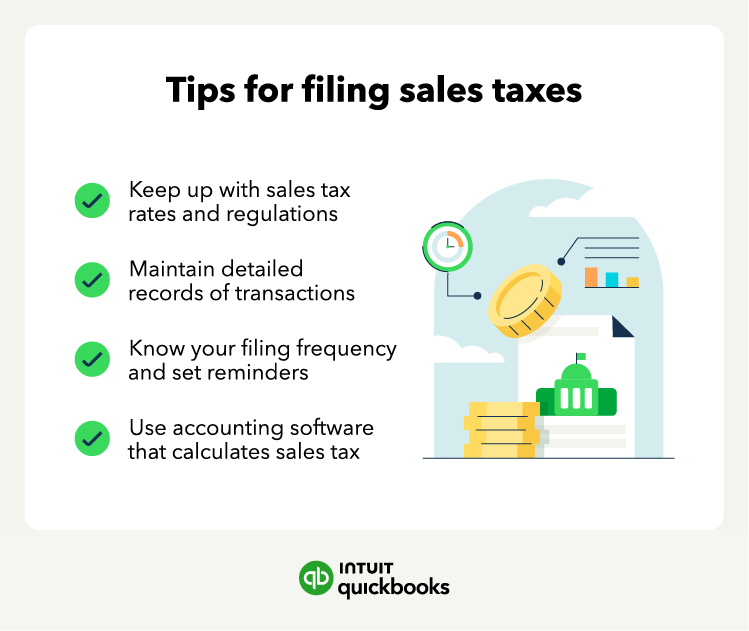
Every registered seller files quarterly, by the 20th. Once your business is registered to collect sales tax, you file quarterly returns on Form ST-50 and make quarterly payments. Returns and payments are due on or before 11:59 p.m. on the 20th day of the month after the quarter ends. That means April 20, July 20, October 20, and January 20. If the due date falls on a weekend or a legal holiday, the return and payment are due the following business day. Include all sales made during the period on your return, even if you haven't received payment from the customer yet.
Larger sellers also pay monthly. You must make monthly payments only if you collected more than $30,000 in New Jersey sales and use tax during the prior calendar year and more than $500 in the first or second month of the current quarter. Those payments are due by the 20th of the following month on a Monthly Voucher (Form ST-51), which is for payment only. A zero voucher cannot be submitted.
If you collected $30,000 or less last year, you don't need to make a payment for the first or second month of a quarter, no matter how much tax a given month brings in. It all goes on the quarterly return.
Everything is electronic. All sales and use tax returns are filed electronically through the New Jersey Tax Portal. Payments are sent electronically by e-check, electronic funds transfer, or credit card (fees apply). A payment initiated by 11:59 p.m. on the due date is considered timely even if it settles on a later date.
File every return, including zero returns. You must file a return for each quarter even if no tax is due or no sales were made during the period.
No local breakout. New Jersey has no general local sales tax. So for most sellers, the quarterly return carries one rate and no local allocation.
If you make a mistake, file an amended quarterly return. Errors on a monthly payment are corrected by adjusting the amounts on the quarterly return for the same calendar quarter. If the error resulted in an overpayment, request a refund by also filing Form A-3730.
Tip: if a rate error slips through, fix the rate first, then correct the affected returns. Undercollect and the difference comes out of your pocket. Overcollect and you owe refunds. Tax you collected as tax is never yours to keep.
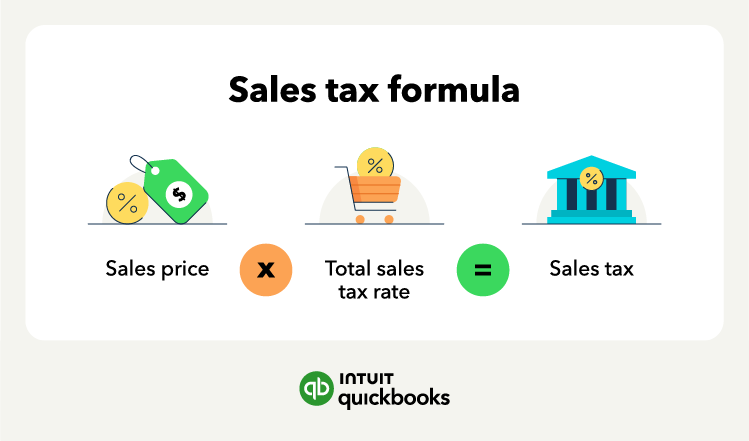
Multiply the pre-tax price by 6.625%. On a $1,200 sale, that's $79.50 in tax and a $1,279.50 total.
Essentially, yes. New Jersey has one statewide rate, 6.625%, and no general local sales tax. So a sale in Montclair and a sale in Cherry Hill carry the same rate. The exceptions are a few special zones with reduced rates and several localities with tourism taxes or other self-administered rates. The New Jersey Division of Taxation's Sales and Use Tax pages are the place to check those programs.
No. Articles of clothing and footwear for human use are exempt, with a short list of taxable exceptions. Those are fur clothing, clothing accessories and equipment such as jewelry and handbags, sport or recreational equipment, and protective equipment that isn't necessary for the daily work of the user. Clothing alteration and repair, dry cleaning and laundering of clothing, and shoe repair are exempt too.
No. Food and food ingredients sold for home consumption are exempt. Candy, soft drinks, prepared food, food eaten on the premises, and alcoholic beverages are taxable. Catering is taxed as prepared food. Bakery items, and food sold unheated by weight or volume as a single item, are exempt unless sold with eating utensils. Dietary supplements with Supplement Facts labeling are exempt under their own exemption.
Only if your service is on New Jersey's list of taxable services. Maintaining, servicing, or repairing real property (landscaping, lawn care, janitorial work, pest control, snow removal, window and pool cleaning) is on it. So are repairing or servicing goods, storage, tanning, massage (unless provided under a doctor's prescription), tattooing, investigation and security services, information services, and pet grooming and boarding. Professional services such as legal, accounting, engineering, and medical work are not. Neither are barber and beauty services, garment alteration, or dry cleaning and laundering of clothing. Repairs to goods are taxed on the full charge, parts and labor.
Manage sales tax in QuickBooks with automation that helps you save time and stay compliant.
Save time with automated sales tax
Products are automatically matched to tax categories, so you can charge the right sales tax with less manual work. New Jersey returns are automatically prepared and formatted for the Division of Taxation, with Urban Enterprise Zone and Salem County sales kept on their own lines, and if you sell into other states, you can automate multi-state filing from one place.
Stay confident and compliant
File with confidence using accurate, automated calculations. New Jersey's rate is flat, but its zone programs and exemptions change, and tax rates and rules are updated automatically in QuickBooks, so what you charge keeps up. Get reminders before Division of Taxation deadlines so you can plan ahead, and know your return status with real-time updates.
Your data stays protected
Securely send returns to tax agencies and track every filing in QuickBooks.
Manage your books and sales tax in one place
Automatically calculate, collect, and track applicable sales tax from your customers. One report breaks out taxable and non-taxable sales, so you always know what to pay each agency. Prepare, file, and pay directly from QuickBooks.
Explore QuickBooks sales tax software to spend less time on tax and more time running your business.
*Sales tax filing is available as an add-on service through QuickBooks Online for $40 per filing.
You've got the rates and the rules that apply in New Jersey. The harder part is applying them correctly on every sale, every quarter. QuickBooks automated sales tax calculates the right combined rate, tracks what you've collected, and shows what you owe when it's time to file.
Call Sales: 1-800-285-4854


