New York sales tax calculator
Know exactly what to charge at any New York address. Find the combined rate, the tax on any amount, and the total. Free for your business, no sign-up.
Know exactly what to charge at any New York address. Find the combined rate, the tax on any amount, and the total. Free for your business, no sign-up.
Done checking rates one sale at a time? QuickBooks applies the right New York rate, state and local included, on every invoice automatically. See how automated sales tax works
New York's sales tax comes in layers. The state rate is 4%. Each county or city sets a local rate for itself. In New York City and the seven counties that make up the rest of the Metropolitan Commuter Transportation District, the state imposes an additional ⅜%. The state Tax Department administers all of it, so you register once and file one return.
The average American side hustle brings in about $2,038 a month, according to Intuit QuickBooks entrepreneurship research. At that size, a New York seller is squarely in the system. You need a Certificate of Authority, you charge a combined rate that depends on where each sale is delivered, and your return reports your sales jurisdiction by jurisdiction.
What makes New York different isn't the number of layers. It's the state's year-round clothing exemption, for clothing and footwear under $110. The exemption comes off the state tax at every address. It comes off the local tax only where the county or city has chosen to match it. So the tax on a $60 pair of shoes depends on where you deliver them.
New York also taxes a long, specific list of services. In construction, everything turns on whether a job is a repair or a capital improvement. Whether you run a sandwich shop in Brooklyn, repair electronics in Buffalo, or mow lawns in Rochester, here's how New York's rate works. You'll also see which of your sales it reaches and what to know at filing time.
New York's state sales tax rate is 4%. Counties and cities impose their own local sales tax on top of it. Taxable sales delivered within the Metropolitan Commuter Transportation District (MCTD) carry an additional ⅜% (0.375%) imposed by the state. The combined rate at any address is the state rate plus whichever local layers apply there:
There is no separate local registration. You register once with the Tax Department for a Certificate of Authority. You collect every layer that applies where a sale is delivered. You report your sales by jurisdiction on one state return.
The combined rates vary in each county and in cities that impose their own tax. So for a specific address, use the Tax Department's Jurisdiction/Rate Lookup by Address rather than a ZIP code. The Department says postal zones usually don't coincide with political boundaries. It adds that using them for tax collection leads to inaccurate reporting.
Clothing and footwear sold for less than $110 per item or pair are exempt from New York State sales tax year-round. Items priced at $110 or more are fully taxable, state and local. Each item is tested on its own. A $120 coat is taxed in full, while three $40 shirts on the same receipt are each exempt from the state tax.
The local layer is the trap. Each county and city decides whether to exempt its own local tax on under-$110 clothing. New York City and a number of counties do. Most localities do not. There, a seller charges just the local rate on under-$110 items. That includes the MCTD portion where it applies. Those elections can change every March 1. So check the current edition of the Tax Department's Publication 718-C for the jurisdiction list rather than memorizing it.
What qualifies: clothing and footwear worn by humans. The exemption also covers fabric, thread, yarn, buttons, zippers, and similar items used to make or repair exempt clothing. What never qualifies, at any price: jewelry, watches, handbags and wallets, athletic equipment such as helmets, skates, and pads, protective devices, costumes, and rented formal wear.
Clothing services lean exempt. Alterations and tailoring (when separately stated), dry cleaning, laundering, and shoe repair are excluded from New York's taxable services.
A worked example. You sell a $90 pair of sneakers at your store in Brooklyn. New York City provides the local exemption. So under-$110 clothing sold there is fully exempt from state and local sales tax, including the MCTD tax. The customer pays no sales tax at all. Ship the same pair to a customer in Albany, where Albany County does not provide the local exemption. You charge no state tax, but you do charge Albany County's 4% local tax, $3.60. Sell a $120 coat in Brooklyn and it is taxed in full at New York City's combined 8.875% rate: $10.65.
New York has no sales tax holiday. Sellers sometimes expect an August back-to-school event. New York does not hold one, and the year-round clothing exemption fills that role instead.
Counties and cities impose their local sales taxes on top of the state rate. The MCTD tax is imposed by the state within the district. The Tax Department administers every layer. You never register with a county or city for general sales tax. The local tax you collect goes on your state return, broken out by jurisdiction.
The local tax follows the same delivery rule as the state tax. When a sale is delivered in a county or city that imposes a tax, you collect that jurisdiction's tax. The same rule decides whether the MCTD tax applies. Where local choice matters day to day is the clothing exemption above. It also matters in New York City, which imposes its own local tax on a handful of specific services, covered below.
New York is a destination-sourced state. The Tax Department's regulations call the sales tax a "destination tax." The point of delivery is the place where possession passes from you to your customer or your customer's designee. It controls both whether New York tax applies and which rate you charge. For goods, that is where the customer takes possession. For services, it is generally the place where the service is delivered to the customer, or where the property you worked on is handed back. The local tax and the MCTD tax follow the same rule. So one delivery point decides every layer. Find your situation:
If you sell goods in person at your location: the sale is delivered at your counter, so you charge your location's combined rate. That holds even if the customer will use the item somewhere else. The Department's own example: a shopper who lives in Saratoga County buys a television at a mall in Albany County. The shopper pays Albany County's combined rate, because that is where they took possession. That holds even though the set is going home to Saratoga County.
If you ship or deliver goods to New York customers: the sale is delivered at the customer's address, whether your own truck or a carrier gets it there. Shipping terms don't change that. In the Department's regulation, goods a New York vendor ships to a New York customer are delivered in New York even when sold F.O.B. Chicago.
Charge the delivery address's combined rate. In the Department's example, a teapot is ordered online and delivered to a home in Erie County. It is taxed at the combined state and Erie County rate. If you deliver outside New York State, you don't charge New York sales tax on the sale. That holds regardless of where you made it.
If you repair, service, or install a customer's property: the taxable charge is sourced to where the property is delivered back to the customer. Where you did the work does not decide the rate. If they pick it up at your shop, that is your shop's rate. If you deliver it to them, it is their address's rate.
The Department's example: a driver who lives in Dutchess County gets an oil change at a shop in White Plains. The driver pays the combined state, Westchester County, City of White Plains, and MCTD rates. That is because the driver took possession of the car there. Had the shop delivered the car to them in Dutchess County, the Dutchess County rate would have applied instead. The MCTD rate would still apply, because Dutchess County is in the district.
If you perform a taxable service at the customer's location: lawn care and landscape maintenance, snow removal, janitorial and interior cleaning, pest control, and pool cleaning are generally delivered where they are performed. So the sale is sourced to the customer's property, and you charge that address's combined rate.
If you sell software or software as a service: prewritten software accessed remotely is sourced to where the user is located. For a customer with users in and out of New York, tax applies to the portion attributable to New York users.
If you provide personal care services: barber and beauty services, manicures, massage, tanning, and tattooing are exempt statewide. But within New York City, the city's local tax applies to these services when they are performed or delivered in the city. So a personal care business in the five boroughs collects the New York City local tax on them.
If you sell through a marketplace like Amazon or Etsy: since June 1, 2019, a marketplace provider must collect state and local sales tax on every facilitated sale of tangible personal property if it has a physical presence in New York. The same applies to a provider with more than $500,000 in facilitated sales of tangible personal property delivered into the state and more than 100 such transactions over the preceding four sales tax quarters.
The provider gives you Form ST-150, its certificate of collection. If you accept it in good faith, you're relieved of collecting on those sales. You keep your Certificate of Authority and keep filing. You report facilitated sales in gross sales and again as nontaxable sales. Your own website, invoices, and in-person sales remain yours to collect and report.
The marketplace rule covers goods only. If you sell taxable services or restaurant food through a platform, it does not cover you. So check the platform agreement. Short-term rentals are the exception. Since March 1, 2025, a booking platform such as Airbnb or Vrbo must collect state and local sales tax on every stay it facilitates. So you collect only on direct bookings. You keep the platform's Form ST-155, its certificate of collection, for the rest.
If you're out of state selling into New York: if you have no physical presence in New York, you must register once you meet two tests. The tests: your sales of tangible personal property delivered into New York exceed $500,000, and you've made more than 100 such sales. Both are measured over the immediately preceding four sales tax quarters. Both conditions must be met. Marketplace sales count toward your threshold even though the marketplace collects on them. Register within 30 days of meeting the threshold and begin collecting 20 days after that. The dollar threshold rose from $300,000 to $500,000 on June 24, 2019. The more-than-100-sales test did not change.
Until you've met both tests, this rule doesn't require you to collect New York tax. But a place of business in the state (a store, office, or warehouse) makes you a vendor regardless of the thresholds. So do employees or other representatives soliciting sales here. Once you have met both tests, the same delivery rule applies to you. You collect on every taxable sale delivered to a buyer in New York. You charge the combined state and local rate in effect where it is delivered.
Sales with their own sourcing rules. Motor vehicles, trailers, and certain boats are taxed at the rate where the owner is a resident rather than at the point of delivery. Vehicle purchases are outside this page. A florist filling an order through a wire service charges the rate where the order is taken, not where the flowers are delivered. A taxable transportation service that begins in one jurisdiction and ends in another is taxed where it began. Hotel occupancy and amusement charges are taxed where the hotel or place of amusement is located.
Worked example. You build furniture in Brooklyn and sell an $800 table.
Same table, same week, a different jurisdiction line on your return. New York's return reports sales and tax by jurisdiction, so keep the delivery address with every sale. The Department requires your invoices to show the place of delivery.
New York's exemptions turn on specific definitions. A few of them cut in unexpected directions. The ones that matter most to small sellers:
Groceries: food sold for home consumption is exempt.
Candy, soda, and bottled water: candy and confectionery are generally taxable. Carbonated soft drinks are taxable. So, unusually, is bottled water, whether plain, mineral, or seltzer. All three are exempt when sold from a vending machine for $1.50 or less. The limit is $2.00 or less if the machine accepts all forms of payment. Fruit drinks with less than 70% real juice are taxable. Beverages with 70% or more natural juice are exempt unless they are carbonated.
Supplements: vitamins, dietary supplements, and health supplements are exempt.
Sandwiches and prepared food: sandwiches are taxable whether heated or cold, eaten in or taken out. Heated food and any food sold for on-premises consumption are taxable. Bakery products are exempt unless sold heated or for on-premises consumption. A restaurant's sale of unheated food to go is exempt when it is in the same form and packaging a grocery store would use. Examples: a plain bagel, a quart of soup packaged cold.
Catering is taxable on essentially everything billed for the event: food, drink, room and equipment rentals, and separately stated service charges. Only properly documented gratuities paid to staff escape.
Clothing: under $110 per item, exempt from the state tax everywhere. Also exempt from the local tax where the locality has chosen to match it. At $110 or more, fully taxable. See the section above.
Software and digital products: prewritten software is taxable however it is delivered: on physical media, downloaded, or accessed remotely. Software as a service is taxable as a license of prewritten software. Selling raw computing capacity (virtual servers billed by the resources consumed) is different. The Department has treated it as a nontaxable service. The reason: the customer is buying computing power rather than the use of the provider's software. What the customer primarily pays for, software use or capacity, controls.
Custom software written for a specific buyer is exempt. Separately stated, reasonable charges to modify prewritten software for a customer are exempt, though the underlying prewritten software stays taxable. Digital products, including e-books and downloaded or streamed music and video, are not subject to sales tax. New York has not enacted a digital goods tax.
Software maintenance agreements are exempt. But when sold with taxable property, the exempt charge must be reasonable and separately stated on both the agreement and the invoice. Otherwise the whole charge is taxable. Hardware maintenance agreements are taxable. Website design and development are nontaxable services unless the arrangement in substance sells the customer access to prewritten software.
Drugs and medical items: drugs and medicines for treating or preventing illness in humans are exempt with no prescription requirement. That includes aspirin, cold remedies, and antacids. Medical equipment and supplies are exempt when bought for personal home use. They are taxable when a provider buys them to use in performing services for compensation. Prosthetic aids, hearing aids, eyeglasses, and artificial devices are exempt. Cosmetics and toiletries are taxable even with medicinal ingredients.
Selling a mix of taxable and exempt items is where receipts get messy. Track the two buckets separately from the start.
Use tax is the buyer's side of the same tax. New York imposes it on the in-state use of taxable goods and services on which sales tax has not been paid. That includes when you buy from a seller located outside New York that did not collect New York tax. The purchase can be in person, online, from a catalog, or by phone.
The state use tax rate is 4%, the same as the state sales tax rate. It comes with the local layers. New York has local use taxes. The rate you owe is generally the combined rate in effect where your business takes delivery of the item or service, or where it uses it, if that rate is higher.
If you paid another state's sales or use tax on the purchase, New York generally allows a reciprocal credit. The credit applies against the New York State and local use tax you owe. It applies only to the extent that state gives a corresponding credit for tax paid to New York; see Tax Bulletin ST-765.
For a business, this shows up when you order equipment, supplies, or software from a vendor that didn't charge New York tax. Say your shop in Ithaca buys a $3,000 commercial espresso machine from an online seller that doesn't collect New York tax. A freight company delivers it to your door. Ithaca's combined rate is 8%, so you owe $240 in New York State and local use tax. That is the 4% state use tax, $120, plus Ithaca's local use tax. If the seller charged you for shipping and handling, that charge is part of the taxable amount too.
Use tax also catches two situations that have nothing to do with out-of-state sellers. If you buy inventory tax free for resale and then take an item off the shelf for your own use, you owe use tax on what you paid for it. And if you buy an item, or have one repaired, in a New York locality with a lower rate than the one where your business uses it, you owe the difference between the two rates. If the rate where you bought it was higher, you aren't entitled to a refund of the difference.
How you report it. If your business is registered for New York sales tax, or is required to be, you report use tax on your regular sales and use tax return. Your purchases subject to use tax are reported by jurisdiction. If your business isn't registered or required to be, and isn't a sole proprietorship, you report it on Form ST-130, Business Purchaser's Report of Sales and Use Tax. That report is due within 20 days after the item or service is first brought or delivered into New York.
A sole proprietor who isn't required to register reports it on their New York personal income tax return, or on Form ST-140 or ST-141. Use tax paid late can bring penalty and interest. The Department conducts audits to promote compliance.
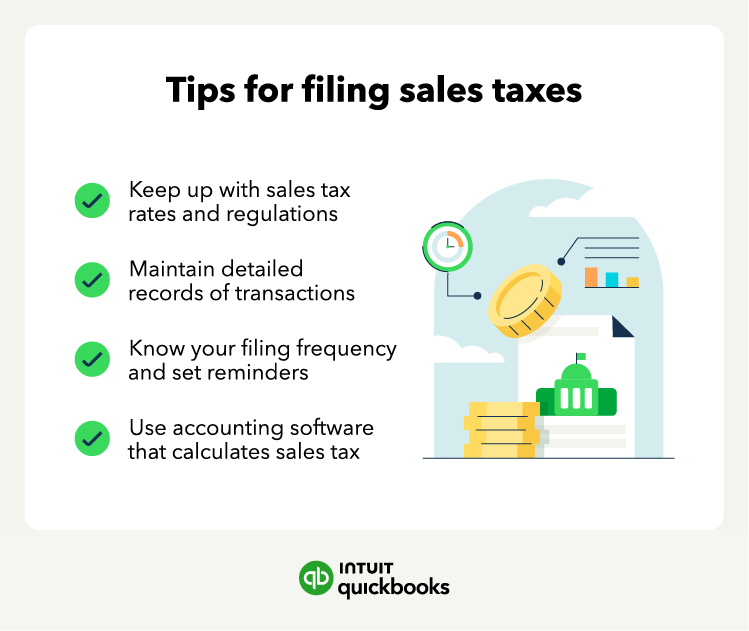
Only services New York names in its statute are taxable, but the list is long. If your service is on it, the tax generally applies to the whole charge. For repair work, that means parts and labor. Taxable services include:
Services that are not taxable include professional services (legal, accounting, engineering, medical), instruction and lessons, babysitting and daycare, moving household goods, travel agency services, massage, and barber and beauty services. The New York City caveat above applies. Inside the five boroughs, the city's local tax applies to barbering, beauty, manicures, massage, tanning, and tattooing. Photography follows delivery. Photos delivered in tangible form are taxable. Images delivered solely electronically are not. Including any tangible copy generally makes the sale taxable.
The capital improvement line. Everything in New York construction turns on one question: capital improvement or repair. A job is a capital improvement when it meets all three of these conditions:
A new roof, a new deck, a new HVAC system installation: capital improvements. So the contractor charges the customer no sales tax. The contractor collects Form ST-124, Certificate of Capital Improvement, from the customer. Fixing a roof leak, repairing an HVAC unit, replacing a thermostat: taxable repairs, taxed on the full charge. The Tax Department's Publication 862 classifies jobs item by item. Contractors pay sales tax on all the materials they buy. There is no resale exemption for capital improvement materials. On a taxable repair job, the contractor collects tax from the customer. The contractor may take a credit for the tax paid on materials transferred to the customer.
What this means for a seller: before you price a service, check the Tax Department's quick reference guide to taxable and exempt property and services. Check it in both directions, for services you assumed were exempt and for services you assumed were taxable.
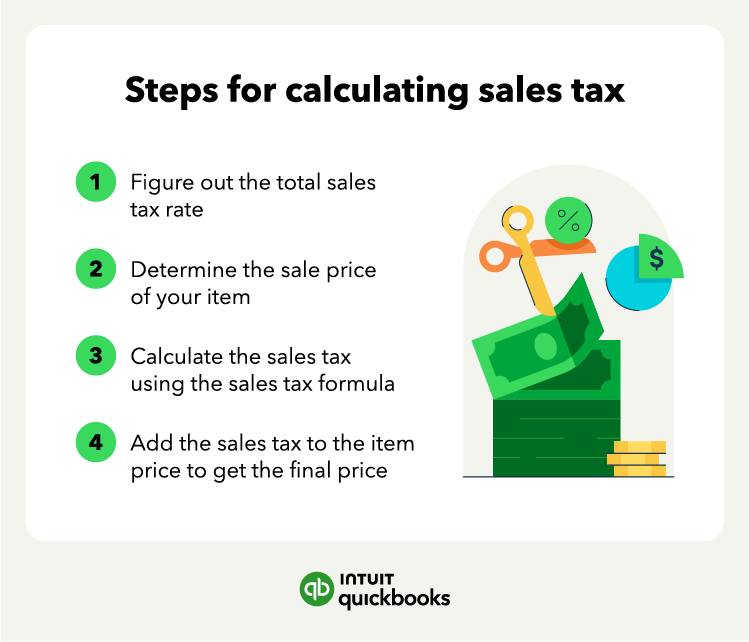
New York's sales tax quarters start in March, June, September, and December. Most of the filing rules key off them:
Quarterly is the default, and returns are due on the 20th. Most vendors are classified as quarterly filers when they first register. The quarters run March 1 through May 31, June 1 through August 31, September 1 through November 30, and December 1 through the end of February. Each return is due within 20 days after the quarter ends: June 20, September 20, December 20, and March 20.
Annual filing is for the smallest sellers. If you owe $3,000 or less in tax during an annual filing period, you file one annual return, Form ST-101. It covers March 1 through the end of February and is due March 20. The Tax Department may reclassify a quarterly filer as an annual filer if the filer's total tax due for the four most recently filed quarters is $3,000 or less. The Department will notify you of the change. An annual filer whose tax due exceeds $3,000 during the annual period may be moved back to quarterly.
Monthly filing kicks in at $300,000 a quarter. If your taxable receipts, purchases subject to use tax, rents, and amusement charges total $300,000 or more in any quarter, you must file monthly. The Department calls it part-quarterly. Monthly filing begins with the first month of the next sales tax quarter. Monthly returns are due within 20 days after the end of the month. You stay monthly until your taxable sales fall below $300,000 in each of four consecutive quarters. At that point, you may ask the Department to move you back to quarterly.
Most sellers must Web File. You must file your sales tax returns electronically through the Department's Online Services if you meet all three of these conditions:
One return, broken out by jurisdiction. Your Certificate of Authority covers every layer. There is no separate local permit. The return reports your sales, purchases subject to use tax, and the tax due for each jurisdiction separately. It uses the Department's reporting codes rather than ZIP codes. Clothing and footwear sales that qualify for the exemption go on Schedule H. Certain services subject to the New York City local tax go on Schedule N. Keeping the delivery address with each sale turns the jurisdiction breakout into a sort, not a research project.
File every return, including zero returns. Even if you made no taxable sales or purchases during the period, you must file the return by the due date. The minimum penalty for a late return is $50, even when no tax is due.
Tip: if a rate error slips through, fix the rate first, then correct the affected returns. Undercollect and the difference comes out of your pocket. Overcollect and you owe refunds. Tax you collected as tax is never yours to keep.
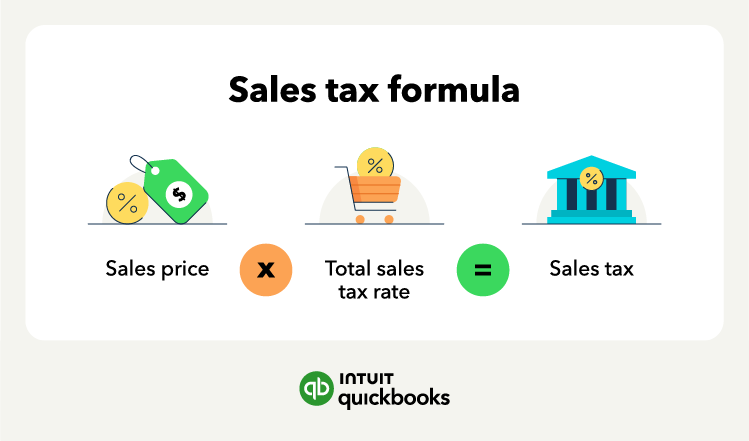
Multiply the pre-tax price by the combined rate where the sale is delivered. That is the 4% state rate plus the local rate, plus ⅜% inside the MCTD. In New York City, where the combined rate is 8.875%, a $1,200 sale carries $106.50 in tax and a $1,306.50 total.
The state rate is 4%. Counties and cities add their own local rates. Taxable sales delivered in New York City and the seven other MCTD counties carry an additional ⅜%. So the combined rate depends on where the sale is delivered: your location if the customer picks up, the delivery address if you ship.
The combined rates vary in each county and in cities that impose their own tax. The Tax Department's Jurisdiction/Rate Lookup by Address gives the rate and reporting code for any address.
Clothing and footwear under $110 per item or pair are exempt from the state sales tax year-round. Items at $110 or more are fully taxable, state and local. Whether the local tax also comes off an under-$110 item depends on the county or city. New York City and a number of counties exempt their local tax. Most localities don't. The elections can change each March 1, so check Publication 718-C. New York has no sales tax holiday. The year-round clothing exemption fills that role.
Only if your service is on New York's statutory list, but that list is long. Repairing, maintaining, or installing goods; cleaning, lawn care, snow removal, and pest control on real property; pet grooming and boarding; storage; interior decorating; and protective services are all on it. For repair work, the tax applies to the full charge, parts and labor.
Professional services, instruction, barber and beauty services, and massage are not. Inside New York City, though, the city's local tax applies to barbering, beauty, manicures, massage, tanning, and tattooing. New construction and capital improvements are not taxed to the customer. Repairs to real property are taxed on the full charge.
No. Food sold for home consumption is exempt. Candy, carbonated soft drinks, bottled water, and sandwiches are generally taxable. That includes sandwiches whether hot or cold, eaten in or taken out. Heated food and food sold for on-premises consumption are taxable. Bakery products are exempt unless sold heated or for on-premises consumption.
Manage sales tax in QuickBooks with automation that helps you save time and stay compliant.
Save time with automated sales tax
Products are automatically matched to tax categories, so you can charge the right sales tax with less manual work. Returns are automatically prepared and formatted for your state, and if you sell into other states, you can automate multi-state filing from one place.
Stay confident and compliant
File with confidence using accurate, automated calculations. Tax rates and rules change, and they are updated automatically in QuickBooks, so what you charge keeps up. Get reminders before filing deadlines so you can plan ahead, and know your return status with real-time updates.
Your data stays protected
Securely send returns to tax agencies and track every filing in QuickBooks.
Manage your books and sales tax in one place
Automatically calculate, collect, and track applicable sales tax from your customers. One report breaks out taxable and non-taxable sales, so you always know what to pay each agency. Prepare, file, and pay directly from QuickBooks.
Explore QuickBooks sales tax software to spend less time on tax and more time running your business.
*Sales tax filing is available as an add-on service through QuickBooks Online for $40 per filing.
You've got the rates and the rules that apply in New York. The harder part is applying them correctly on every sale, every quarter. QuickBooks automated sales tax calculates the right combined rate, tracks what you've collected, and shows what you owe when it's time to file.
Call Sales: 1-800-285-4854


