North Carolina sales tax calculator
Know exactly what to charge at any North Carolina address. Find the combined rate, the tax on any amount, and the total. Free for your business, no sign-up.
Know exactly what to charge at any North Carolina address. Find the combined rate, the tax on any amount, and the total. Free for your business, no sign-up.
Done checking rates one sale at a time? QuickBooks applies the right North Carolina rate, state and local included, on every invoice automatically. See how automated sales tax works
North Carolina's sales tax has three possible layers. The 4.75% state rate applies at every address. A county rate sits on top of it everywhere. A transit rate applies in some counties. Every county levies a local sales tax on top of the state rate. Some counties levy a transit tax as well. The Department of Revenue administers all of it on a single registration and a single return.
The average US small business brought in about $52,440 in revenue in July 2026, according to the Intuit QuickBooks Small Business Index. At that size, a North Carolina seller is squarely in the system. You register once. You charge a combined rate that depends on which county the sale is sourced to. Your state return carries the county tax on it.
What makes North Carolina different isn't the layering. It's how much of what small businesses sell is taxable in the first place. The state taxes repair, maintenance, and installation work of nearly every kind, including work on real property. Groceries, though exempt from the state tax, still carry a 2% local food rate. Whether you run a boutique in Raleigh, repair appliances in Charlotte, shoot weddings in Asheville, or run a restaurant in Durham, here's how North Carolina's rate works. You'll also see which of your sales it reaches and what to know at filing time.
North Carolina's combined rate at any address is the 4.75% state rate plus the local rate for the county. A transit rate is added in the counties that levy one. Rates vary by county, and county rates do change. The Department of Revenue's current rate chart lists the total by county. The layers:
There is no separate county registration. You register once with the Department of Revenue. The county and transit taxes go on the same return (Form E-500) as the state tax. Qualifying groceries are the exception to the layering. They are exempt from the state tax and carry a uniform 2% local food rate everywhere in the state, covered below.
Two taxes sit alongside the sales tax and are paid to the local government rather than the Department of Revenue. One is county and city room occupancy taxes on lodging. The other is prepared food and beverage taxes in a few counties, Mecklenburg and Wake among them.
North Carolina taxes physical goods and digital products. Unusually, it also taxes repair, maintenance, and installation work of nearly every kind, including on real property. The shorthand is RMI, and the rule is broad. Charges to keep property in working order, restore it, or install it are taxable. These charges are taxable whether the property is tangible personal property, digital property, or real property. If your work is RMI, the tax applies to the full charge, parts and labor. That includes any property you apply to the customer's property. Taxable examples:
Services that are not taxed to the customer, because the statute exempts them or never names them, include:
Lawn care and landscaping are not taxed to the customer either, by a different route. Landscaping (mowing, tree trimming, planting, fertilizing land) is defined as a capital improvement. So the provider operates under real property contracts and pays tax on its own materials rather than charging the customer.
The capital improvement carve-out. Everything in real property work turns on capital improvement versus repair. Capital improvements include new construction, reconstruction, remodeling, and work requiring a permit. They also include installation or complete replacement of an HVAC unit or system, roofs, siding, septic systems, plumbing and electrical installations, decks, driveways, patios, and landscaping. Painting or wallpapering of real property is on the list too, except where the painting is incidental to a repair, maintenance, or installation job.
Two limits sit inside that list. First, a permit does not by itself make a job a capital improvement. Second, "plumbing and electrical installations" means a system, not a part. So repairing or replacing individual items is taxable RMI unless the work is part of new construction, reconstruction, or remodeling. That covers items such as a water heater, gas logs, gutters, or an electrical or plumbing component. Capital improvements are real property contracts. The contractor pays tax on materials and charges the customer no sales tax.
Services to real property are presumed taxable RMI unless substantiated as a capital improvement. Form E-589CI, the Affidavit of Capital Improvement, is the substantiation. It protects whoever receives it in good faith. Mixed contracts have a threshold. If the RMI portion is 25% or less of the contract price, the whole job is treated as a real property contract. Above that, the RMI portion is taxed. The same contractor can have a taxable Tuesday repairing a deck and an untaxed Wednesday building one. The paperwork decides which side of the line a job falls on.
What this means for a seller: before you price a service, check the Department of Revenue's repair, maintenance, and installation guidance and its services to real property chart. Check them in both directions, for services you assumed were exempt and for services you assumed were taxable.
The county and transit taxes apply to the same taxable sales as the state tax. They use the same sourcing rules to decide which county's rate applies. For goods, that is the place where your customer takes possession: your counter if they pick up in person, the delivery address if you ship. For services, it is generally the place where your customer can first make use of the service. For repair work, that means wherever they get the property back. For work on real property, it means where the property sits.
Anyone liable for the tax in a county collects that county's local tax. The local tax goes on your state return. Qualifying groceries are different. They carry the 2% local food rate and no state tax, covered below.
North Carolina is a destination-sourced state. Under G.S. § 105-164.4B and the Department of Revenue's sourcing bulletin, a sale is sourced to the place where your customer receives what they bought. For goods, that is where they take possession. Possession by a shipping company on the customer's behalf does not count. For services, it is where the customer can potentially first make use of the service.
Your own location matters when the customer receives the goods or the service there. Where you performed a service is not what decides where it is sourced. For goods, the place you shipped from matters only as a last resort, when no delivery address or customer address is available. The county and transit taxes follow the same rule. Anyone liable for the tax in a county collects that county's local tax. Find your situation:
If you sell goods in person at your location: the sale is sourced to your business location when the customer receives the item there. Charge that county's combined rate: the 4.75% state rate plus the county's local rate, plus transit if your county levies it.
If you ship or deliver goods to North Carolina customers: the sale is sourced to the location where the customer, or someone the customer designates, receives the item. That is the delivery address, not the place you shipped from and not the carrier's hands along the way. Charge the delivery county's combined rate.
If you repair, maintain, or install property: repair, maintenance, and installation services are generally sourced to where the customer can potentially first make use of the property you worked on. For tangible personal property, that is generally where the property is delivered back to the customer. That means your shop's county if they pick it up, and their address if you deliver or ship it back. For real property, it is the location of the property. So HVAC component repairs and other repair work on a building are generally sourced to the building's address. Where you performed the work does not decide it.
The Department's own example: a North Carolina resident takes a lawnmower to a repair shop in another state and picks it up there. The repair is sourced to the shop's location in that state. If the shop instead delivers the repaired mower to the owner's North Carolina home, the service is sourced there.
If you sell prepared food, cater, or run a food truck: the general rules apply to food, and the Department publishes its own examples. Say a caterer prepares a meal in one county and serves it at a banquet hall in another. All charges for the meal are sourced to the county where the hall sits. Say a food truck based in one county sells in another county on certain days. It collects the other county's rate while it is there. Food a retailer delivers is generally sourced to the location it is delivered to.
If you sell through a marketplace like Amazon or Etsy: since February 1, 2020, a marketplace facilitator engaged in business in North Carolina is the retailer of each sale it facilitates. The facilitator collects the state and local tax on that sale. Facilitated sales the marketplace collects on stay off your own returns. Keep the documentation. A North Carolina-based seller still registers and collects on its direct sales. You remain liable only if the facilitator undercollects because of incorrect information you provided. Your own website checkout, invoices, and in-person sales remain yours to collect and report.
If you're out of state selling into North Carolina: you must collect once you have $100,000 in gross sales into North Carolina in the previous or current calendar year. There is no transaction-count test. North Carolina removed its 200-transaction threshold effective July 1, 2024, so only dollars matter. Marketplace sales count toward your threshold even though the marketplace collects on them.
Say you cross the threshold on or after July 2, 2026 and the threshold is your only tie to the state. You become engaged in business on the first day of the first calendar month that begins at least 60 days after you cross. You must register and begin collecting on that day. Sellers that crossed before July 2, 2026 were subject to the rule in effect at the time. That rule required collection beginning with the next transaction.
Until you've crossed the threshold, and as long as you have no physical presence in North Carolina, you aren't required to collect North Carolina tax. Physical presence means an office, warehouse, inventory, employees, agents, or sales representatives in the state, or even attending a single event here to make retail sales. Any of these makes you "engaged in business" and requires you to collect from the moment that presence exists, whatever your sales total. Once you have crossed the threshold, the same sourcing rules apply to you. Each shipment is sourced to its North Carolina delivery address. You collect the 4.75% state rate plus that county's local rate and any transit rate. Facilitated sales the marketplace collects on stay off your returns either way.
Sales with their own sourcing rules. Telecommunications services and direct mail are outside these rules. A florist wire sale is sourced to the business location of the florist that takes the order. A rental of an accommodation is sourced to the location of the accommodation. Leases and rentals of equipment follow a modified rule. The first periodic payment is sourced like a sale. Each later payment is sourced to the primary location of the property for the period the payment covers.
Worked example. You build furniture in Greensboro, in Guilford County, and sell a $900 table.
Same table, same week, a different county on your return. When you collect for more than one county, North Carolina's return carries a county schedule, Form E-536. It reports the local and transit tax county by county, so keep the delivery address with every sale.
The exemptions that matter most to small sellers, and the lines inside them:
Groceries: not fully exempt. Qualifying food is exempt from the state tax but carries a uniform 2% local food rate everywhere in the state. Candy, soft drinks, dietary supplements, and prepared food get the full state-plus-local rate. The details, including the bakery rules, are below.
Clothing: taxable year-round. Clothing, footwear, accessories, protective clothing, and sports equipment are taxable as tangible personal property. North Carolina has had no sales tax holiday since its August back-to-school holiday was repealed effective July 1, 2014. One seller-friendly carve-out from the RMI tax: alteration and repair of clothing are exempt, except alteration and repair of belts and shoes and work on taxable rental clothing. A tailor's hemming charge is untaxed. A cobbler's shoe repair is taxable.
Software and digital products: prewritten software is taxable however it is delivered, including electronically. Custom software is exempt. So are separately stated charges to modify prewritten software for a specific customer. Software as a service and cloud-accessed software are not taxable. The Department states directly that North Carolina does not impose tax on software as a service.
Certain digital property is taxable: digital audio, audiovisual works, books, magazines, newspapers, photographs, and greeting cards transferred electronically. That holds whether the customer gets permanent use or pays by subscription. So streaming subscriptions for music and video are taxable. Computer hardware is taxable. Internet access is not.
Prescription drugs and medical items: drugs that federal law restricts to prescription dispensing are exempt. So are over-the-counter drugs when actually sold on a prescription. Over-the-counter drugs off the shelf are taxable. Insulin is exempt with no prescription needed. Prosthetic devices for human use are exempt without a prescription. Durable medical equipment, durable medical supplies, and mobility-enhancing equipment are exempt only when sold on prescription. Vitamins and dietary supplements are taxable at the full rate. Medical services are not taxable.
Buying for resale or manufacturing: anything bought for resale is exempt with a certificate of exemption (Form E-595E). Packaging that accompanies products sold is exempt. Mill machinery and manufacturing equipment are exempt. So are materials that become ingredients or components of manufactured products.
Leases and rentals of goods: taxable. Renting out equipment or other goods is taxable at the same rate, with the same maximum tax if any, as a sale of the same property.
Selling a mix of full-rate, 2%-rate, and exempt items is where receipts get messy. Track the buckets separately from the start.
Use tax is the buyer's side of the same tax. It is due when you purchase, lease, or rent items for storage, use, or consumption in North Carolina and do not pay the applicable sales and use tax at the time of purchase. That holds whether the purchase, lease, or rental happens inside or outside North Carolina. It covers tangible personal property, certain digital property, and taxable services sourced to the state.
The use tax rate is the same as the sales tax rate. It depends on the type of item and the county where the item is stored, used, or consumed. So it is the 4.75% state rate plus the county rate and any transit rate for that county. It is not the state rate alone. The tax is payable by the buyer. You pay it to the Department of Revenue when a retailer, remote seller, or marketplace facilitator did not collect it.
For a business, this shows up when you order equipment, fixtures, or supplies from a vendor that didn't charge North Carolina tax. Say you buy a $3,000 commercial espresso machine online for your Greensboro cafe. The invoice shows no North Carolina tax. You owe use tax on the $3,000 at the combined rate for the county where the machine is used. That is Guilford County's 6.75% on the current chart: $202.50.
The Department calls out two North Carolina-specific points. First, repair, maintenance, and installation services performed outside the state are subject to use tax when the item is returned to you in North Carolina. Second, say another state's sales or use tax was due and paid on a purchase. You may claim a credit for that tax against the North Carolina use tax. You pay the difference if the tax paid there was less.
How you report it. A business reports and pays use tax on Form E-500, the same sales and use tax return. Or it reports and pays through the Department's online filing and payment system. Say you are in business but not otherwise required to file a sales and use tax return, and you make a purchase subject to use tax. You must register, file a return, and pay the tax. The deadline is 20 days after the end of the month in which you made the purchase.
Qualifying food is exempt from the state tax but subject to a uniform 2% local food rate everywhere in the state. A $100 basket of qualifying groceries carries $2 in tax wherever in North Carolina the register sits. What does not qualify gets the full state-plus-local rate:
The bakery rules split three ways. Ordinary grocery-aisle bakery goods are food at the 2% rate. Bakery items sold without eating utensils by an artisan bakery stay at the 2% rate even though freshly made. An artisan bakery is one with over 80% of its receipts from bakery items and no more than $1.8 million in annual receipts. Bakery items sold heated or with utensils, or by sellers that don't qualify as artisan bakeries, are full-rate prepared food.
Restaurant and catering sales are taxable at full rates. In a few counties, a locally administered prepared food and beverage tax, paid to the county, stacks on top. Alcohol is its own set of lines. Beer and wine carry the regular state plus local tax. Bottled spirits carry the state's combined general rate. Cocktails and mixed drinks sold by bars and restaurants are taxable at the regular state plus local rates, not exempt.
Map your products to the right bucket once. If you file the county schedule, the 2% food tax for all counties goes on the 2.00% Food Tax line at the bottom of Form E-536. It goes there as one cumulative amount, separate from your general-rate figures.
Your filing frequency follows your tax liability, state and local combined. The Department of Revenue assigns your frequency based on your liability and notifies you of changes by mail. If you are consistently liable for less than $100 a month in state and local sales and use taxes, you file quarterly. The return and payment are due by the last day of the month after the quarter ends: January 31, April 30, July 31, and October 31. If you are consistently liable for at least $100 but less than $20,000 a month, you file monthly. The return is due by the 20th of the following month.
If you are consistently liable for $20,000 or more a month, you file monthly with a prepayment of the next month's liability. The prepayment is due with the monthly return. It must be at least 65% of the current month's tax, the same month's tax in the preceding year, or the preceding year's average monthly tax. You must file and pay electronically. A return due on a Saturday, Sunday, or legal holiday is timely on the next business day.
One return, with a county schedule when you collect for more than one county or for a county where you're not located. There is no county registration. Your state registration covers the county and transit taxes, and they go on the same Form E-500 as the state tax. You must also file Form E-536, the Schedule of County Sales and Use Taxes, in two cases. One is when you report sales and use tax for more than one county. The other is when you collect county tax for a county where your business is not located. On it, you enter the local and any transit tax due for each county. Keeping the delivery address with each sale turns that schedule into a sort, not a research project.
Groceries have their own line. On the county schedule, the 2% food tax for all counties is entered on the 2.00% Food Tax line at the bottom of Form E-536. It is a single cumulative amount, separate from your general-rate figures.
File every return, including zero returns. A retailer that makes no sales in a reporting period must still file a return for that period and enter 0.00 on the Total Due line. So must a business that makes no taxable purchases. A retailer in business for six or fewer consecutive months a year can register as a seasonal filer. It can then skip returns for off-season periods in which it did not do business.
Online filing is open to everyone and required for some. Most taxpayers file sales and use tax returns electronically through the Department's online filing and payment system. Monthly-with-prepayment filers are required to file and pay that way.
Tip: if a rate error slips through, fix the rate first, then correct the affected returns. Undercollect and the difference comes out of your pocket. Overcollect and you owe refunds. Tax you collected as tax is never yours to keep.
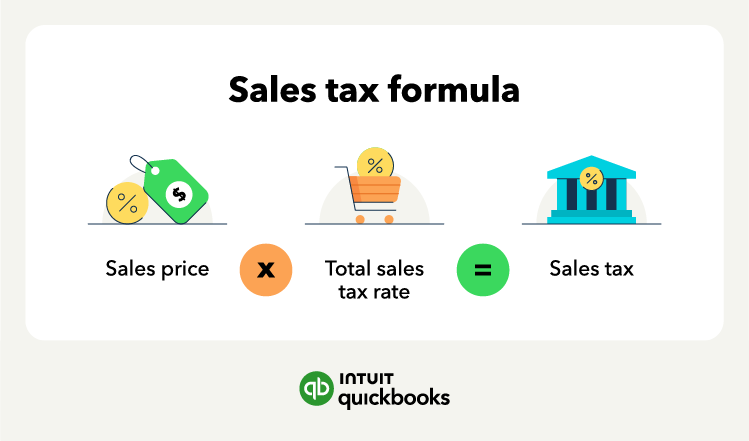
Multiply the pre-tax price by the combined rate for the county the sale is sourced to. That is the 4.75% state rate plus that county's local rate, plus its transit rate if it levies one. On a $1,200 sale sourced to Guilford County, 6.75% on the Department's current chart, that's $81 in tax and a $1,281 total.
The state rate is 4.75%, and every address adds the local rate for its county. Some counties add a transit rate as well. So the combined rate depends on the county, and county rates do change. The Department of Revenue's current rate chart lists the total by county. Qualifying groceries are the exception: a 2% local food rate everywhere, with no state tax.
If your service is repair, maintenance, or installation work, generally yes. Charges to keep property in working order, restore it, or install it are taxable on the full charge, including labor. That holds whether the property is tangible personal property, digital property, or real property.
Work that qualifies as a capital improvement is a real property contract instead. Examples include new construction, remodeling, a roof, and installation or complete replacement of an HVAC system. The contractor pays tax on materials and the customer is not taxed. Form E-589CI substantiates it. Cleaning of real property, pest control, moving, trash and snow removal, clothing alteration (except belts and shoes), professional services, barber and beauty services, and pet grooming are not taxed to the customer.
At 2%, yes. Qualifying food is exempt from the state tax but carries a uniform 2% local food rate everywhere in the state. Candy (unless it contains flour), soft drinks, dietary supplements, and prepared food don't qualify and are taxed at the full state-plus-local rate.
No. North Carolina's August back-to-school holiday, and a separate Energy Star holiday, ended with the 2013 tax overhaul. The last holiday ran in August 2013, and the repeal took effect July 1, 2014. Don't honor holiday requests based on neighboring states' August events.
Manage sales tax in QuickBooks with automation that helps you save time and stay compliant.
Save time with automated sales tax
Products are automatically matched to tax categories, so you can charge the right sales tax with less manual work. North Carolina returns are automatically prepared and formatted for NCDOR, with your collections allocated by county, and if you sell into other states, you can automate multi-state filing from one place.
Stay confident and compliant
File with confidence using accurate, automated calculations. North Carolina counties change their rates, and tax rates and rules are updated automatically in QuickBooks, so the rate you charge keeps up. Get reminders before NCDOR deadlines so you can plan ahead, and know your return status with real-time updates.
Your data stays protected
Securely send returns to tax agencies and track every filing in QuickBooks.
Manage your books and sales tax in one place
Automatically calculate, collect, and track applicable sales tax from your customers. One report breaks out taxable and non-taxable sales, so you always know what to pay each agency. Prepare, file, and pay directly from QuickBooks.
Explore QuickBooks sales tax software to spend less time on rates and more time running your business.
*Sales tax filing is available as an add-on service through QuickBooks Online for $40 per filing.
You've got the rates and the rules that apply in North Carolina. The harder part is applying them correctly on every sale, every quarter. QuickBooks automated sales tax calculates the right combined rate, tracks what you've collected, and shows what you owe when it's time to file.
Call Sales: 1-800-285-4854


