North Dakota sales tax calculator
Know exactly what to charge at any North Dakota address. Find the combined rate, the tax on any amount, and the total. Free for your business, no sign-up.
Know exactly what to charge at any North Dakota address. Find the combined rate, the tax on any amount, and the total. Free for your business, no sign-up.
Done checking rates one sale at a time? QuickBooks applies the right North Dakota rate, state and local included, on every invoice automatically. See how automated sales tax works
North Dakota's sales tax has two layers. The first is a 5% state rate set in the Century Code. The second is the city and county sales and use taxes that local governments impose. The Office of State Tax Commissioner collects those local taxes for them.
The average American side hustle brings in about $2,038 a month, according to Intuit QuickBooks entrepreneurship research. At that size, a North Dakota seller is squarely in the system. You need a sales and use tax permit. You charge a combined rate that depends on where the customer receives what they bought. And you file one return to the state that carries the local taxes with it.
What makes North Dakota different isn't the layering. It's how little of what a service business does is taxable. North Dakota taxes retail sales of goods plus a short, named list of transactions. Sales tax does not apply to services generally. Whether you run a boutique in Fargo, a print shop in Bismarck, or a photography studio in Grand Forks, here's how North Dakota's rate works. You'll also see which of your sales it reaches and what to know at filing time.
North Dakota's state sales tax rate is 5%, set in the North Dakota Century Code. A few product lines carry a different state rate under separate chapters of the Code. Alcoholic beverages are taxed at 7% under the alcoholic beverage gross receipts tax, in place of the 5% sales tax. New farm machinery and irrigation equipment used exclusively for agriculture are taxed at 3%, and so are new manufactured homes. City and county gross receipts taxes generally apply on top of the 7% alcohol rate.
Cities and counties may add their own sales and use taxes. Those apply on top of the state rate when the customer receives the goods inside their boundaries. The Office of State Tax Commissioner administers those taxes on the cities' and counties' behalf. There are two layers:
The local taxes follow the state base. What is taxable or exempt under the state sales tax is taxable or exempt under the city and county taxes too. There is no separate local registration. You register, file, and pay the state only. The local taxes go on the same return as the state tax. The Office of State Tax Commissioner, not the city or county, handles collection and audits.
North Dakota taxes retail sales of goods, which the law calls tangible personal property. That includes leases and rentals of goods. Those are generally taxed on the lease or rental receipts, unless sales or use tax was already paid on the item when it was bought. North Dakota also taxes a short, named list of transactions:
A service is taxable only if it falls into one of those named categories.
That makes the list of untaxed services long. Services that are not taxable in North Dakota because they fall outside the named categories include:
Flying instruction is not taxable, and neither is pest control.
Repairs: the labor line matters. Say you repair, alter, restore, or clean a customer's property. You collect tax on the itemized charge for the parts and materials used in the job. Separately stated repair labor is not taxable. If labor is not separated from parts and materials on the invoice, the entire charge, labor included, becomes taxable. Supplies you consumed on the job and already paid tax on when you bought them are not taxed again to the customer.
A Minot shop that bills a brake job as $250 in parts and $150 in labor collects tax on the $250. Bill it as one $400 line and tax applies to all $400.
Fabrication, photography, and printing are taxable, each with its own line rule. A fabricator who furnishes the materials and fabricates an item for a fixed price collects tax on the full amount received. The fabricator may not deduct labor or fabrication costs from the taxable base, even if they are billed separately.
Photography is taxable. But a separately stated sitting or camera charge is exempt when the sitting is genuinely separate from the sale of photographs. In a package deal, no more than 30% of the total selling price may be treated as a nontaxable sitting charge. Printing is taxable on the full selling price of the printed matter. That includes the labor or service that went into producing it.
Contractors. General or prime contracting services are not taxable. A contractor or subcontractor is treated as the final user of the machinery and materials it uses to complete a construction contract. It pays sales or use tax on them. So sales of machinery and materials to contractors are taxable.
What this means for a seller: before you price a service, check the Office of State Tax Commissioner's sales and use tax guidelines for your line of business. Then set up your invoices so that taxable parts and nontaxable labor each have their own line.
City and county taxes ride on the same sales as the state tax. Say your customer receives the goods inside a city or county that imposes a local tax. You collect both the state and the local sales tax on the selling price. That holds whether they receive the goods by delivery or by pickup. Local tax ordinances parallel state law. So every exemption that applies to the state tax applies to the local taxes too. A resale, exemption, or processing certificate exempts both levels. A certificate cannot be used to exempt only one. You report the local taxes on the same form as the state tax.
North Dakota is a destination-sourced state. Under N.D.C.C. § 57-39.4-11, a sale is sourced to the place where your customer receives what they bought. That is the general sourcing rule North Dakota adopted as a member of the Streamlined Sales and Use Tax Agreement. For goods, that means where the customer takes possession. For the few services North Dakota taxes, it generally means where the customer first uses the service.
If the customer receives the product at your business location, the sale is sourced there. If not, it is sourced to the place where the customer, or someone the customer designates, receives it. That includes the delivery address the customer gives you. A shipping company taking possession on the customer's behalf does not count as the customer receiving it. The local tax follows the same receipt rule. When the customer receives the goods inside a city or county with a local tax, you collect both. Find your situation:
If you sell goods in person at your location: the sale is sourced to your business location. Charge the combined rate for that address: the 5% state rate plus any city and county tax that applies there.
If you ship or deliver goods to North Dakota customers: the sale is sourced to where the customer receives the goods. For a shipped or delivered order, that is the delivery address you were given. Charge the combined rate for the delivery address. The address you shipped from matters only when none of the other rules can be applied. One example: you have no delivery address and no customer address at all. A delivery into a city with a local tax picks up that city's tax, even if your shop is somewhere else.
If you deliver goods to a customer outside North Dakota: a sale you deliver, or have delivered, to the customer at a point in another state is a sale in interstate commerce. It is not a taxable North Dakota sale. But you may be obligated to collect the other state's tax if your activities there are enough to bring you under its law. Keep proof of delivery, such as truck records or bills of lading, with the sale. If instead you hand the goods to the customer or the customer's agent in North Dakota, North Dakota tax applies.
If you sell one of the few taxable services: a service is generally sourced to where the customer first uses it. For hotel and motel lodging and for admissions, that is generally the hotel or the venue, so that location's combined rate applies. Many cities also impose a separate city lodging tax of up to 2% on stays of fewer than 30 consecutive days, and a lodging-and-restaurant tax of up to 1% on those stays and on restaurant and bar sales of prepared food and drinks (N.D.C.C. ch. 40-57.3). You collect those in addition to sales tax and report them on separate forms, not on your sales tax return.
If you repair a customer's property, the parts and materials you bill are goods. So that part of the sale is generally sourced to where the customer takes the item back: your shop if they pick it up, their address if you deliver it. Communication services follow their own sourcing rules.
If you sell through a marketplace like Amazon or Etsy: a marketplace facilitator without a physical presence in North Dakota must obtain a permit once its combined marketplace sales reach $100,000 in the current or preceding calendar year. At that point it must collect and remit state and local sales and use tax on the sales it facilitates. There is no separate transaction-count threshold.
The Office of State Tax Commissioner says a marketplace seller that has received the facilitator's written certification that it will collect and remit is no longer liable for tax on sales made through that marketplace. A seller with its own North Dakota permit should not report those sales on its return. Your own website checkout, invoices, and in-person sales remain yours to collect and report.
If you're out of state selling into North Dakota: if you have no physical presence in North Dakota, you must collect once you have $100,000 in taxable sales into North Dakota in the previous or current calendar year. The department describes this dollar test as a small-seller exception for remote sellers only. So it does not apply to a seller with a physical presence in the state. There is no transaction-count test. North Dakota removed its 200-transaction threshold effective December 31, 2018, so only dollars matter.
Sales you make through a marketplace are excluded from your own threshold. Once you meet the threshold, you must register and begin collecting by the following calendar year or 60 days after you meet it, whichever is earlier.
A remote seller with no physical presence in North Dakota is required to collect state and local sales tax on its taxable sales into the state, unless it qualifies for this small seller exception. Once you are required to collect, you charge North Dakota sales tax, including the local taxes, the same as a seller with a physical presence. That means each sale is sourced to the North Dakota address where the customer receives it.
Sales with their own sourcing rules. The general rule does not apply to retail sales of motor vehicles, trailers, semitrailers, and aircraft. Their leases are sourced under a separate lease rule. The general rule also does not apply to watercraft and modular, manufactured, and mobile homes, florist sales, telecommunications and ancillary services and internet access, or direct mail. Each has its own rule. Leases and rentals of other equipment follow a modified rule. For a lease with recurring payments, the first periodic payment is sourced like a sale. Later payments are sourced to the primary location of the property as shown in your records.
Worked example. You build furniture in Fargo and sell a $900 table.
Same table, same week, three different results. The local tax followed the delivery address, not your shop. North Dakota's return reports local tax by jurisdiction, so keep the delivery address with every sale.
The exemptions that matter most to small sellers each come with specific conditions attached:
Groceries: food and food ingredients are exempt. Candy, dietary supplements (including vitamins and minerals), prepared food, and soft drinks are excluded from the exemption and remain taxable.
Soft drinks, with a milk and juice test: a soft drink is a nonalcoholic beverage containing a natural or artificial sweetener. But the definition excludes any beverage containing milk or milk products, soy, rice, or a similar milk substitute. It also excludes any beverage that is more than 50% vegetable or fruit juice by volume. A sweetened milk-based, soy, or rice drink is exempt as food, even though it contains a sweetener. Carbonated and other sweetened beverages that meet the soft-drink test are taxable.
Bakery items and water: bakery items are exempt when sold without eating utensils, even though prepared food generally is taxable. Water, including bottled water, is exempt, with two exceptions. The first is bottled water sold through a vending machine. The second is water sold as prepared food in a restaurant, bar, or similar venue. Any food or food product is exempt when purchased with SNAP benefits or WIC vouchers. That includes otherwise taxable candy and soft drinks.
Clothing: taxable year-round. North Dakota has no general clothing exemption. Clothing, clothing accessories, protective clothing and equipment, sports and recreational equipment, and special-order clothing and footwear are all taxable. One statutory exception: children's diapers have been exempt since July 1, 2023. North Dakota does not currently hold a sales tax holiday.
Prescription drugs and medical items: drugs sold under a doctor's prescription are exempt. Medicine purchased without a prescription is taxable. Medical marijuana does not qualify for the exemption. Oxygen sold for medical purposes under a prescription is exempt. Durable medical equipment for home use is exempt without a prescription when it meets the statutory tests:
Mobility enhancing equipment and prosthetic devices are exempt only when sold under a doctor's written prescription. Insulin dispensed at a physician's direction, glucose for treating insulin reactions, urine and blood testing kits, and insulin syringes and needles are exempt. So are supplies for ostomy care and bladder dysfunction.
Newspapers and magazines: newspapers are not taxable. Magazine subscriptions are exempt, while magazines sold at newsstands or over the counter are taxable. Other periodicals follow the same pattern.
Lodging: a hotel or motel room is taxable unless the same person or persons occupy it as residential housing for 30 or more consecutive days.
Selling a mix of taxable and exempt items is where receipts get messy. Track the two buckets separately from the start.
Use tax is the counterpart to sales tax. The Office of State Tax Commissioner puts it plainly: all individuals, including businesses operating in the state, must pay use tax if sales tax was not collected by the seller on tangible personal property brought or shipped into North Dakota for storage, use, or consumption. Use tax applies to the purchase price, calculated on the same basis as sales tax.
Under the use tax statute, the state use tax rate is 5% of the purchase price. That is the same as the state sales tax rate. Property you did not originally buy for use in North Dakota is taxed on its fair market value when you bring it into the state.
You also owe North Dakota use tax if the sales and use tax you paid in another state was not at a rate equal to or greater than North Dakota's state sales tax rate plus the applicable local taxes. Say you paid another state's sales or use tax on the purchase. North Dakota generally credits that tax against the use tax you owe. So only the difference is due, provided the other state allows a like credit for North Dakota tax.
For a business, this shows up when you order equipment, supplies, fixtures, or display cases from a vendor that didn't charge North Dakota tax. Say you run a coffee shop in Grand Forks and buy a $3,000 commercial espresso machine online. The invoice shows no North Dakota tax. You owe $150 in state use tax, plus any local use tax that applies at your address.
Local use tax exists. Most cities and counties that impose a local sales tax also impose a local use tax. The department names Bisbee and Cando as the exceptions, with a local sales tax but no use tax.
Say you did not pay a local tax when you bought goods. You then take them into a city or county that imposes a local use tax, to store, use, or consume them there. Local use tax is due on the goods' fair market value when they enter that jurisdiction. You, not the seller, report and pay it. Credit is allowed for sales and use tax legally due and paid to another local jurisdiction if that jurisdiction gives a like credit.
The department's own example: an item is bought in Fargo (2.25% city tax plus 0.5% Cass County tax) and brought into West Fargo (2.5% city tax plus 0.5% county tax). It owes an additional 0.25% to West Fargo as use tax. The purchaser self-accrues that tax and reports it under West Fargo's local tax on the sales and use tax return.
How you report it. If you hold a North Dakota sales and use tax permit, report purchases on which no tax was collected on your sales, use, and gross receipts tax return. Use the "Items Subject to Use Tax" line. Report them for the period in which you made the purchase, and pay the use tax with that return.
If the seller holds a North Dakota permit, you pay the use tax to the seller. If it does not, you pay directly to the tax commissioner. If you don't hold a permit, the department's One Time Remittance Form covers one-time use tax payments. That includes payments by North Dakota residents on goods bought tax-free from out-of-state sellers. It also includes payments by out-of-state businesses that brought materials or equipment into the state for a one-time job.
The split runs through the middle of the digital shelf. Prewritten (canned) computer software is taxable regardless of delivery method, including electronic delivery and load-and-leave. Custom computer software is exempt. Digital products delivered electronically, including digital audio-visual works, digital audio works, and digital books, are exempt. But that exemption does not extend to prewritten software delivered electronically, which stays taxable as software.
Computer hardware is taxable, with limited exceptions. Those include installation charges when the hardware becomes real property upon installation, and equipment that qualifies for the manufacturing exemption. Internet access service is exempt.
Cloud services. North Dakota has not issued guidance addressing Infrastructure as a Service, Platform as a Service, or Software as a Service by name. The state's general framework taxes transfers of tangible personal property and prewritten software, not pure remote-access services.
The state's own Computers guideline treats the sale or lease of computer time (time sharing) as a nontaxable service when separately billed. It also treats web page development and web hosting as not taxable. Even so, no guidance names these cloud models directly. A seller relying on that reading should confirm current treatment with the Office of State Tax Commissioner.
Maintenance contracts. A mandatory maintenance contract for prewritten software is taxable in full, including any bundled consultation services. An optional maintenance contract for prewritten software is also taxable when it provides software upgrades or updates. That holds whether the upgrades or updates come alone or bundled with support services.
The one nontaxable slice is a consultation or support service the buyer can buy separately from the upgrades or enhancements. If no such separate option exists, the consultation charges are taxed along with everything else. Don't assume an optional maintenance agreement is broadly exempt.
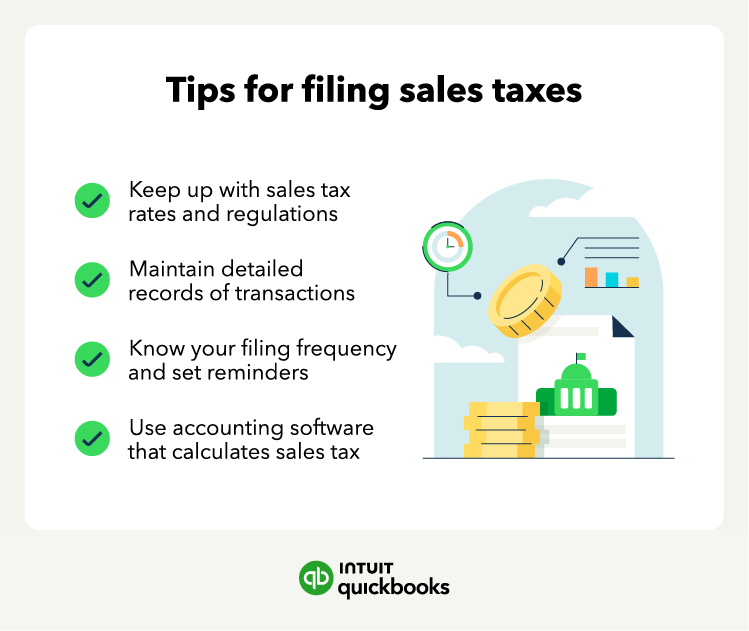
Returns are due the last day of the month after the period ends. North Dakota sales and use tax returns and payments are due on or before the last day of the month following the reporting period. When that day falls on a weekend, the Office of State Tax Commissioner's deadline calendar carries the due date past it. For 2026, the return for the fourth quarter of 2025 was due February 2, because January 31 fell on a Saturday.
Your filing frequency is assigned with your permit. Depending on how often your sales occur, you may be required to file and pay monthly, quarterly, or annually. The department determines this when you apply for your permit, and you can contact the department to change it.
Under the statute, the default is quarterly. A permit holder whose taxable sales and purchases for the preceding calendar year were $333,000 or more files and pays monthly. That permit holder must file those returns electronically. If your sales later fall below $333,000 for a year, you may return to quarterly filing. The department reviews filing status each calendar year. A change takes effect on or after July 1 of the following year.
File through ND TAP. Sales and use tax returns and payments are made through the department's online portal, ND TAP. The department stopped mailing paper return forms for sales and use tax on January 1, 2023.
File every return, including zero returns. Returns must be filed each period whether tax is due or not. If no tax is due, the return must be filed indicating that no taxable sales or reportable purchases were made for that period.
One return carries the local taxes. You cannot be required to register with, file returns with, or pay anyone other than the tax commissioner. Local sales, use, and gross receipts taxes are reported on the same form as the state sales tax. A city or county may not conduct its own sales or use tax audit of a seller registered under the Streamlined agreement.
Some local taxes have a per-purchase cap. Certain cities and counties set a maximum amount of local tax that can apply to a single purchase. Under the statute, you collect the city and county tax without regard to the cap. The buyer may then apply to the tax commissioner for a refund of the local tax paid above it, within three years of the sale date.
A retailer may instead give the buyer a credit for that amount at the time of purchase, as long as the tax shown on the receipt equals the total tax calculated less the credit. The department asks retailers to pick one method and apply it consistently.
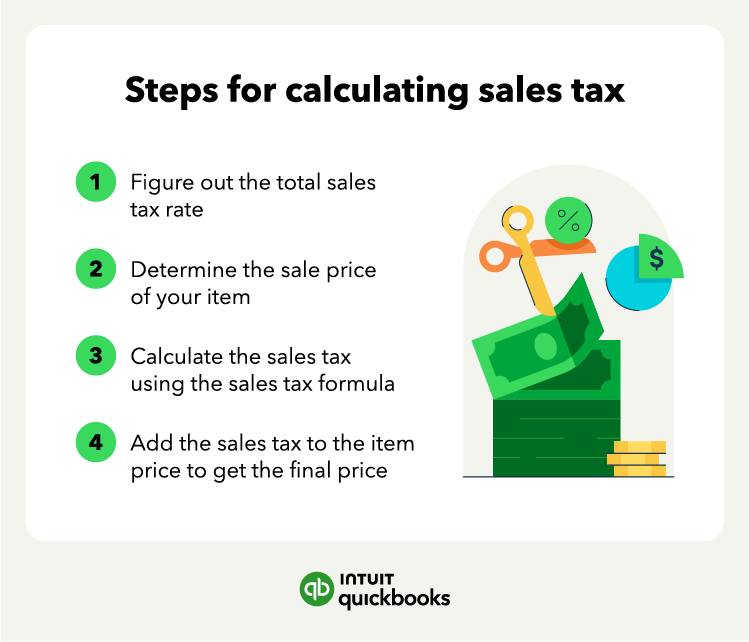
Tip: if a rate error slips through, fix the rate first, then correct the affected returns. Undercollect and the difference comes out of your pocket. Overcollect and you owe refunds. Tax you collected as tax is never yours to keep.
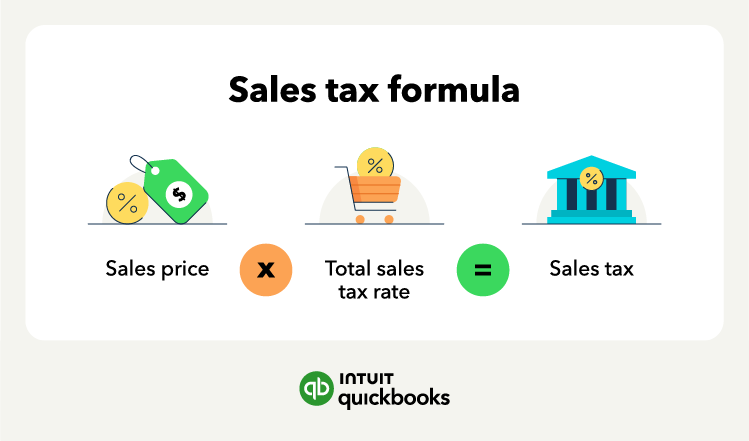
Multiply the pre-tax price by the combined rate for the address where your customer receives the goods. That is the 5% state rate plus any city and county tax that applies there. Take a $1,200 sale delivered to a Fargo address. The 2.25% city tax and the 0.5% Cass County tax bring the combined rate to 7.75%, so that's $93 in tax and a $1,293 total.
Yes. Cities and counties may impose their own sales and use taxes on top of the state rate, and the Office of State Tax Commissioner administers them. You register, file, and pay the state only. The local taxes go on the same return as the state tax. They use the same base as the state tax, so whatever is exempt from the state tax is exempt from the local taxes too.
A sale is sourced to where the customer receives the goods. So a delivery into a city with a local tax picks up that city's tax, even if your shop is somewhere else. The department's Sales and Use Tax Rate Lookup gives the state and local sales and use tax rate for a specific North Dakota address.
Generally, no. North Dakota does not tax services generally. A service is taxable only if it falls into one of the named categories: certain communication services, hotel and motel lodging, admissions to amusements, entertainment, or athletic events (including charges for participating in them), computer software, and tire vulcanizing, recapping, and retreading. Lawn care, barbering and beauty services, pet grooming, accounting, legal, management consulting, and veterinary services are not taxable.
If you repair a customer's property, you collect tax on the itemized parts and materials. Separately stated repair labor is not taxable. But if the invoice doesn't separate labor from parts, the entire charge is taxable. Photography, fabrication, and printing are taxable.
No. Food and food ingredients are exempt. Candy, dietary supplements, prepared food, and soft drinks are taxable.
A soft drink is a sweetened nonalcoholic beverage. But drinks containing milk, soy, rice, or a similar milk substitute, and drinks that are more than 50% fruit or vegetable juice by volume, stay exempt as food. Bakery items sold without eating utensils are exempt. So is bottled water, except when sold through a vending machine or as prepared food in a restaurant or bar.
Prewritten software is taxable however it is delivered, including by download or load-and-leave. So is a mandatory maintenance contract for it. Custom software is exempt, and so are electronically delivered digital audio-visual works, digital audio works, and digital books. North Dakota has not issued guidance that names Software as a Service. Confirm current treatment with the Office of State Tax Commissioner before relying on a nontaxable reading.
Manage sales tax in QuickBooks with automation that helps you save time and stay compliant.
Save time with automated sales tax
Products are automatically matched to tax categories, so you can charge the right sales tax with less manual work. Returns are automatically prepared and formatted for your state, and if you sell into other states, you can automate multi-state filing from one place.
Stay confident and compliant
File with confidence using accurate, automated calculations. Tax rates and rules change, and they are updated automatically in QuickBooks, so what you charge keeps up. Get reminders before filing deadlines so you can plan ahead, and know your return status with real-time updates.
Your data stays protected
Securely send returns to tax agencies and track every filing in QuickBooks.
Manage your books and sales tax in one place
Automatically calculate, collect, and track applicable sales tax from your customers. One report breaks out taxable and non-taxable sales, so you always know what to pay each agency. Prepare, file, and pay directly from QuickBooks.
Explore QuickBooks sales tax software to spend less time on tax and more time running your business.
*Sales tax filing is available as an add-on service through QuickBooks Online for $40 per filing.
You've got the rates and the rules that apply in North Dakota. The harder part is applying them correctly on every sale, every quarter. QuickBooks automated sales tax calculates the right combined rate, tracks what you've collected, and shows what you owe when it's time to file.
Call Sales: 1-800-285-4854


