Pennsylvania sales tax calculator
Know exactly what to charge at any Pennsylvania address. Find the combined rate, the tax on any amount, and the total. Free for your business, no sign-up.
Know exactly what to charge at any Pennsylvania address. Find the combined rate, the tax on any amount, and the total. Free for your business, no sign-up.
Done checking rates one sale at a time? QuickBooks applies the right Pennsylvania rate, state and local included, on every invoice automatically. See how automated sales tax works
Pennsylvania's sales tax has a 6% state rate that applies at every address in the Commonwealth. It has a local sales tax in exactly two places: Allegheny County and Philadelphia. The Commonwealth collects both local taxes, so there is no county or city registration.
The average American side hustle brings in about $2,038 a month, according to Intuit QuickBooks entrepreneurship research. At that size, a Pennsylvania seller is squarely in the system.
You need a sales tax license from the Department of Revenue. You charge the 6% state rate on every taxable sale. You add a local tax when goods are delivered or services are performed in Allegheny County or Philadelphia. And you file one return in myPATH that carries the local tax with the state tax.
What makes Pennsylvania distinctive is what it leaves out. Everyday clothing, grocery staples, candy and gum, and prescription and over-the-counter medicines are all exempt. But digital products count as goods and are taxable. A service is taxable only when the law names it.
Whether you sell furniture in Lancaster, groom pets in Pittsburgh, or run a cleaning company in Philadelphia, here's how Pennsylvania's rate works. You'll also see which of your sales it reaches and what to know at filing time.
Pennsylvania's state sales tax rate is 6%. Only two local sales taxes, Allegheny County's and Philadelphia's, are imposed on top of it. Everywhere else in the state, 6% is the whole rate. At any one address, at most two layers apply:
Both local taxes are reported on the same license and return as the Commonwealth tax, through myPATH. Sellers never register with a county or city for sales tax. Under Act 21 of 2026, the local tax applies when goods are delivered or services are performed in Allegheny County or Philadelphia. That holds no matter where the seller is located. The Department began enforcing Act 21 on October 1, 2026.
Most services are not taxable in Pennsylvania. But the taxable list is specific, and it includes some that surprise sellers. If your service is on the list, the tax generally falls on the whole charge, labor included. Taxable services include:
A $400 repair to a customer's office chair is taxable on the whole $400, parts and labor. Agreements to render taxable services work the same way. Maintenance contracts, service plans, and extended warranties on equipment and electronics are taxable on the entire charge, regardless of label. There is no optional-versus-required distinction. The exceptions run through the clothing exemption. Repairing everyday wearing apparel and shoes is exempt. Repairs to formal wear, sporting apparel, and fur articles are taxable.
Services that are not taxable, because Pennsylvania hasn't named them, include professional services (legal, accounting, engineering, medical), barber and beauty services, instruction and lessons, veterinary services, pet boarding and kenneling, security and investigation services, interior design, payroll services, massage, tanning, tattooing, travel agency services, moving and hauling, trash removal, and snow plowing.
One note on old guidance: computer and data services were taxed briefly in the 1990s and repealed in 1997. An outdated regulation still lists them, but they are not taxable.
The real property rule. Construction, remodeling, and repair work on real property in Pennsylvania is nontaxable to the customer. The contractor pays sales tax when purchasing materials and charges the customer no tax. There is no repair-versus-improvement split to manage.
Central heating and air conditioning systems, water heaters, and similar built-ins are real property. So installing or repairing them is nontaxable to the customer. Items that stay tangible personal property after installation are ordinary taxable retail sales, including the installation charge. Free-standing appliances, window air conditioners, and blinds are examples.
What this means for a seller: before you price a service, check the Department's Retailer's Information Guide (REV-717), its item-by-item guide. Check it in both directions, for services you assumed were exempt and for services you assumed were taxable.
Allegheny County and Philadelphia each impose a local sales tax on top of the Commonwealth rate. The Commonwealth collects both. Under Act 21 of 2026, the local tax applies when goods are delivered or services are performed in Allegheny County or Philadelphia. That is true no matter where the seller is located. The Department began enforcing Act 21 on October 1, 2026.
There is no separate local license. Both local taxes are reported on the same license and return as the Commonwealth tax, through myPATH. Sellers never register with a county or city for sales tax.
Pennsylvania is a destination-sourced state. Under the Tax Reform Code and the Department of Revenue's rules, the state tax applies to a taxable sale delivered to a location in Pennsylvania. That holds no matter where you ship from. It does not apply when you deliver, or ship by carrier or mail, to a destination outside the state.
The 6% state rate is the same at every Pennsylvania address. So the only sourcing question inside the state is whether one of the two local taxes applies. That too now follows the destination.
Under Act 21 of 2026, local sales tax is based on the point of destination, where the product or service is delivered. Vendors selling taxable products or services to customers in Philadelphia and Allegheny counties collect and remit the local sales taxes. That holds no matter where the vendor is located. The Department began enforcing Act 21 on October 1, 2026.
For goods, the point of destination is the place where your customer takes delivery. For services, it is generally where the service is performed or its result is delivered. Before the change, local sales tax was generally based on the point of sale. That meant where the vendor was located. The change is covered below. Find your situation:
If you sell goods in person at your location: the customer takes delivery at your counter, in Pennsylvania, so the state tax applies. That holds even if the customer lives in another state or carries the item out of Pennsylvania afterward. If your location is in Allegheny County or Philadelphia, that local tax generally applies too. Anywhere else in the state, you charge the 6% state rate alone.
If you ship or deliver goods to Pennsylvania customers: the delivery address decides. The state tax applies when delivery is made to a location within Pennsylvania. That holds whether the goods ship from inside the state or from outside it. A delivery into Allegheny County or Philadelphia carries that local tax, no matter where you are located. A delivery anywhere else in the state carries the 6% state tax alone.
When you deliver the goods, or hand them to a carrier or the mails for delivery, to a point outside Pennsylvania, no Pennsylvania sales tax applies. But keep the delivery documents: waybills, bills of lading, shipping orders, or postal receipts. If instead the buyer or the buyer's agent, other than an interstate carrier, takes delivery in Pennsylvania, the tax applies. That holds even though the buyer then transports the goods out of state.
The Department's own examples: a Pennsylvania retailer delivers laboratory supplies to a buyer in Providence, Rhode Island. No sales tax applies. The reason: delivery was made out of state, even though title passed at the Pennsylvania point of shipment. A Pennsylvania steel maker delivers harpoons to a Massachusetts buyer's agent in Harrisburg for ultimate delivery in Massachusetts. The tax applies. The reason: delivery was made and title passed in Pennsylvania.
If you repair, alter, or clean a customer's goods: repair, alteration, and cleaning of tangible personal property are taxed when the item is delivered back to the customer in Pennsylvania. Everyday clothing and shoes are the exception. The tax applies even if the customer is a nonresident who will use it elsewhere. The Department's example: a visitor has a car repaired in Pennsylvania while on vacation. The garage collects tax on the entire charge.
You are not required to collect when your agreement requires you to deliver the item to a destination outside Pennsylvania for use outside the state, and you do. A Pennsylvania laundry that picks up soiled drapes from a Maryland customer and delivers the clean drapes back in Maryland does not collect tax. Neither does the garage when the vacationer directs it to deliver the car to an out-of-state home.
For the local tax, a repair is generally treated as delivered where the customer gets the item back. That means your shop's county if they pick up there, and their address if you deliver.
If you perform a service at the customer's location: lawn care, building maintenance and cleaning, and disinfecting and pest control are taxable when performed in Pennsylvania. The Department presumes these services are subject to Pennsylvania tax when the delivery or benefit of the service occurs in Pennsylvania. The sale is generally sourced to the customer's property. So the local tax applies when that property is in Allegheny County or Philadelphia. Related rules from the Department's guide:
If you sell software, cloud services, or digital products: software as a service and remotely accessed canned software are taxable when the user is located in Pennsylvania. Sourcing follows users, not servers.
A Pennsylvania billing address creates a presumption that all users are in Pennsylvania. The customer can rebut that presumption with an exemption certificate (REV-1220) stating the percentage of users located in Pennsylvania. Digital products, such as streaming subscriptions, e-books, apps, and games, are taxable property, however delivered, streamed, or accessed.
If you sell through a marketplace like Amazon or Etsy: since July 1, 2019, a marketplace facilitator with more than $100,000 in Pennsylvania sales must register, collect, and remit on facilitated sales. That $100,000 counts everything it facilitates for its sellers. Sales through a collecting marketplace are not yours to tax.
A Pennsylvania-based seller keeps its sales tax license. It files returns for its direct sales, through its own website and in person. It files every period, even when no tax is due. Keep documentation of the marketplace's collection responsibility.
If you're out of state selling into Pennsylvania: Pennsylvania measures economic nexus on the prior calendar year. If your gross sales into Pennsylvania exceeded $100,000 in a calendar year, you must register and begin collecting on April 1 of the following year. There is no transaction-count test, so only dollars matter.
The current threshold has applied since July 1, 2019. Before that, from April 1, 2018, Pennsylvania used a $10,000 threshold with a notice-and-reporting option. If you have no physical presence in Pennsylvania, sales you make through a marketplace facilitator that collects the tax don't count toward your own $100,000. Sales through a marketplace that doesn't collect do count.
Until you've crossed the threshold, this rule alone doesn't require you to collect Pennsylvania tax. Once you have, the same destination rules apply to you as to an in-state seller. Each taxable delivery into Pennsylvania carries the 6% state tax. A delivery into Allegheny County or Philadelphia carries that local tax too.
The reason: the Department requires vendors already collecting the Commonwealth's 6 percent sales tax to collect and remit Philadelphia's and Allegheny County's local sales taxes on taxable sales made to customers in those counties.
Sales with their own local-tax rules. The Tax Reform Code keeps special situs rules for the two local taxes:
Act 21 of 2026 left these rules in place.
Worked example. You build furniture at a shop in Pittsburgh, in Allegheny County, and sell a $900 table.
Same table, same week, and the only thing that changed the tax was where the customer took delivery. Keep the delivery address and the shipping documents with every sale.
Pennsylvania's exemptions reach the everyday basics, and the lines are specific. The ones that matter most to small sellers:
Clothing: everyday wearing apparel and footwear are exempt, year-round. The taxable exceptions are:
Sneakers, running shoes, jogging and warm-up suits, baseball caps, tee shirts, and hunting clothing, camouflage and blaze orange included, are exempt as ordinary clothing.
Clothing services follow the garment. Repairing, altering, dyeing, laundering, or dry cleaning everyday apparel and shoes is exempt. Embroidery on everyday clothing is exempt too. The same services on formal wear, sporting apparel, or fur articles are taxable. So is dry cleaning household items like curtains and rugs. One named exception: imprinting or printing on clothing belonging to others is taxable even on everyday clothing. Pennsylvania has no sales tax holiday.
Groceries: food and beverages for human consumption are exempt. Bread, dairy milk, produce, meat, deli meats and cheeses, chips and pretzels, party trays, and bottled water leave the store tax free.
Candy and gum: exempt everywhere, even when sold by a restaurant. Pennsylvania is one of the few states with this rule.
Soft drinks: taxable, bottled or fountain. Noncarbonated fruit drinks are taxable below 25 percent real juice and exempt at 25 percent or more. Plant-based milks (soy, almond, oat) are taxable as soft drinks unless they contain at least 25 percent natural juice. Flavored water is taxable. Plain and unflavored mineral water are exempt.
Prepared food: ready-to-eat food from eating establishments (restaurants, lunch counters, food trucks) is taxable. Even at grocery stores, delis, bakeries, and convenience stores, the "selected items" are taxable: meals, sandwiches (cold hoagies included), salad bar food, hand-dipped ice cream, hot pizza, hot soup, and hot beverages like brewed coffee.
A deli selling cold hoagies charges tax on them even though its sliced meats are exempt. A grocery or bakery counter inside an eating establishment can keep its exemption with separate records and registers.
Catering is taxable on the total charge, including separately stated equipment, tables, and staff. Properly separated gratuities are excluded. Vitamins, dietary supplements, and diet pills are exempt as medical items when sold at retail. But an eating establishment selling supplement items charges tax on them.
Medicines and medical items: prescription and over-the-counter medicines, drugs, and medical supplies are exempt: aspirin, cold remedies, antacids, insulin. Vitamins and dietary supplements in any form are exempt.
Crutches, wheelchairs, artificial limbs and eyes, hearing devices, false teeth, prescribed eyeglasses, braces and supports, hospital beds, and other therapeutic or prosthetic devices designed for a particular individual are exempt. Equipment used by providers in their practice, such as exam tables and diagnostic machines, is taxable. Medical services are not taxable.
Toiletries, with a short exempt list: cosmetics and most toiletries are taxable (shampoo, deodorant, perfume, suntan lotion). But toothpaste, toothbrushes, dental floss, feminine hygiene products, diapers, and wet wipes are exempt.
Software and digital products: taxable, broadly. Canned (prewritten) software is taxable regardless of delivery, by disk, download, stream, or remote access. That includes licenses, updates, enhancements, and upgrades. Software as a service used by Pennsylvania users, streaming video and music subscriptions, e-books, audiobooks, apps and in-app purchases, games, ringtones, satellite radio, and digital photographs are all taxable, whether bought singly or by subscription. The exceptions:
Computer hardware is taxable, as are hardware repair and maintenance contracts.
Newspapers and magazines: newspapers of general circulation qualified to carry legal advertisements are exempt. Magazine subscriptions, for periodicals published at intervals not exceeding three months, are exempt. The same magazine sold by the single copy is taxable. Direct mail advertising materials and mail order catalogs are exempt. Anything bought for resale is exempt with a Pennsylvania exemption certificate (REV-1220).
Selling a mix of taxable and exempt items is where receipts get messy. Track the two buckets separately from the start.
Use tax is the counterpart of the state and local sales taxes. Pennsylvania law requires any person who purchases taxable goods or services delivered into or used in Pennsylvania to pay use tax if the vendor did not collect sales tax.
For a business, that covers purchases made over the internet, through toll-free numbers, from mail-order catalogs, and from out-of-state locations. That applies when Pennsylvania sales tax was not paid but the property or service is delivered into or used in Pennsylvania. It also covers a taxable service performed outside Pennsylvania on property you bring into the state to use here.
If you paid another state's sales tax on the purchase, Pennsylvania generally credits that tax against the use tax you owe.
The use tax rate is the same as the sales tax rate. That means 6 percent state tax, plus an additional 1 percent local use tax for items purchased in, delivered to, or used in Allegheny County. For Philadelphia, the additional local use tax is 2 percent.
The Department's own example, with numbers added: you buy $3,000 of computers and accessories for your business from a website. The website does not collect Pennsylvania sales tax. The seller ships them to you in Pennsylvania. You owe Pennsylvania use tax on the entire purchase price, including any shipping and handling fees the seller charged. That is $180 at 6 percent.
If they are delivered to and used at your business in Allegheny County, you also owe the 1 percent local use tax. That is another $30, for $210 in all. In Philadelphia, the 2 percent local use tax adds $60, for $240.
How you report it. A business registered to collect sales tax reports and pays its use tax on its regular sales and use tax return. That is line 6, filed through myPATH. It goes on the first return filed after the first taxable use of the property or service. No vendor discount is allowed on use tax reported.
A business that incurs use tax regularly is encouraged to register for a sales and use tax account. Any other use tax liability can be reported on the Department's online PA-1 Use Tax Return at myPATH. That return is due with payment on or before the 20th day of the month after the month of the purchase.
If you buy something subject to the local tax and the local sales tax was not collected, you pay the local use tax directly to the Department. You report it as use tax on your return. Purchases made "tax free" from out-of-state vendors are often assessed on audit. The assessment includes interest and penalty on top of the tax.
According to the Department of Revenue's Local Sales Tax page, Pennsylvania's General Assembly passed legislation, Act 21 of 2026. It requires vendors selling taxable products or services to customers in Philadelphia and Allegheny counties to collect and remit local sales taxes.
Vendors who are already required to collect and remit the Commonwealth's 6 percent sales tax are required to collect and remit Philadelphia's and Allegheny County's local sales taxes. That applies on taxable sales made to customers in those respective counties.
The change became law on July 12, 2026. It has a retroactive effective date of tax years after December 31, 2025. Because vendors may need time to adjust to the change in law, the Department said it would not begin enforcing the new rules until October 1, 2026.
What is different now: prior to this change in law, local sales tax was generally based on the point of sale. That meant where the vendor was located. Local sales tax is now based on the point of destination, meaning where the product or service is delivered. The Department says this aligns the local tax with how Pennsylvania's state sales tax is administered.
The local tax now turns on where the customer takes delivery rather than where the vendor is located. So a vendor anywhere that sells taxable products or services to customers in Philadelphia or Allegheny County collects and remits that county's local sales tax.
State sales tax rules have not changed. State sales tax must be collected whenever you sell taxable items or services. State and local use tax rules have not changed either. If sales tax is not collected at the time of purchase, buyers still owe use tax when taxable items or services are used in Philadelphia or Allegheny counties.
To check whether a customer's address is in Philadelphia or Allegheny County, the Department's Local Sales Tax page points vendors to public ZIP code resources.
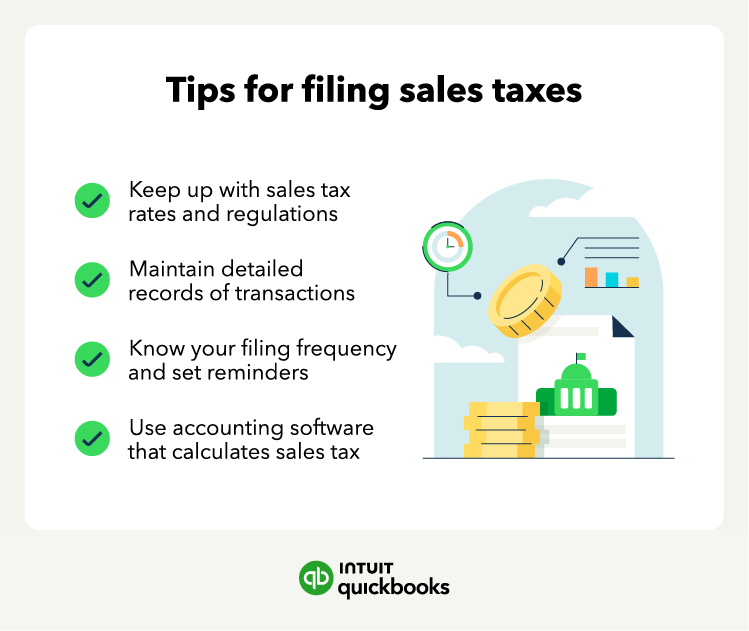
Pennsylvania sets your filing frequency from your actual tax liability in the third calendar quarter of the preceding year. Every tier is due on the 20th:
Monthly returns are due the 20th of the following month. If your third-quarter liability was $600 or more but less than $25,000, you file monthly. July's return is due August 20. If the 20th falls on a weekend or a federal holiday, the return is due the following business day.
Quarterly is where new licensees start. New licensees file quarterly. Sellers whose liability is less than $600 per quarter but more than $300 a year stay quarterly. Returns are due April 20, July 20, October 20, and January 20 for the quarters ending March, June, September, and December.
Semi-annual filing for the smallest sellers. With the Department's authorization, a seller whose liability is $300 or less a year files twice. The returns are due August 20 for January through June, and February 20 for July through December.
Prepayments begin at $25,000. If your third-quarter liability was $25,000 or more, you make an accelerated sales tax (AST) prepayment by the 20th of each month. The return and remaining liability for the period are due the 20th of the following month.
From $25,000 up to, but not including, $100,000, the prepayment is one of two figures. One is 50 percent of your actual liability for the same month of the previous year. The other is at least 50 percent of your actual liability for the current month.
At $100,000 or more, it is 50 percent of the same month of the previous year, with no alternative. The current month's prepayment and the prior month's remaining tax are sent in as separate payments.
File electronically. Returns and payments are filed through myPATH. TeleFile is available by request for taxpayers who cannot use the online system. Payments of $1,000 or more must be made electronically.
One return carries the local taxes. Allegheny County's and Philadelphia's local sales taxes are reported on the same license and return as the Commonwealth tax, through myPATH. There is no separate county or city registration. Keep the delivery address with each sale so the local tax is a sort, not a research project.
File every return, including zero returns. Returns are to be filed whether or not taxable transactions occur in a period. So a period with no sales still gets a return.
Tip: if a rate error slips through, fix the rate first, then correct the affected returns. Undercollect and the difference comes out of your pocket. Overcollect and you owe refunds. Tax you collected as tax is never yours to keep.
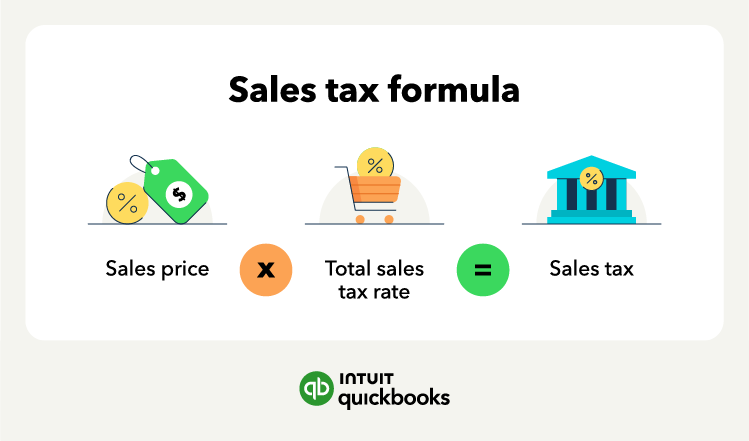
Multiply the pre-tax price by the combined rate for the place where your customer takes delivery. That is the 6% state rate, plus Allegheny County's or Philadelphia's local rate when the goods are delivered or the service is performed there. Everywhere else in Pennsylvania, it is 6% alone. On a $1,200 sale delivered to an address outside those two places, that's $72 in tax and a $1,272 total.
Only two: Allegheny County and Philadelphia each impose a local sales tax on top of the Commonwealth rate. The Commonwealth collects both. Under Act 21 of 2026, local sales tax is based on the point of destination, where the product or service is delivered. So the local tax applies when goods are delivered or services are performed in Allegheny County or Philadelphia. That holds no matter where the seller is located. The Department of Revenue began enforcing Act 21 on October 1, 2026.
Both local taxes are reported on the same license and return as the state tax, through myPATH. Sellers never register with a county or city for sales tax. The Department of Revenue's Local Sales Tax page explains the change.
Only if your service is on Pennsylvania's list of taxable services: repairing, altering, or cleaning goods other than everyday clothing and shoes; building cleaning and maintenance; disinfecting and pest control; lawn care; self-storage; help supply and employment agency services; credit reporting and collection; lobbying; secretarial and editing services; printing on customer-furnished property; motor vehicle washing, waxing, and inspection; pet grooming; taxidermy; and photography.
Professional services, barber and beauty services, lessons, veterinary services, pet boarding, interior design, payroll services, massage, tanning, tattooing, moving and hauling, trash removal, and snow plowing are not taxable. Construction, remodeling, and repair work on real property is nontaxable to the customer. The contractor pays tax on materials.
Generally, no. Everyday wearing apparel and footwear are exempt. Formal wear, fur articles, sport-specific clothing and footwear (bathing suits included), costumes, and accessories are the taxable exceptions.
Food and beverages for human consumption are exempt, and so are candy and gum, even sold by a restaurant. Tax falls on soft drinks, on ready-to-eat food from eating establishments, and on the "selected items" sold anywhere: meals, sandwiches including cold hoagies, salad bar food, hand-dipped ice cream, hot pizza, hot soup, and hot beverages.
No. Pennsylvania has no sales tax holiday. Proposals have been introduced but never enacted. The broad everyday exemptions for clothing, food, and medicine cover most of what other states' holidays target.
Manage sales tax in QuickBooks with automation that helps you save time and stay compliant.
Save time with automated sales tax
Products are automatically matched to tax categories, so you can charge the right sales tax with less manual work. Returns are automatically prepared and formatted for your state, and if you sell into other states, you can automate multi-state filing from one place.
Stay confident and compliant
File with confidence using accurate, automated calculations. Tax rates and rules change, and they are updated automatically in QuickBooks, so what you charge keeps up. Get reminders before filing deadlines so you can plan ahead, and know your return status with real-time updates.
Your data stays protected
Securely send returns to tax agencies and track every filing in QuickBooks.
Manage your books and sales tax in one place
Automatically calculate, collect, and track applicable sales tax from your customers. One report breaks out taxable and non-taxable sales, so you always know what to pay each agency. Prepare, file, and pay directly from QuickBooks.
Explore QuickBooks sales tax software to spend less time on tax and more time running your business.
*Sales tax filing is available as an add-on service through QuickBooks Online for $40 per filing.
You've got the rates and the rules that apply in Pennsylvania. The harder part is applying them correctly on every sale, every quarter. QuickBooks automated sales tax calculates the right combined rate, tracks what you've collected, and shows what you owe when it's time to file.
Call Sales: 1-800-285-4854


