South Carolina sales tax calculator
Know exactly what to charge at any South Carolina address. Find the combined rate, the tax on any amount, and the total. Free for your business, no sign-up.
Know exactly what to charge at any South Carolina address. Find the combined rate, the tax on any amount, and the total. Free for your business, no sign-up.
Done checking rates one sale at a time? QuickBooks applies the right South Carolina rate, state and local included, on every invoice automatically. See how automated sales tax works
South Carolina's sales tax has two layers. The first is a 6% state sales tax imposed by statute. The second is local sales taxes that range from 0% to 3%, depending on the county and municipality. The Department of Revenue administers and collects all of them on one state return.
The average American side hustle brings in about $2,038 a month, according to Intuit QuickBooks entrepreneurship research. At that size, a South Carolina seller is squarely in the system. You need a Retail License. You charge a combined rate between 6% and 9% that follows where your customer takes delivery. Your state return reports local tax by county and municipality.
What makes South Carolina different isn't the local layer. It's what the tax reaches. South Carolina taxes goods and a short list of named services, so most services carry no sales tax. It exempts groceries from the state tax, while many counties still tax them locally. Whether you run a boutique in Charleston, build furniture in Greenville, run a dry cleaner in Columbia, or serve plates in Myrtle Beach, here's how South Carolina's rate works. You'll also see which of your sales it reaches and what to know at filing time.
South Carolina's state sales tax rate is 6%. That is a 5% sales tax plus an additional 1% the statute has imposed since June 1, 2007. One exception: an individual 85 or older buying for their own personal use pays 1% less state tax (5% instead of 6%). The exclusion applies when the individual asks for it at the time of sale and shows proof of age. Retailers must post a sign at each entrance or cash register advising customers of it.
Local sales taxes add 0% to 3% on top. So the combined rate at any South Carolina address runs from 6%, where no local tax is imposed, to 9%. There are two layers:
Most local taxes are imposed county-wide. The tourism development tax is imposed by a municipality. The Department publishes a rate chart by municipality (Form ST-575) and a county map (Form ST-500). They show which local taxes apply where. There is no separate local return. You file and pay local taxes along with your state sales tax return. You report them by county and municipality on the Schedule for Local Taxes (ST-389). The Department's MyDORWAY portal is updated automatically when local rates change.
South Carolina imposes sales and use tax on retail sales of goods, which the law calls tangible personal property. It also imposes the tax on the services its statute specifically names. A service that is not named is not taxable. For a seller, the practical starting points are that goods are taxable and most services are not. The named services are:
Not taxable: building maintenance, janitorial and window cleaning, lawn care, pest control, snow removal, barber and beauty services (though the products a salon sells are taxable), moving, self-storage, medical services, and all professional services.
Where it gets specific is the invoice. Three rules decide how much of a mixed bill is taxable:
Two more rules catch service providers who also handle goods:
South Carolina taxes software by its delivery method. Software delivered on a tangible medium is taxable, whether prewritten or custom. Software delivered entirely electronically is not taxable, custom or prewritten. That holds so long as no part of it, including backup media, arrives in tangible form.
Software as a service is taxable. The Department treats charges to access software or databases on a provider's website as taxable communications services. Streaming TV, movies, and music are taxable the same way. Permanently downloaded digital goods generally follow the electronic-delivery rule and are not taxed. There is no digital-products statute. Computer hardware is taxable. Internet access is not.
What this means for a seller: before you price a service or a software product, check the Department of Revenue's sales tax guidance. Check it in both directions, for charges you assumed were taxable and for charges you assumed were not.
For its local taxes, South Carolina is a destination-sourced state in the usual case. The Department applies local sales and use tax based on the point of delivery. It defines that as when and where title or possession of the goods transfers from you to your customer. Under the Department's guidelines, that is your customer's location, or wherever they direct you to deliver. That holds unless your shipping terms are FOB shipping point. In that case, delivery takes place at your location.
The state tax applies to a retail sale whenever the goods are delivered in South Carolina. That means delivery to the buyer, or to the buyer's agent other than a carrier. It applies even if the buyer later takes them out of state. It is the local layer that depends on where delivery happens. Find your situation:
If you sell goods in person at your location: your customer takes possession at your counter. So delivery takes place at your location. You charge your location's combined rate: the 6% state tax plus whatever local taxes are imposed where your store sits. If you have more than one retail location, the Department requires your records to show clearly which sales belong to each location.
If you ship or deliver goods to South Carolina customers: delivery takes place at your customer's location, or wherever they direct you to deliver, when:
In each of those cases, you charge the combined rate for that address. When your terms are FOB shipping point, or when title transfers but you keep possession of the goods, delivery takes place at your location. Your location's local taxes apply instead.
The Department's own example: a retailer in Greenville County sells plantation shutters to a customer in Charleston County. It delivers them in its own truck. Because it has nexus with South Carolina, it must collect and pay Charleston County's local sales and use tax. One caution from the Department: in reporting the local option tax, retailers cannot rely on mailing addresses. A mailing address is not an accurate indication of whether a location is inside a particular municipality or county.
If you perform a service: most services are not taxable in South Carolina. So for a landscaper, a cleaning company, a salon, a mover, or a repair shop's labor, there is generally no sales tax to source. For the services the statute does tax, the rules are specific to each:
For laundering and dry cleaning, neither the statute nor the Department's local-tax guidance states a separate rule. That guidance is written in terms of where goods are delivered. So the local tax generally follows where your customer takes the cleaned items back. That is your counter if they pick up, their address if you deliver.
If you sell through a marketplace like Amazon or Etsy: the marketplace collects the tax on the sales it facilitates in South Carolina. Those sales are not yours to collect on. A South Carolina seller still registers and collects on its own direct sales. Your website checkout, invoices, and in-person sales remain yours.
If you're out of state selling into South Carolina: you must register and collect once your gross sales into South Carolina reach $100,000 in the previous or current calendar year. There is no transaction-count test, so only dollars matter. Your marketplace sales count toward your threshold even though the marketplace collects on them. Registration kicks in on the first day of the second calendar month after you establish economic nexus. The standard has been in effect since November 1, 2018.
Until you've crossed the threshold, and only if you have no physical presence in South Carolina, the economic nexus rule doesn't require you to collect South Carolina tax. A retailer has physical nexus if it maintains an office, warehouse, or other place of business in the state, or has an agent operating there, even temporarily. It must register and collect from the date that presence begins, whatever its sales volume.
Once you have crossed the threshold, the Department treats you as having nexus with every local jurisdiction in the state. So each shipment is sourced to its South Carolina delivery point. You collect the state tax plus that jurisdiction's local taxes. The Department's own example: a North Carolina retailer has established economic nexus with South Carolina. It sells a chair delivered to a customer in Lexington County. It must collect and pay Lexington County's local sales and use tax.
Sales with their own sourcing rules. Telecommunications services are sourced under their own statute:
Prepaid wireless calling arrangements are sourced to the store where an over-the-counter sale takes place. If an item is shipped, they are sourced to the shipping address. Otherwise they are sourced to the billing address or the location associated with the mobile number.
Worked example. You build furniture in Greenville and sell a $900 table.
Same table, same week, $27 more in tax and a different line on your return. South Carolina's Schedule for Local Taxes reports local tax by the county and municipality where each sale or delivery takes place. So keep the delivery address with every sale.
South Carolina's exemptions turn on specific definitions. One of them, groceries, splits the state and local layers. The ones that matter most to small sellers:
Groceries: unprepared food that could lawfully be bought with USDA food coupons is exempt from the state sales tax. The exemption applies only to the state tax. Local sales taxes still apply to groceries unless the particular local tax exempts them. So a grocer often charges local-only tax. More on this below.
Candy, snacks, and soft drinks: when sold for home consumption, they count as exempt food. South Carolina did not carve them out of the grocery exemption. Vitamins and medicines do not qualify as unprepared food. They are taxable unless another exemption applies, such as the prescription medicine exemption.
Prepared food: generally taxable at the full rate. That covers prepared food, restaurant meals, hot food, and food sold for immediate consumption. The Department's regulation carries one exception. Food a deli, bakery, or coffee shop sells for home consumption rather than immediate eating stays exempt unprepared food. An unheated loaf of bread or a whole sheet cake is an example. That holds provided the sale is not for a party or gathering at the store, or delivered somewhere other than a private residence. Alcoholic beverages are taxable.
Clothing: taxable year-round, except during the August tax-free weekend covered below. Clothing, footwear, accessories, protective clothing, and sports and recreational equipment are all taxable.
Software and digital products: covered above. Software is taxable on a physical medium, and not taxable when delivered entirely electronically. It is taxable as a communications service when sold as software as a service or streaming.
Prescription drugs and medical items: prescription drugs are exempt when the medicine requires a prescription and is actually sold by prescription. Prescription-type drugs sold to hospitals and doctors are generally not exempt. There are carve-outs for cancer and similar treatment drugs and free samples. Durable medical equipment is taxable by default. A narrow exemption applies only when the equipment is paid directly by South Carolina or federal funds under Medicaid or Medicare and sold by a provider holding a South Carolina retail license. There is no general mobility equipment exemption: wheelchairs, braces, and orthopedic appliances are taxable.
Prosthetic devices are exempt when sold by prescription and when they replace a missing part of the body. Dental prosthetic devices are exempt with no prescription needed. Hearing aids are exempt, though their batteries and cords are not. Insulin, hypodermic needles, blood-sugar test strips, and glucose meters are exempt when sold to diabetics under a physician's authorization. Over-the-counter drugs, vitamins, and supplements are taxable.
Newspapers and magazines: newspapers published daily or weekly on newsprint are exempt. Magazines, periodicals, and bulletins do not qualify as newspapers and are taxable. There are narrow exceptions, such as religious publications.
Resale and manufacturing: anything bought for resale is exempt with a resale certificate. Containers, packaging, labels, and wrappers for the products you sell are exempt. Machines used in manufacturing, processing, mining, or recycling, with their parts and attachments, are exempt. Materials that become an ingredient or component of the manufactured product are wholesale, tax-free.
Separately, South Carolina caps the sales tax at $500 on certain items. Among them are boats and watercraft motors, aircraft, recreational vehicles, horse trailers, and self-propelled light construction equipment of 160 horsepower or less (S.C. Code Ann. § 12-36-2110). These maximum-tax items are taxed at 5% up to the cap. Local sales taxes do not apply to them. So the combined-rate math on this page does not fit them.
Selling a mix of fully taxable, local-only, and exempt items is where receipts get messy. Track the buckets separately from the start.
Use tax is the buyer's side of the same tax. The Department describes it plainly. Use tax applies when South Carolina sales tax hasn't been paid on an out-of-state purchase. Tangible goods bought at retail to be used, stored, or consumed in South Carolina are subject to a statewide 6% use tax. Any applicable local taxes apply on top. The items subject to use tax are the same items subject to the sales tax. The Department's examples are catalog purchases, goods bought online, and furniture.
The buyer pays the use tax. Under the statute, every person storing, using, or otherwise consuming goods bought at retail in South Carolina is liable for it until it is paid. A receipt from a retailer that maintains a place of business in South Carolina relieves you of further liability for the tax it covers. So does a receipt from a retailer the Department has authorized to collect the use tax. If you paid another state's sales or use tax on the purchase, that amount is credited against the South Carolina use tax. You owe the difference if the other state's tax was less.
There is a local use tax. A county's local option sales and use tax applies to goods subject to the state use tax as well. A business that owes it must identify the county or municipality where the goods are stored, used, or consumed. The Department's guidance covers purchases of tangible personal property (not for resale). Those first stored, used, or consumed in a local tax jurisdiction are subject to that jurisdiction's local use tax. It is reported by county and/or municipality where the property is first stored, used, or consumed.
You are not liable for a jurisdiction's local use tax if you took delivery in another jurisdiction and paid that jurisdiction's local sales tax. That holds provided the local sales tax you paid is equal to or greater than the local use tax otherwise due. If it was less, you owe the difference.
For a business, this shows up when you order equipment or supplies from a vendor that didn't charge South Carolina tax. Say your café in Columbia buys a $3,000 commercial espresso machine from an out-of-state seller that doesn't collect South Carolina tax. It is delivered to your door. You owe $180 in state use tax (6% of $3,000). You also owe local use tax on the same $3,000. The rate is that of the local taxes imposed where the machine is first stored, used, or consumed.
How you report it. Businesses that regularly make non-taxed purchases from out of state report and pay the use tax on their monthly sales and use tax return. On the ST-3, purchases from an out-of-state retailer that did not collect South Carolina use tax go on the Sales and Use Tax Worksheet. Tangible personal property you bought tax free at wholesale but used yourself or through your employees is reported with your gross proceeds. The local use tax goes on the Schedule for Local Taxes (ST-389) by county or municipality. Individuals report use tax on the SC Use Tax Worksheet and Payment Return (UT-3/UT-3W).
South Carolina's grocery rule is the quirk to internalize. Unprepared food that could lawfully be bought with USDA food coupons is exempt from the state sales tax. The statute says so in as many words: the exemption applies only to the state sales and use tax.
Local sales taxes still apply to sales of unprepared food unless the particular local tax law specifically exempts them. So grocery sales that are subject to a local tax go on the local tax schedule, even though they come off the state return as a deduction. The result is that many counties still tax food for home consumption, and a grocer often charges local-only tax.
Candy, snacks, and soft drinks sold for home consumption count as exempt food. So they are state-exempt and locally taxable too. Prepared food, restaurant meals, hot food, and food sold for immediate consumption are generally taxable at the full rate. Some local taxes do exempt unprepared food. The Department of Revenue's local sales taxes page and its published exemption chart say which. Check them for each county you deliver into.
South Carolina holds one recurring tax-free weekend each year. It runs 72 hours. It starts at 12:01 a.m. on the first Friday in August and runs through midnight the following Sunday. There are no price caps on the exempt items. Exempt during the weekend, at any price:
Not exempt: jewelry, cosmetics, eyewear, wallets, watches, furniture, rentals, layaway sales, and any item for use in a trade or business. The Department publishes the eligible-items list each year before the holiday.
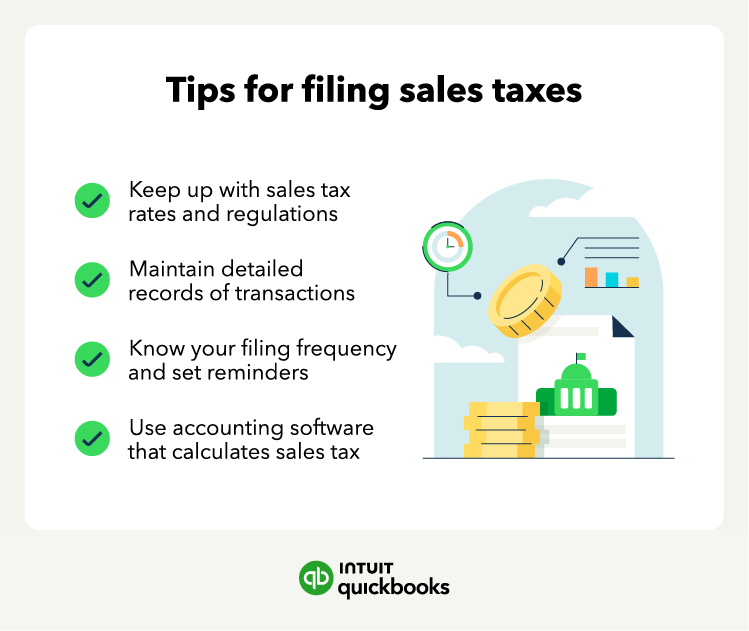
South Carolina's filing calendar has one date to remember and a few mechanics that catch new sellers:
Returns are due the 20th of the following month. Sales and use taxes are due and payable in monthly installments on or before the twentieth day of the month following the month in which the tax accrues. The return is due the same day. January's return is due February 20, and December's is due January 20. A return is considered timely if it is mailed with a postmark dated on or before the due date.
Monthly is the default; quarterly and annual filing take approval. The Department's quarterly schedule puts each quarter's return on the 20th of the month after the quarter ends (April 20, July 20, October 20, January 20). Its annual schedule puts the calendar-year return on January 20. But you must request approval from the Department to file quarterly or annually. Requests go by web message through MyDORWAY or by email to the Department's sales tax inbox. The statute lets the Department authorize quarterly returns when your total tax does not exceed $100 for any month. Seasonal filers use the monthly schedule for the months they had sales.
File and pay through MyDORWAY. Sales and use taxpayers whose South Carolina tax liability is $15,000 or more per filing period must file and pay electronically. Paper filing is available only to taxpayers whose liability is less than $15,000. The Department recommends its free MyDORWAY portal for everyone. There, the local tax schedule is part of the same workflow as the return.
One return, with the local breakout. There is no separate local return. State tax goes on the State Sales and Use Tax Return (ST-3). Local taxes go on the Schedule for Local Taxes (ST-389). It reports them by the county and municipality where each sale or delivery takes place.
You must file the ST-389 if your business is located in a county or municipality that imposes a local tax. You must also file it if your business delivers into one, whether or not you are located there. The statute requires the return to show your gross proceeds by location. The Department warns about mailing addresses. In reporting the local option tax, retailers cannot rely on them to tell which county or municipality a delivery falls in.
File every return, including zero returns. If you have a South Carolina Retail License, you must file an ST-3 even if you have no tax due for the period. Enter zero for gross proceeds and for net taxable sales. On the ST-389, a no-sales return gets a zero for the county or municipality where your business is located. States penalize missing paperwork, not just missing money.
Tip: if a rate error slips through, fix the rate first, then correct the affected returns. Undercollect and the difference comes out of your pocket. Overcollect and you owe refunds. Tax you collected as tax is never yours to keep.
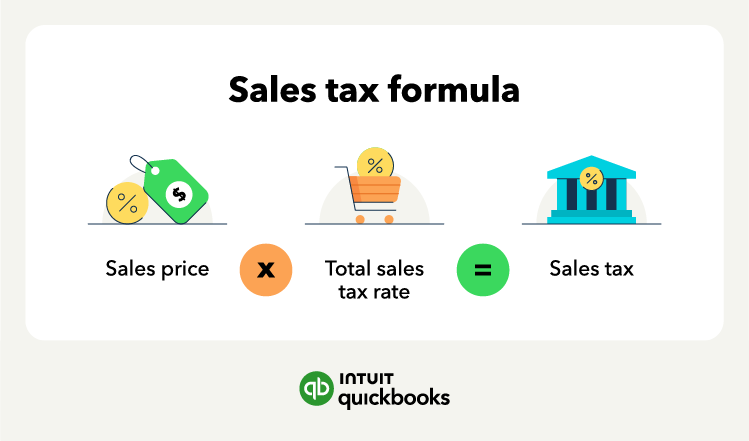
Multiply the pre-tax price by the combined rate where the sale is delivered. That is the 6% state rate plus the local sales taxes, 0% to 3%, imposed in the county and municipality where your customer takes delivery. Delivery is at your location if they pick up or your terms are FOB shipping point. It is at the delivery address if you ship or deliver otherwise.
The exception is the items under South Carolina's $500 maximum tax, covered in the exemptions section. Those get 5% state tax up to the cap and no local tax. On a $1,200 sale delivered to an address at the 9% ceiling, that's $108 in tax and a $1,308 total.
Generally no. South Carolina taxes only the services its statute names: laundering, dry cleaning, dyeing, and pressing; communications services, including software as a service and streaming; electricity; and accommodations. Cleaning, lawn care, pest control, snow removal, barber and beauty services, moving, self-storage, and all professional services are not taxable. Separately stated repair labor generally is not either. Watch the goods that travel with a service. Repair parts are taxable. A repair bill that doesn't separate parts from labor is taxable in full. Printing is taxable on the full charge. The products a salon sells are taxable.
Partly. Unprepared food that could lawfully be bought with USDA food coupons is exempt from the state sales tax. That includes candy, snacks, and soft drinks sold for home consumption. The exemption applies only to the state tax. Local sales taxes still apply unless the particular local tax exempts groceries. So many counties still tax food for home consumption, and a grocer often charges local-only tax. Prepared food, restaurant meals, hot food, and food sold for immediate consumption are generally taxable at the full rate. Vitamins and alcoholic beverages are taxable too.
It depends on how it arrives. Software delivered on a tangible medium is taxable, whether prewritten or custom. Software delivered entirely electronically is not taxable, custom or prewritten. That holds as long as no part of it, including backup media, arrives in tangible form. Software as a service is taxable as a communications service. So is streaming TV, movies, and music. Permanently downloaded digital goods generally follow the electronic-delivery rule and are not taxed. Computer hardware is taxable. Internet access is not.
It starts at 12:01 a.m. on the first Friday in August and runs 72 hours, through midnight the following Sunday. Clothing, accessories, footwear, school supplies, computers, printers, printer supplies, computer software, and bed and bath items are exempt at any price. There are no price caps. Jewelry, cosmetics, eyewear, wallets, watches, furniture, rentals, layaway sales, and items for use in a trade or business do not qualify. The Department publishes the eligible-items list each year before the holiday.
Manage sales tax in QuickBooks with automation that helps you save time and stay compliant.
Save time with automated sales tax
Products are automatically matched to tax categories, so you can charge the right sales tax with less manual work. Returns are automatically prepared and formatted for your state, and if you sell into other states, you can automate multi-state filing from one place.
Stay confident and compliant
File with confidence using accurate, automated calculations. Tax rates and rules change, and they are updated automatically in QuickBooks, so what you charge keeps up. Get reminders before filing deadlines so you can plan ahead, and know your return status with real-time updates.
Your data stays protected
Securely send returns to tax agencies and track every filing in QuickBooks.
Manage your books and sales tax in one place
Automatically calculate, collect, and track applicable sales tax from your customers. One report breaks out taxable and non-taxable sales, so you always know what to pay each agency. Prepare, file, and pay directly from QuickBooks.
Explore QuickBooks sales tax software to spend less time on tax and more time running your business.
*Sales tax filing is available as an add-on service through QuickBooks Online for $40 per filing.
You've got the rates and the rules that apply in South Carolina. The harder part is applying them correctly on every sale, every quarter. QuickBooks automated sales tax calculates the right combined rate, tracks what you've collected, and shows what you owe when it's time to file.
Call Sales: 1-800-285-4854


