Virginia sales tax calculator
Know exactly what to charge at any Virginia address. Find the combined rate, the tax on any amount, and the total. Free for your business, no sign-up.
Know exactly what to charge at any Virginia address. Find the combined rate, the tax on any amount, and the total. Free for your business, no sign-up.
Done checking rates one sale at a time? QuickBooks applies the right Virginia rate, state and local included, on every invoice automatically. See how automated sales tax works
Virginia's sales tax starts from one statewide number: a 5.3% combined general rate. That rate is made of a 4.3% state rate and a uniform 1% local option tax that applies in every city and county. Regional and additional local taxes lift it to 6% in Northern Virginia, Hampton Roads, and Central Virginia. They lift it to 6.3% in certain cities and counties, and to 7% in the Historic Triangle.
The average American side hustle brings in about $2,038 a month, according to Intuit QuickBooks entrepreneurship research. At that size, a Virginia seller is squarely in the system. You register once with Virginia Tax. For a Virginia-based seller, the rate follows the place of business that takes the order. One return carries the state, local, and regional tax together.
What makes Virginia different isn't the rate. It's what the tax reaches. Virginia taxes sales of physical goods and almost no services. It settles mixed invoices with a "true object" test. It leaves anything delivered purely electronically out entirely. Whether you run a boutique in Richmond, build furniture in Norfolk, or run a print shop in Roanoke, here's how Virginia's rate works. You'll also see which of your sales it reaches and what to know at filing time.
Virginia's combined general sales tax rate is 5.3% statewide. That is the 4.3% state rate plus a uniform 1% local option tax that applies everywhere. Certain areas add more. Northern Virginia, Hampton Roads, and Central Virginia reach 6%. Certain individual cities and counties, including Danville, Halifax County, and Pittsylvania County, reach 6.3%. The Historic Triangle (Williamsburg, James City County, York County) reaches 7%. The layers:
Virginia Tax (the Department of Taxation) administers all of these together. You register once and file one return. You never register with a locality for sales tax. Food purchased for human consumption and essential personal hygiene products are taxed at a reduced 1% rate statewide, covered below. The exact combined rate at any location is in the Department's rate and locality code lookup.
Virginia imposes its sales and use tax on retail sales of goods, which the law calls tangible personal property. Services are generally not taxable, so the everyday service businesses are not taxable to the customer. That includes janitorial and building cleaning, dry cleaning, lawn care, pest control, snow removal, pool and window cleaning, barber and beauty services, massage, tanning, tattooing, moving, kenneling, pet grooming and training, and all professional services (legal, accounting, engineering, medical, veterinary).
A service business is generally the consumer of the supplies it uses and pays tax on them. Run a cleaning company in Arlington or a lawn service in Chesapeake, and the tax generally lands on your supply purchases, not your invoices.
The true-object test. When a transaction involves both a service and tangible property, the entire charge is taxable or exempt based on the true object of the transaction. That holds regardless of whether the parts are separately stated. If the real object is the service, the whole charge is exempt even though some property changes hands. If the real object is the property, the whole charge is taxable. Photography is the case to know. When the customer receives a photograph, the full charge is taxable: labor, sitting time, and all components. That is because the true object is the tangible product.
Separately stated labor. Separately stated charges for installing, applying, remodeling, or repairing property are exempt. If parts and labor are not separately itemized, the whole charge is taxable. Separately stated charges for alterations to clothing are exempt too. On a $400 repair invoice at the 5.3% general rate, itemizing $250 in parts and $150 in labor means tax of $13.25 on the parts. One unitemized $400 line means tax of $21.20 on all of it. The exception is fabrication labor. Producing new tangible property for a customer is taxable even when separately stated.
Maintenance contracts. A contract covering both repair parts and repair labor is taxed on 50% of the total charge. It is deemed half parts and half labor regardless of the actual split. A parts-only contract is fully taxable. A labor-only contract is not taxable, and the provider pays tax on the materials it consumes.
Contractors. A contractor performing work on real property is the taxable consumer of the materials it installs. It pays tax when buying them and does not charge the customer sales tax. Sales of materials to contractors are taxable retail sales.
Electronic delivery. Anything delivered purely electronically is exempt, because no tangible property changes hands. That covers software, digital content, and information services. The details are in the exemptions section below.
For a seller, the practical starting points are these. Goods are taxable. Services usually are not. Separately stating labor keeps it out of the tax. Electronic delivery takes software and digital products out entirely. Leases and rentals of goods are taxable just like sales of them.
The 1% local tax and the regional taxes are collected by the same seller on the same return as the state tax. There is no separate local registration. Which locality's rate applies is decided by Virginia's sourcing rule, covered next. For a seller located in Virginia, the locality is generally the city or county of the place of business that took the order, not the customer's address. For a seller located outside Virginia, it is the city or county where the goods are delivered.
Virginia is an origin-sourced state for sellers located in Virginia. It is a destination-sourced state for sellers located outside it. Under Virginia Tax's sourcing rule (23 VAC 10-210-2070), sales by dealers located in Virginia are generally sourced to the city or county of the dealer's place of business. The rule applies "without regard to the city or county of possible use by the purchaser."
Your place of business is the Virginia location that first takes the customer's order, whether in person, by purchase order, or by letter or telephone. It does not matter where the merchandise is, or where the order is accepted or shipped from. A place of business includes a store, a sales or other office, or any warehouse. An out-of-state dealer registered to collect Virginia tax sources each sale to the city or county of destination. The 1% local tax follows the same rule and goes to the same locality. Find your situation:
If you sell goods in person at your location: the sale is sourced to that place of business, even if you then deliver the goods to the customer somewhere else. Charge your location's combined rate. The Department's own example: a dealer sells to a customer at its place of business in the City of Fairfax, in the Northern Virginia region. It delivers the goods to the customer in Loudoun County. The sale is sourced to the City of Fairfax, and the dealer collects 6.0%: 4.3% state, 0.7% regional, and 1.0% local. The local tax goes to the City of Fairfax.
If you ship or deliver goods to Virginia customers from a Virginia location: a remote sale by telephone, internet, or mail order from an in-state dealer is sourced to the location where the order was first taken. That holds even if the goods are delivered to the customer somewhere else. An order placed at a store in County A, forwarded to a sales office in City B, and shipped from a warehouse in County C is a sale made in County A.
The Department's examples run both directions. A dealer in Loudoun County, in the Northern Virginia region, delivers to Roanoke County, outside the Northern Virginia and Hampton Roads regions. It still collects 6.0% because the sale is sourced to Loudoun County. A customer phones an order to a store in Newport News, in the Hampton Roads region, and has it shipped to a home outside both regions. The store collects 6.0% because the sale is sourced to Newport News.
If you sell a service, or a service that comes with a product: most services aren't taxable in Virginia, so most service invoices have nothing to source. The Department's sourcing rule is written for sales of tangible personal property. It states no separate rule for the few taxable services. Where a service charge is taxable because the true object is a product, fabrication labor, or a photographer's full charge when the customer receives a photograph, the charge is part of a taxable sale of goods and generally follows the same place-of-business rule as your goods.
If you sell through a marketplace like Amazon or Etsy: since July 1, 2019, a marketplace facilitator with more than $100,000 in annual Virginia gross retail sales or 200 or more transactions must register. It must collect state and local tax on the sales it facilitates. Sales through a collecting marketplace are not yours to collect on. If you're located in Virginia and also sell directly, through your own website or in person, you still register and collect on those direct sales. If you're out of state with no physical presence in Virginia and also sell directly, only your direct sales count toward the $100,000 or 200-transaction threshold below.
If you're out of state selling into Virginia: if you have no physical presence in Virginia, you must register and collect once you cross the threshold. The threshold is more than $100,000 in gross revenue from retail sales, or 200 or more separate retail sales transactions, into Virginia in the previous or current calendar year. The obligation begins with your next transaction. Until you've crossed either line, you aren't required to collect Virginia tax. Once you have, you source each sale to the city or county where the goods are delivered and charge that locality's combined rate.
Physical presence changes that. An office, warehouse, or other place of business in Virginia makes you a Virginia dealer required to register, whatever your sales volume. So do employees, agents, or independent contractors soliciting business here. So do inventory or leased goods located here, and regular deliveries in your own vehicles (more than 12 trips into Virginia in a calendar year).
The Department's own example: an out-of-state dealer makes internet sales from its place of business in North Carolina, holds a Virginia registration, and ships an order to the City of Fairfax. It collects 6.0%: 4.3% state, 0.7% regional, and 1.0% local. The local tax goes to the City of Fairfax. Local rate changes take effect only on the first day of a calendar quarter. The Tax Commissioner gives remote sellers at least 30 days' notice before one.
Sales with their own rules. Aircraft, watercraft, and motor vehicles are taxed at different rates from the ones above, under their own rules. Cable television falls under Virginia's separate Communications Sales and Use Tax. Accommodations rented for fewer than 90 continuous days are subject to sales tax. Localities impose their own transient occupancy taxes on the same charges. If a locality boundary runs through your place of business, the local tax on that location's sales is split equally among the localities involved.
Worked example. You build furniture at your shop in the City of Fairfax and sell a $900 table.
Same table, same customer, a different rate depending on where the seller's place of business is. Virginia Tax credits the local tax to the city or county of the place of business that made each sale. So keep the location that took each order, and its locality code, with every sale.
The exemptions and reduced rates that matter most to small sellers:
Groceries: taxed at a reduced 1% rate, not exempt. Since January 1, 2023, food purchased for human consumption and essential personal hygiene products are taxed at 1%. The state's share was eliminated, so only the 1% local option tax remains. Virginia uses the federal food-stamp (SNAP) definition of food, so food sold for home consumption generally gets the 1% rate. Alcoholic beverages, tobacco, hot prepared food, and seeds and plants that grow food are excluded and taxed at the full rate. A $60 basket of groceries carries $0.60 in tax.
Essential personal hygiene products: diapers, incontinence products, and menstrual products also get the 1% rate.
Prepared food: taxed at the full combined rate, not 1%. Hot food prepared for immediate consumption doesn't qualify for the 1% rate wherever it's sold. Restaurants, caterers, and concession vendors are presumed to sell for immediate consumption.
The statute's test for a restaurant, cafe, or any other food seller is its receipts. If more than 80% of a location's gross receipts (motor fuel sales included) come from food it prepares for immediate consumption, nothing it sells qualifies for the 1% rate. A store or deli below that line generally charges 1% on cold packaged food sold for home consumption. Many localities add a separate meals or food-and-beverage tax, paid to the locality.
Supplements and alcohol: vitamins and dietary supplements are taxed at the full rate unless sold pursuant to a written prescription. The line is the label. A product with a Supplement Facts panel is taxed at the full rate. One with a Nutrition Facts panel is food at 1%. Alcoholic beverages are taxed at the full rate.
Clothing: taxable year-round. Clothing, footwear, accessories, protective clothing, and sports equipment are all taxable as tangible personal property. Separately stated charges for alterations are exempt. The August sales tax holiday is covered below.
Software and digital products: taxable only on physical media. Off-the-shelf, or prewritten, software on a disk or drive is taxable. Prewritten software delivered electronically, with no tangible medium provided, is exempt. Custom programs are exempt regardless of delivery. SaaS, IaaS, and PaaS are not taxable. Neither are downloaded or streamed music, video, and books. That is because no tangible personal property changes hands. Computer hardware is taxable. Internet access is exempt. Two carve-outs apply. Cable television is subject to the separate Virginia Communications Sales and Use Tax. A 10% digital media fee applies to in-room purchases or rentals of audio-visual works through hotel televisions.
Prescription and over-the-counter drugs: both exempt. Prescription drugs and medicines dispensed by or on the order of licensed practitioners are exempt. So are over-the-counter drugs and proprietary medicines purchased for the cure, mitigation, treatment, or prevention of disease in humans. Cosmetics are excluded from that exemption and taxable. Durable medical equipment, wheelchairs and parts, braces, and prosthetic devices are exempt when purchased by or on behalf of an individual. Medical services are not taxable.
Newspapers and magazines: publications issued daily or at regular intervals not exceeding three months are exempt, along with the advertising supplements distributed with them. But newsstand single-copy sales of the same publications are taxable. Printing is taxable.
Resale and manufacturing: anything bought for resale is exempt with a resale certificate (Form ST-10). Machinery, tools, and materials used directly in manufacturing or processing products for sale are generally exempt. So are materials that become part of the finished product.
But the exemption applies only where the production is industrial in nature: a plant, factory, or mill producing for sale rather than for direct sale to consumers. A business that makes goods as an incidental part of a retail or service operation, such as a bakery, candy shop, photographer, or tailor, generally doesn't qualify. It pays tax on its equipment. Containers, packaging, labels, and wrappers are exempt when marketed with the product and passing to the buyer.
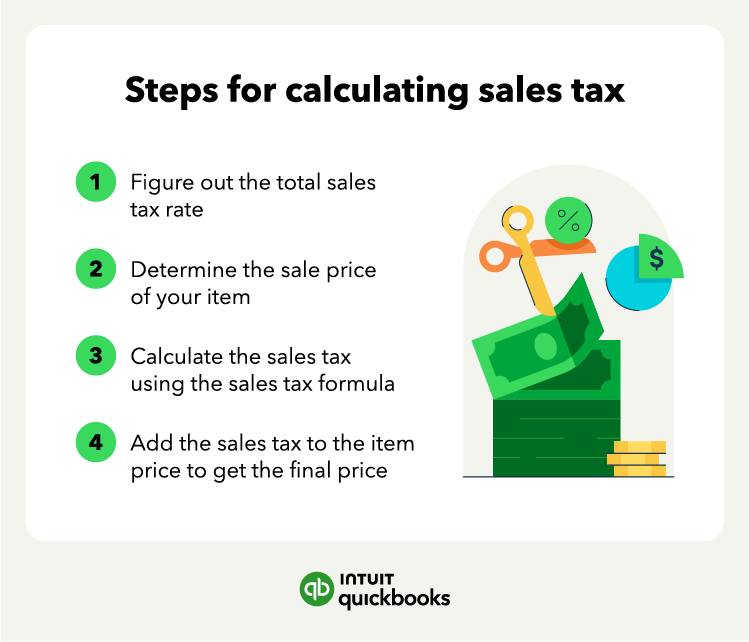
Selling a mix of full-rate, 1%-rate, and exempt items is where receipts get messy. Track the buckets separately from the start.
Use tax is the buyer's side of the same tax. It applies to the use, consumption, or storage of tangible personal property in Virginia when Virginia sales or use tax was not paid at the time of purchase. Goods are subject to either sales tax or use tax, not both. If you paid another state's sales or use tax on the purchase, Virginia generally credits that tax against the use tax you owe, up to the amount of the Virginia tax. So you owe only the difference, if any.
The rates match. Virginia's state use tax is 4.3%, the same as the state sales tax. The rates of the local and regional use taxes are the same as the local and regional sales taxes. So, as Virginia Tax puts it, the use tax rate is the same as your sales tax rate. Use tax is sourced to the city or county where you use, consume, or store the goods.
For a business, this shows up when you order equipment, supplies, or software on a disk from a vendor that didn't charge Virginia tax. For a service business, it shows up on supplies bought without Virginia tax.
Say your shop in the City of Fairfax buys a $3,000 commercial espresso machine from an out-of-state seller that doesn't collect Virginia tax. You owe 6% use tax, 4.3% state, 0.7% regional, and 1% local, or $180. That is the same tax a Fairfax City store would have charged. The Department's own example has the same shape. A Fairfax City customer who buys online from a West Virginia dealer with no Virginia registration pays 6.0% use tax.
There is a local use tax. The 1% local use tax applies in all cases in which the state use tax applies. That includes goods bought outside Virginia for use or storage in the locality. So it rides along with the state use tax on your out-of-state purchases. One relief applies if you paid Virginia sales tax on a purchase and later move the item into a region that has the regional tax. You don't owe the regional use tax on it.
How you report it. If you're registered for sales tax, report use tax by including the taxable items on your regular sales tax return. That return is due on the 20th of the month after the filing period. It is filed every period whether or not you owe use tax.
A business that isn't registered reports it on a consumer's use tax return (since April 2025, the same Form ST-1). That return is due the 20th of the month following the period in which the liability was incurred. The business doesn't have to file for a period in which it owes no use tax. Use tax is computed on the cost price. That is the total amount you paid for the property, including any services that are part of the purchase. Items exempt from sales tax are exempt from use tax too.
Virginia holds one combined sales tax holiday each year, on the first weekend of August. It covers school supplies, clothing, hurricane-preparedness items, and energy-efficient products. The three-in-one holiday runs the three-day period beginning the first Friday in August through the following Sunday. In 2026, that is August 7 through 9. Exempt during the window:
The holiday statute is currently in effect through a sunset of July 1, 2030. The Department publishes each year's details on its sales tax holiday page.
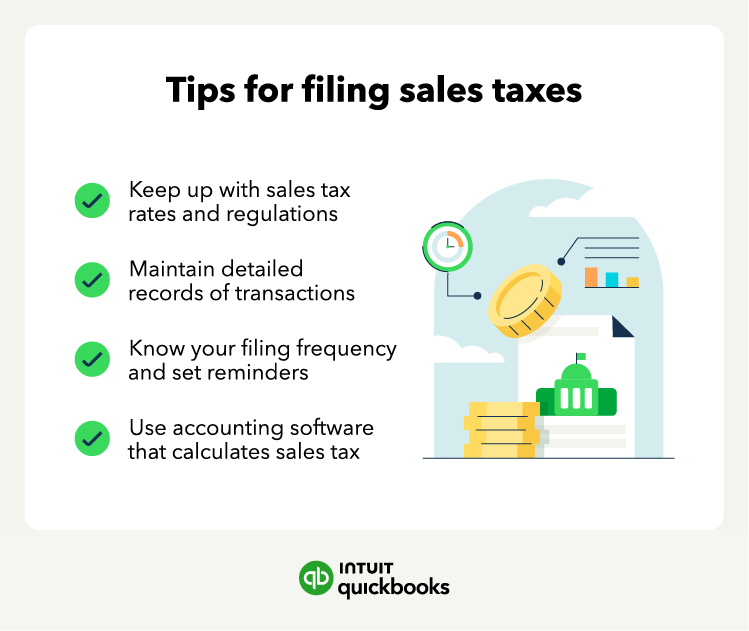
Returns are due on the 20th. Monthly returns are due on the 20th day of the month following the close of the filing period. Your April return is due May 20. Quarterly returns are due April 20, July 20, October 20, and January 20. Payment goes in with the return. The tax becomes delinquent on the 21st of the month after the period if it isn't paid.
Virginia Tax assigns your filing frequency. Based on your tax liability, the Department determines whether you file monthly or quarterly. A new dealer stays on monthly filing until it has been in business long enough to show it belongs in another category. The change from monthly to quarterly is made automatically by the Department. Dealers should not request it. A business that operates only during certain months can ask for a seasonal registration and file only for the months it operates.
File electronically, every period, including zero returns. Sales tax must be filed and paid electronically. If you can't, you must submit an electronic filing waiver request. You need to file your return every month or quarter even if no tax is owed. A late return or payment carries a penalty of 6% per month of the tax owed, up to 30%. A $10 minimum applies even when no tax is owed. Interest accrues at the federal underpayment rate plus 2%.
One return carries the state, local, and regional tax. You register once with Virginia Tax and file one return, Form ST-1. That form consolidated the older ST-9 and related forms as of April 2025. You never register with a locality for sales tax.
Virginia Tax credits the 1% local tax to the city or county of the place of business that made each sale, without regard to where the buyer might use the goods. An out-of-state dealer breaks its shipments into Virginia down by city and county of destination, so far as reasonably practicable. The Department identifies localities by locality code (the FIPS code), available in its rate and locality code lookup. Keeping the code with each sale turns the local allocation into a sort, not a research project.
Amending a return. If you need to change a sales tax return you filed, file an amended Form ST-1 through eForms.
Tip: if a rate error slips through, fix the rate first, then correct the affected returns. Undercollect and the difference comes out of your pocket. Overcollect and you owe refunds. Tax you collected as tax is never yours to keep.
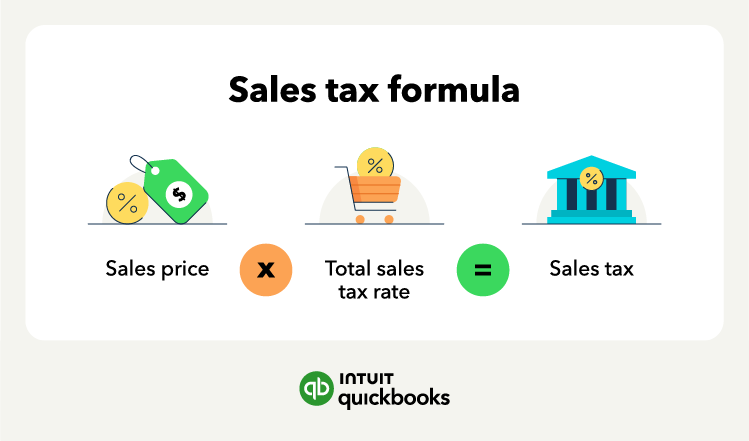
Multiply the pre-tax price by your combined rate. At the 5.3% general rate, a $1,200 sale carries $63.60 in tax and totals $1,263.60. Use your location's rate: 6% in Northern Virginia, Hampton Roads, and Central Virginia, 6.3% in certain cities and counties, or 7% in the Historic Triangle.
Both, depending on where the sale is sourced. The combined general rate is 5.3% statewide: 4.3% state plus the uniform 1% local option tax. Northern Virginia, Hampton Roads, and Central Virginia are 6%. Certain cities and counties, including Danville, Halifax County, and Pittsylvania County, are 6.3%. The Historic Triangle (Williamsburg, James City County, York County) is 7%. For a seller located in Virginia, the rate generally follows the city or county of the place of business that took the order, not the customer's address. For a seller located outside Virginia, it follows the delivery address. The Department's rate and locality code lookup gives the exact combined rate at any location.
Generally no. Virginia taxes retail sales of tangible personal property and almost no services. Cleaning, lawn care, pest control, barber and beauty services, pet grooming, moving, and all professional services are not taxable to the customer. When a job mixes a service with property, the true object of the transaction decides the whole charge. Separately stated repair, installation, and alteration labor is exempt. But fabrication labor is taxable even when separately stated. A photographer's full charge is taxable when the customer receives a photograph. A maintenance contract covering both parts and labor is taxed on half the charge.
Yes, at a reduced 1% rate. Since January 1, 2023, food purchased for human consumption and essential personal hygiene products are taxed at 1%, the local option tax only. Food sold for home consumption generally qualifies. Dietary supplements, alcoholic beverages, tobacco, and hot prepared food are taxed at the full rate. So is all food sold by a business that takes more than 80% of its receipts from food it prepares for immediate consumption.
The three-day period beginning the first Friday in August through the following Sunday: August 7 through 9 in 2026. Exempt during the window are school supplies $20 or less per item, and clothing and footwear $100 or less per item. Hurricane and emergency preparedness items are exempt within their price limits (portable generators $1,000 or less, gas-powered chainsaws $350 or less, chainsaw accessories and other specified items $60 or less). So are Energy Star and WaterSense products $2,500 or less per item for noncommercial home or personal use.
Manage sales tax in QuickBooks with automation that helps you save time and stay compliant.
Save time with automated sales tax
Products are automatically matched to tax categories, so you can charge the right sales tax with less manual work. Returns are automatically prepared and formatted for your state, and if you sell into other states, you can automate multi-state filing from one place.
Stay confident and compliant
File with confidence using accurate, automated calculations. Tax rates and rules change, and they are updated automatically in QuickBooks, so what you charge keeps up. Get reminders before filing deadlines so you can plan ahead, and know your return status with real-time updates.
Your data stays protected
Securely send returns to tax agencies and track every filing in QuickBooks.
Manage your books and sales tax in one place
Automatically calculate, collect, and track applicable sales tax from your customers. One report breaks out taxable and non-taxable sales, so you always know what to pay each agency. Prepare, file, and pay directly from QuickBooks.
Explore QuickBooks sales tax software to spend less time on tax and more time running your business.
*Sales tax filing is available as an add-on service through QuickBooks Online for $40 per filing.
You've got the rates and the rules that apply in Virginia. The harder part is applying them correctly on every sale, every quarter. QuickBooks automated sales tax calculates the right combined rate, tracks what you've collected, and shows what you owe when it's time to file.
Call Sales: 1-800-285-4854


