West Virginia sales tax calculator
Know exactly what to charge at any West Virginia address. Find the combined rate, the tax on any amount, and the total. Free for your business, no sign-up.
Know exactly what to charge at any West Virginia address. Find the combined rate, the tax on any amount, and the total. Free for your business, no sign-up.
Done checking rates one sale at a time? QuickBooks applies the right West Virginia rate, state and municipal included, on every invoice automatically. See how automated sales tax works
West Virginia's sales tax has two layers. The state sales tax is 6%. Municipalities may impose a municipal sales and use tax of up to 1%. The state Tax Division collects it for them.
The average American side hustle brings in about $2,038 a month, according to Intuit QuickBooks entrepreneurship research. At that size, a West Virginia seller is squarely in the system. You charge the 6% state rate plus any municipal tax, depending on where each sale is sourced. One state return carries the municipal tax on it.
What makes West Virginia different isn't the rate. It's how much of what a small business sells is taxable in the first place. The state taxes services by default. A service is taxable unless it is a professional service, a personal service, a service an employee provides to their own employer, or one the law specifically lists as exempt. Whether you run a boutique in Charleston, repair cars in Huntington, or mow lawns in Morgantown, here's how West Virginia's rate works. You'll also see which of your sales it reaches and what to know at filing time.
West Virginia's state sales tax rate is 6%. Where a municipality imposes the municipal sales and use tax, the combined rate is 6% plus the municipal rate. The municipal rate may not exceed 1%. There are two layers:
The municipal tax reaches the same goods, custom software, and services as the state tax, with a few limited exceptions. It applies only to sales sourced to a municipality that imposes it. There is no separate return to the city. You report municipal tax on the municipal schedule of your West Virginia combined sales and use tax return.
West Virginia taxes retail sales of goods, which the law calls tangible personal property, and custom software. It also taxes the furnishing of nearly all services. The statute's default is broad. A service is taxable unless it is a professional service, a personal service, a service an employee provides to their own employer, or a service specifically listed as exempt. A personal service is one rendered directly on the person of an individual, without also selling tangible personal property, such as barbering or manicuring. If you sell services in West Virginia, you should generally assume a new type of service is taxable unless it clearly fits one of those carve-outs.
Under that default, most cleaning, business, and trade services are generally taxable. Taxable services include:
Services that are not taxable fall into the carve-outs. Personal services performed directly on the person of an individual, without also selling tangible personal property, are exempt. Those include barbering, hairstyling, manicuring, and massage therapy. Professional services recognized as such under West Virginia law are exempt. Those include the services of physicians, certified public accountants and public accountants, professional engineers, and attorneys. Veterinary services are treated as exempt professional services. Investment counseling is treated as an exempt banking service. Purchases these professionals make for use in providing their professional services remain taxable to them.
Babysitting by an individual is not taxable as long as that individual's gross receipts from babysitting do not exceed $5,000 in a taxable year. Licensed day care centers are separately and unconditionally exempt regardless of revenue.
The line cuts in specific places. Veterinary services are exempt, but grooming or kenneling provided by the same veterinarian is taxable. A manicure is an exempt personal service. A tanning session is taxable because a machine, not a person, renders it.
The capital improvement carve-out. General or prime contracting is not taxable when the work results in a capital improvement to real property. The same is true of excavating and grading. Building maintenance is taxable except in connection with new construction, reconstruction, alteration, expansion, or remodeling of a structure. HVAC installation and repair is taxable unless the work is a capital improvement. Contractors still pay tax on the goods and taxable services they buy to use or consume in performing a contracting service. So sales of equipment and materials to contractors are taxable.
What this means for a seller: before you price a service, check your category against the West Virginia Tax Division's sales and use tax exemptions publication, TSD-300. If a new type of service doesn't clearly fit a carve-out, generally assume it is taxable.
The municipal sales and use tax applies to the same goods, custom software, and services as the state tax. There are a few limited exceptions. It applies only to sales sourced to a municipality that imposes it. It uses the same sourcing rules as the state tax. All sellers who are required to collect West Virginia sales tax and who do business in a municipality that imposes the tax must collect the municipal tax as well. They must pay it to the Tax Division. That includes sellers located outside the municipality who ship or deliver goods into it or perform taxable services in it. The municipal tax goes on the municipal schedule of your state return.
West Virginia is a destination-sourced state. It has adopted the sourcing rules of the Streamlined Sales and Use Tax Agreement. Under W. Va. Code § 11-15B-15, a sale is sourced to the place where your customer receives what they bought. For goods, receiving means taking possession. For services, it means making first use of the service. For computer software and digital goods, it is whichever of those comes first. Your own location decides the rate only when the customer receives the goods or the service there. The address you shipped from, or provided the service from, matters only as a last resort, when none of the other rules can be applied. The municipal tax follows the same sourcing rules. So it applies when the sale is sourced to a municipality that imposes it. Find your situation:
If you sell goods in person at your location: the sale is sourced to your business location. Charge that location's combined rate. That is the state rate, plus the municipal tax if your location is inside a municipality that imposes it. That holds even when the customer is from somewhere else.
The Tax Division says to charge municipal sales tax to customers from outside the municipality who pick up items in the municipality. That applies to items for business or personal use. It applies even if the items are then taken out of the municipality for use. Its own example is a contractor who buys and picks up wood, in his own truck, in a city with a tax. The wood is for use in an area without one. Because the wood is picked up inside the city, the city's sales tax applies. If the seller had delivered the materials to the construction site in the area without a municipal tax, no municipal tax would be due.
If you ship or deliver goods to West Virginia customers: the sale is sourced to the location where the customer receives the goods. That includes the delivery location the customer gave you. A shipping company's possession on the customer's behalf is not receipt. So a shipped order is sourced to where the customer takes possession, not to where you handed it to the carrier. Charge the delivery address's combined rate.
Delivering into a municipality that imposes the tax means collecting its municipal tax, even if your business sits outside it. The Tax Division says not to charge municipal tax when you ship or deliver to a customer outside the municipality where you operate and into an unincorporated location, or into a municipality that does not impose the tax. The Tax Division's example: a Charleston company sells tires to a Romney company and delivers them to Romney in its own truck. The Charleston company must collect Romney's municipal sales tax.
If you perform a service at the customer's location: lawn care, pest control, snow removal, janitorial work, HVAC repair, and other taxable services performed at the customer's property are generally received where they are performed. That is because the customer first uses the result there. So the sale is sourced to the customer's address. The Tax Division says to charge municipal sales tax to customers from outside the municipality if you perform taxable services for them inside it. It also says a service provider rendering services within a municipality must collect that municipality's tax.
If you repair, alter, clean, or otherwise work on a customer's property: repair work, garment alterations, dry cleaning, pet grooming, photography, and other taxable services whose result the customer takes away are generally sourced to where the customer receives that result. If they pick it up at your shop, that is your shop's rate. If you deliver or ship it to them, that is their address's rate.
The Tax Division's own examples: a motor vehicle repair you perform inside a city that imposes the tax carries that city's municipal tax. That is true even though the vehicle's owner lives outside the municipality. A photographer takes pictures at a site with no municipal tax. The customer picks up the photos at the photographer's studio in a city that has one. Municipal sales tax is due because the customer takes possession of the photos in that city. If the photographer mails the photos to an area with no municipal sales tax, no municipal sales tax is due.
If you sell through a marketplace like Amazon or Etsy: a marketplace facilitator must collect and remit West Virginia sales and use tax once its sales into West Virginia reach $100,000, or 200 or more separate transactions, in the current or preceding calendar year. That duty covers all taxable sales it facilitates into the state, including applicable municipal tax. It includes sales made on behalf of third-party marketplace sellers like you. Those marketplace sales still count toward your own threshold, covered next.
If you're out of state selling into West Virginia: you must collect once you have $100,000 in gross sales or 200 or more separate transactions into West Virginia in the preceding or current calendar year. Either test alone is enough. Marketplace sales count toward your threshold even though the marketplace collects on them. Collection starts with your next transaction after you cross either line.
Until then, you aren't required to collect West Virginia tax if you have no physical presence in West Virginia. The Tax Division says the small-seller exception does not apply to sellers with a physical presence in the state. A retailer with an office, warehouse, or other place of business in West Virginia, or an agent operating here, is a retailer engaging in business in the state. It must collect on its taxable sales regardless of volume.
Once you have crossed either threshold, the same sourcing rules apply to you. Each sale is sourced to the place your customer receives it. The Tax Division says a remote seller must collect the applicable municipal sales and use tax when the customer's shipped-to address is inside a municipality that imposes it.
Sales with their own sourcing rules. Telecommunications services, ancillary services, and Internet access services are sourced under a separate section of the statute. Advertising and promotional direct mail is sourced to the jurisdictions where it is delivered to recipients, when the buyer gives you that information. The buyer can take over the sourcing by giving you a direct pay permit or a direct mail exemption certificate. Leases and rentals of equipment follow a modified rule. A lease with recurring payments sources the first payment like a sale. Later payments are sourced to the address where the property is kept. A lease without recurring payments is sourced like a sale.
Worked example. You build furniture in Parkersburg and sell a $900 table.
Same table, same week, a different line on your return. West Virginia's return reports municipal tax municipality by municipality, so keep the delivery address with every sale.
The exemptions that matter most to small sellers:
Groceries: food and food ingredients for home consumption are exempt. The exemption does not reach soft drinks or food sold through vending machines. The statute taxes those at the general rate alongside prepared food. A soft drink is a nonalcoholic beverage containing natural or artificial sweeteners, other than one containing milk or milk substitutes or more than 50% vegetable or fruit juice by volume.
Prepared food: generally taxable. Prepared food includes:
The statute generally excludes from prepared food:
Vitamins and dietary supplements: exempt, as a category distinct from ordinary food, when the product meets all of these conditions:
Clothing: taxable year-round. West Virginia has no general clothing exemption. Clothing, clothing accessories, protective clothing and equipment, sports and recreational equipment, special-order clothing and footwear, and clothing alteration are all taxable. The annual August sales tax holiday, covered below, exempts qualifying clothing and footwear for four days.
Software, digital products, and cloud services: custom, downloaded, and prewritten software are taxable. So is computer hardware. Software as a service, platform as a service, and infrastructure as a service are all taxable. So are optional and required hardware and software maintenance agreements. Streaming and subscription services that provide access to a content catalog are taxable services. Sales or rentals of individual digital audio, video, and book files to end users are not subject to West Virginia sales tax.
Prescription drugs and medical items: prescription drugs, durable medical equipment, mobility enhancing equipment, and prosthetic devices are exempt when dispensed on a prescription from a health care provider licensed to prescribe in West Virginia. They also need to be dispensed for the diagnosis, cure, mitigation, treatment, or prevention of injury or disease. Insulin sold for medical purposes is exempt. Over-the-counter drugs and health care items are taxable.
Manufacturing purchases: services, machinery, supplies, and materials directly used or consumed in manufacturing are exempt. But the mechanism is a refund rather than a tax-free checkout. Generally, the buyer takes one of two routes. One is to hold a direct pay permit to purchase tax-free up front. The other is to pay tax at the time of purchase and apply to the Tax Division for a refund or credit. Purchases that are only incidental or convenient to manufacturing do not qualify. The Tax Division's own example: a furnace used to heat a manufacturer's office building is taxable. So is the fuel to run it. Equipment and materials directly used to make the product are exempt.
Selling a mix of taxable and exempt items is where receipts get messy. Track the two buckets separately from the start.
Use tax is the buyer's side of the same tax. West Virginia imposes it on the use in the state of goods, custom software, or taxable services. The rate is 6% of the purchase price. The Tax Division describes it as a 6% tax on the use of property or services in West Virginia where West Virginia sales tax has not been paid. The use tax rate is the same as the sales tax rate. Property and services whose sale is exempt from West Virginia sales tax, used for the purpose that makes them exempt, are exempt from use tax as well.
Every person using taxable property or services in West Virginia owes the tax. That liability isn't extinguished until the tax has been paid. A receipt with the tax separately stated, issued by a retailer engaged in business in West Virginia, is what relieves you of it.
For a business, use tax shows up when a supplier does not collect West Virginia sales or use tax on a taxable purchase. That includes an out-of-state supplier. The Tax Division's examples of businesses liable for use tax include retailers and service providers on most items they don't resell, contractors, and professionals. Say a coffee shop in Huntington buys a $3,000 commercial espresso machine from an out-of-state vendor. The invoice shows no West Virginia tax. The shop owes $180 in state use tax.
There is a municipal use tax. A municipality that imposes the municipal sales tax must also impose a municipal use tax at the same rate. It applies when you buy items or services for use, storage, distribution, or consumption in that municipality without paying its municipal sales tax to the seller. The Tax Division's own example is a buyer who purchases a taxable item from an out-of-state seller that charges no municipal sales or use tax. Huntington imposes the tax at 1%. So the espresso machine also carries $30 of Huntington use tax, for $210 in all.
To avoid double taxation, you get a credit against municipal use tax for sales or use tax you lawfully paid to another municipality. You also get a credit against the state use tax for sales tax you lawfully paid to another state. Each credit is capped at the use tax due here.
How you report it. A business that owes use tax pays it directly to the Tax Division. It goes on the same combined sales and use tax return, the CST-200CU. Taxable purchases on which no West Virginia sales tax was paid go on the purchases line. Municipal use tax goes on the municipal schedule for each municipality. The return is due on or before the 20th day of the month following the end of your filing period.
West Virginia holds one annual sales tax holiday. It recurs on the first Sunday of August, along with the preceding Friday and Saturday and the following Monday. During the holiday, these items are exempt:
The thresholds apply per qualifying item. Items qualify only if they are not being purchased for use in a trade or business.
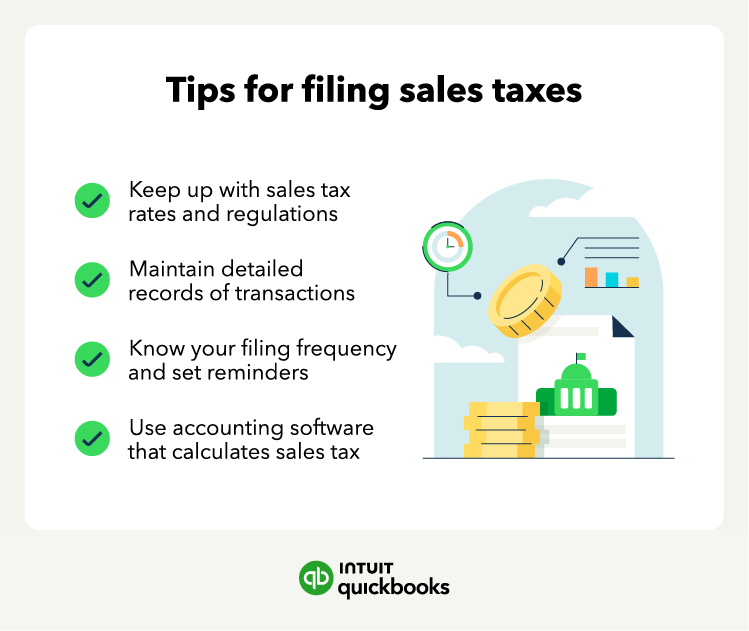
West Virginia's filing side has a few features worth knowing before your first return is due:
One combined return covers state tax, municipal tax, and use tax. The CST-200CU is used to report both state and municipal sales and use tax. Anyone with an obligation to collect and remit sales and use tax must file it. Municipal tax goes on Schedule M, one line per municipality, identified by its FIPS code. So keep the delivery address with every sale. Returns reporting more than ten municipalities must be filed electronically.
Returns are due the 20th. The default is monthly. The return and payment are due on or before the 20th day of the month after the month in which the tax accrued. Vendors who collect more than $250 of sales tax a month must pay monthly. If your average monthly remittance is no greater than $250, an annual aggregate of $3,000 or less, you may file quarterly. The quarterly return is due on or before the 20th day of the first month after the quarter ends. If your annual aggregate sales and use tax is $600 or less, you may file one annual return after your taxable year ends.
File electronically if you paid more than $25,000 last year. Taxpayers who paid more than $25,000 in the prior tax year need to file and pay electronically, through MyTaxes. The Tax Division encourages everyone else to as well.
File every return, including zero returns. A sales and use tax return must be filed even if no tax is collected or due. The instructions have you enter a 0 on the total-due lines. Keep a copy of each return and its supporting documents for at least three years after the tax is paid or due, whichever is later.
Tip: if a rate error slips through, fix the rate first, then correct the affected returns. Undercollect and the difference comes out of your pocket. Overcollect and you owe refunds. Tax you collected as tax is never yours to keep.
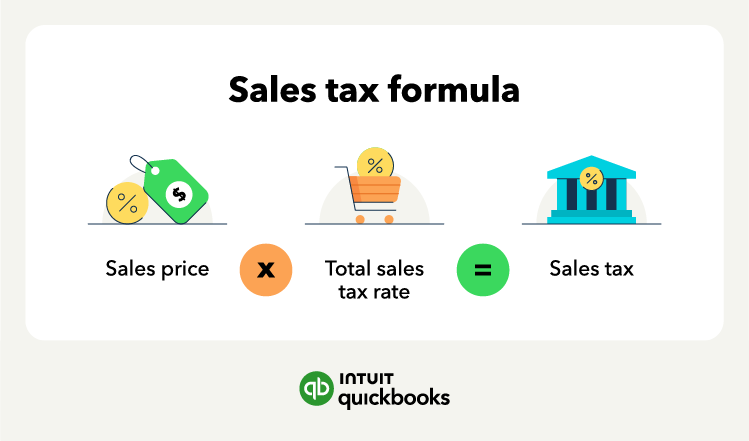
Multiply the pre-tax price by your combined rate: 6% state plus, where the sale is sourced to a municipality that imposes it, the municipal rate of up to 1%. The Tax Division's instruction is to combine the state rate and the municipal rate, then apply the combined rate to the taxable sales price. Round up or down to the nearest full cent. On a $1,200 sale sourced to Parkersburg, which imposes the municipal tax at 1%, the combined rate is 7%. That's $84 in tax and a $1,284 total. The same sale sourced to an address outside any municipality that imposes the tax is taxed at 6%. That's $72 in tax and a $1,272 total.
Yes, one kind. Municipalities may impose a municipal sales and use tax at a rate not exceeding 1%. The West Virginia Tax Division, not the city, administers, collects, and enforces it. It applies to sales sourced to a municipality that imposes it, under the same rules as the state tax. That means your location if the customer picks up there, the delivery address if you ship, and generally where the customer first uses the result of a service.
Nine-digit ZIP codes help determine the taxing area, but they do not always correspond exactly with a municipality's corporate boundaries. So part of a nine-digit ZIP can lie outside the city. The Tax Division's municipal sales and use tax page lists the municipalities that impose the tax and their effective dates.
Yes, by default. A service is taxable unless it is a professional service, a personal service, a service an employee provides to their own employer, or a service specifically listed as exempt. A personal service is one rendered directly on the person of an individual without also selling tangible personal property. Lawn care, janitorial work, repair labor, pet grooming, photography, management consulting, and self-storage are taxable. Barbering, hairstyling, manicuring, massage therapy, and the services of physicians, certified public accountants and public accountants, professional engineers, and attorneys are exempt. Contracting that results in a capital improvement to real property is not taxable. But contractors pay tax on the materials and equipment they buy for the job.
No. Food and food ingredients for home consumption are exempt. But soft drinks and food sold through vending machines are taxed at the general rate. A soft drink is a sweetened nonalcoholic beverage, other than one containing milk, milk substitutes, or more than 50% fruit or vegetable juice by volume.
Prepared food is generally taxable. That means two or more ingredients combined by the seller and sold as a single item. It also means food sold by an eating establishment for on- or off-premises consumption. And it means food the seller has already heated and that is ready to eat without further cooking. Bakery items and food sold in an unheated state by weight or volume as a single item are generally not prepared food. Vitamins and dietary supplements that meet the statutory definition are exempt as their own category.
The first Sunday of August, along with the preceding Friday and Saturday and the following Monday, every year. Clothing priced at $125 or less, school supplies at $50 or less, school instructional material at $20 or less, laptop or tablet computers at $500 or less, and sports equipment at $150 or less qualify. The thresholds apply per item. Items qualify as long as they are not being purchased for use in a trade or business.
Manage sales tax in QuickBooks with automation that helps you save time and stay compliant.
Save time with automated sales tax
Products are automatically matched to tax categories, so you can charge the right sales tax with less manual work. West Virginia returns are automatically prepared and formatted for the Tax Division, with municipal sales broken out by city, and if you sell into other states, you can automate multi-state filing from one place.
Stay confident and compliant
File with confidence using accurate, automated calculations. New municipalities adopt the 1% tax twice a year, and tax rates and rules are updated automatically in QuickBooks, so the rate you charge keeps up. Get reminders before Tax Division deadlines so you can plan ahead, and know your return status with real-time updates.
Your data stays protected
Securely send returns to tax agencies and track every filing in QuickBooks.
Manage your books and sales tax in one place
Automatically calculate, collect, and track applicable sales tax from your customers. One report breaks out taxable and non-taxable sales, so you always know what to pay each agency. Prepare, file, and pay directly from QuickBooks.
Explore QuickBooks sales tax software to spend less time on tax and more time running your business.
*Sales tax filing is available as an add-on service through QuickBooks Online for $40 per filing.
You've got the rates and the rules that apply in West Virginia. The harder part is applying them correctly on every sale, every quarter. QuickBooks automated sales tax calculates the right combined rate, tracks what you've collected, and shows what you owe when it's time to file.
Call Sales: 1-800-285-4854


