
You could save up to 25% on transaction costs².
Speak with us now to see if you qualify.
Talk to sales 1-800-515-8366
Monday - Friday, 6 AM to 4 PM PT

Table of contents
Table of contents
For most finance teams, the challenge of growth does not appear overnight. It starts gradually. The close stretches by a few days. A report stalls while someone reconciles a spreadsheet. A miscoded transaction surfaces during audit prep.
As transaction volume increases, strain can begin showing up across accounts receivable, transaction management, reporting, and approvals. Processes that once worked, start to slow down. Over time, delays compound, visibility weakens, and risk increases.
In an Intuit QuickBooks Business Solutions Survey, respondents reported spending an average of 25 hours each week on manual data entry and reconciliation. That’s time that doesn’t increase capacity or improve visibility when transaction volume grows. As complexity rises, manual effort rises with it—pulling focus away from analysis and forward planning. It’s one reason many midmarket finance teams are shifting core processes to automated, policy-based workflows now rather than waiting for pressure to build at close.
Financial process automation gives finance teams room to grow without sacrificing control. Structured workflows bring consistency to cash flow, audit preparation, and reporting. This improves productivity by helping teams close faster, produce more reliable reports, and maintain stronger controls.
In this article, we’ll explore where scaling midmarket finance teams typically lose time—and how building automation into core processes helps prevent slowdowns before they start.

Inconsistent invoicing and manual follow-up are two of the most common drains on finance team capacity. A client billed three days late, a reminder that never went out, an invoice sitting in a queue because no one confirmed receipt—each of these seems minor in isolation. Together, however, they push receivables past due and introduce friction at month-end when cash positions should be clear.
Unpredictable AR weakens cash visibility and forecasting accuracy. When leadership requests a short-notice projection, it’s only as reliable as the aging data behind it.
Batch invoicing enables finance teams to generate consistent invoices across customer segments without manually rebuilding each one. For recurring services or standardized revenue streams, you can use templates, recurring transactions, and batch invoicing together to reduce variability across larger portfolios.
When properly structured, batch invoicing helps scaling companies:
In QuickBooks Online Advanced, invoices created through these workflows roll into the product’s enhanced reporting, custom fields, and invoice permissions. Automation eliminates the need for separate handling. It reduces reconciliation discrepancies and gives finance teams a better view of expected cash inflows as receivables move through the system.
Finance leaders gain clearer oversight into customer concentration, aging trends, and expected cash inflows, which can support more reliable projections and a more controlled close.
Manual categorization is one of the most underestimated bottlenecks in finance. At lower transaction volume, it’s manageable. As activity increases, it slows review cycles and introduces inconsistency into the ledger.
Consider a retail company processing hundreds of vendor payments daily. One miscoded expense (e.g., recording a marketing cost as office supplies) may seem minor. Multiplied across thousands of transactions, those inconsistencies compound. Reporting requires more validation. Reconciliation takes longer. The close stretches.
When transaction management relies heavily on manual review, month-end becomes a cleanup exercise.
Intelligent transaction rules create consistency before close begins. Predefined logic categorizes transactions based on vendor, amount, account, or keywords, reducing variability in how expenses are recorded. Recurring transactions post the same way each time, while exceptions are flagged for review.
QuickBooks Online Advanced enables bank rules and AI-assisted categorization, reducing manual touchpoints in the transaction review process. The general ledger remains more accurate throughout the month, leading to fewer reclassifications, less rework during reconciliation, and a faster, more controlled close.
Finance teams at scaling businesses face a steady cadence of financial reporting demands. Monthly board packages, weekly cash summaries, department-level P&Ls, variance analysis against budget—the list is long, and much of it gets built manually from exports and pivot tables.
The problem isn't the reports themselves. It's that manual assembly creates lag, version control issues, and inconsistency across reporting periods. A CFO presenting to the board with numbers that are 72 hours old isn't presenting with full confidence. Neither is the controller who built the deck from four different spreadsheet pulls.
When reporting is delayed or inconsistent, decisions are made with incomplete information. Faster access to reliable data improves decision speed and strengthens clarity in financial decisions.
Scheduled, customizable reporting reduces spreadsheet dependency and delivers consistent output. Reports run on a defined cadence—daily, weekly, or monthly—and go directly to stakeholders. Dashboards stay current without manual refreshes.
For example, a multi-entity organization preparing its monthly leadership report can use scheduled performance summaries that pull from standardized financial data across locations or entities. Revenue and expense figures follow consistent structures, reducing the need to reconcile multiple spreadsheet versions before leadership review. Decision-makers see aligned results without rebuilding reports manually.
With QuickBooks Online Advanced, reporting becomes more structured and scalable:
This is financial process automation applied to reporting and decision support. Finance spends less time resolving discrepancies and more time analyzing performance.
Scaling a finance team introduces new governance risk. With more users accessing financial data and more transactions requiring approval, there are increased opportunities for policy exceptions to slip through. Without deliberate controls, delegation becomes exposure.
Approval routing is often where governance gaps first appear. A purchase order bypassing the correct approver or an expense being coded and processed without a manager's review can lead to errors and inefficiencies.
Imagine a $50,000 software purchase getting authorized by a junior team member instead of the department head, simply because the approval request went to the wrong inbox. These aren't always the result of bad intent. They're often the result of workflows that weren't built to enforce policy at scale.
Role-based access and structured approval workflows solve for this systematically. Instead of relying on manual oversight or email-based authorizations, controls get embedded in the process itself. The right people see what they need to see. Transactions above certain thresholds require multi-level sign-off before they move. Policy gets enforced consistently, not occasionally.
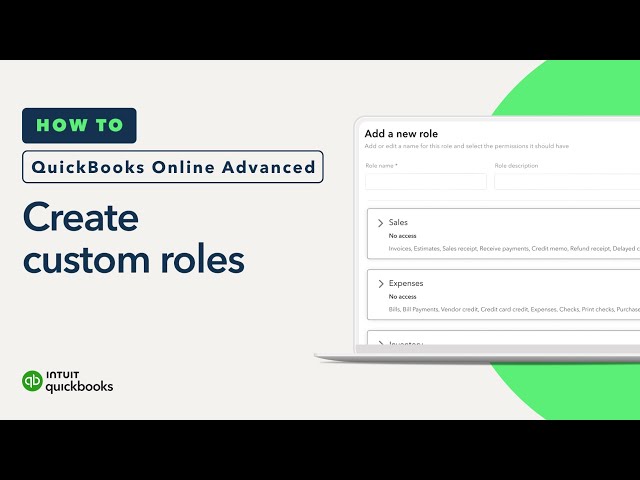
QuickBooks Online Advanced supports custom user roles and configurable workflows that route transactions based on defined criteria. Finance leads can delegate operational tasks to team members without exposing sensitive data or reducing oversight. The result is a team that can scale without creating gaps in governance—and an audit trail that reflects accurate, controlled financial operations throughout.
Productivity becomes a strategic advantage when finance can support growth without increasing operational strain. Structured systems create stability across core processes, enabling faster close cycles, more dependable reporting, and stronger financial oversight as complexity intensifies.
With financial process automation embedded across core workflows, the impact extends well beyond efficiency.

Access to current, aligned financial data shortens decision cycles. Expansion analysis and cost evaluations move forward with current, reliable data rather than waiting on reconciliation or manual consolidation.
Forecasts built on standardized inputs across departments and entities carry greater weight. Cash projections and investment models rely on controlled data, reducing last-minute revisions before board meetings or lender reviews.
Rising transaction volume and expanding headcount increase oversight demands. Embedded controls maintain accountability through role-based access and structured approval routing, preserving audit readiness without adding unnecessary review layers.
Reduced manual cleanup frees time for deeper analysis of margin performance, cost drivers, and emerging trends. The shift from transaction correction to forward-looking insight enhances the organization’s ability to plan with confidence.
This is where finance moves from managing processes to shaping direction.
Consider a leadership team evaluating a new market expansion. The decision requires updated cash projections, entity-level margin visibility, and confidence in expense trends. When receivables, transaction data, reporting, and controls are already structured, finance delivers those answers quickly. The conversation centers on opportunity and risk—not data cleanup.
That positioning compounds over time. Finance becomes a stabilizing force that supports growth with clarity and discipline.
QuickBooks Online Advanced reinforces this operating model through automated workflows, rules-driven transaction management, scheduled reporting, and configurable access controls. As complexity increases, structure remains intact.

Call Sales: 1-800-285-4854