
QuickBooks Blog
Two people research ways they can support women on Equal Pay Day.
manage employees

How businesses, employees, and advocates can support Equal Pay Day

It’s no secret that gender imbalances are a key issue in the fight for universal equality, but what can we do to change it?

The Equal Pay Act became law more than six decades ago, yet women in the United States still earn significantly less than men for comparable work. In 2024, women working full-time earned just below 84 cents for every dollar paid to men, and that gap grows larger when all workers are included.

Wage disparities also remain steep along racial and ethnic lines. Women of color continue to earn significantly less than white men, a gap that persists even after decades of legal protection and advocacy. These figures underscore why Equal Pay Day—the symbolic date on which women’s cumulative earnings catch up to what men earned the previous year—remains an important reminder of how far we still have to go.

Whether you’re a small business owner who hopes to improve pay equity in your workplace or an employee looking for ways to raise your voice, you already have the power to effect change. You just need the right tools. Here’s everything you need to know about Equal Pay Day—including how to support your colleagues, inspire lawmakers, and help close the wage gap once and for all.

Equal Pay Day isn’t the same for every woman

While Equal Pay Day is often discussed as a single date marking how far into the new year women must work to match men’s earnings from the previous year, the reality is more complex. The gender wage gap doesn’t affect all women equally.

Race, ethnicity, parental status, disability, and sexual orientation can all widen pay disparities. As a result, multiple communities recognize their own Equal Pay Days throughout the year—marking how long women in those groups must work to catch up to what white men earned the year before.

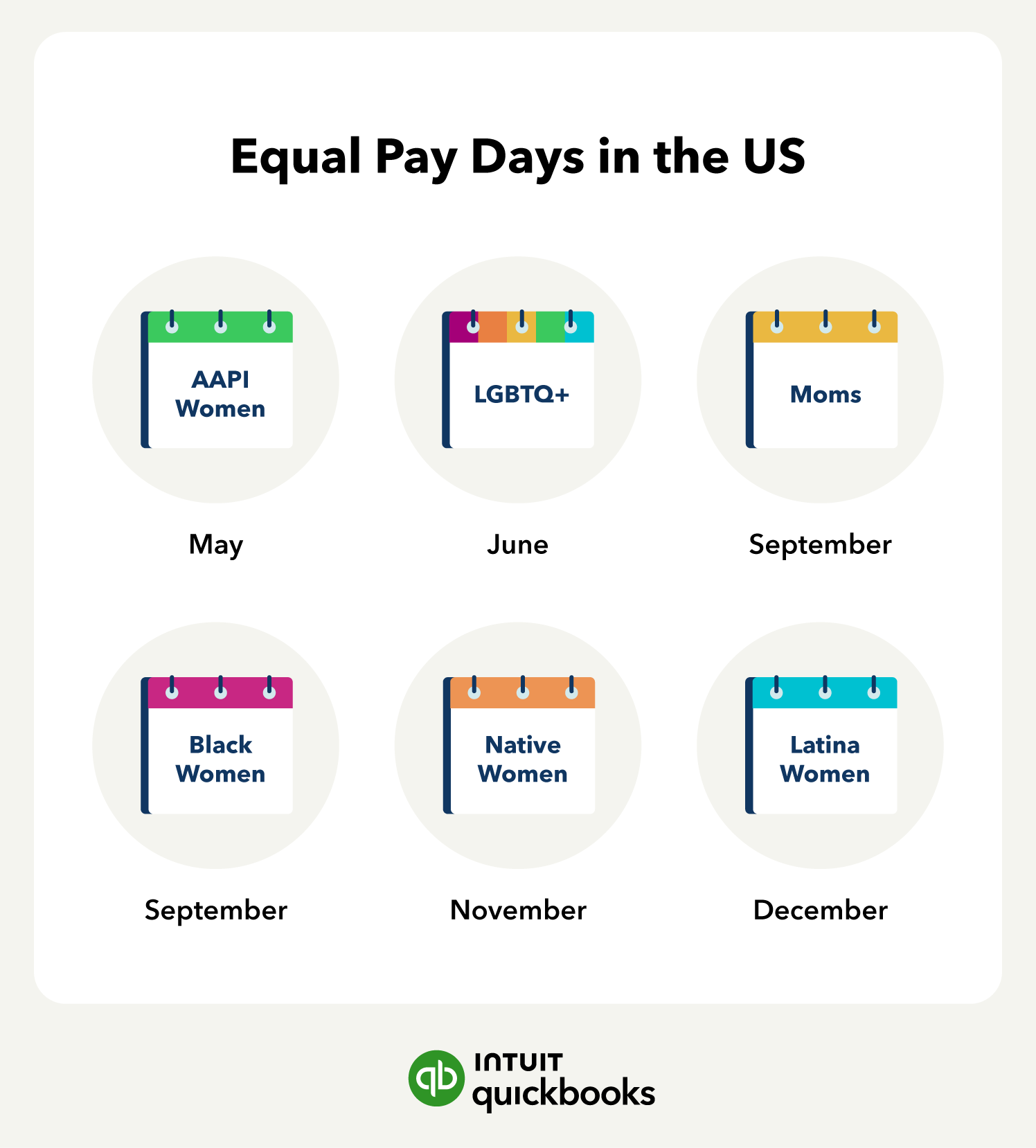
In the United States, Equal Pay Days are observed at different points in the year for Asian American and Pacific Islander women, LGBTQ+ women, mothers, black women, native women, and latina women. The later in the year the observance falls, the wider the wage gap for that group.

Equal Pay Days in the US

The issue isn’t limited to the United States. Many industrialized nations (including Germany, Portugal, Switzerland, and the United Kingdom) also recognize Equal Pay Day, underscoring that gender-based pay disparities remain a global challenge.

How businesses (and individuals) can help support Equal Pay Day

Equal Pay Day isn’t just symbolic. It’s a reminder that real change happens inside workplaces. Here are practical ways businesses and individuals can help move the needle.

If you’re a business owner or leader

  • Audit your compensation structure. Review pay across genders, roles, tenure, and caregiving status. Look for patterns, not just individual cases.
  • Set clear, objective salary bands. Align ranges to market data and transparent criteria such as experience, education, performance, and cost of living.
  • Stop asking for salary history. Salary history questions can perpetuate past inequities. Many states have already banned the practice—even where it’s legal, it’s worth reconsidering.
  • Create space for conversation. Encourage employees to raise concerns about pay equity and career progression without fear of retaliation.
  • Communicate your efforts. Be transparent about how your company approaches compensation, promotion, and pay equity goals. Pay equity isn’t a one-time fix. It’s an ongoing practice.

If you’re an employee or advocate


  • Normalize talking about pay. Open, respectful conversations about salaries and compensation ranges help reduce stigma and surface inequities.
  • Start conversations with leadership. Ask how pay decisions are made and whether salary bands are clearly defined.
  • Advocate for transparency. Encourage leadership to share salary ranges and criteria.
  • Engage with policymakers. Contact local and federal representatives to support legislation aimed at closing wage gaps.
  • Share resources. Organizations like the National Committee on Pay Equity provide templates and tools for outreach.
  • Use your platform. Whether that’s social media or internal company forums, amplify awareness around Equal Pay Day.

Closing the wage gap requires participation at every level. You don’t need to be an activist or policymaker to contribute. Whether you’re leading a company, building your career, or supporting your community, small actions add up.

There is still work to be done. But progress happens when businesses examine their practices, individuals speak up, and equity becomes part of everyday decision-making—not just a once-a-year conversation.

Get organized with simple tools right sized for your one person business

Let QuickBooks streamline your books and your business, so you can focus on what you do best.

Equal Pay Day FAQs


Recommended for you

Mail icon
Get the latest to your inbox
No Thanks

Get the latest to your inbox

Relevant resources to help start, run, and grow your business.

By clicking “Submit,” you agree to permit Intuit to contact you regarding QuickBooks and have read and acknowledge our Privacy Statement.

Thanks for subscribing.

Fresh business resources are headed your way!

Looking for something else?

QuickBooks

From big jobs to small tasks, we've got your business covered.

Firm of the Future

Topical articles and news from top pros and Intuit product experts.

QuickBooks Support

Get help with QuickBooks. Find articles, video tutorials, and more.