




QuickBooks Blog
An illustration conceptualizing the idea of cloud accounting with a calculator, calendar, and cloud.
Thought leadership

A guide to cloud accounting: What it is & how it works


Key cloud accounting takeaways:

  • In 2026, AI-driven phishing and stolen logins pose a bigger risk than server breaches, making identity-based security essential.
  • Automated backups, audit logs, and smart permissions help prevent fraud and limit damage when issues occur.
  • Built-in compliance features support changing tax rules, privacy laws, and audit requirements.


Modern businesses use solutions that are flexible, connected, and built for real-time decision-making—not spreadsheets or desktop-bound systems.

Cloud accounting brings financial data online, helping businesses manage money, collaborate with accountants, and reduce risk. In fact, according to the QuickBooks Guide to Cloud Accounting, cloud users can save up to nine weeks a year.

In this guide, we explain what cloud accounting is and how tools like cloud accounting software, such as QuickBooks, support smarter financial decisions.

Jump to:
Why use cloud accounting?

Cloud accounting allows you to move all your financial statements and data online, unlike traditional systems that rely on desktop software or on-site servers. This, in turn, makes it easier to access your books, collaborate with accountants, and stay up to date in real time.

In 2026, cyber risks will become a major threat. In fact, a survey found that 43% of SMBs have experienced at least one cyberattack in the past year. Physical servers sitting in office closets are especially vulnerable—they often miss automated security updates, can be stolen or damaged, and are easy targets for localized ransomware.

The good news is that the cloud now operates on a zero-trust model. In this model, no device is trusted by default. Every login, action, and access request is continuously verified, whether someone is working from the office or remotely.

How using cloud accounting helps you stay compliant

Keeping up with changing tax rules and payroll regulations is difficult, especially when you have a small team that relies on manual updates or local software.

On the other hand, cloud-based account software automatically applies the latest sales tax rates, payroll laws, and reporting requirements across states and countries. This reduces calculation errors and helps you avoid penalties that often come from outdated or incorrect compliance data.

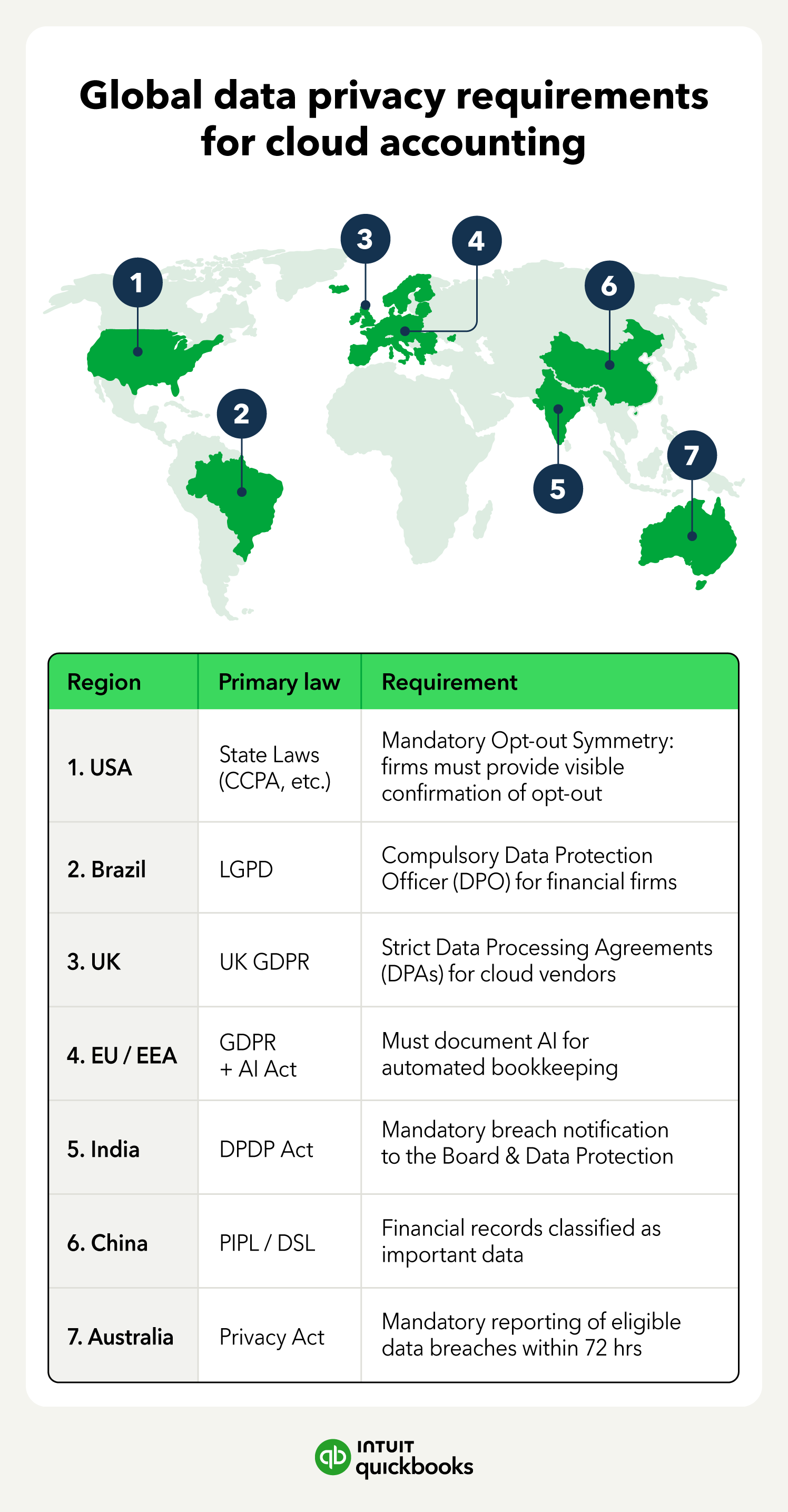
Cloud accounting also supports modern data privacy requirements. Many major providers let you choose where your financial data is stored, such as within the US or Europe. This added control helps businesses stay compliant as privacy laws continue to evolve globally.

An image showing the global data privacy requirements for cloud accounting.

Moreover, cloud accounting also creates a clear, verifiable audit trail. Every change in the ledger is time-stamped and linked to a specific user, making it difficult to hide errors or manipulate records.

This level of transparency is especially important for businesses using accrual accounting, where timing adjustments and journal entries must be clearly documented and easy to review.

Many cloud accounting software solutions also meet SOC 2 Type II standards, a leading benchmark for data security and privacy. This certification confirms that strict controls are consistently followed over time, helping businesses build trust with customers, lenders, and partners who expect strong data protection.

The 3 layers of proactive defense

Modern cloud accounting practices and tools go beyond basic security by adding multiple layers of protection built for today’s threats. Instead of reacting after something goes wrong, these defenses work continuously to prevent fraud, limit access, and protect your data in real time.

Together, they form a proactive security model built to handle the speed and sophistication of advanced attacks.

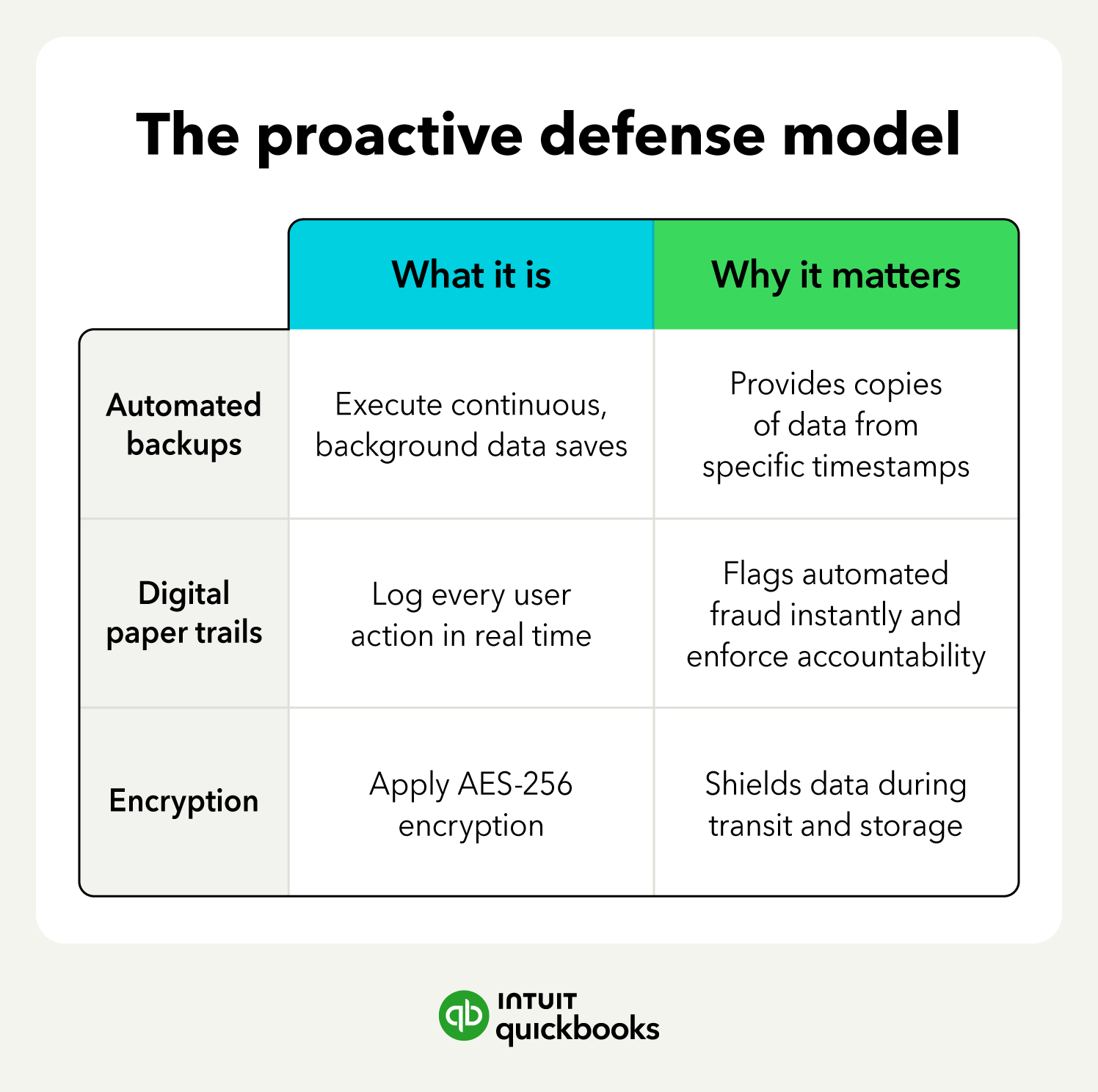
Here are the three core layers that make up this proactive defense model:

An image showing the 3 steps of proactive defense for cloud accounting.

1. Automated backups and restoration

Modern cloud accounting goes beyond basic backups to offer continuous data protection. Instead of relying on occasional manual copies, your financial data is backed up automatically and securely in the background.

With QuickBooks Online Advanced, you can restore your data to a specific point in time if it’s corrupted or altered by mistake or malicious activity. This removes the need for outdated or vulnerable backup options like USB or external devices.


note icon

Set a regular review cadence for your backups, even if they run automatically. This helps you respond quickly to accidental deletions, data corruption, or suspicious activity.


2. Digital paper trails

An audit log is not something you review during the tax season. It’s an active security tool. In cloud accounting, every action is recorded in real time, giving you visibility into who changed what and when.

This makes it easier to spot AI-speed anomalies, such as hundreds of invoices edited or deleted in seconds, an early warning sign of automation or fraud. Combined with multi-factor authentication and biometric logins, cloud computing helps stop attacks that rely on stolen credentials. Plus, unique user identities prevent account sharing, so every action is tied to a real, verified person.

3. Encryption and data sovereignty

Modern cloud accounting uses bank-level security as a baseline, including 128-bit SSL and AES-256 encryption to protect your data in transit and at rest. This ensures sensitive financial information stays protected from unauthorized access.

Data sovereignty is just as important. QuickBooks uses global data centers with redundant backups across multiple geographic regions. This helps keep your data available and secure while supporting regional data residency requirements.

How to defend against AI threats in cloud accounting

We’re in 2026, where generative AI is being used to exploit cloud accounting workflows at an extraordinary speed. AI-driven impersonation, automated data changes, and convincing phishing attempts have become one of the biggest financial risks businesses face today.

Here’s how cloud accounting helps defend against impersonation, automated attacks, and other AI-driven threats.

Spot deepfake phishing

Hackers are smarter than ever now. They use gen AI to mimic a business owner’s voice, tone, or writing style to send urgent requests for wire transfers or payment changes. The goal of these messages is to create pressure and bypass normal approval steps.

  • Use this checklist before acting on any urgent financial request:
  • Pause and question urgency, especially requests marked “confidential” or “immediate”
  • Verify the request using a second channel, such as a phone or video call
  • Confirm any changes to vendor payment details before processing
  • Never approve payments based on email or chat alone

Simplify your accounts payable with Bill Pay

Discover the smarter way to manage vendor payments, optimize cash flow, and stay on top of financial reporting—all from one integrated platform.

Use anomaly detection and smart alerts

When transactions can be created, changed, or approved in seconds, catching irregular activity quickly becomes critical. Manual reviews often happen too late, after funds have moved or records have been altered. This is where you need a tool that can continuously monitor activity, recognize unusual patterns, and alert you immediately—before issues escalate.

QuickBooks uses machine learning to understand your business’s normal behavior and monitor activity in real time. When something falls outside those patterns, smart alerts surface the issue immediately, helping you investigate and respond before it turns into a costly problem.


note icon

Review alerts as soon as they appear, even if the amount seems small. Many fraud attempts start with low-value transactions to test whether unusual activity goes unnoticed.


Apply the principle of least privilege

Least privilege means giving people access only to what they need and nothing more. This reduces risk without slowing work down. With QuickBooks Online Advanced, you can create custom roles and control exactly what each user can see or do.

For example, your sales rep can create estimates and invoices, but won’t have access to payroll data or bank balances. All you need to do is assign the right role, send an invite, and they’re ready with the data they need to succeed without exposing sensitive information.

QuickBooks Online Advanced supports up to 25 users, the most of any QuickBooks Online plan. You can delegate roles across your finance team, sales team, and operations while keeping strong controls in place. Built for growing businesses, it offers deeper insights, greater flexibility, and higher productivity so you can scale faster while staying secure.

Streamline your accounting and save time

If managing finances feels more complex than it should, cloud accounting can simplify your day-to-day work while reducing risk. With automation, built-in controls, and real-time visibility, you can spend less time fixing issues and more time growing your business.

Get started with QuickBooks cloud accounting and see how the right tools can help you work faster, smarter, and more securely.


Recommended for you

Mail icon
Get the latest to your inbox
No Thanks

Looking for something else?

QuickBooks

From big jobs to small tasks, we've got your business covered.

Firm of the Future

Topical articles and news from top pros and Intuit product experts.

QuickBooks Support

Get help with QuickBooks. Find articles, video tutorials, and more.