






QuickBooks Blog
An illustration of the United States
taxes

Top 10 states with the highest sales tax rates in 2026

Table of contents

Table of contents


4 things to remember for states with high tax rates:

  • Louisiana and Tennessee lead the nation with the highest combined sales tax rates, both averaging over 9.5% due to substantial local and parish-level surcharges.
  • States like Arkansas, Kansas, and Illinois have eliminated or significantly reduced state-level taxes on unprepared food to provide resident relief.
  • Illinois removed its transaction count threshold for economic nexus, and Nevada moved its filing deadline to the 20th of the month.
  • Washington and California continue to expand their tax bases, with Washington taxing previously exempt services (like digital ads) and California introducing new recycling fees on battery-embedded electronics.


Running a small business is thrilling, but navigating sales tax means crunching numbers and understanding regulations.

You must calculate and charge sales tax for each purchase when your business sells something. The sales tax rates vary by state and by location within the state. While some states only have sales tax at a state level, others also have different rates depending on your city or county, leading to a higher combined sales tax rate.

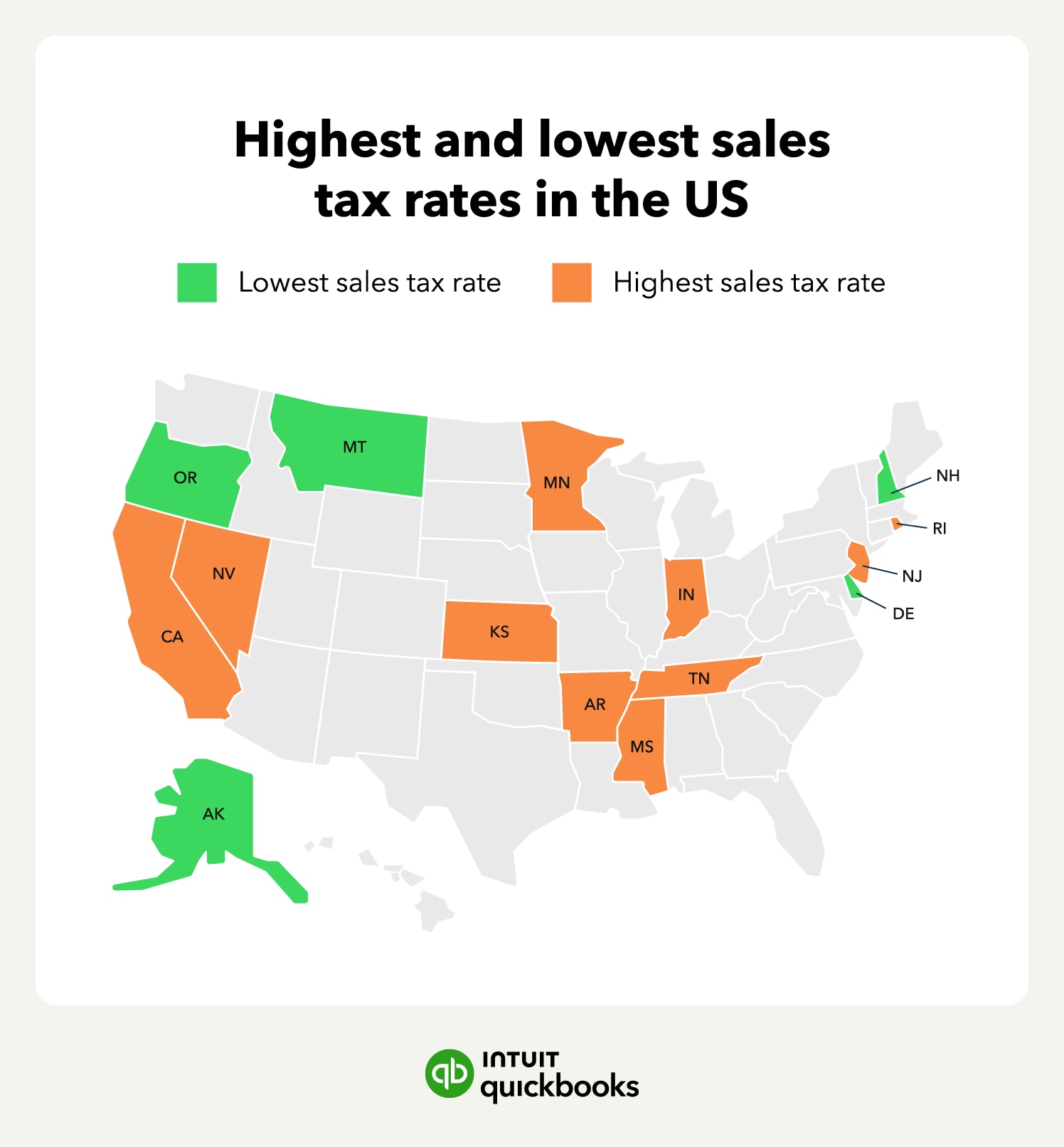
Sales tax rates vary significantly from state to state. Below is a list of the 10 states with the highest sales tax rates in 2026:

Here's what you need to know about when, where, and how much sales tax to collect. Intuit QuickBooks makes it easier to calculate by tracking of 1000's of tax laws so you don't have to.

1. Louisiana


note icon

Louisiana sales tax rates
State sales tax: 5.0%
Average local sales tax: 5.11%


Louisiana currently holds the title for the highest average combined sales tax rate in the nation, at 10.11%. Effective January 1, 2025, the state rate increased to 5.0% as part of a broader tax overhaul, and this rate is scheduled to remain in place through 2029.

Depending on your parish or city, customers may pay a significant local tax on top of the state rate. In many areas, such as Monroe and parts of New Orleans, the combined rate easily exceeds 10%, with some specific taxing districts reaching as high as 12.5% to 13.5%.

Louisiana also has special local taxes that apply to specific transactions, including hotel occupancy, car rentals, and telecommunications. One of the most unique aspects of the state's system is its complexity. Rates can vary not just by parish, but by specific shopping centers or economic development districts.

However, certain items remain tax-exempt at the state level to provide relief to residents. These include:

  • Unprepared food purchased for home consumption (grocery items)
  • Prescription drugs and specific medical devices
  • Residential utilities (electricity, water, and natural gas)
  • Sales to nonprofits and government agencies

2. Tennessee


note icon

Tennessee sales tax rates
State sales tax: 7.0%
Average local sales tax: 2.6%


Tennessee's state sales tax is 7.00% but it has one of the highest combined tax rates. The local sales tax rate ranges from 1.5% to 2.75%, with the combined local and state rates reaching 9.75%. 

If you have a business in Tennessee, you may have to charge the highest combined sales tax rate, as most counties charge an additional 2.75% on top of the state taxes. However, some goods such as gasoline, textbooks, school meals, and health care products are not subject to sales tax.

A key point of contention in 2026 is the grocery tax. Unlike many neighboring states, Tennessee still taxes groceries at a state rate of 4.0% plus local taxes. However, new legislative efforts like the "End the Grocery Tax Act" are currently being debated to provide relief to residents.

Common exemptions in Tennessee include:

  • Prescription drugs and certain medical oxygen equipment
  • School meals and textbooks for K-12 and higher education
  • Firearm safes and safety devices (a permanent exemption enacted recently)
  • Gasoline, which is subject to a separate excise tax rather than the general sales tax

3. Washington


note icon

Washington sales tax rates
State sales tax: 6.5%
Average local sales tax: 3.01%


Washington is often a surprise for business owners because it carries the fourth-highest average combined sales tax rate in the country at 9.51%. While the state-wide rate has remained steady at 6.5%, local jurisdictions have been increasingly active in raising rates to fund transit and local services.

In many major hubs, the tax burden is even higher. For example, as of 2026, the minimum combined rate in Seattle is 10.55%. Because Washington does not have a personal income tax, the state relies heavily on these consumption-based taxes and the Business & Occupation (B&O) tax to fund its budget.

Washington has also recently expanded its sales tax base. As of late 2025 and into 2026, several services that were previously exempt (including digital advertising, custom software development, and temporary staffing services) are now subject to retail sales tax, making it a critical area for business compliance.

Despite the high rates, Washington offers specific relief through exemptions, including:

  • Most grocery items (unprepared food)
  • Prescription drugs and certain medical oxygen systems
  • Manufacturing machinery and equipment (M&E exemption)

Sales to nonresidents from specific states (like Oregon or Montana) who may apply for a refund of the state portion of the tax

4. Arkansas


note icon

Arkansas sales tax rates
State sales tax: 6.5%
Average local sales tax: 2.95%