QuickBooks Blog
illustration of a woman holding a clipboard
Marketing

How to build an effective market development strategy: Step-by-step process

Companies are always looking for ways to attract new customers and reach new target audiences. Creating innovative business strategies can help businesses identify where there are opportunities for growth. If you’re looking to tap into new markets to expand your offerings, then developing an effective market development strategy might be your next move.


In this article, we define what a market development strategy is, discuss why it's important, share the steps you can take to develop one, and provide examples of businesses that implemented a successful market development strategy.

Jump to:

What is a market development strategy?

The goal of market development is to expand into new markets and is considered part of a business’s growth phase. In other words, a market development strategy can help identify and develop new opportunities for businesses to sell their existing products to new customers. 


Market development strategies encourage businesses to step outside their comfort zone, which can lead to new opportunities and a significant amount of value and revenue.


Before we dive into the specifics of market development, it’s important to nail down the differences when compared to market penetration. Understanding both strategies can help you decide which is better suited for your specific business.

Market development vs. market penetration

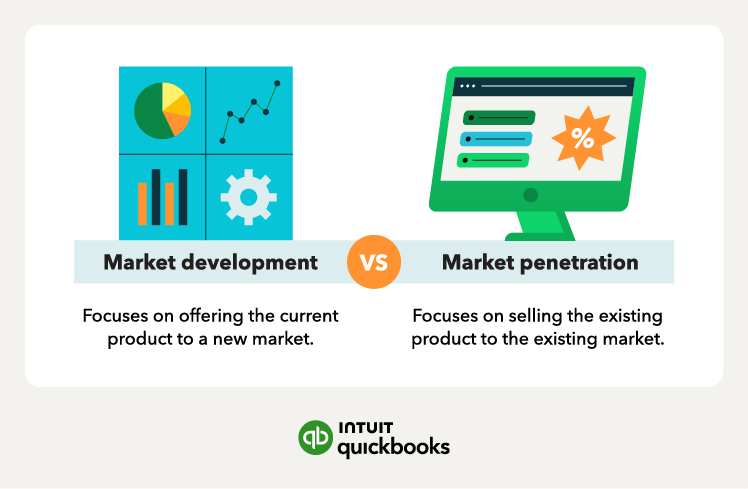
illustration of market development vs market penetration

The focus of market penetration is to sell the existing product to the existing market, while market development focuses on offering the current product to a new market. Both strategies help to increase your revenue and expand your customer base with minimal risk. However, if you’re just starting out and are looking for a strategy that has the least amount of risk, the suitable choice would be market penetration.


Once your business is more established and you’re ready to take on a higher risk strategy, it could be beneficial to move on from market penetration and implement a market development strategy. This involves taking extra steps to ensure your product is reaching the necessary markets to continue steady growth. 

Importance of market development

Creating an effective market development strategy is a crucial step in expanding your small business because it promotes growth within the customer market in a well-planned and structured way. With extensive research and a comprehensive plan in place, companies will be able to introduce new and existing products to the market, creating the potential for more sales.


Unlike other strategies, market development creates structure and guidance for your business. However, it’s important to remember that in-depth research is essential to ensure that there’s value in targeting new audiences and customers.

Common market development strategies

As you prepare to put together your expansion plan, there are some common market development strategies you should consider including to help optimize your chances of growth.


1. Increasing revenue through new ways of using a product

If you’re thinking about increasing sales and revenue for your business, one common market development strategy would be thinking of new ways to use your product. Doing so will allow you to bring in new customers and take the business into unexplored markets.

2. Looking into regional expansion

If you have a location in a specific area, it might be a good idea to think about regional expansion. Conduct research on surrounding areas and consider expanding your services domestically to increase your chances of consumer growth. 

3. Looking into global expansion

Similar to regional expansion, if you’re primarily focused on providing your product and services to one country, you should consider looking into the feasibility of global expansion. Tapping into foreign markets can help you expand your audience on a global level.

QuickBooks has the tools you need to help your business thrive.

How to create a market development strategy

Creating an effective market development strategy involves careful consideration and meticulous research in order to get the results you want. The goal is to put together a solid expansion and budget plan backed by market research in order to keep traffic steady and reach new markets.


The basic steps are as follows:


  1. Ask the right questions
  2. Research development opportunities
  3. Define your goals
  4. Develop a marketing plan
  5. Introduce product to a new market
  6. Analyze results

1. Ask the right questions


Before you dive headfirst into your development plan, there are a few things to consider in order to ensure you’re going in the right direction. Asking the right questions before doing research is a great way to get a good idea of what you’re looking for and what you need to analyze.


Ask yourself the following questions:


  • Are there any specific target markets you haven’t tapped into yet? 
  • Are customers going to benefit from your product?
  • Is it worth the effort to invest in the new market and approach new customers?  
  • Do you have to modify any existing products or plan to launch a new product? 
  • Does your business or company have the bandwidth to measure the effectiveness of a market development strategy once it’s in place?


Once you’ve got a clear answer for each of these questions, you’re ready to begin researching growth opportunities. 

2. Research growth opportunities 

It’s important to begin the research phase by identifying what your biggest market development opportunities are. This includes looking into your target audience and analyzing your market to provide additional value to your research. Doing so will provide vital information to guide you in the right direction and help you reach your goals.

Identify new audiences 

Introducing your product to a new market is difficult if you can’t identify your target audience. Spend some time researching your target consumers and determining whether your product will interest them or not. Creating buyer personas to assess the demographics, motivations, and backgrounds will give you a good idea of what your new audience is looking for in a product.

Analyze your market

Once you've identified who your target audience is, conduct thorough research into your potential competitors by looking at reviews or sending out feedback forms to ensure your strategy is up to par. We recommend conducting a SWOT analysis to determine strengths, weaknesses, opportunities, and competitive threats. 

3. Define your goals

Think about which areas of your business you’re hoping to grow by expanding into a new market. Consider the following areas for growth: 


  • Customers or users
  • Products
  • Sales
  • Net profit
  • Employees
  • Geographic locations


Once you’ve identified the areas you’d like to focus on, you should also consider the requirements needed to help you reach your goals. This can include software, digital marketing tools, and initial funding, all of which can help you get your strategy up and running. You can also build out each area through SMART goals, which allows you to gather actionable insight from your data and share it with your team.  

4. Develop a marketing plan

Expanding into a new market requires a strong marketing plan. You can build out your advertising strategy through various avenues to attract potential customers, including:


You’ll also need to consider any crucial resources you’ll need to hit your goals, such as equipment, staff, or raw materials. Once you have everything prepared, you can begin putting it all together like pieces of a puzzle. This will become your marketing plan.

5. Introduce product to new market

You’re nearly there! Once you’re happy with the plan you’ve set in place, you can begin launching your product to the new market. Here are some ways you can keep the product launch as smooth as possible:


  • Use clear communication with your team by discussing your goals and progress throughout the marketing campaign. Doing so will help increase the likelihood of success and help your teammates understand what tasks they are responsible for. 
  • Provide frequent updates and keep everyone on your team in the loop on upcoming deadlines and tasks. 
  • Stay organized throughout your launch to ensure that the process stays on track. 

6. Analyze results

Once the product is launched, you can begin using your primary software and tools to track your success. Collecting this information will help you assess how successful your launch is and give you a better timeline on meeting your deadlines.


This data is crucial for improvement and ensures that you’re on track to meet your goals in a timely manner. You can present this data to stakeholders and give them a better idea of what they can expect from you next.


Tips to create an effective market development strategy

illustration of tips to create a marketing development strategy

To ensure your marketing development strategy is on the road to success, we’ve provided some helpful tips to execute your campaign:

Facilitate clear communication

In order to expand your market and execute a strong market development plan, use clear communication with members of your team and answer any questions they might have. Ensure that they understand the long-term goals and what tasks they’ll need to complete throughout the process. 

Keep track of important details

You’ll want to make sure you track and document key details of the strategy so you can revisit them as you continue to execute the plan. These important details will also come in handy when it’s time to present to any stakeholders that are interested in your company.

Track KPIs

Ensure you’re using the right marketing software and accounting tools to track KPIs and measure your company’s growth. This helps increase time and efficiency in the long run and gathers necessary data to help you perfect your strategy. 

Adapt to new trends and industry changes


Keeping up with the industry and being flexible when changes arise is crucial for growth. There are always new consumer trends arising, which means you need to be able to adjust your strategy as needed.


Closing thoughts

Simply put, a market development strategy can be an excellent choice for business growth. Using your existing product to grow means that your team can save the time and resources it would take to build entirely new products or attempt to diversify its offerings, and concentrate on leveraging what you already have on hand to increase your revenue. 


QuickBooks can help power growth in your business and serve as your backbone when developing your market development strategy.


Recommended for you

Mail icon
Get the latest to your inbox
No Thanks

Get the latest to your inbox

Relevant resources to help start, run, and grow your business.

By clicking “Submit,” you agree to permit Intuit to contact you regarding QuickBooks and have read and acknowledge our Privacy Statement.

Thanks for subscribing.

Fresh business resources are headed your way!

Looking for something else?

QuickBooks

From big jobs to small tasks, we've got your business covered.

Firm of the Future

Topical articles and news from top pros and Intuit product experts.

QuickBooks Support

Get help with QuickBooks. Find articles, video tutorials, and more.