Maintaining a balance sheet is one of the most difficult but essential aspects of running a business. Mistakes on your balance sheet can damage supplier relationships, disrupt business operations, and make it difficult to access funding from banks or venture capital firms.
To ensure accurate bookkeeping, we will discuss everything you need to know about inventory, accounting for your assets, and answering the question “Is inventory a current asset?”
Before we dive in, let’s quickly review the difference between current and noncurrent assets.
Current vs. noncurrent assets
Both current and noncurrent assets will be included in a company’s overall balance sheet. However, there are differences in how these assets are handled and the role they play in the valuation of a company.
Let’s review the key distinctions between current and noncurrent assets.
Current assets definition
A current asset is defined as any type of asset that can reasonably be expected to be converted into cash within one accounting period or fiscal year. Current assets tend to be ranked by liquidity (how easy it is to convert into cash) on a company’s balance sheet.
Current assets are considered “current” because they are or could be used to pay bills, debts, and operational expenses.
Examples of current assets: Cash, short-term investments, accounts receivable.
Noncurrent assets definition
Non-current assets, also called “fixed assets,” are long-term investments and assets that can’t be converted quickly into cash. Non-current assets include real estate, copyrights or other intellectual properties, and land.
Examples of noncurrent assets: Property, plant, and equipment (PP&E) and other long-term assets, goodwill, and long-term investments.
Is inventory a current or noncurrent asset?
Inventory is considered a current asset. In fact, inventory is one of the most important assets on a company’s balance sheet because the products and materials sold represent one of the primary sources of revenue and income.
Of course, certain exceptions exist, such as companies in the financial services industry where the majority of revenue is created via investments.
Inventory also contains both finished goods ready for store shelves and unfinished goods like raw materials and work-in-progress goods.
Why inventory is a current asset
Assuming your inventory is produced in alignment with demand, you should reasonably expect to sell off your inventory production within a fiscal year. This is especially true if your enterprise sells fast-moving consumer goods (FMCG), the type of goods that define most retail businesses.
3 most common methods of valuing inventory
Inventory valuation is one of the most important financial details a business owner or accounting team must deal with.
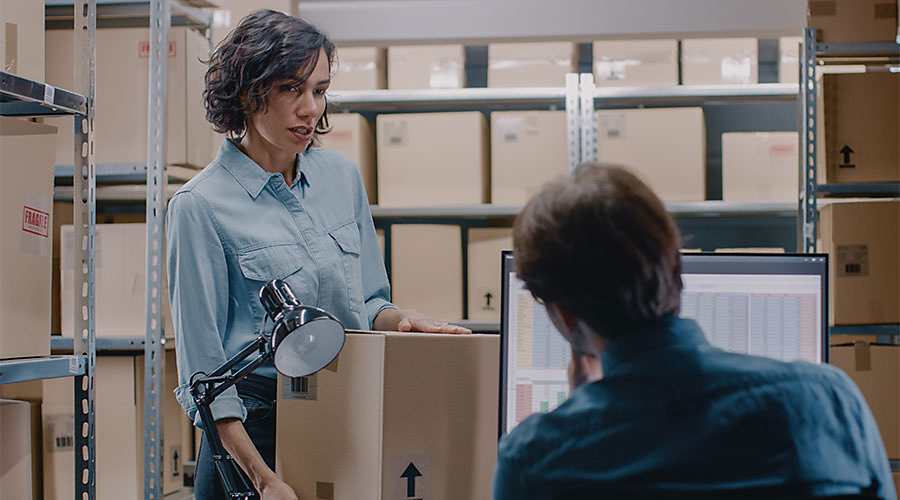
Accurate inventory management is critical to evaluate logistics, employee productivity, and warehouse efficiency and to successfully handle customer and supplier orders. Let’s discuss the three most popular methods of inventory valuation.
FIFO: First in, first out method
The first accounting method is FIFO, which is highly intuitive. Using the FIFO method, the goods you purchase or make first are sold first.
The advantage of FIFO is that it reduces spoilage, obsolescence, and other forms of waste by minimizing the time units spend in your inventory before being sold. The disadvantage of FIFO is that it tends to provide an overly optimistic view of financial performance due to the fact that prices, as a general rule, tend to rise over time.
Example industries: Restaurants, grocery stores, and other sellers of perishable goods.
LIFO: Last in, first out method
The LIFO method is the inverse of FIFO. Companies that use the LIFO method always sell whatever goods or materials they received most recently, as opposed to whatever goods they received first.
Companies using LIFO will likely calculate lower earnings and financial statements than companies using FIFO. The advantage of this practice is that income taxes will be lower. But LIFO carries disadvantages when trying to acquire lending from banks or outside investments.
Important note:
LIFO is not an acceptable method under IFRS (International Financial Reporting Standards) regulations. However, it is an acceptable method for American companies who are governed by GAAP (Generally Accepted Accounting Practices) regulations.
Example industries: Plastic and rubber manufacturers, energy, and other industries where the market price of goods rises significantly over time.
WAC: Weighted average cost method
The WAC method is a simplified version of accounting that is considered a good starting point for retailers. It is also commonly used by businesses who find it difficult to calculate individual unit costs.
WAC is calculated by dividing the cost of goods sold (COGS) by the number of inventory units available. The advantage of the WAC method is that it simplifies your accounting procedures. The disadvantage is that it can provide an inaccurate valuation of the items in your inventory, which can result in selling items at a loss.
Example industries: Agriculture, manufacturing, and any other industry where calculating individual unit costs is especially burdensome.
How to calculate current assets
Current assets are calculated by combining all of the assets that can be converted into cash to pay off expenses and debts in a reasonable period of time. To calculate your current assets, add the total of:
- Cash
- Cash equivalents, such as treasury bills or certificates of deposit (CDs)
- Marketable securities, including stocks, bonds, exchange-traded funds (ETFs), and mutual funds
- Accounts receivable
- Inventory
- Prepaid revenue share and prepaid expenses
- Non-trade receivables
- Other current assets (any short-term asset that cannot be included into one of the above categories)
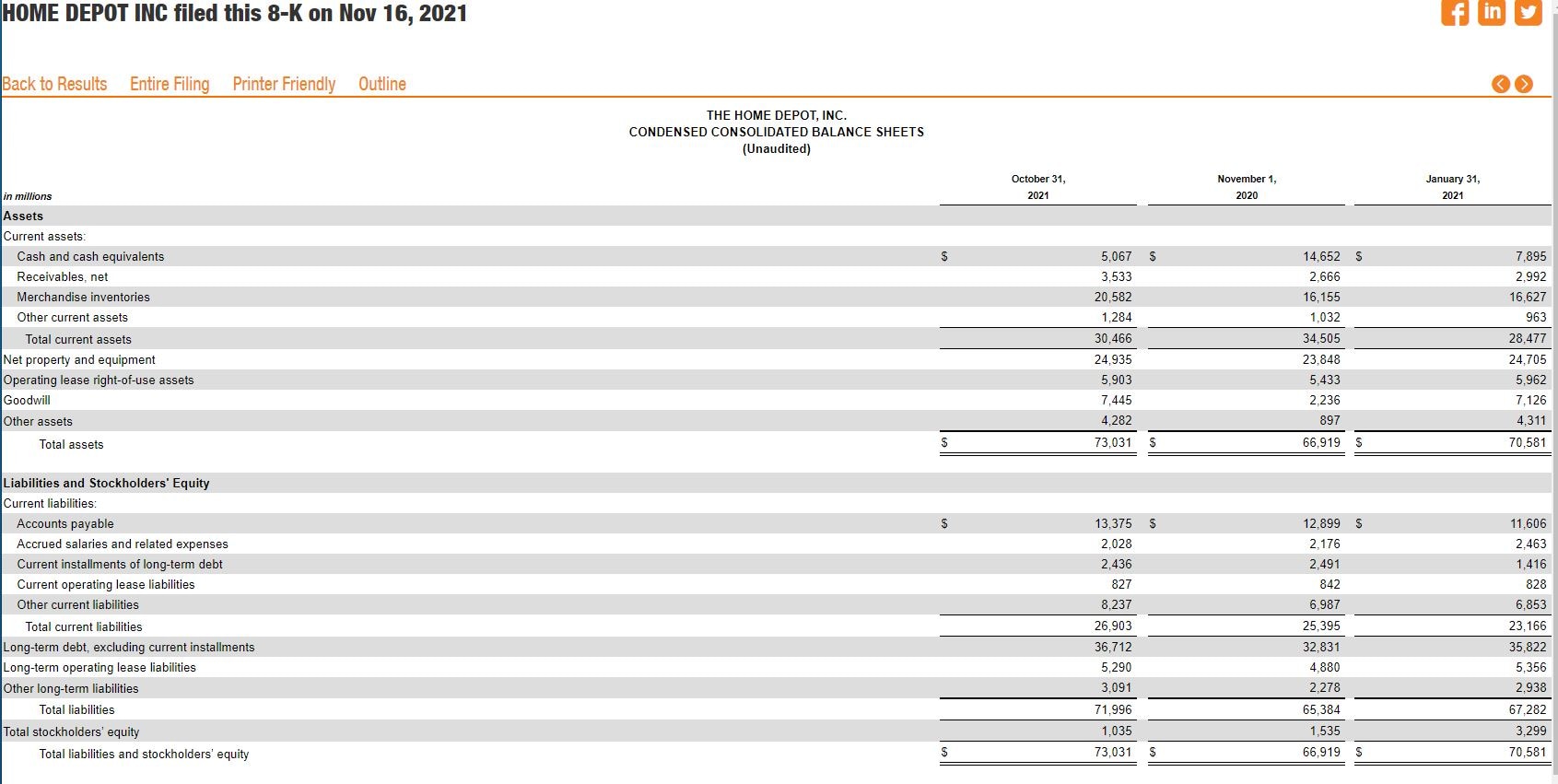
Balance sheet example: The Home Depot
See how The Home Depot accounts for their current assets (including inventory) on their balance sheet below: