

QuickBooks Blog
A graphic shows someone applying for small business grants online.
funding

How to find small business grants: A guide to free funding

Table of contents

Table of contents

Starting and growing a business can require capital, and for many entrepreneurs, securing that funding can be one of the bigger hurdles they face. While loans and credit cards are common options, they come with the obligation of repayment and often interest. This is where small business grants may offer an alternative .

Grants offer a unique funding opportunity because, unlike loans, they typically do not require repayment. They provide funding that you generally don't have to pay back, though they come with reporting requirements and usage restrictions . Because they’re competitive , there’s a lot of competition and the application process can be rigorous, and many grants are limited to very specific industries, activities, or organizations, so not every small business will be a match.

Finding and winning a small business grant is about knowing where to look and how to present your business as a worthy investment. Whether you’re a startup looking for seed money or an established business trying to innovate, understanding the grant landscape is a key step toward identifying the financial support you may need. This guide walks you through where to find these opportunities, how to qualify, and how to craft a strong proposal.
What are business grants?

Business grants are non-repayable funds distributed by government agencies, corporations, foundations, and nonprofit organizations. Unlike a loan, you generally don't have to pay the money back, and you don't have to give up equity in your company to get it.

These organizations offer grants to support specific business activities or populations. Their goal is to stimulate economic growth, encourage innovation, support underserved communities, or advance particular industries. For example, a local government might offer grants to revitalize a downtown district, while a tech company might fund startups working on green energy solutions.

The key advantage of grants over other funding sources is clear: you are not required to repay grant funds, provided you meet the program's conditions and reporting requirements.. However, this benefit comes with strings attached. Grants typically have strict eligibility requirements, detailed application processes, and specific usage restrictions. You often have to demonstrate how you spent the money and report on the results you achieved.

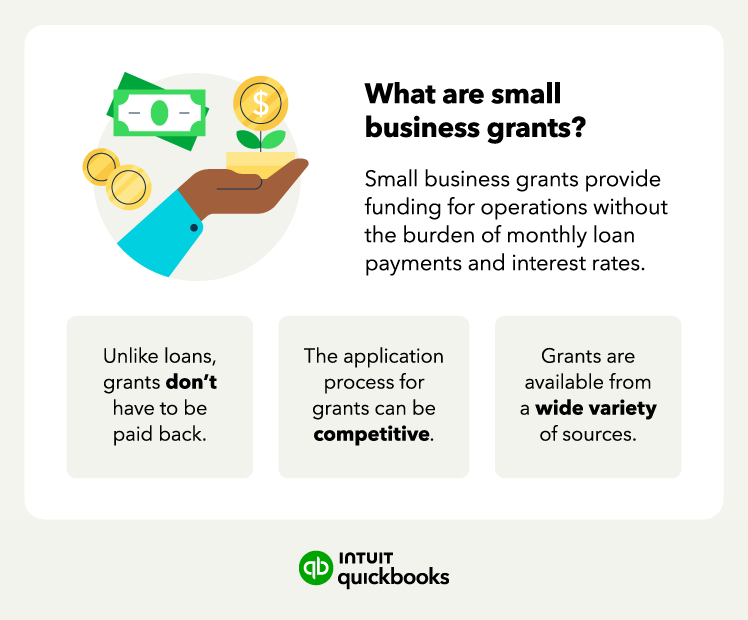
A graphic explains what a small business grant is.

Types of business grants available

Grants generally fall into four main categories, each with its own set of rules and funding sources. Understanding these categories can help you narrow your search to the opportunities that best fit your business profile.

Federal government grants

The U.S. federal government offers a wide array of grant programs, primarily through specific agencies. These are often the most substantial grants but also the most competitive.

  • Small Business Innovation Research (SBIR) and Small Business Technology Transfer (STTR): These programs are designed for businesses engaged in research and development (R&D) with commercial potential. If your business is working on innovative technology, these competitive grants can provide significant funding to help you explore your technological potential.
  • Small Business Administration (SBA): While the SBA is primarily known for its loan programs, it also partners with organizations to administer grants. These often target specific demographics, such as the State Trade Expansion Program (STEP) for exporters, or support management and technical assistance for eligible businesses.

State and local government grants

State and local governments frequently offer grants to stimulate regional economic development. These programs are often less competitive than federal grants because the applicant pool is smaller. They vary significantly by location but often focus on initiatives that directly benefit the local community.

Common focus areas include:

  • Job creation: Funding for businesses that commit to hiring residents from the local community.
  • Revitalization: Grants for businesses opening in or renovating properties in specific downtown districts or enterprise zones.
  • Sustainability: Incentives for businesses adopting green technologies or sustainable practices.
  • Industry support: Targeted funds for key regional industries like agriculture, manufacturing, or technology.

To find these, start by contacting your state’s economic development office or your local chamber of commerce.

Corporate grants

Many large corporations run grant programs as part of their corporate social responsibility (CSR) or diversity initiatives. These companies often want to give back to the communities where they operate or support entrepreneurs who are innovating in their industry.

Corporate grants often support:

  • Small businesses owned by women, minorities, or veterans.
  • Entrepreneurs in industries related to the corporation's business.
  • Businesses utilizing innovative technologies.
  • Community-based enterprises that solve local problems.

Well-known examples include the QuickBooks Small Business Hero Program and grants from financial institutions. These grants often come with additional perks, such as mentorship or publicity.

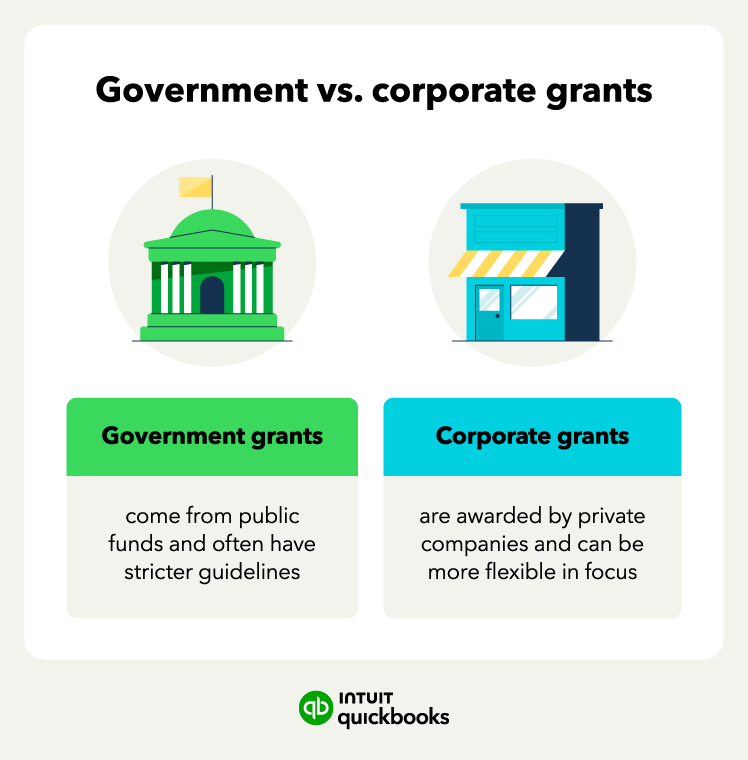
The difference between government and corporate grants.

Nonprofit and foundation grants

Private foundations and nonprofit organizations provide grants that align with their specific missions. These organizations focus on social impact and often support businesses that are trying to make a difference in the world.

These grants might focus on:

  • Social enterprises addressing community issues like housing or hunger.
  • Businesses owned by specific demographic groups, such as the Amber Grant for women.
  • Environmentally sustainable ventures.
  • Arts and cultural businesses.

Organizations like the National Association for the Self-Employed (NASE) also regularly offer growth grants to their members.

Who qualifies for business grants?

Eligibility is the first hurdle in the grant process. Before you spend hours writing a proposal, you need to make sure you meet the basic criteria. While every program is different, grantors typically look at two main areas: your business characteristics and your business purpose.

Business characteristics

Grantors often target specific types of businesses to meet their funding goals.

  • Stage of development: Some grants are strictly for startups to help them get off the ground, while others are designed for established businesses seeking capital for expansion.
  • Industry or sector: Many grants are industry-specific. Sectors like technology, agriculture, medical research, and green energy often have dedicated funding streams.
  • Location: Geographic restrictions are common, especially for state and local grants. You may need to operate within a specific city, county, or state to qualify.
  • Size: Most programs target small businesses, usually defined by employee count and/or annual revenue.

Business purpose

Grants are given to support specific activities or projects.

  • Research and development: Funding to create new products or technologies.
  • Exporting: Assistance for businesses looking to enter international markets.
  • Workforce development: Funds to hire and train new employees.
  • Green initiatives: Support for reducing your carbon footprint or implementing sustainable practices.
  • Community impact: Projects that revitalize neighborhoods or provide essential services to the community.

How to find business grants

Searching for grants can feel like looking for a needle in a haystack, but knowing where to look makes the process much more manageable.

Online grant databases

The centralized hub for federal grant opportunities is known simply as Grants.gov. This site allows you to search for grants by category, agency, or eligibility criteria. You can create a free account to apply for federal grants directly through the portal.

For private opportunities, the Foundation Directory is a powerful tool for identifying private foundation grants. While full access typically requires a subscription, many public libraries provide free access to this resource for their patrons.

Small business loans — big opportunities for growth

Get the funding you need fast with QuickBooks Term Loans or Lines of Credit.

Government resources

The Small Business Administration (SBA)’s Grants page is an invaluable resource. It maintains information about grant programs and connects entrepreneurs with local SBA offices and Small Business Development Centers (SBDCs). These centers offer free business counseling and can help you identify relevant grant opportunities in your area.

Additionally, check your state's economic development agency website. These sites list state-specific incentives and grants. Don't overlook your city or county economic development office, as they often have funds available for local business improvements.

Industry associations and community groups

Trade associations and professional organizations often maintain lists of grants relevant to their specific industries. Joining these organizations can provide access to exclusive funding opportunities and application assistance.

Similarly, local chambers of commerce, women's business centers, and minority business development agencies track grants available to their constituencies. They often provide workshops and support to help you navigate the application process.

The grant application process

Applying for a grant is a formal process that requires preparation and attention to detail.

Research and preparation

Before you start writing, thoroughly research the grant to ensure your business aligns with the program's goals. Look at past recipients to understand what types of businesses have been successful.

You will need to have your essential business documents ready. This typically includes:

Writing your grant proposal

Your proposal is your chance to sell your business to the grant committee. A compelling proposal clearly articulates several key elements.

First, explain your business concept. Describe what your business does, the problem it solves, and why it matters. Second, demonstrate alignment. Show exactly how your business advances the grant program's specific objectives. Use the same language and terminology found in the grant guidelines to show you’ve done your homework.

You must also detail your financial needs. Provide a specific budget showing exactly how grant funds will be used. Be realistic about costs. Finally, describe the expected outcomes. Will you create jobs? Will you increase revenue? Quantify the impact the grant will have.

Submission and follow-up

Submit your application well before the deadline to avoid technical issues. Keep copies of everything you submit. After submission, some programs allow for follow-up. If permitted, verify receipt of your application and be prepared to provide additional information if requested.

Tips for winning grant applications

Winning a grant is competitive, but you can increase your odds by following best practices.

Start early and follow instructions

Quality applications take time. Rushing leads to mistakes and incomplete submissions. Begin researching opportunities and preparing materials months before deadlines.

Once you start, follow the instructions precisely. Grant reviewers often disqualify applications that don't follow guidelines exactly. Pay attention to formatting requirements, page limits, and required attachments. If a specific font size is requested, use it.

Tell a compelling story

Beyond facts and figures, you need to connect with the reviewers. Help them understand your passion and vision. Explain why you are uniquely positioned to succeed and how the grant will make a meaningful difference to your business and community.

Quantify your impact

Vague promises won't win funding. Use specific numbers and metrics to demonstrate potential outcomes. For example, instead of saying you will "grow the team," state that you will "hire three full-time employees within six months."

According to the QuickBooks Small Business Index (January 2026), U.S. small business employment decreased by approximately 5,500 jobs in December 2025. In a shifting economic environment, demonstrating exactly how a grant could help you stabilize or grow your workforce can strengthen your application.

Demonstrate sustainability

Grantors want to know their investment will have a lasting impact. Show that your business will thrive beyond the grant period. Explain your revenue model, market opportunity, and long-term growth strategy to prove you aren't just looking for a temporary fix.

Common mistakes to avoid

Even great businesses can get rejected if they make avoidable errors in their application.

  • Applying for every grant: Quality matters more than quantity. Focus on grants that genuinely fit your business rather than wasting time on poor matches.
  • Incomplete applications: Missing documents or unanswered questions often result in automatic disqualification. Use checklists to ensure you've included everything required.
  • Generic proposals: Reviewers can spot a copy-paste application. Customize each proposal to address the specific grant's priorities.
  • Ignoring eligibility: Carefully review all criteria before investing time. If you don't meet the requirements, you won't receive funding.
  • Poor financial documentation: Vague budgets undermine credibility. Provide detailed, well-researched financial information.

Alternatives to grants

If grants prove elusive, or if you need funding more quickly, consider these alternatives.

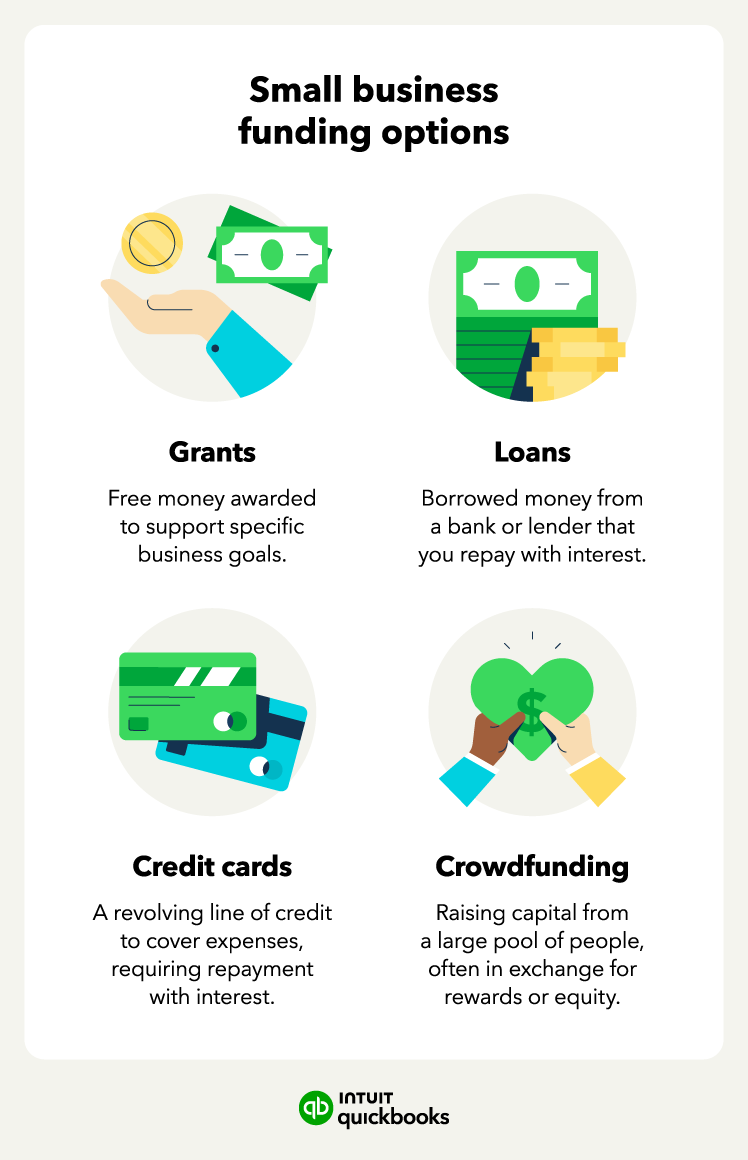
Four small business funding options.

Small business loans

While they require repayment, loans are a reliable source of capital. The SBA offers loan programs with favorable terms through partner lenders. You can also explore term loans and lines of credit designed for small businesses.

Crowdfunding

Platforms like Kickstarter and Indiegogo allow you to raise capital from many small contributors. This approach not only provides funds but also validates market interest in your product or service.

Angel investors and venture capital

For businesses with high growth potential, angel investors and venture capitalists provide funding in exchange for equity. This option is best suited for businesses prepared to scale rapidly and give up partial ownership.

Microloans

Organizations often offer small loans with reasonable terms, specifically targeting underserved entrepreneurs or those who may not qualify for traditional bank financing.

Maximizing your success

Grants represent just one piece of the funding puzzle. Successful entrepreneurs typically combine multiple funding sources to build a strong financial foundation. Whether you secure a grant or pursue alternative funding, the discipline of preparing grant applications can help sharpen your business planning and clarify your vision.

The grant landscape constantly evolves, with new opportunities emerging regularly. Stay informed about available programs, maintain your application materials, and remain ready to act when opportunities arise. With persistence and preparation, you may be able to identify the support that helps move your business forward. 

QuickBooks Term Loan and QuickBooks Line of Credit loans are issued by WebBank.


Recommended for you

Mail icon
Get the latest to your inbox
No Thanks

Looking for something else?

QuickBooks

From big jobs to small tasks, we've got your business covered.

Firm of the Future

Topical articles and news from top pros and Intuit product experts.

QuickBooks Support

Get help with QuickBooks. Find articles, video tutorials, and more.