BLACK FRIDAY SALE  
70% OFF 
QuickBooks
for 3 months  Ends 11/30
QuickBooks Blog
A woman and man are selling plants in a store
Michigan

How to start an LLC in Michigan: Your 2025 step-by-step guide

Starting a business in Michigan is an exciting opportunity to turn your ideas into reality. Whether you're launching a side hustle or building a company, choosing the right business structure is a key first step. In Michigan, entrepreneurs can register as a sole proprietorship, partnership, corporation, or limited liability company (LLC)—each with its own benefits. Many small business owners choose an LLC for their business structure. 

Jump to:

Why choose an LLC in Michigan?

An LLC provides limited liability protection, meaning owners' personal assets are safeguarded from business debts and legal claims. LLCs also benefit from pass-through taxation, where profits are taxed on the owners' personal returns, avoiding corporate taxes. 

Some other advantages? LLCs have less strict regulatory and administrative requirements compared to corporations making management and compliance simpler. They also offer ownership flexibility, allowing single or multiple members to run the business without strict operational requirements. Whether you're a solo entrepreneur or launching with partners, an LLC combines protection, tax advantages, and ease of operation to help your business thrive.

This guide covers everything you need to know about starting an LLC in Michigan, including the required paperwork, costs, tax implications, and how accounting software can simplify management. 

New business data in Michigan in 2025

Michigan’s business landscape is flourishing, driven by small businesses, innovation, and strategic investments. Companies with fewer than 50 employees make up 96.2% of the state’s private businesses, totaling over 264,000 small enterprises—many that are structured as LLCs. 

The state’s economy is booming thanks to major investments in clean energy, advanced manufacturing, and technology. Michigan leads the nation in securing Inflation Reduction Act projects, attracting $27.84 billion in investments and creating over 26,000 jobs in clean energy, EVs, and battery production. There’s significant new job creation in the healthcare and automotive industries, plus four key economic development projects in Southeast Michigan representing nearly $55 million in capital investment. These trends indicate a steady economic environment and the state's ongoing efforts to support business development and job creation.

5 steps for creating an LLC in Michigan 

Starting an LLC in Michigan is a major step toward growing your business. The process includes choosing a distinct business name and handling essential tasks like filing the necessary documents and obtaining an EIN. The next sections go through each step to help you set up your Michigan LLC smoothly.

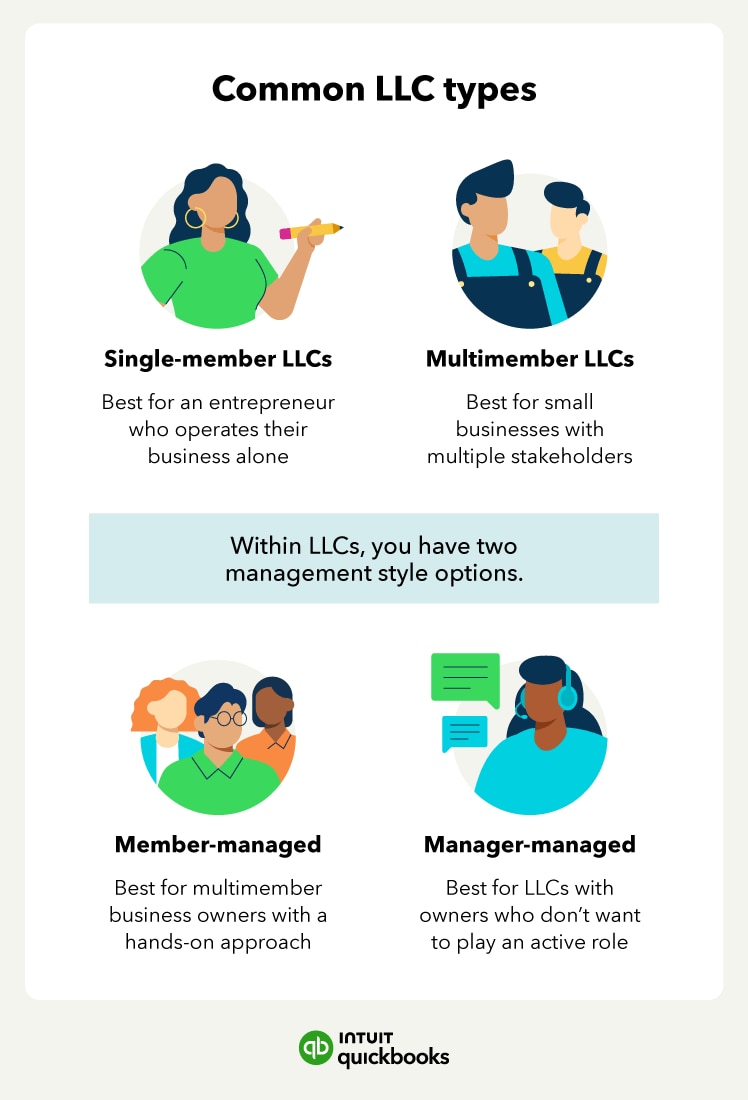
A graphic breaks down the four common LLC types to help answer the question, "What is an LLC?"

Step 1: Choose a name for your Michigan LLC

Choose a business name that is unique, memorable, and reflects your brand and business while meeting Michigan’s naming requirements.

When you want to choose a business name that is relevant, suitable, and available, it's important to conduct a bit of research before submitting trademark and business formation applications.

You will need to verify that your preferred business name is not already taken and registered in the state of Michigan. To do so, visit the official Michigan Secretary of State Business Search. Choosing the right business name can mean the difference between failure and success in today's world.

Michigan LLC naming rules

Naming an LLC in Michigan will require you to abide by the following rules:

It must contain one of the following:

  • "Limited Liability Company"
  • "LLC"
  • "L.L.C."
  • "LC"
  • "L.C."
  • (Periods or punctuation in abbreviations are optional)

It must be distinct:

  • The name must differ from all existing Michigan-registered entities, including corporations, limited partnerships, and LLCs

It should not have any prohibited terms or restricted language:

  • Cannot include "corporation," "incorporated," "corp.," or "inc." 
  • Avoid words implying unauthorized purposes (e.g., "bank" or "university" without state/federal approval)
  • Must not violate other Michigan statutes. For example, a name should not include a term regulated by professional licensing boards.
  • View the entire list of restricted words at the Michigan Department of Licensing and Regulatory Affairs website.

Check for name availability

Once you have chosen a name for your new business, you must ensure that no other company is already using it. Use the Michigan Business Entity Search to verify availability.

In Michigan, subtle variations in business names may not be sufficient to make them legally distinct. The state applies strict criteria when determining name uniqueness. For example:

  • Suffixes (e.g., Inc., LLC, Co.), for example, Detroit Sports Supplies, Co. and Detroit Sports Supplies, LLC are not considered different.
  • Articles (e.g., the, a, an)
  • Interchanging "and" with "&"
  • Singular, plural, or possessive forms of a word
  • Substituting numbers for words (five vs. 5) 

When searching for name availability, focus on your preferred core name without these variations. Read more about naming a Michigan LLC

Reserving your LLC name 

In Michigan, reserving your name is not required, but if you wish to secure a preferred name before registering it. you can reserve your LLC name by completing and submitting the Application of Name Reservation. The name will be reserved for six months following the month of filing. The cost is $25.00, with additional costs for expedited services.

Learn more about name reservations in Michigan

Step 2: Choose a registered agent in Michigan

Every Michigan LLC is required to appoint a registered agent, also known as a resident agent. This individual or entity is responsible for receiving important legal documents, tax forms, and official correspondence on behalf of the LLC.

Who can be a registered agent?

In Michigan, a registered agent can be:

  • You: You can act as your own registered agent if you:
  • Are at least 18 years old.
  • Have a physical street address in Michigan (P.O. boxes are not acceptable).
  • Are available during normal business hours to receive legal documents.
  • An individual resident: A person over the age of 18 who resides in Michigan and has a physical street address in the state.
  • A domestic or foreign entity: A corporation or limited liability company (LLC) authorized to transact business in Michigan, with a business office identical to the registered office.
  • Registered agent service. If you prefer not to use your personal address or cannot commit to being available during business hours, hiring a professional third-party registered agent service is a practical alternative. These services provide a physical address in Michigan and handle the receipt of important documents on your behalf.

Choosing a registered agent service

When selecting a registered agent service in Michigan, consider the following factors:

  • Cost: Fees typically start around $50 per year.
  • Reputation: Opt for a reputable company with a proven track record.
  • Customer support: Ensure they offer excellent customer service and support.
  • Knowledge: Select a provider with a strong understanding of Michigan's compliance requirements to keep your business in good standing.
  • Coverage: For businesses operating in multiple states, choose a provider that offers services across all the states where you plan to operate.

Consider bundled services

Some company formation services or attorneys may offer registered agent services as part of a package, which can be a convenient option when setting up your LLC.

Step 3: Complete the Articles of Organization form and file your Michigan LLC

After deciding your business name and who will act as your registered agent, it is time to fill out the Articles of Organization form.

What is an Articles of Organization?

The Articles of Organization is a legal document submitted to the state to officially form a Limited Liability Company (LLC). It includes essential details such as your business name, address, members, purpose, and management structure. This document serves as the foundation for your LLC's legal operation within the state. 

Articles of Organization in Michigan are filed with the Michigan Licensing and Regulatory Affairs (LARA) department. The fee to file a new Michigan LLC Articles of Organization is $50 Optional certified copies cost $30 each. 

More information on necessary LLC documents on Michigan's Licensing and Regulatory Affairs website. Access the form directly here: Michigan's LLC Articles of Organization

Submission methods for LLC Articles of Organization in Michigan include:

Option 1: Online

  • You can file and submit your LLC's Articles of Organization in Michigan via the online portal at Michigan LARA Online Filing. The Corporations Division processes standard filings within 10 business days, while expedited service is available online for an additional fee.

Option 2: Mail

  • It is also possible to download the Articles of Organization directly to complete and mail the completed form with applicable fee to the: 
  • Department of Licensing and Regulatory Affairs

Corporations, Securities & Commercial Licensing Bureau

P.O. Box 30054

Lansing, MI, 48909

Mailing the form will take longer due to postal delivery times. 

If you are not a Michigan resident:

To conduct business in Michigan as a non-resident and establish an LLC, you must obtain a Certificate of Authority by filing an Application for Certificate of Authority to Transact Business in Michigan. This form is used for registering a foreign (out-of-state) LLC to operate in Michigan.

You must also: 

  • Ensure compliance with naming rules: Confirm that your LLC's name complies with Michigan's naming rules. If your LLC's name is unavailable in Michigan, you may apply for a Certificate of Authority under an assumed name that is available.
  • Complete the application. Accurately fill out the application form, providing all required information.
  • Obtain a Certificate of Good Standing: Submit a Certificate of Good Standing from your LLC's home state, dated within 30 days prior to filing.
  • Designate a resident agent: A registered agent must have a physical street address in Michigan to receive legal documents on behalf of your LLC.
  • File the form with filing fee: Include the appropriate filing fee with your application. The standard fee for registering a foreign LLC is $50. 

Submit your application and accompanying documents to the Michigan Department of Licensing and Regulatory Affairs (LARA). For detailed instructions and access to the necessary forms, visit LARA's website

What to include in your LLC's Articles of Organization form

To complete the Articles of Organization, will indeed to provide the following information: 

  • Business name: You will need to include the official name for your LLC when completing your Articles of Organization. This will need to include "LLC" or "Limited Liability Corporation" following the name of your preferred business.
  • Address: An official primary business or commercial address will be required.
  • Registered agent: You will need to designate a registered agent to represent your LLC. In some instances, you may have the ability to designate yourself as the preferred registered agent.
  • Management structure: You will need to determine if your LLC will be managed by your own members or if you prefer a manager-managed and appointed structure.
  • Purpose: A descriptive purpose of your LLC will help describe its intended operations and business structure.
  • Duration: Determine the length of time you intend for your LLC to exist. In most cases, you may state your LLC will be formed with a perpetual duration if you do not have an intended end-date for the entity.
  • Effective date: You can also determine if your LLC should become effective immediately upon filing your application in Michigan, or you can set a preferred effective date for the future.
  • Member details: Include member or manager information, depending on your preferred management structure of your new Michigan LLC.
  • Organizer information: You will also need to include personal information such as the name and primary physical address of the individual filing the Articles of Organization for your new Michigan LLC.

Step 4: Get an Employer Identification Number (EIN)

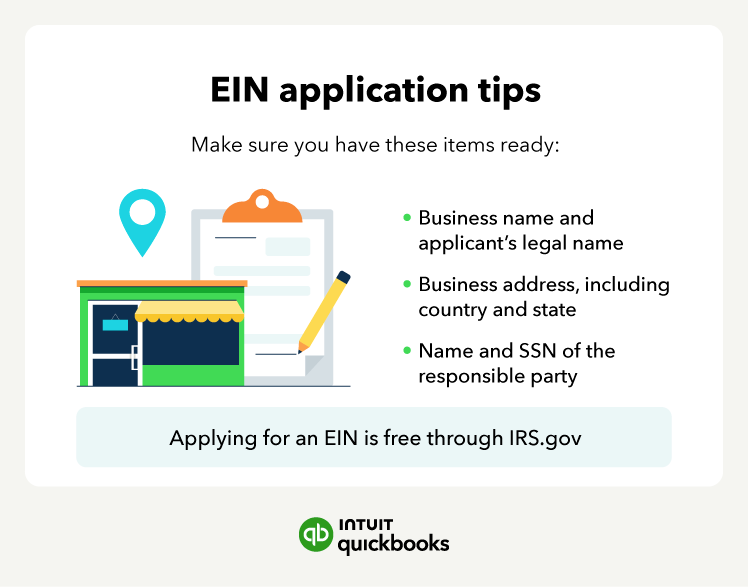
You’ll likely need an Employer Identification Number (EIN) from the Internal Revenue Service to form an LLC in Michigan. An EIN is a nine-digit number that identifies a business for tax purposes, similar to a Social Security Number for your company.

According to the IRS, you need an EIN if any of the following apply:

  1. You have employees
  2. Your business operates as a corporation or partnership
  3. You file employment, excise, or alcohol, tobacco, and firearms tax returns
  4. You withhold taxes on income, other than wages, paid to a non-resident alien
  5. You have a Keogh plan (a tax-deferred pension plan)
  6. You are involved with certain types of organizations, including trusts, estates, real estate mortgage investment conduits, non-profit organizations, farmers' cooperatives, or plan administrators

Single-member LLC considerations

If you are a single-member LLC, you may not be required to obtain an EIN. However, getting one is still a smart idea, as your business needs might change over time, and obtaining an EIN is free.

An EIN becomes mandatory if your LLC elects to be taxed as a corporation, hires employees, or files excise or employment tax returns.

Having an EIN also simplifies opening a business bank account and protects your personal Social Security Number, reducing the risk of identity theft.

Requesting an EIN

You can request an EIN by mail or phone, but the fastest method is completing the process online on the IRS website. After obtaining an EIN, use accounting software to track business expenses and ensure your company’s finances remain separate from your personal finances. 

A sign that says "HSE fees apply".

Step 5: Ongoing compliance and required filings 

Registering your LLC certificate is the first step of the business compliance journey. To continue doing business, you must adhere to the state and federal laws and regulations to keep your LLC compliant, which include:

  • Annual Statement 
  • Filing requirement: Filing an Annual Statement is a legal requirement for LLCs in Michigan. These statements must be submitted to the Michigan Department of Licensing and Regulatory Affairs (LARA) to maintain the LLC's active status
  • Purpose: To ensure that the state's records for your LLC are current, including details like the registered agent's name and address.
  • Due date: LLCs must file by February 15 each year. However, LLCs formed after September 30 are exempt from filing the statement in the following February. Failure to file for two consecutive years results in the LLC losing its good standing.
  • Filing method: Approximately 90 days before the due date, LARA sends a pre-printed form to your LLC's registered office. You can file the completed form online through LARA's Corporations Online Filing System (COFS) or by mailing it to the address provided on the form.
  • Fees: The filing fee for the Annual Statement is $25. Late filings may incur penalties.
  • Beneficial Ownership Information Report
  • Filing Requirement: Submit a Beneficial Ownership Information Report to the U.S. Department of the Treasury within 30 days of forming your LLC.
  • Purpose: This report helps prevent money laundering and other financial crimes by identifying the true owners of the LLC.
  • Who needs to file: All LLCs formed in 2024 or later are required to file.
  • How to file: File the report online through the U.S. Treasury Financial Crimes Enforcement Network website.
  • Fees: There is no filing fee.
  • Business licenses and permits
  • Requirement: Depending on your industry and location, specific licenses or permits may be necessary. Businesses selling certain products may require additional licensing or permits.
  • Examples: 
  • Health professionals
  • Child care
  • Certain professional services
  • Certain skilled trades
  • Verification: Check the LARA website to determine any applicable requirements for your business. 
  • State tax registration
  • Requirement: If your LLC will collect state taxes, such as sales tax, you must register with the Michigan Department of Treasury.
  • Tax determination: Utilize the Michigan Department of Treasury's business tax resources to identify which taxes apply to your LLC.
  • Registration methods: Register via Michigan Treasury Online. You should receive your sales tax license in as little as seven business days
  • Purchase insurance
  • Requirement: Depending on the type of business you operate, you may also need to get specific insurance coverage, such as:
  • Workers’ compensation
  • Commercial auto insurance
  • General liability insurance
  • Information: To determine your business insurance requirements, consult the Michigan Department of Insurance and Financial Services (DIFS) and the Michigan Department of Labor and Economic Opportunity (LEO). These agencies provide information on mandatory coverages, such as workers' compensation, and can guide you on additional insurance policies relevant to your industry.
  • Certificate of Good Standing (optional):
  • Requirement: While not legally mandated in Michigan, obtaining a Certificate of Good Standing can be advantageous for your LLC.
  • Purpose: It verifies that your LLC is in good standing with the State of Michigan, confirming compliance with state regulations and that all filings are current.
  • Why you may need it: A Certificate of Good Standing may be required when:
  • Opening a business bank account
  • Obtaining certain licenses or permits
  • Applying for financing or credit
  • How to obtain it: You can request a Certificate of Good Standing through the Michigan Department of Licensing and Regulatory Affairs (LARA).
  • Fee: $10.00
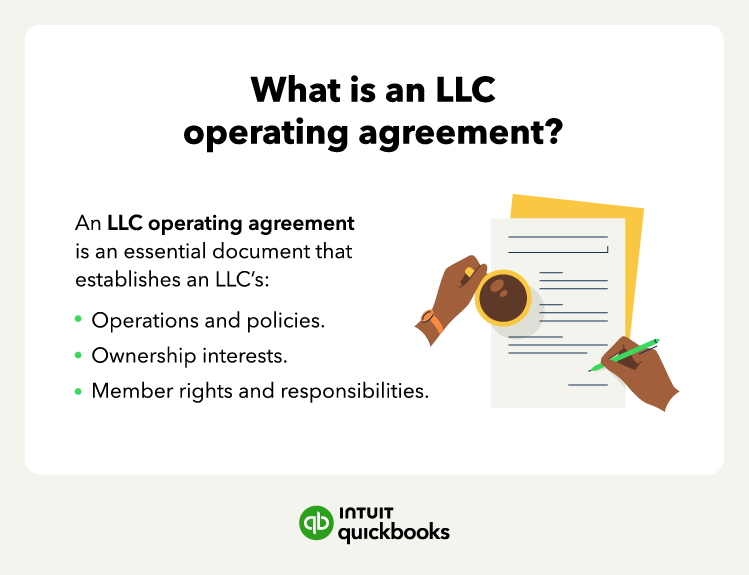
A graphic showcases the definition of an LLC operating agreement, a document you'll need when learning how to start an LLC.

Types of LLCs to consider in Michigan 

When establishing a Michigan LLC, it's essential to understand the various types available to determine which structure best suits your business needs.

Single-member LLC

A single-member LLC is owned by one individual or entity, providing liability protection while allowing for simplified management and taxation.

Multi-member LLC

A multi-member LLC consists of two or more members who share ownership. This structure offers flexibility in management and profit distribution among members.

Professional Limited Liability Company (PLLC)

In Michigan, licensed professionals such as doctors, lawyers, or accountants may form a Professional Limited Liability Company (PLLC) to provide their services. The name of a PLLC should end with "Professional Limited Liability Company," "PLLC," or "PLC."

Member-managed LLC

In a member-managed LLC, all members actively participate in running the business, making decisions, and handling daily operations. This structure is ideal for small businesses where owners want direct control over management.

Manager-managed LLC

In a manager-managed LLC, members appoint one or more managers to oversee daily operations, while non-managing members take a passive role. This setup works well for businesses with multiple investors or those who prefer to delegate management responsibilities.

Costs of setting up an LLC in Michigan

Setting up an LLC in Michigan involves certain basic fees:

  • A one-time Articles of Organization filing fee of $50; Foreign LLCs are required to submit Certificate of Authority for $50
  • Annual Statement filing fee of $25
  • Registered agent service fee (if you choose to hire one) which typically ranges from $50 to $300 annually

Additional costs may include fees for reserving an LLC name ($25) and obtaining necessary business licenses or permits, depending on your industry.

Open a Michigan LLC business bank account

To maintain the liability protection offered by your LLC, it's essential to keep your business and personal finances separate. Opening a dedicated business bank account for your Michigan LLC helps preserve this separation.

What you'll need

When opening a business bank account in Michigan, be prepared to provide:

  • Your Employer Identification Number (EIN) issued by the IRS for your business.
  • Your Michigan Department of Licensing and Regulatory Affairs (LARA) identification number which was assigned upon filing your Articles of Organization.
  • Articles of Organization, a certified copy may be required.
  • Some financial institutions may require an operating agreement and a Certificate of Good Standing.

Out-of-state residents should consider choosing a bank with a presence in Michigan.

After opening your bank account, consider solutions such as QuickBooks accounting software that can streamline the management of your LLC's tax and financial documents with ease.

LLC taxes in Michigan

Michigan LLCs can be classified differently for federal and state tax purposes. They may be treated as:

  • Sole proprietorship (for single-member LLCs)
  • Partnership (for multi-member LLCs)
  • C corporation (via IRS Form 8832)
  • S corporation (via IRS Form 2553)

This classification determines how the LLC is taxed at both federal and state levels.

Pass-through taxation

By default, Michigan LLCs are treated as pass-through entities. The LLC itself does not pay federal or state income taxes. Instead:

  • Profits/losses flow through to members’ personal tax returns
  • Members pay taxes at individual personal state income tax rates (4.25% in Michigan

Corporate income tax (CIT)

LLCs that elect to be taxed as C corporations are subject to Michigan’s 6% corporate income tax (CIT) if their gross receipts exceed $350,000.

Small business alternative credit

Some LLCs may qualify for a reduced 1.8% tax rate on adjusted business income if they meet these criteria:

  • Annual income of $1.3 million or less
  • Gross receipts of $20 million or less

Sales and Use Tax

LLCs selling tangible personal property or certain taxable services are required to collect a 6% sales tax from customers. To comply, businesses must register for a sales tax license with the Michigan Department of Treasury.

Employment taxes

If you have employees you are responsible for withholding state income tax from employee wages and paying unemployment insurance tax. Register for these taxes with the Michigan Department of Treasury and the Unemployment Insurance Agency (UIA). 

Michigan-related resources

  • Michigan Small Business Development Center (SBDC): The SBDC offers no-cost consulting, training, and market research to help entrepreneurs start and grow their businesses.
  • Michigan Department of Licensing and Regulatory Affairs (LARA): LARA assists with business registration, licensing, and regulatory compliance, providing essential information for starting and maintaining a business in Michigan.
  • State of Michigan website: This is the official online hub for Michigan’s government services, resources, and updates. It provides easy access to information for residents, businesses, and visitors, covering everything from government operations to public safety, health, and economic development.
  • Michigan Economic Development Corporation (MEDC): Working with over 100 partners, MEDC promotes Michigan as a prime business destination and supports businesses at any stage of growth. It provides customized assistance to help companies invest, expand, and develop their workforce in communities across the state. No matter the size or industry, businesses can access valuable tools and resources through MEDC’s statewide network of partners.

Federal-related resources 

  • Small Business Administration (SBA): The SBA supports small businesses through various loan programs, including the 7(a) loan, provides resources for government contracting, and offers counseling and training programs to help entrepreneurs start and grow their businesses.
  • Internal Revenue Service (IRS): The IRS provides essential information for LLCs, including tax classifications, employer identification numbers (EINs), and filing requirements. Its Small Business and Self-Employed Tax Center offers guidance on tax obligations specific to LLCs.
  • U.S. Patent and Trademark Office (USPTO): For businesses looking to protect their intellectual property, the USPTO provides resources on how to apply for patents and register trademarks, which can be essential for safeguarding your unique products or services.
  • U.S. Department of Labor (DOL): The DOL's website offers information on federal labor laws, workplace safety regulations, and employee benefits that LLC owners need to consider when hiring staff.

Frequently asked questions

Disclaimer: 

This content is for information purposes only and information provided should not be considered legal, accounting or tax advice or a substitute for obtaining such advice specific to your business. Additional information and exceptions may apply. Applicable laws may vary by state or locality. No assurance is given that the information is comprehensive in its coverage or that it is suitable in dealing with a customer’s particular situation. Intuit Inc. does not have any responsibility for updating or revising any information presented herein. Accordingly, the information provided should not be relied upon as a substitute for independent research. Intuit Inc. cannot warrant that the material contained herein will continue to be accurate, nor that it is completely free of errors when published. Readers should verify statements before relying on them. 


Recommended for you

Mail icon
Get the latest to your inbox
No Thanks

Get the latest to your inbox

Relevant resources to help start, run, and grow your business.

By clicking “Submit,” you agree to permit Intuit to contact you regarding QuickBooks and have read and acknowledge our Privacy Statement.

Thanks for subscribing.

Fresh business resources are headed your way!

Looking for something else?

QuickBooks

From big jobs to small tasks, we've got your business covered.

Firm of the Future

Topical articles and news from top pros and Intuit product experts.

QuickBooks Support

Get help with QuickBooks. Find articles, video tutorials, and more.