QuickBooks Blog
A person working with procurement management.
Midsize business

What is procurement management? Why it is essential for supply chain efficiency


Procurement management meaning: Procurement management is the process of acquiring the supplies and services needed to perform business operations. It involves multiple steps, including negotiating contracts, monitoring budgets, and processing invoices.


Procurement is more than just purchasing—it’s a strategic function that directly impacts your company’s bottom line. A recent QuickBooks study shows 37% of businesses are working to find new and innovative ways of sourcing materials or services.


Whether you're sourcing raw materials, software, or outsourced services, effective procurement management ensures that you’re getting the best value, maintaining supplier relationships, and optimizing costs. Without a well-structured procurement process, businesses risk overspending, supply chain disruptions, and inefficiencies that cut into profitability.


This article will discuss procurement management's importance, its benefits to your business, and how to make the process more efficient.

Jump to:

How procurement management works

Procurement management is the process of acquiring the goods and services your company needs to operate—whether that’s raw materials, warehouse equipment, software, or outsourced services. It goes beyond simply buying supplies. Effective procurement management ensures your company sources from the right vendors, at the right cost, with the right terms.


While purchasing is a transactional function focused on buying specific items, procurement takes a broader, more strategic approach. It includes:


  • Supplier selection
  • Contract negotiation 
  • Risk management
  • Cost optimization. 


When done well, procurement management improves cash flow, strengthens supplier relationships, and enhances operational efficiency.


No matter how your company structures procurement, its impact is clear. By streamlining the sourcing process and controlling costs, procurement management helps safeguard margins and maintain a competitive edge.

Why is procurement management important?

Procurement management plays a critical role in cost control and financial efficiency. It ensures your company maximizes the value of every dollar spent, freeing up capital for growth and innovation.


Here’s how effective procurement management benefits your business:


  • Reduces costs: Negotiates better terms, secures volume discounts, and optimizes supplier contracts to improve cash flow.
  • Strengthens relationships: Builds strong supplier partnerships, ensuring reliability, higher quality standards, and leverage during market fluctuations.
  • Streamlines processes: Boosts business efficiency by reducing delays, improving resource allocation, and minimizing supply chain risks.
  • Enhances compliance: Ensures adherence to regulatory requirements and internal policies, reducing legal and financial risks.
  • Improves data-driven decisions: Leverages procurement data to identify spending patterns, forecast demand, and optimize purchasing strategies.


By prioritizing procurement management, your company can drive financial stability, reduce risk, and maintain a competitive edge in an ever-changing market.

The procurement lifecycle: A step-by-step breakdown

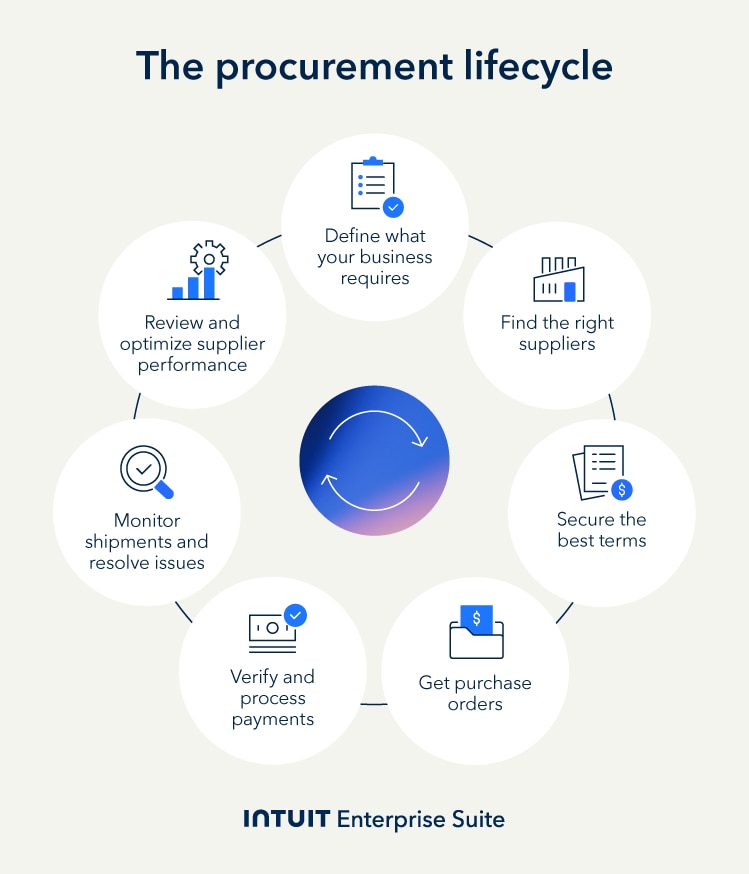
Understanding the procurement lifecycle improves efficiency and helps control costs. Here’s a breakdown of each key step in the process, from identifying needs to managing supplier relationships:

Step 1: Identify business needs

The first step in the procurement lifecycle is identifying the business needs. This involves understanding what products, services, or resources are required for the organization to meet its operational goals. 


Collaborating with internal teams helps define specific requirements, including quality standards, quantities, and delivery timelines, ensuring that procurement efforts align with business objectives.

The procurement management life cycle.

Step 2: Supplier research and selection

Once the needs are defined, the next step is to research and select suppliers. This involves evaluating potential vendors based on factors such as pricing, reliability, quality, and their ability to meet delivery deadlines. 


Conducting thorough due diligence ensures that the chosen suppliers are capable of fulfilling your business requirements and can offer value for money in the long term.

Step 3: Negotiating contracts and terms

With suppliers identified, the next step is to negotiate contracts and terms. This includes agreeing on pricing, payment terms, delivery schedules, and other critical conditions. 


Effective negotiation ensures favorable terms that protect your company's interests while maintaining strong supplier relationships. Clear contracts also mitigate potential risks and avoid misunderstandings down the line.

Step 4: Purchase order creation and approval

Once terms are set, a purchase order is created and submitted for approval. This document formally requests the goods or services from the supplier and outlines the agreed-upon terms. The purchase order is then reviewed internally for accuracy, ensuring that it aligns with the business needs and available budget before final approval.

Step 5: Invoice processing and payment

After receiving the goods or services, the next step is invoice processing and payment. The procurement team verifies that the invoice matches the purchase order and the goods received. 


Once confirmed, the invoice is approved for payment, ensuring that the supplier is compensated according to the agreed terms while maintaining cash flow management for your business.

Step 6: Order fulfillment and delivery tracking

During order fulfillment, it’s critical to track deliveries to ensure timely and accurate receipt of goods. This step involves monitoring the shipment and resolving any issues such as delays, damages, or incorrect items. Proper tracking ensures smooth operations, preventing disruptions in your supply chain and maintaining reliable service to internal teams.

Step 7: Performance evaluation and relationship management

The final step in the procurement lifecycle is evaluating supplier performance and managing relationships. This involves assessing the quality of goods or services, delivery reliability, and overall supplier performance against agreed terms. 


Regular reviews help identify areas for improvement and foster strong, long-term relationships that contribute to future procurement success.

Benefits of strategic procurement operations

Given procurement’s integral function within a company, a more proactive approach can help reap the maximum benefit. Here are a few benefits that come from building strategic procurement operations:

Faster sourcing process

A large part of the procurement process is spent on strategic sourcing for goods and services. Developing a standard workflow to evaluate potential suppliers speeds up procurement timelines and defines an approved list of trusted third-party partnerships. 


Better resource utilization

Being mindful of how procurement currently operates often uncovers areas for improvement. For instance, there may be underutilized resources, redundant efforts, or discrepancies and inefficiencies across team members. 


A supply chain or inventory management system can easily track end-to-end procurement so managers can identify the best opportunities for a more cost-effective process. 

Less wasted expenditure 

Better resource utilization usually leads to less waste. A strategic procurement approach aligns the entire supply chain and effectively consolidates all expenses. 


With a dedicated business management platform that centralizes every purchase, procurement teams are able to combine orders and deliveries for increased cost savings. It also becomes easier to spot any maverick spending or unapproved purchases that are outside of approved contract lifecycles.  

More secure supply chain

Maintaining oversight of procurement can help procurement professionals get ahead of any last-minute disruptions, such as out-of-stock supplies or logistical issues. 


While it’s impossible to remove all risks when dealing with external parties, a strong procurement strategy should include alternative suppliers and contingency plans to guarantee supply chains are continuously operational.

Procurement KPIs: How to measure success

Tracking key performance indicators (KPIs) helps ensure your procurement processes are efficient and aligned with your business goals. These metrics provide valuable insights into cost control, supplier performance, and overall procurement effectiveness.

Cost savings percentage

Cost savings percentage is a crucial KPI that measures how much your procurement efforts have reduced expenses. By comparing the actual cost of goods or services with the budgeted amount, this metric shows the effectiveness of negotiations, volume discounts, and supplier terms in lowering operating costs and maximizing value.

Supplier lead time

Supplier lead time measures how long it takes for a supplier to fulfill an order from the time it’s placed to delivery. Shorter lead times improve your ability to meet demand and maintain inventory levels, directly impacting your company’s ability to respond to market needs quickly and efficiently.

Purchase order cycle time

Purchase order cycle time tracks how long it takes from creating a purchase order to receiving the goods or services. This KPI helps evaluate the efficiency of the entire procurement process, highlighting any delays or bottlenecks that could affect your supply chain and overall operations.

Supplier compliance rate

Supplier compliance rate measures how well your suppliers adhere to agreed-upon terms, such as delivery schedules, quality standards, and contract specifications. A high compliance rate indicates reliable suppliers, while lower rates may point to the need for improved vendor management or renegotiation of terms.

Spend under management

Spend under management reflects the proportion of your company’s total spending that is actively managed through strategic procurement practices. The higher this percentage, the better your company is at controlling costs, improving supplier relationships, and optimizing procurement activities.

How to make procurement efforts more efficient

With all the activities and teams involved in procurement, there are several ways to streamline the management practice. The following are some recommended steps to make procurement activities more efficient:

Standardize your procurement management process

Procurement requires a significant amount of paperwork and approvals. Simplify the process for stakeholders by outlining all the steps needed to go from the initial request for proposal (RFP) to final supply delivery. If possible, provide templates and guidelines on what types of purchases will be approved. This initial effort can end up saving everyone time in the long run.


note icon Create a clear, step-by-step checklist for every procurement process to reduce confusion and avoid redundant approvals. This ensures all stakeholders are aligned, speeding up decision-making and eliminating unnecessary delays.


Automate routine tasks

Using automation to handle repetitive tasks not only saves time, it also prevents accounting errors, misplaced paperwork, and other mistakes common to manual processing. Automation increases efficiency throughout procurement and frees up the team to work on more important tasks, such as negotiating contract terms and planning supply strategies.


note icon Implement automated workflows for routine tasks like invoice approval or order confirmation to eliminate human error and free up time for your team to focus on higher-value strategic activities.


Centralize all third-party information

Working with even a single supplier involves multiple touchpoints, documentation, and other details. This only compounds in time, especially as companies expand their third-party network. 


To keep tabs on all the important information, it’s best to use a business management platform that organizes all the supply details and makes it easy to filter and access across teams. 


note icon Set up a centralized digital repository for all supplier contracts, contact details, and performance records. This ensures easy access and up-to-date information, reducing search time and improving collaboration.


Use software to track and improve processes

Most procurement teams rely on supply chain or order management software to keep track of movements throughout the supply chain. All procurement requests and documents are recorded and updated in real time. 


By collating all information in one place, procurement management systems improve accuracy across operations and make it easier to draw insights that improve inventory forecasting and future planning. 


note icon Leverage analytics within procurement management software to identify bottlenecks or inefficiencies in the supply chain. By proactively addressing these areas, you can improve the overall speed and accuracy of future orders.


Best practices for stronger procurement management

Implementing effective practices in procurement management can drive cost savings, improve supplier relationships, and streamline processes. These best practices will help you optimize procurement efforts and enhance operational efficiency.

Implement spend analysis for cost optimization

Spend analysis allows you to track and categorize your company’s expenditures, identifying opportunities for cost savings. By analyzing purchasing patterns, you can pinpoint areas of overspending or inefficiency and negotiate better pricing or terms with suppliers.

Strengthen vendor relationship management

Building strong, collaborative relationships with your suppliers fosters trust and improves service. Regularly communicate with suppliers, address any concerns promptly, and share long-term goals to align expectations, which can lead to better pricing, quality, and reliability.

Ensure compliance with procurement policies

Enforce compliance with procurement policies to maintain consistency and mitigate risks. Regular audits, training for procurement teams, and clear communication of policy changes will help ensure adherence to the company's standards and legal requirements, reducing the risk of non-compliance.

Optimize contract negotiations and management

Focus on improving contract terms by thoroughly evaluating each supplier’s offer and understanding the long-term impact of the agreement. Effective contract management ensures that all terms are met, reduces disputes, and strengthens supplier relationships, leading to better value over time.

What to look for in a procurement management software

When choosing procurement management software, prioritize features that enhance efficiency and control. The right tools ensure real-time collaboration, accurate financial tracking, and seamless integration with your existing systems.


Key features to look for include:


  • Cloud-based access: Enables teams to collaborate from anywhere with real-time data updates.
  • Real-time spend tracking: Monitors purchasing trends and identifies cost-saving opportunities to prevent budget overruns.
  • Automated invoice processing: Reduces manual errors, speeds up payment cycles, and integrates smoothly with accounting systems.
  • Centralized data management: Improves visibility, accountability, and decision-making by consolidating procurement information in one platform.


By choosing software with these features, your company can streamline procurement operations, reduce costs, and improve financial oversight.

Introducing Intuit Enterprise Suite

Simplify complex operations with multi-entity management, custom roles and permissions, and automated revenue recognition. Make faster decisions with multi-dimensional reporting and deeper insights in real time.

The future of procurement: Trends and innovations

The procurement landscape is rapidly evolving, driven by technological advancements and shifting market dynamics. Here are some key trends and innovations shaping the future of procurement.

AI and machine learning in procurement

AI and machine learning are transforming procurement by automating decision-making processes and optimizing supplier selection. These technologies can analyze vast amounts of data to predict demand, identify cost-saving opportunities, and recommend suppliers based on historical performance. 


By leveraging AI, procurement teams can streamline processes, improve forecasting accuracy, and enhance strategic decision-making.

Blockchain for supply chain transparency

Blockchain technology is revolutionizing supply chain management by providing unparalleled transparency and security. It allows for real-time tracking of goods, ensuring that every step of the supply chain is recorded in an immutable ledger. 


This enhances trust between suppliers and buyers, reduces fraud, and ensures compliance with regulatory standards, ultimately improving overall supply chain efficiency.

Sustainability and ethical sourcing trends

As businesses increasingly focus on environmental and social responsibility, sustainability and ethical sourcing have become top priorities in procurement. Companies are prioritizing suppliers that adhere to ethical labor practices, environmental standards, and sustainable production methods. 


This shift not only helps protect the planet but also aligns with consumer demand for responsible business practices, enhancing brand reputation and long-term success.

How Intuit Enterprise supports procurement management 

With all the responsibilities that fall on procurement, dedicated procurement software makes the entire process much easier to manage. Intuit Enterprise offers best-in-class functionality to give you a clear line of sight across operations and the necessary information to improve decision-making, efficiency, and productivity.


A centralized dashboard contains real-time delivery details of inventory and orders from warehouse production to your customer’s doorstep. Intuit Enterprise lets your team enter expenses as they occur, and Enterprise automatically generates invoices and reports so procurement management can easily stay on top of job costs. 


Additional expenses, such as materials, overhead, and labor, can be tracked and quickly reallocated, depending on the current needs of the business. 


Intuit Enterprise helps procurement professionals make the best business decisions and gain efficiencies across the order purchasing process by creating a single source of accurate data. 

Boost profitability and enhance productivity
An effective procurement management initiative keeps a company stocked with the supplies and services it needs to operate smoothly. It plays a key role in financial and supply chain management, helping maintain profitability and meet market demands.


With so many steps involved in project procurement management, automating routine tasks and reviewing critical information is necessary to optimize the process continuously. Intuit Enterprise offers the visibility needed to better utilize resources, coordinate across teams, and streamline overall procurement management across the organization. 


Recommended for you

Mail icon
Get the latest to your inbox
No Thanks

Get the latest to your inbox

Relevant resources to help start, run, and grow your business.

By clicking “Submit,” you agree to permit Intuit to contact you regarding QuickBooks and have read and acknowledge our Privacy Statement.

Thanks for subscribing.

Fresh business resources are headed your way!

Looking for something else?

QuickBooks

From big jobs to small tasks, we've got your business covered.

Firm of the Future

Topical articles and news from top pros and Intuit product experts.

QuickBooks Support

Get help with QuickBooks. Find articles, video tutorials, and more.