QuickBooks Blog
An image of a business owner reviewing a graph of business growth.
Growing a business

11 digital growth strategies to transform your business

Whether you’re building a startup or running a small to midsize business (SMB), staying ahead of the competition remains one of the most important factors to improving your bottom line. The key to victory in a competitive market is establishing digital growth strategies that can keep your business at the top of its game. 

A strong growth strategy will give your business staying power, even in the rockiest of markets. According to the 2025 Intuit QuickBooks Small Business Index Annual Report, businesses leveraging more digital tools are 1.6x more likely to forecast positive future revenue growth.

In this guide, we’ll discuss multiple aspects of digital strategy you can adopt to help you make a plan to expand. Keep reading to learn how developing growth strategies can help create a lasting relationship with your customers and set your business up for long-term success. 

Jump to:

  1. Know your customer
  2. Product development and diversification
  3. Establish key performance indicators
  4. Determine your value proposition
  5. Experiment with new sales channels
  6. Invest in cloud-based technology
  7. Conduct market and industry research
  8. Plan to develop your team
  9. Automate everything
  10. Leverage valuable data
  11. Artificial intelligence (AI) integration

Grow your business with confidence

1. Know your customer

While it may sound basic, customers’ shopping habits today are more dynamic than ever. The ability to click "buy" almost instantaneously shapes how consumers make purchases, discover products, and evolve into loyal, repeat buyers.

They're consistently looking for new places to shop, whether it’s because they’re looking for:

  • More information on a particular product
  • The best deal
  • Related alternatives
  • A more ethical supplier or merchant

Having a deeper understanding of your customers can help you develop a thorough market penetration strategy that can help you reach your target markets

Consider investing in social media tools like Sprout Social or HubSpot to help you connect with your customer base worldwide. To gauge customer interest, you can share pictures of current products and future projects on these platforms.

An image of a social media post, styled like an Instagram photo, showing an image of a potting soil company's post with audience comments.

Knowing your customers can also help you begin to create products specifically designed to meet their needs. This way, you can prevent investing in products that won’t sell and leave you with deadstock.

2. Product development and diversification

Developing a new product requires significant time and resources. You want to avoid investing valuable efforts into something that doesn't resonate with your customers.

If you find it tough to brainstorm product ideas likely to sell, start by diving deep into what you already have. Your existing inventory is a treasure trove of insights. You can use tools like QuickBooks financial reporting software to identify your best-selling products. 

In addition to what sells most, also consider:

  • Complementary products: What items do customers frequently buy with your bestsellers? Could you develop accessories that enhance the core product experience? For example, if you sell popular coffee makers, could you also offer specialty coffee beans or reusable filters?
  • Customer feedback: Are customers consistently asking for variations, different sizes, or new features for your popular items? Their direct input is invaluable for pinpointing unmet needs.
  • Market trends: Research broader trends in your industry beyond your own data. Are there emerging demands that your bestsellers hint at? These could involve eco-friendly alternatives, customizable options, or digital add-ons.
  • Competitor trends: Analyzing what your competitors are doing, especially their bestsellers or newly launched products, can offer valuable insights. Are they successfully serving a niche that you're currently overlooking? Do their popular products have features that yours lack, or vice versa?

Analyzing these aspects can help you develop a focused strategy to add items to your product line. This approach directly caters to your clients' evolving wants, ultimately attracting new customers and cementing your market position.

3. Establish key performance indicators and goals

Key performance indicators, or KPIs, help you keep track of metrics and assess whether or not implementing certain changes was effective. They can range from financial, such as inventory turnover, to operational, which could be the time it takes to fulfill an order.

Some common KPIs for small businesses include:

  • Revenue growth: Measures the rate at which your business's sales income increases over a specific period, indicating overall business expansion.
  • Net profit margin: Shows the percentage of revenue left as profit after deducting all expenses, reflecting your business's overall profitability.
  • Gross profit margin: Represents the percentage of revenue remaining after subtracting the direct costs of goods sold, indicating the profitability of your core products or services.
  • Cash flow: Tracks the movement of cash in and out of your business, essential for managing daily operations and financial stability.
  • Customer acquisition cost (CAC): Calculates the average expense incurred to gain one new customer, helping assess the efficiency of your marketing and sales efforts.
  • Customer lifetime value (CLTV): Estimates the total revenue a business can expect from a single customer over the entire duration of their relationship, highlighting the long-term value of your customer base.
  • Conversion rate: Measures the percentage of website visitors or leads who complete a desired action, like purchasing or signing up for a newsletter.

And if digital growth is part of your strategy, consider tracking:

  • Lead generation volume: Tracks the number of potential customers acquired over a set time frame.
  • Cost per click (CPC): Measures the price you pay for each click in a digital ad campaign, helping optimize your ad spend.
  • Engagement rate: Looks at how users interact with your content (likes, shares, comments), reflecting how well you're connecting with your audience.
  • Brand awareness: Gauges how familiar your target audience is with your business—often tracked through impressions, branded search volume, or social mentions.

Determining the most likely KPIs to grow your business is key here. After all, why spend time building dashboards for data you'll never look at again? Select your KPIs from the list above (or come up with your own), and find the best way to measure them over time. Then you'll be able to calculate exactly what success looks like for your business.

4. Determine your value proposition

As a business, you must determine your value proposition so that you attract the right customers. Your products may have led them to your business, but it’s your values that will make them long-term customers. 

Think about the following when creating your value proposition:

  • What are the benefits of your products?
  • How do they bring value to your customers?
  • What’s the problem your products will help customers solve?
  • How is your business different from other businesses?

Ultimately, your customer base is what’s going to drive your business to success. A good value proposition should answer the questions above to help increase the likelihood that the product will sell.


note icon

Your value proposition should center on your customers, not you. Make sure it clearly states how your product uniquely solves your customers' problems or helps them achieve their goals.


5. Experiment with new sales channels

While selling on one platform may be a good idea when you’re just starting your business, it could be limiting your business’s ability to grow. 

As a business, making the move to branch off into other sales channels has many benefits, including:

  • Increasing your discoverability for new and existing customers. Brands that are present on multiple channels often attract loyal, repeat buyers.
  • Showing that you have the scale and wherewithal of a large and reliable organization.
  • Easily research competitive pricing, positioning, or identical products, allowing you to be more strategic.
  • More opportunities to have your content indexed by search engines and surfaced to buyers that have high purchase intent.
  • Expanding into multiple channels is one of the most straightforward ways to see potential returns for the effort invested. 

A few tips for growing your market and adopting digital sales channels:

  • Build a B2B e-commerce channel to profit from excess inventory and begin selling wholesale.
  • Sign your business up to sell on an online marketplace like Amazon or Etsy to expose your brand to new customers.
  • Take advantage of multichannel platforms, such as QuickBooks Commerce, that can help make your expansion strategy much smoother.

6. Invest in cloud-based technology

Driving a successful digital transformation strategy is only possible if you command a lean ship. Operations are often the largest headache of running an organization. However, managing and streamlining them today has never been easier, thanks to innovative software solutions for e-commerce. 

A cloud-based business system can help you save time and money, and ultimately empower your team to work better together. 

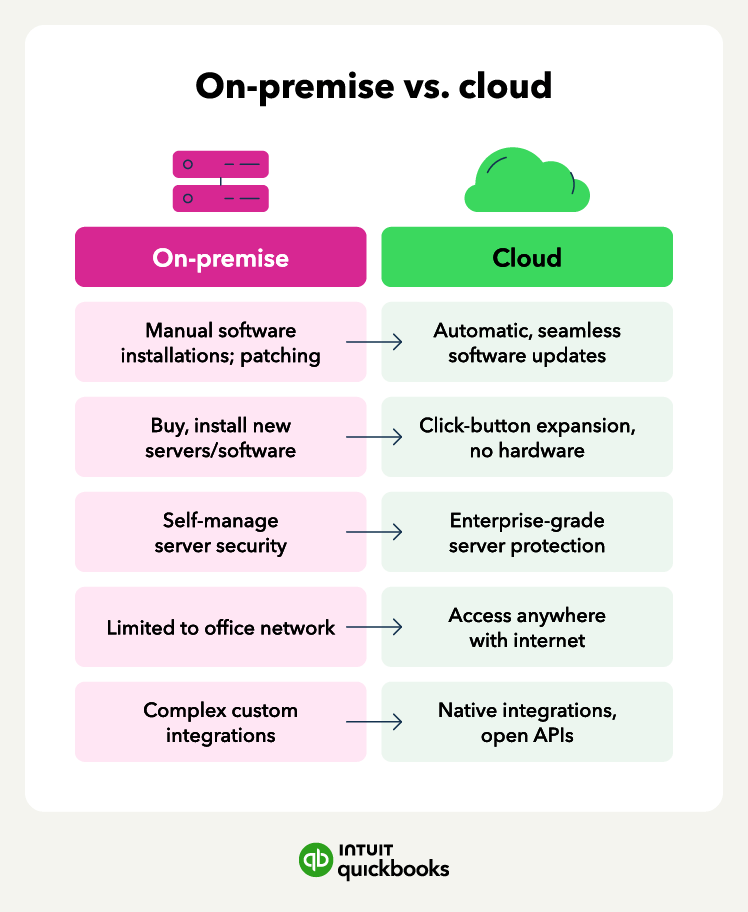
Some other notable benefits of cloud-based business systems include:

  • They’re updated frequently, which means you’ll have access to the latest software without having to perform manual installations.
  • They’re designed to grow alongside your business with the click of a button, not through buying and installing additional servers or software.
  • Your data is typically secure and protected on enterprise-grade servers, even if you run a one-person operation.
  • You can access these platforms at any time from anywhere with a stable internet connection.
  • They often provide native integrations to other technologies and offer developers access to application programming interfaces (APIs).
An image showing the benefits of cloud-based solutions

7. Conduct market and industry research

Understanding where you fit in the market is a foundational element of any growth strategy. To do this, you'll need to dedicate significant time to ongoing market and industry research. This will help you make better decisions about your business's future. 

How should you go about performing market research? Looking at what your competitors are doing is a good place to start. Analyze competitors' strategies and identify successful industry leaders to draw inspiration and learn best practices. You can also evaluate your customers' needs and consider how to better meet them. 

A process for successful market research might look something like this: 

  1. Define objectives: Clearly state what you aim to learn.
  2. Identify target segments: Understand who your ideal customers are.
  3. Analyze market trends: Monitor industry shifts and technological advancements.
  4. Evaluate competitor strategies: Learn from rivals' successes and failures.
  5. Gather customer feedback: Use surveys, interviews, and focus groups.
  6. Utilize data analytics: Leverage tools for deeper insights into customer behavior.

If you're looking for a digital business transformation strategy, sometimes the best place to start is with your customers. 

8. Plan to develop your team

As your business flourishes, consider investing in and expanding your team. Employees are the backbone of your company's performance, ensuring it runs like a well-oiled machine. To keep things running smoothly, ensure they have the necessary tools and resources to succeed.

The right tools and resources could include a lot of different things, from additional team members to the right technology and skills to handle the demands of their workload. Still, the most important thing is ensuring your team can perform to the best of their abilities.


note icon

Supporting your team helps your business remain profitable, but it also helps with employee retention. A well-supported employee is more likely to stay with you and continue providing value. 


9. Automate everything

Human error is an inevitable part of manual data entry. Whether it’s entering the wrong number, inputting the wrong data for the wrong product, or forgetting to add something altogether, these mistakes can have a notable effect on your business. For example, if you miss too many orders as a result of inaccurate inventory counts, your customers may search elsewhere for a business that is more organized and has what they need, when they need it.

By automating your business’s manual and time-consuming processes you can empower your team to work smarter and find time for other important tasks. 

When looking for an operational system with automation, you should look for a system that can do the following: 

  • Ensures that your inventory is updated in real time, so you don’t list items that you can’t fulfill.
  • Syncs orders with your accounting system to avoid reconciliations and manual errors.
  • Receives goods by scanning purchase order barcodes (vs. manually counting stock).
  • Automates part of your fulfillment process to save on shipping costs.

Once you find the right system, the possibilities for automation are limitless. Both your staff and your bottom line will thank you for making “busy” meaningful again.

10. Leverage valuable data

Data is not your enemy, and it doesn’t have to be intimidating or overwhelming.

For example, you can trust a modern cloud-based system that automates tasks across your supply chain to collect and centralize important data. This data enables you to explore the shopping habits of your consumers and examine how your products are moving.

How to leverage data 

Being able to understand channel performance and under- or over-performing products, identify buyers who are late on payments, and prevent deadstock makes this an invaluable growth strategy.

Here are some ways you can leverage data:

  • Track which sales channels consistently outperform others and allocate resources accordingly
  • Use customer payment data to flag risky accounts before they become bad debt
  • Identify high-margin products that are moving quickly to optimize reordering
  • Spot excess inventory before it becomes obsolete and adjust purchasing habits

Analyze process data to reduce manual work and streamline your operations

To truly grow your business, reexamine your strategy's foundations and the systems you’ve selected to support them. This is where your bottlenecks typically exist or will emerge. 

Identifying areas where you can improve business processes, efficiencies, and iterative wins will allow your company to thrive in current and future market conditions.

11. Artificial intelligence (AI) integration

It seems like everyone's talking about artificial intelligence these days, and it's no wonder—there's almost no area of your business that can't benefit from AI integration in some way. 

AI's ability to analyze vast amounts of customer data also allows you to create highly tailored and responsive interactions, ultimately leading to increased customer engagement.

How to use AI for your business?

Beyond customer interactions, AI powerfully optimizes operations. You can utilize AI for predictive analytics in demand forecasting, enabling precise inventory management. 

You can also use it to enhance quality control through automated inspection, drastically improving product consistency. It's a key part of any digital transformation strategy framework.

If you're not sure where to start with AI, here's a list of ways AI can benefit your business: 

  • AI-powered chatbots for 24/7 customer support
  • Personalized product recommendations based on customer data
  • Dynamic pricing adjustments for optimized sales
  • Predictive analytics for demand and inventory forecasting
  • Automated visual inspection for quality control
  • Streamlined supply chain logistics and route planning
  • Advanced business intelligence via AI agents and rapid data analysis

Introducing Intuit Assist

Your new generative AI-powered financial assistant. Intuit Assist handles administrative items on your to-do list, so you can focus on big picture growth.

Grow your business with confidence 

To truly take advantage of digital growth strategies, your business plan should include technology-driven solutions for both your short—and long-term goals. Cloud-based platforms help you serve customers across various channels in one centralized hub, making your customers happier and your life easier. 

To start building a strong foundation for growth and manage your finances effectively, you'll need a powerful cloud-based accounting software. Get started with QuickBooks today to experience streamlined operations and informed decision-making for your business. 


Recommended for you

Mail icon
Get the latest to your inbox
No Thanks

Get the latest to your inbox

Relevant resources to help start, run, and grow your business.

By clicking “Submit,” you agree to permit Intuit to contact you regarding QuickBooks and have read and acknowledge our Privacy Statement.

Thanks for subscribing.

Fresh business resources are headed your way!

Looking for something else?

QuickBooks

From big jobs to small tasks, we've got your business covered.

Firm of the Future

Topical articles and news from top pros and Intuit product experts.

QuickBooks Support

Get help with QuickBooks. Find articles, video tutorials, and more.