
You could save up to 25% on transaction costs².
Speak with us now to see if you qualify.
Talk to sales 1-800-515-8366
Monday - Friday, 6 AM to 4 PM PT

Table of contents
Table of contents
Supporting your team can take many forms, from competitive pay and healthcare coverage to flexible schedules and mental health resources. The right mix of benefits and wellness support can also matter for retention and recruiting. According to the QuickBooks Small Business Insights survey, 61% of U.S. small businesses said healthcare is considered the most effective benefit for keeping employees.
That doesn’t mean you need a large budget or a complex benefits package. Employee wellness programs can start with one or two practical ideas that match your team’s needs.
This guide explains what wellness programs are, the benefits they may offer, examples to consider, and how to build and measure a program that works for your small business.
For a broader look at what you can offer your team, check out our employee benefits guide for small businesses.

An employee wellness program is an employer-sponsored initiative that supports employees' overall well-being. It goes beyond a standard benefits package by actively encouraging healthier habits and creating a more supportive work environment.
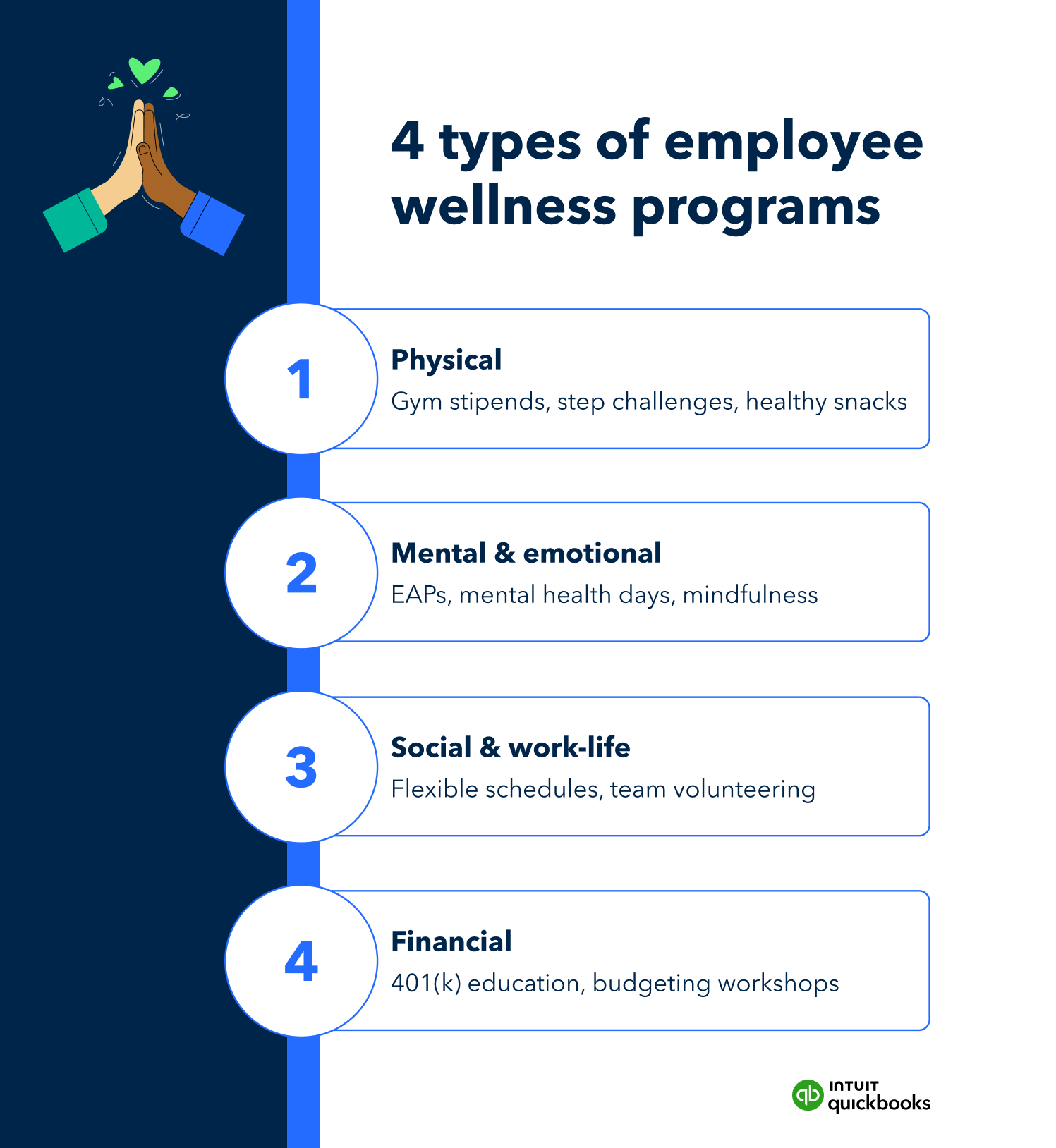
Wellness programs can address five main areas:
Programs can be formal, like a structured employee assistance program (EAP) with professional counseling, or informal, like a weekly walking group or a shared meditation app subscription. They can be simple or comprehensive, low-cost or more involved.
Wellness programs are one component of a broader employee benefits strategy. When paired with competitive pay, solid health insurance, and retirement savings options, these benefits can round out a package that helps attract and retain great people.
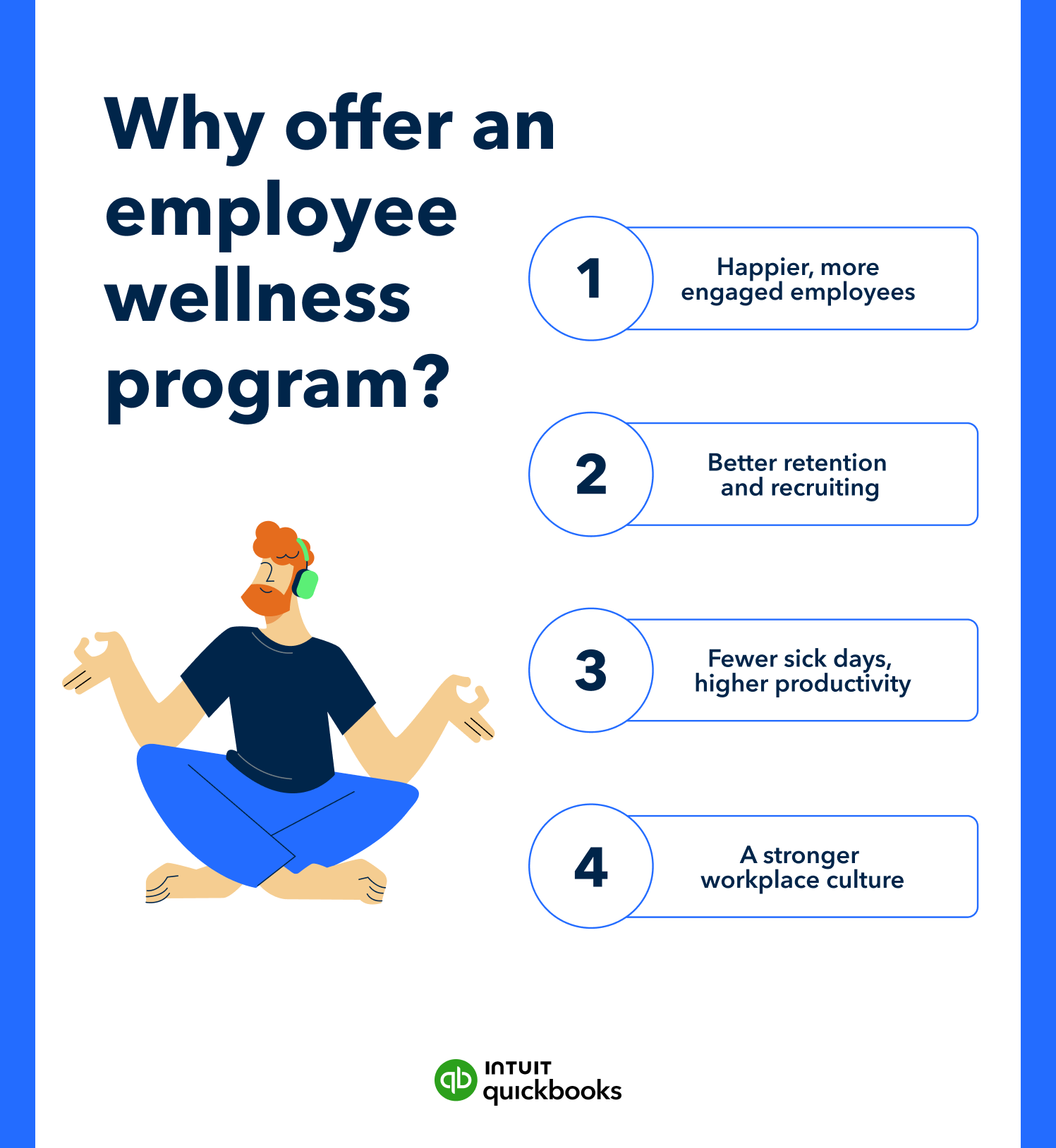
Workplace wellness programs can offer real advantages for small businesses. Here are the benefits a well-run program may support.
These outcomes aren’t guaranteed, but the potential upside makes wellness programs worth considering, even at a small scale.
There's no single right wellness program. What works depends on your team, your budget, and the specific challenges your employees face. The table below shows common employee wellness program examples, which type suits each, and the relative cost or effort.
Note: Actual costs and effort vary based on vendors, program scope, and team size.

When you offer stipends, rewards, reimbursements, or perks, the details matter. Some are considered fringe benefits, and the tax treatment of a benefit may depend on the program and your circumstances, so it helps to confirm the current rules first.
If you’re gathering employee wellness program ideas, start with the categories that match what your team says they need, not what looks impressive on paper.
You don't need to build a corporate-level program from day one. Starting small is the right approach, especially if this is your first time offering structured wellness support. Here’s a simple, step-by-step way to build a small business wellness program.
Before you spend any time or money, find out what your employees actually want. A short anonymous survey, even a few questions sent by email, can reveal a lot. You might ask what causes them the most stress at work, what kind of support would be most useful to them, and whether they prefer physical, mental, or financial wellness resources.
This step matters. A wellness program no one uses is a wasted investment. Starting with employee input increases the chances that your program will have a real impact.
Choose one specific outcome you'd like the program to support, e.g., reducing stress, improving physical activity, or building stronger team connections. Then decide on a realistic spending limit.
A small budget doesn't mean a weak program. Many effective wellness initiatives cost very little. Free apps, flexible scheduling changes, and lunch-and-learn sessions are all meaningful places to start.
Resist the urge to launch five things at once. Pick one or two programs that align with what your employees said they need, and focus on doing those well.
Good starting points for small budgets include:
Tell your team what's available, why you're offering it, and exactly how to participate. Keep the communication clear and low-pressure. Employees are more likely to engage when they understand the purpose and know there's no obligation.
For remote or hybrid teams, make sure the program is accessible online. Email, a shared channel in your team communication tool, or a quick video message from you can all work well.
Once the program has run for a while, check in. Ask whether employees know about it, whether they find it useful, what barriers keep them from taking part, and what they would change. Honest feedback tells you what to keep and what to fix.
Keep what's working, adjust or drop what isn't, and consider adding new options as your budget allows. Wellness programs work best when they evolve with your team's needs, not when they're built once and forgotten.
For teams that span different work arrangements, look for initiatives that translate across in-person, remote, and hybrid settings. Walking challenges, mindfulness apps, and flexible time-off policies work well for all three.
Tools that help you manage scheduling, records, and communication, such as QuickBooks HR software, can make this ongoing work easier.
You can measure success with a few simple metrics, even without special software. Track a handful of signals and compare them against the goal you set in Step 2.

Many of these numbers can shift for reasons unrelated to wellness. A drop in turnover, for example, could reflect the job market as much as your program. Compare your results against your original goal, and treat the metrics as useful signals rather than proof.
Wellness programs come with practical details to manage, from employee communication and scheduling to benefits enrollment and payroll. When those systems work together, it’s easier to deliver a consistent experience.
QuickBooks Workforce includes tools for payroll, employee data management, benefits administration, and HR workflows, all in one place. Having employee records, benefits information, and time-off data organized in a centralized system may make it easier to manage the administrative work that supports a wellness program, such as tracking stipends, updating benefits selections, or monitoring participation-related time off.
Explore QuickBooks Workforce to see how it can help manage your employee wellness program.

Call Sales: 1-800-285-4854